Our Pick: Bula Kava House
Check PriceBest Kava (2026): The Top Kava Brands & Picks, Ranked
There are dozens of brands selling kava and only a handful that will tell you, in writing, what's actually in the bag or the can. We ranked the names worth trusting on the one thing the category mostly hides: published lab transparency — certificates of analysis, disclosed kavalactone numbers, named cultivars and origins — then weighed each on value and consistency. Here are the eight brands a serious buyer should start with, whatever format you drink.
By The Kava Review DeskUpdated 2026-09-01~12 min read Ranked by the lab reportHow we research
 Best Overall
Bula Kava House — Borogu Kava Powder
Bula Kava House · 4.7
Borogu from $17.60 (100g sample · 1/2 LB · 1 LB)
 Upgrade Pick
Wakacon Fijian Waka Kava Powder (16 oz)
Wakacon · 4.3
$64.99 / 16 oz (~$8.12 per 4-cup batch)
Ask the internet for the best kava brand and you'll get a list ordered by ad budget. We order ours by a harder, duller question: which brand shows you the receipts? A kava purchase is, underneath the flavor and the founder's story, a bet on what's inside — which cultivar, from which island, certified noble by which lab, at what kavalactone strength, screened for which contaminants. Most sellers answer that bet with the phrase "lab tested" and nothing more. A few publish the actual paperwork. That gap is the whole basis of this ranking, because in a category with this little regulation, a brand's willingness to put numbers and lab sheets in front of you is the closest thing to a guarantee you'll get.
So we ranked brands, not products, on three things in priority order. First and heaviest: transparency — does the brand publish a certificate of analysis (COA), disclose a real kavalactone figure or percentage rather than a meaningless extract weight, and name its cultivars and origins? Second: value, measured the way we measure everything on this site — cost per 100 mg of disclosed kavalactones for cans and shots, cost per session for powders, with the math shown. Third: consistency — a track record, a stable catalog, sourcing relationships that don't change with the wind. A brand that nails all three is one you can build a habit around without re-vetting it every order.
Eight brands made the list, and they're deliberately different from one another: drink makers that print their potency like a brewery prints ABV, traditional-powder houses on opposite ends of the disclosure spectrum, a concentrate-and-powder specialist that publishes its chemotype, an ISO-lab-tested bulk bag you can buy on Amazon, the company that quietly solved kava's biggest practical problem — preparation — and, new in August 2026, the first ready-to-drink brand to post public per-batch COAs on the finished product, which we read ourselves before writing a word. Everything below is reused from prices, labels, and COA policies we verified against the brands' own pages; we invent nothing. No brand paid for placement or ranking; some product links earn this site a small disclosed commission. The usual ground rules apply: kava is for adults 21+, it can cause drowsiness, don't drive after drinking it, don't mix it with alcohol, and if you take medications or are pregnant, talk to your doctor first. None of this is medical advice.
The short version
- We rank brands by transparency first — published COAs, a real kavalactone number (not an extract weight), and named cultivars and origins — then by value and consistency. A brand that shows its work earns the top of the list.
- Best brand overall is Bula Kava House: a Portland kava house running since 2011 that publishes a per-varietal COA — origin, chemotype, total kavalactone percentage, contaminant screen — linked from every product page. It's the cleanest paper trail in the category.
- Best ready-to-drink brand is Kavahol, at 4.9 the highest-rated product on this site: the only drinks maker posting public per-batch COAs on the finished bottle (back to 2023), with the June 2026 sheet assaying ~330 mg of kavalactones per serving against a stated 250 mg — plus Gold at the blind-tasted International Non-Alcoholic Competition in both 2025 and 2026.
- Best canned-drink brand is MELO: the only major can maker that discloses a flat kavalactone number (100 mg per 12 oz can), which works out to $4.17 per 100 mg — the best disclosed value among cans.
- Most quantified powder brand is Root of Happiness: it prints chemotype (425) and total kavalactone percentage (6.2% on Superior Vanuatu), a disclosure almost no competitor matches, and its KavaShot is the cheapest disclosed kavalactones we've found (~$1.20 per 100 mg).
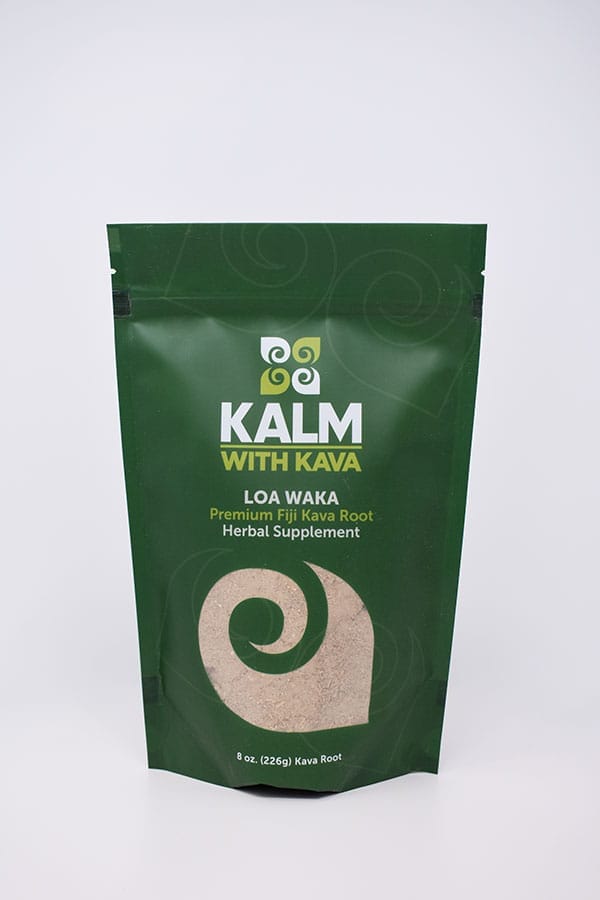
- Best for newcomers is Kalm with Kava: a long-running noble-kava house whose named, balanced Loa Waka is the friendliest first traditional grind, sold in both medium grind and micronized.
- Best gear brand is Kavafied: the AluBall maker turns a strainer-bag chore into a shake-and-go bottle — the brand that solved kava's preparation problem rather than its sourcing one.
- Best root-juice can is TRU KAVA: the only major can built on pressed kava root juice rather than extract, with a published 65-75 mg kavalactone average per serving ($29.94 per 6-pack).
- Best bulk buy on Amazon is Wakacon: a full pound of Fijian noble Waka for $64.99 (about $8.12 per 4-cup batch), with every batch tested at a US lab accredited to ISO/IEC 17025:2017.
- The single biggest red flag across the whole category is an "extract weight" disclosure ("1,500 mg kavalactone extract") with no purity figure. It reads like potency and tells you nothing — and the brands on this list are the ones that don't do it.
At a glance
| Brand | What it's best at | Transparency signal | Hero product & price | Check price |
|---|---|---|---|---|
| Bula Kava House | Best overall — the transparency benchmark | Per-varietal COA (origin, chemotype, kavalactone %) linked from every PDP; certified noble | Borogu Kava Powder — from $17.60 | Check Price |
| Kavahol | Best ready-to-drink brand — the finished-product COA benchmark | Public per-batch COAs on the bottled drink itself, back to 2023; June 2026 sheet assays ~330 mg/serving vs 250 mg stated | Fiery Ginger NA Spirit — $39.99/16 oz (10 servings) | Check Price |
| MELO | Best canned-drink brand | Discloses a flat 100 mg kavalactones per can — the only major can maker that prints the number | MELO Sparkling Kava — $49.99/12 ($4.17/can) | Check Price |
| Root of Happiness | Most quantified — prints its chemistry | Publishes chemotype (425) and 6.2% total kavalactones on Superior Vanuatu | Superior Vanuatu — $35.00/8 oz | Check Price |
| Kalm with Kava | Best for newcomers | 100% noble Fijian, brand-stated lab-tested; named cultivar (Loa Waka) | Loa Waka, medium grind — ~$39.99/8 oz | Check Price |
| TRU KAVA | Best root-juice can, the traditionalist's RTD | Publishes a 65-75 mg kavalactone average per serving; every batch third-party tested (claimed) | Tropical Citrus: $29.94/6-pack ($4.99/can) | Check Price |
| Wakacon | Best bulk buy on Amazon | Every batch tested at a US lab accredited to ISO/IEC 17025:2017; nobility confirmed in Fiji and the USA | Fijian Waka powder, 16 oz: $64.99 | Check Price |
| Koa Kava | Best single-origin powder on Amazon | Named origin per bag (Vanuatu, Fiji, Tonga), noble-only, brand-stated every-batch third-party testing; no public COA | Vanuatu Waka powder, 8 oz: $41.99 (1 kg: $124.99) | Check Price |
| Kavafied | Best gear — solved kava prep | Gear maker, not a root vendor — judged on the tool, not a COA | AluBall Kava Maker — the shake-and-go bottle | Check Price |
The eight brands worth trusting, 2026 — ranked on transparency first, then value and consistency. Prices, COA policies, and label disclosures verified against the brands' own pages and live listings (June 2026, spot-rechecked July 2026; Kavahol's COA archive read and verified August 2026).
Bula Kava House — Borogu Kava Powder
Bula Kava House
The cleanest paper trail in kava — a per-varietal COA on every product page, from a house that's been pouring since 2011.
Our verdict: Bula Kava House wins the whole ranking on transparency, which is the metric that matters most. It publishes a certificate of analysis for every varietal — origin, chemotype, total kavalactone percentage, contaminant screen — and links it from the product page, not a buried policy doc. Pair that with a thirteen-year track record as a Portland kava house and fair starting prices (Borogu from $17.60), and you have the brand we'd send a careful first-time buyer to before any other.
Lab report: Publishes a per-varietal COA disclosing country of origin, processing date, chemotype, and total kavalactone percentage, linked from both the testing page and each product page; every batch tested at accredited independent labs; all kava certified noble.
If you only trust one kava brand, trust the one that shows its work — and that's Bula Kava House. It opened in 2011 as a nakamal (a kava bar) on SE Division Street in Portland, grew into a national online shop, and is a member of the American Kava Association. But tenure isn't why it tops the list. It tops the list because of paperwork: per its published testing policy, every batch of every kava is sent to accredited independent labs and screened for chemotype and total kavalactone percentage, yeast and mold, and microbial contamination, with all products certified noble — and the resulting COAs are published per varietal and linked from the individual product pages.
As a brand to live with, it's about as stable as kava gets: a deep, single-origin catalog (Vanuatu Borogu, the euphoric Fijian White Waka, Tongan cultivars, traditional and micronized formats) that reads like the inventory of people who actually drink this every day, because they do. The honest knocks are about format, not trust: traditional grind is real homework — a strainer bag, kneading, an earthy, peppery flavor — and a powder's COA gives you the root's kavalactone percentage, not a guaranteed milligram count in your finished cup, which depends on how you brew. For the full breakdown see our Bula Kava House review.
Who should buy it
Buy from Bula Kava House if transparency is your deciding factor — it's the brand most likely to tell you exactly what's in the bag, and the right starting point for a careful buyer who's done being sold mystery root. Begin with the Borogu (from $17.60), our pick of the range, ideally via the 100g sample so the first order is low-risk.
What we don't like
Its flagship powders are traditional grind, so there's no skipping the strainer bag and the earthy flavor that comes with real root. As with every powder vendor, the COA discloses a kavalactone percentage, not a guaranteed milligram per serving. And as a legacy Shopify-era shop, the buying experience is functional rather than slick — you're paying attention to lab sheets, not landing pages.
- Brand since
- 2011 — Portland, Oregon (kava bar + national online shop)
- Transparency
- Per-varietal COA (origin, chemotype, kavalactone %, contaminant screen) linked from each PDP
- Hero product
- Borogu Kava Powder — Vanuatu noble, traditional grind
- Starting price
- From $17.60 (100g sample · 1/2 LB · 1 LB)
- Sourcing
- Direct from growers in Vanuatu, Fiji, and Tonga; all certified noble
What we like
- The clearest paper trail in kava — per-varietal COAs linked from product pages
- Every batch tested at accredited labs; all kava certified noble
- Thirteen-plus years of track record and documented single-origin sourcing
- Fair starting prices with a 100g Borogu sample to trial
Worth noting
- Flagship powders are traditional grind — strainer bag and earthy taste required
- COA gives kavalactone percentage, not a guaranteed per-cup milligram figure

Kavahol — Non-Alcoholic Kava Spirit, Fiery Ginger
Kavahol
The first drinks brand to post per-batch COAs on the finished bottle — and the lab sheet assays above the label.
Our verdict: Kavahol earns the highest rating we have ever given a product (4.9) by doing, on a finished drink, what this ranking was built to reward: publishing the batch paperwork. The posted COA assays its servings above its own label claim, the contaminant panel is clean top to bottom, the alcohol-free promise is lab-verified rather than asserted, and the blind-tasting record (Gold at the International Non-Alcoholic Competition, 2025 and 2026, the only kava brand on either winners list) says the liquid matches the paper. At a verified $1.21 per 100 mg of kavalactones it is also the best documented value in ready-to-drink kava. Name the island and the cultivar and this brand's file is complete.
Lab report: The finished-product transparency benchmark. Where Bula Kava House sets the standard for raw-powder COAs, Kavahol sets it for the drink in your glass: a public per-batch Certificate of Analysis archive back to 2023, covering the kavalactone assay (June 2026: 7.03 mg/mL, roughly 330 mg per serving against a stated 250 mg), heavy metals, a full micro panel, mycotoxins, pesticides, residual solvents, and GC-FID verification of the 0.0% ABV promise. We downloaded and read the sheets ourselves. Origin island and cultivar remain unnamed — the one line still blank.
Every ranking on this site keeps a standing offer: show us the lab sheets and move up. Kavahol is what collecting looks like. The brand's 3rd Party Tested page carries downloadable per-batch COAs going back to 2023 — not a summary, not a badge, the actual certificates. We pulled the June 2026 sheet (Murray-Brown Laboratories) and read it line by line: total kavalactones 7.03 mg/mL by the USP monograph, which is roughly 330 mg per 1.6 oz serving against the label's stated 250 mg, with a kawain-led profile, heavy metals below limits, Salmonella, Listeria, STEC, S. aureus, yeast and mold all clean, mycotoxins and pesticides non-detect, and ethanol under 0.01% ABV.
The commercial record backs the paperwork: 300,000+ stated servings sold, verified live retail, and a judged trophy shelf spanning three competitions, all desk-verified: back-to-back Gold Medals for Kava Infused Spirit at the International Non-Alcoholic Competition's blind tastings by trade buyers (95 points in both 2025 and 2026, plus the 2026 Top 20 Non-Alcoholic of the Year list), a Bronze at The Daily Pour's 2025 Zero Proof Choice Awards, and Commended honors at the World Alcohol-Free Awards in 2025 and 2026. The register rides along as always: a ~330 mg serving is a complete session, 21+ only, never with alcohol, no driving after, standing liver caution in effect. Full breakdown in our Kavahol review.
Who should buy it
Buy from Kavahol if you want the one ready-to-drink kava whose contents you can verify on a public lab sheet before you order — and a genuinely excellent fiery ginger pour once it arrives. It is the brand for the buyer this whole ranking is written for: the one who asks for receipts.
What we don't like
A one-product catalog: single flavor, single 16 oz size, no trial format. And the origin file is the last blank: no island or cultivar named behind the noble claim, which keeps the raw-material story a step behind the finished-product paperwork.
- Transparency signal
- Public per-batch finished-product COAs, back to 2023 — unique in RTD kava
- Verified strength
- ~330 mg kavalactones/serving assayed (250 mg stated) on the June 2026 sheet
- Verified value
- $1.21 per 100 mg — best documented number in ready-to-drink kava
- Awards
- Gold, Int'l Non-Alcoholic Competition 2025 + 2026; Bronze, Zero Proof Choice 2025; Commended, World Alcohol-Free Awards 2025 + 2026
- Catalog
- Fiery Ginger NA Spirit, 16 oz / 10 servings, $39.99
What we like
- Only drinks brand posting public per-batch COAs on the finished product
- Assays above its own label: ~330 mg verified vs. 250 mg stated
- Verified $1.21 per 100 mg — the best documented value in RTD kava
- Back-to-back blind-tasted golds; the only kava brand on those winners lists
Worth noting
- One product, one flavor, one size
- Island and cultivar behind the noble claim still unnamed

Koa Kava Vanuatu Waka Kava Powder (8 oz)
Koa Kava
A Utah family vendor that sells origin-labelled noble root by the bag, with Amazon logistics and a sensible kilo price.
Our verdict: Koa Kava is the single-origin brand we point Amazon shoppers to. Founded by a Tongan-American couple in Utah, it sells one origin per bag rather than a blend, noble-only, and its Vanuatu Waka is a heavier, deeply relaxing lateral-root grind at $41.99 for 8 oz (verified in stock August 2026). The kilo at $124.99 is the better standing order for regulars. What keeps it out of the top three is the missing public lab sheet: the brand says every batch is third-party tested, but we could not read a COA.
Lab report: Noble-only, named origin on every bag (Vanuatu, Fiji, or Tonga), and a brand-stated every-batch third-party test. The honest gap: Koa Kava does not post COA documents or kavalactone percentages publicly, so it sits a rung below Bula Kava House and Root of Happiness on our ladder.
If you want to know which island your root came from, and you want it shipped by Amazon, this is the brand. Koa Kava was started by Toi, who is Tongan and grew up in Hawai'i, and her husband Mikkel, and the catalog reflects that: single-origin noble root from Tonga, Vanuatu, and Fiji, each sold as its own bag rather than a house blend. The hero for most drinkers is the Vanuatu Waka, a lateral-root grind on the heavy, relaxing end of the spectrum, at $41.99 for 8 oz at our August 2026 check. Regulars should look straight at the 1 kg bag at $124.99, which lands around $3.50 per 28 g serving and undercuts every 8 oz bag on this page per gram.
Taste and effect match the origin: the Vanuatu Waka is earthy, heavy, and slow, the kind of bag that suits an evening at home rather than a pre-dinner shell. It needs a strainer bag and a proper knead. If you would rather skip the prep, Koa's dehydrated instant is reviewed in our instant kava guide, and the full catalog is covered in our Koa Kava review.
Who should buy it
Buy Koa Kava if you shop on Amazon, want to choose your origin rather than accept a blend, and drink enough traditional kava that a kilo makes sense. It is the right second bag for someone who liked a Fijian noble and wants to try the heavier Vanuatu profile.
What we don't like
No public COA or kavalactone figure, which is the one thing our ranking weights most. The Vanuatu Waka is heavy and bitter, so it is a poor first bag, and 8 oz pricing is a touch above Kalm with Kava's Loa Waka.
- Origin / grade
- Vanuatu Waka, noble, lateral root, traditional grind
- Size / price
- 8 oz for $41.99; 1 kg for $124.99 on Amazon (verified August 2026)
- Testing
- Brand-stated every-batch third-party testing; no COA posted publicly
- Other origins
- Fijian Loa Waka (1 kg, $122.99), Tongan Pouni Ono, dehydrated instant
- Availability
- Amazon-stocked; also sold direct at koakava.com
What we like
- Single-origin, noble-only root with the island named on every bag
- Kilo pricing that beats every 8 oz bag here per gram
- Amazon logistics for easy reordering
- Family-run specialist with a real catalog, not an Amazon-only label
Worth noting
- No published COA or kavalactone percentage
- Heavy, bitter Vanuatu profile is not a beginner's bag

MELO — Sparkling Kava
MELO
The only major can brand that prints its kavalactone number — which is the entire reason it can be trusted on value.
Our verdict: Among the brands making ready-to-drink kava cans, MELO is the only one that does the one thing the format requires: it prints the number. 100 mg of kavalactones per 12 oz can, stated as plainly as a brewery states ABV, from farm-grown Vanuatu kava — which at $49.99 a twelve-pack works out to $4.17 per 100 mg, the best disclosed value in the can category. Every competing can brand discloses an extract weight instead. That single honest label is why MELO is the canned-kava brand we trust.
Lab report: Discloses 100 mg kavalactones per 12 oz can — the cleanest potency number on the can shelf. Vanuatu farm-sourced; lab testing claimed, though we'd like to see a public COA library.
The canned-kava aisle has a transparency problem, and exactly one major brand opted out of it. MELO states the potency of its Sparkling Kava the way it should be stated: 100 mg of kavalactones per 12 oz can, sourced from kava grown on the brand's own farm in Vanuatu. No "proprietary blend," no extract-weight hand-waving. In a category where rivals print "1,000 mg kava extract" or "1,500 mg kavalactone extract" — ingredient weights that read like potency and disclose nothing — MELO simply tells you the figure.
As a brand it's young but coherent: three zero-sugar, zero-calorie tropical flavors built in the modern seltzer register, a $19.99 four-pack that makes the first try cheap, and clear alcohol-alternative positioning that many drinkers describe in exactly those terms — a relaxed, sociable ease over the first fifteen minutes, with the brief tongue-tingle that marks real kava. What keeps MELO from a higher score is the gap almost every brand here shares: it discloses the best label number in cans but doesn't post a downloadable per-batch COA library. Publish the lab sheets and the distance between MELO and the rest of the can shelf gets embarrassing. The full category is in our best kava drinks guide, and our Kava Haven vs MELO head-to-head pits it against the one bottled kava spirit that also prints its number.
Who should buy it
Buy MELO if you want kava in a can and you comparison-shop by the numbers — it's the only major can brand whose potency math is fully checkable, and it's also the best disclosed value in the category. It's the right pick for the sober-curious drinker replacing a five-thirty beer and for anyone tired of guessing what's actually in the can.
What we don't like
No public, downloadable COAs — the 100 mg disclosure is excellent, but we want the batch paperwork posted, not just claimed. The list price still reads craft-beverage at $4.17 a can, and the lineup is only three flavors deep, all tropical-adjacent; if you want a cola or a mocktail profile, you're shopping a different brand.
- Kavalactones per can
- 100 mg (disclosed by the brand)
- Cost per 100 mg KL
- $4.17 at list price — best disclosed value among cans
- Format
- 12 oz sparkling, zero sugar, zero calories
- Source
- Kava root from the brand's farm in Vanuatu
- Pack pricing
- $19.99/4-pack · $49.99/12-pack
What we like
- The only major can brand that discloses a flat kavalactone number (100 mg)
- Best disclosed value in the can category at $4.17 per 100 mg
- Farm-grown Vanuatu kava, zero sugar, zero calories
- $19.99 four-pack makes the first try low-commitment
Worth noting
- No public COA library to back the excellent label number
- Only three flavors, all in the tropical-seltzer lane

Root of Happiness — Superior Vanuatu
Root of Happiness
The rare brand that prints its chemotype and lactone percentage — and sells the cheapest disclosed kavalactones we've found.
Our verdict: Root of Happiness is the brand for buyers who want to shop kava by the chemistry. Its Superior Vanuatu powder prints its chemotype (425) and total kavalactone percentage (6.2%) — the nearest thing to an ABV figure a bag of root offers, and a disclosure almost no competitor matches. The same numbers-first habit runs through its concentrate line, where the KavaShot discloses 500 mg of kavalactones for about $6 by the case — roughly $1.20 per 100 mg, the cheapest disclosed kavalactones we've found anywhere.
Lab report: Publishes chemotype (425) and total kavalactone content (6.2% on Superior Vanuatu) — disclosure almost no powder competitor matches; noble Vanuatu cultivars, low-temp dehydrator dried. KavaShot discloses 500 mg per 2 oz shot.
Everywhere on this site we penalize brands that won't print a number; Root of Happiness is the one that does. Its Superior Vanuatu powder publishes a chemotype — 425, a desirable noble configuration — and a total kavalactone content of 6.2%. Almost no one else in the powder category prints a lactone percentage at all. For a buyer who wants to compare strength per gram rather than trust an adjective like "strong," that disclosure is the entire pitch, and it's a strong one.
As a brand it's a specialist with more than a decade in noble Vanuatu kava and concentrates, drying its root in a low-temp dehydrator to preserve the lactones that commodity sun-dried kava degrades. The consistency case is real: a stable catalog, a clear house style of disclose-the-chemistry, and pure-kava formulas (no kratom, no melatonin), which matters more than it sounds if your job screens, since kratom-containing blends are the one real trap in whether kava shows up on a drug test. The one thing keeping it from the very top is the gap shared across this list — the stated percentages would land harder with downloadable per-batch COAs sitting next to them. A number is a claim until the lab sheet backs it. See the value case in full in our best value kava guide.
Who should buy it
Buy from Root of Happiness if you want to shop by the chemistry — the chemotype and lactone-percentage disclosures make its powders the most quantifiable on the shelf, and the KavaShot is the cheapest disclosed kavalactones we've found. It's the brand for the buyer who refuses to guess at strength, whether they want a traditional bag or a portable concentrate.
What we don't like
The stated percentages and milligram counts would be far stronger with downloadable per-batch COAs beside them — reputation is doing some of the work the paper should. The Superior Vanuatu is a traditional grind, so the strainer-bag labor is unavoidable, and at ~$8.75 per batch it's a connoisseur's value, not a budget one.
- Disclosure
- Chemotype (425) and 6.2% total kavalactones on Superior Vanuatu; 500 mg KavaShot
- Hero product
- Superior Vanuatu — Vanuatu noble, traditional grind
- Cost per session
- ≈$8.75 per ~4-cup batch (2 oz prep)
- Concentrate value
- KavaShot ≈$1.20 per 100 mg — cheapest disclosed kavalactones on this site
- Drying
- Commercial low-temp dehydrator to preserve lactones and oils
What we like
- Publishes chemotype and total kavalactone percentage — the most quantified powder brand here
- KavaShot discloses 500 mg and is the cheapest disclosed kavalactones we've found
- Pure kava formulas — no kratom, no melatonin, no second active
- Decade-plus specialist with low-temp-dehydrator drying
Worth noting
- Stated percentages would be stronger with downloadable per-batch COAs
- Superior Vanuatu is a premium traditional grind, not a budget powder

Kalm with Kava — Loa Waka (Medium Grind)
Kalm with Kava
A long-running noble-kava house whose named, balanced Loa Waka is the friendliest first traditional grind.
Our verdict: Kalm with Kava is the brand we point first-timers to. It has sold noble-kava powders and concentrates since 2010, and its Loa Waka is a named Fijian noble marketed as "balanced and strong" — which in practice is a rounder, more forgiving pour than a bracing straight Waka, the right profile for someone learning to make kava at home. It's sold in both medium grind and micronized, so you can pick your prep without switching brands. The transparency is good rather than category-best, which is the one thing keeping it mid-list.
Lab report: 100% noble Fijian kava, brand-stated lab-tested; Loa Waka is a named cultivar marketed as balanced and strong, sold in both medium grind and micronized; public per-batch COA library thinner than the leaders'.
The best brand for a beginner isn't the most quantified one — it's the one whose kava you'll actually finish. Kalm with Kava has been a dedicated noble-kava vendor since 2010, the kind of house that sells single-cultivar Fijian and Vanuatu powders to people who own their own strainer bags. Its Loa Waka is a named Fijian noble it describes as "balanced and strong" — a rounded, agreeable profile rather than the aggressive bitterness of a lateral-root Waka, which makes it a sensible first traditional kava. It's 100% noble, brand-stated lab-tested, and usefully offered in both medium grind and a micronized instant.
As a brand its strongest card is longevity — fifteen years of selling noble powders and concentrates is a genuine consistency signal, and the same house is behind a kava seltzer we cover in our drinks guide. Its honest weakness, and the reason it sits below Bula and Root of Happiness, is that the "100% noble, lab-tested" claim isn't backed by as deep a public COA library as the category leaders publish. We'd upgrade it the day the downloadable sheets match the reputation. The full value case is in our best value kava guide.
Who should buy it
Buy from Kalm with Kava if you're new to making kava at home and want a named, balanced Fijian noble from an established house — ideally trying the medium grind and the micronized of the same kava to learn which prep you prefer. Once you know you're in, a cheaper-per-session standing order makes sense, but this is the friendliest on-ramp.
What we don't like
Its transparency is good, not great — the "100% noble, lab-tested" claim isn't backed by as deep a public per-batch COA library as Bula or Root of Happiness publish, which is exactly why it sits mid-list rather than higher. It's also the most expensive traditional grind we track at ~$10 per batch, and the balanced profile that suits beginners reads mild to veterans chasing a heavy Waka.
- Brand since
- 2010 — dedicated noble-kava powders, concentrates, and seltzer
- Origin / cultivar
- Fijian noble — Loa Waka (named, "balanced and strong")
- Grind
- Medium grind; micronized instant also sold
- Price / size
- ~$39.99 / 8 oz (~$10.00 per 4-cup batch)
- Testing
- 100% noble, brand-stated lab-tested
What we like
- Named, balanced Fijian noble — the friendliest first traditional kava
- Sold in both medium grind and micronized — pick your prep, same kava
- Fifteen-year track record as a noble-kava house
- Per-cup cost on par with a can while you learn the cheaper format
Worth noting
- "Lab-tested" claimed, but the public COA library is thinner than the leaders'
- Most expensive traditional grind we track at ~$10 per batch
- Balanced profile reads mild to veterans wanting a heavy Waka

TRU KAVA Tropical Citrus
TRU KAVA
The only major can built on pressed kava root juice instead of extract, with a published 65-75 mg kavalactone average behind it.
Our verdict: TRU KAVA is the brand for people who want a can that drinks like a kava bar's brew. The first ingredient is kava root juice, not extract, sweetened with stevia and monk fruit, and the brand publishes a real number: a 65-75 mg kavalactone average per serving, which pencils out to $6.65-$7.68 per 100 mg at the $29.94 six-pack price. It is the second of only two can makers here willing to be measured, and the most traditional-tasting thing on the RTD shelf.
Lab report: Publishes a 65-75 mg kavalactone average per serving and says every batch is third-party tested for all known contaminants; per-batch COAs aren't posted publicly.
Every other canned kava is built from kava extract. This brand builds from kava. The ingredient list on TRU KAVA's Tropical Citrus leads with pressed kava root juice, carbonated and sweetened with stevia and monk fruit, and the company's stated mission is preserving the character of a traditionally prepared brew in a 12 oz can. On potency it does what our rankings reward: it publishes a number, a 65-75 mg kavalactone average per serving. A range is less satisfying than MELO's flat 100, but it is a real, checkable disclosure, which puts TRU KAVA in the small club of can brands that can actually be value-ranked.
The brand claims third-party testing of every batch for all known contaminants, one of the more specific testing commitments in canned kava, though the batch documents are summarized rather than posted for download, and the 65-75 mg figure is a brand-wide average rather than a per-batch label number. Two practical notes from our price checks: TRU KAVA ships direct in the continental US only, and its checkout pushes subscriptions hard enough that you should watch which option is selected. The full can-by-can category is in our best kava drinks guide.
Who should buy it
Buy TRU KAVA if you want the can that drinks most like a real kava-bar shell: actual root juice, a published potency average, and the lowest per-can sticker among the majors. It is the right RTD for traditionalists and for anyone who distrusts extracts on principle.
What we don't like
The 65-75 mg figure is a brand average, not a per-batch label number, and the COAs behind the every-batch testing claim are not posted publicly. The true-to-root taste will not suit seltzer drinkers, and the subscription-forward checkout requires attention.
- Kavalactones per can
- 65-75 mg (published brand average per serving)
- Cost per 100 mg KL
- $6.65-$7.68 ($7.13 at the midpoint)
- Format
- 12 oz carbonated can, kava root juice base
- Sweeteners
- Stevia Reb A and monk fruit: no sugar, no artificial sweeteners
- Pack pricing
- $29.94/6-pack ($4.99 per can); continental US shipping only
What we like
- First ingredient is kava root juice: the only non-extract major can
- Publishes a real kavalactone average (65-75 mg per serving)
- Lowest per-can sticker among the major cans at $4.99
- Specific testing claim: every batch, third-party, all known contaminants
Worth noting
- Potency is a brand average, not a per-batch label number
- Rootier taste than the seltzer crowd expects; pushy subscription checkout
Wakacon Fijian Waka Kava Powder (16 oz)
Wakacon
A full pound of ISO-lab-tested Fijian noble Waka, delivered by Amazon, for drinkers who go through kava by the batch.
Our verdict: Wakacon is the volume pick with a real credential behind it. The hero product is a full pound of Fijian noble Waka, the kavalactone-rich lateral root, for $64.99 on Amazon (verified in stock at our July 2026 check), which works out to about $8.12 per standard 4-cup batch. The testing claim is unusually specific for bulk kava: every batch checked at a US lab accredited to ISO/IEC 17025:2017, with nobility confirmed in both Fiji and the USA. Strong, dark, and bitter is the profile; convenience is not the pitch.
Lab report: Every batch tested at a US lab accredited to ISO/IEC 17025:2017, with nobility confirmed in both Fiji and the USA: the most specific lab-accreditation credential in our powder coverage. Fijian noble Waka (lateral root).
Regular kava drinkers eventually stop buying 8 oz bags, and this is the pound they graduate to. Wakacon's Fijian Waka Kava Powder is a 16 oz bag of noble Waka, the lateral-root grade that typically carries the highest kavalactone content, sold through Amazon at $64.99 (in stock at our July 2026 check). At our standard prep assumption of roughly 2 oz of root per 4-cup batch, a pound is about eight batches, roughly $8.12 per evening's brew, with Amazon logistics instead of a boutique shop's shipping calendar.
Know what you are buying: Waka is the stronger, darker, more bitter end of Fijian kava, in a traditional grind that requires a strainer bag and a proper knead. This is the wrong first bag for a newcomer and exactly the right standing order for a drinker whose evenings already include one. The full powder shelf, with the per-batch math for every bag, is in our best kava powder guide.
Who should buy it
Buy Wakacon if you brew traditional kava regularly and want the best-credentialed pound you can have delivered by Amazon. It is the stock-up bag for established drinkers, not a first experiment.
What we don't like
The accreditation claim is strong but the COAs themselves are not posted per batch on the product page. Waka's intensity and bitterness are unforgiving for beginners, and a pound of traditional grind is a commitment to the strainer-bag ritual, not an escape from it.
- Origin / grade
- Fijian noble Waka: lateral root, traditional grind
- Size / price
- 16 oz for $64.99 on Amazon (verified July 2026)
- Cost per session
- ≈$8.12 per ~4-cup batch (2 oz prep)
- Testing
- Every batch at a US lab accredited to ISO/IEC 17025:2017; nobility confirmed in Fiji and the USA
- Availability
- Amazon-first: the easiest bulk kava logistics in this guide
What we like
- Full pound of noble Fijian Waka at ≈$8.12 per batch
- Named lab accreditation (ISO/IEC 17025:2017) behind every batch
- Nobility confirmed in both Fiji and the USA
- Amazon availability makes reordering trivial
Worth noting
- Per-batch COAs not posted on the product page
- Strong, bitter Waka profile and strainer-bag prep: not for beginners

Kavafied — AluBall Kava Maker
Kavafied
The brand that solved kava's biggest practical problem — preparation — with a bottle you shake instead of a bag you knead.
Our verdict: Kavafied is the one brand on this list you judge on engineering, not lab sheets — it makes the gear, not the root. Its AluBall Kava Maker turns the strainer-bag ritual into a thirty-second shake: load the perforated ball, drop it in the bottle, add water, shake, and the brew strains itself. For anyone whose only barrier to traditional kava is the mess and the kneading, it's the brand that removes the barrier — which is why it earns a place alongside the sourcing-and-transparency names.
Lab report: Gear maker, not a root vendor — judged on the tool rather than a COA. The AluBall is a perforated ball-and-bottle system that strains kava as you shake, no strainer bag required.
Every other brand here competes on what's in the bag. Kavafied competes on getting it into your cup without a fight. The single biggest reason people bounce off traditional kava isn't taste or trust — it's preparation: the strainer bag, the bowl, the ten minutes of kneading, the spent makas to deal with. The AluBall Kava Maker is the brand's answer. It's a finely perforated ball you fill with root and seal inside a shaker bottle; add water, shake for half a minute, and the ball strains the brew as you go. No bag, no bowl, no kneading.
Judge this brand on the tool, not a certificate of analysis — it doesn't sell the kava, so the COA standard we apply to root vendors doesn't apply here. The catalog is coherent and consistent: the AluBall and its variants, strainer bags, and traditional kava gear, the inventory of a brand that clearly drinks what it sells. The honest limits are inherent to the format — a shake-strained brew is convenient but slightly less thorough than a patient hand-kneaded one, and you'll still want a quality noble powder to put inside it. But as the brand that made traditional kava genuinely easy, Kavafied has no real competition.
Who should buy it
Buy from Kavafied if the only thing standing between you and traditional kava is the preparation — the AluBall turns the strainer-bag ritual into a shake-and-go bottle, which is exactly what converts a curious first-timer into a regular. Pair it with a transparent noble powder (a Bula or Root of Happiness bag) for the full setup.
What we don't like
It's a gear brand, so it carries none of the sourcing transparency the root vendors do — you still have to bring your own quality, COA-backed powder. A shake-strained brew is a touch less thorough than a careful hand-knead, and the convenience the brand sells is its whole pitch, not a strength of the kava itself.
- Category
- Gear maker — kava preparation tools, not root
- Hero product
- AluBall Kava Maker — perforated ball + shaker bottle
- How it works
- Fill the ball with root, shake in water, the brew strains itself
- Judged on
- The tool, not a COA (Kavafied doesn't sell the kava)
- Pairs with
- Any quality noble powder — the AluBall does the straining
What we like
- Removes kava's biggest practical barrier — strainer-bag preparation
- Brew real traditional root with no bag, bowl, or kneading
- Coherent, consistent gear catalog from a brand that drinks its own product
- The convenience upgrade that turns first-timers into regulars
Worth noting
- A gear brand — carries none of the root vendors' sourcing transparency
- Shake-strained brew is slightly less thorough than a careful hand-knead
- You still need to supply your own quality, COA-backed powder
More kava worth comparing
Beyond this guide: the highest-rated kava across every format, kavalactones verified, with a live price check on each.



As an Amazon Associate we may earn from qualifying purchases, at no cost to you. 21+.
Quick shop: every pick
Skip the scroll: the whole lineup, with a live price check on each.
- Bula Kava House — Borogu Kava PowderBest Kava Brand OverallBula Kava House · Borogu from $17.60 (100g sample · 1/2 LB · 1 LB)Check Price
- Kavahol — Non-Alcoholic Kava Spirit, Fiery GingerBest Ready-to-Drink BrandKavahol · $39.99 / 16 oz bottle (10 servings)Check Price
- Koa Kava Vanuatu Waka Kava Powder (8 oz)Best Single-Origin Powder on AmazonKoa Kava · $41.99 / 8 oz (1 kg: $124.99) on AmazonCheck Price
- MELO — Sparkling KavaBest Canned-Drink BrandMELO · $49.99 / 12-pack ($4.17/can)Check Price
- Root of Happiness — Superior VanuatuMost Quantified BrandRoot of Happiness · $35.00 / 8 oz (~$8.75 per 4-cup batch)Check Price
- Kalm with Kava — Loa Waka (Medium Grind)Best Brand for NewcomersKalm with Kava · ~$39.99 / 8 oz (~$10.00 per 4-cup batch)Check Price
- TRU KAVA Tropical CitrusBest Root-Juice Can (the Traditionalist's RTD)TRU KAVA · $29.94 / 6-pack ($4.99/can)Check Price
- Wakacon Fijian Waka Kava Powder (16 oz)Best Bulk Buy on AmazonWakacon · $64.99 / 16 oz (~$8.12 per 4-cup batch)Check Price
- Kavafied — AluBall Kava MakerBest Gear BrandKavafied · The shake-and-go kava bottleCheck Price
How we chose
Transparency is the heaviest factor, and we grade it on a ladder. The top rung is a brand that publishes a certificate of analysis (COA) per varietal or batch, links it from the actual product page, and discloses the figures that matter — country of origin, chemotype, and total kavalactone percentage for powder, or a flat kavalactone milligram count for a finished drink. The middle rung is a real disclosed number with COAs available only on request. The bottom rung — which knocks a brand off this list entirely — is the "extract weight" dodge: a label that says "1,500 mg kavalactone extract" with no stated purity, which reads like potency and discloses nothing. We quote each brand's own wording and credit only what it actually publishes.
Value is measured the same way across the whole site, and only from disclosed numbers. For cans, bottles, and shots: cost per 100 mg of the kavalactones the brand itself states — MELO's $49.99 twelve-pack at 100 mg per can is $4.17 per 100 mg; Root of Happiness's KavaShot at a disclosed 500 mg for $6.00 by the case is roughly $1.20 per 100 mg; Kavahol's $39.99 bottle at the COA-assayed ~330 mg per serving is a verified $1.21 per 100 mg, the only figure here computed from a downloadable lab sheet. For powders, which rarely print a flat milligram figure, we use cost per session on a stated, checkable assumption (~2 oz of root per ~4-cup batch from our how-to-make-kava guide): a $64.99 pound is about $8.12 a batch. Where a brand discloses only an extract weight, we never estimate purity — a fake number is worse than an honest blank.
Consistency and drinkability finish the picture, because a brand that vanishes or reformulates every season isn't one you can build a habit around. We weigh tenure, catalog stability, sourcing relationships, and whether the product is actually pleasant to prepare and drink — the cheapest milligram you'll never finish is worth nothing. What we never do is invent test results, fabricate tasting panels, or make health claims. Kava is a centuries-old Pacific social drink that many adults find relaxing; it is not a treatment for anything, it can cause drowsiness, and anyone on medications should check with a doctor first. This ranking is independent and unpaid — no brand bought a place on it.
Key terms
- COA (Certificate of Analysis)
- A lab document reporting what's actually in a batch — for kava, the chemotype, total kavalactone percentage, and contaminant screen. The trust ladder runs: published per varietal and linked from the product page (best), available on request (acceptable), "we lab test" with nothing posted (a claim, not evidence). The single best signal of a trustworthy kava brand.
- Kavalactone extract weight
- An ingredient name dressed up to look like a potency. "1,500 mg kavalactone extract" means 1,500 mg of an extract whose actual kavalactone concentration is unstated unless the brand publishes a purity percentage. It's the category's favorite sleight of hand — and the red flag that keeps a brand off this list.
- Chemotype
- The numeric code (e.g. 425) describing the order in which a kava's six main kavalactones appear by concentration — a fingerprint of its effect profile and an indicator of whether it's noble. A brand that prints its chemotype, as Root of Happiness does, is telling you something most won't.
- Noble kava
- The traditional cultivars Pacific growers raise for everyday drinking, prized for a smooth, agreeable effect with minimal next-day heaviness — the opposite of tudei. "Noble" on a label is a sourcing claim worth seeing backed by a COA, which the brands on this list provide or claim to.
- Cost per 100 mg of kavalactones
- Our signature value metric: per-serving price divided by the brand's disclosed kavalactones, normalized to 100 mg. The kava equivalent of pricing coffee by cost per milligram of caffeine. Only computable when a brand states a real number — which is exactly why we use it to separate honest value from cheap mystery.
- Cost per session
- The value metric for powder, which rarely prints a flat milligram figure. We divide the bag price by the number of batches it makes, assuming a standard ~2 oz of root per ~4-cup batch. The honest unit for comparing powder brands, because nobody drinks an ounce — they brew a batch.
Questions, answered
What is the best kava?
The best kava is verified noble kava from a brand that publishes its lab paper, and the specific answer depends on your format. For traditional powder, our best overall is Bula Kava House's Borogu (from $17.60), backed by a per-varietal COA on the product page. For a ready-to-drink kava, Kavahol's Fiery Ginger spirit is the best-documented bottle on the market — public per-batch COAs assaying ~330 mg per serving — and among cans specifically, MELO Sparkling Kava is the only major can that prints its kavalactone number (100 mg per can). For capsules, Root of Happiness's liposomal caps disclose 250 mg each, and for a bulk bag on Amazon, Wakacon's ISO-lab-tested Fijian Waka pound is the pick. Whatever you choose, the rule is the same: buy the kava whose label gives you a real number or a real lab sheet, and skip anything that only advertises an extract weight.
What is the best kava brand in 2026?
By our standard — transparency first, then value and consistency — the best kava brand overall in 2026 is Bula Kava House. It publishes a certificate of analysis for every varietal it sells, disclosing origin, chemotype, total kavalactone percentage, and contaminant screening, and links those COAs from the actual product pages. Paired with a track record running back to 2011 and fair prices (Borogu from $17.60), that paper trail is the cleanest in the category for raw kava. On the finished-drink side, the top-rated brand on this entire site is Kavahol (4.9): the only ready-to-drink maker publishing public per-batch COAs on the bottled product, with a June 2026 sheet that assays above its own label and back-to-back blind-tasted golds. If you want a can specifically, MELO is the best canned-kava brand because it's the only major can maker that discloses a real kavalactone number.
How did you decide which brands to rank?
We ranked brands on three factors in priority order. First and heaviest, transparency: does the brand publish a COA, disclose a real kavalactone figure or percentage rather than a meaningless extract weight, and name its cultivars and origins? Second, value: cost per 100 mg of disclosed kavalactones for cans and shots, cost per session for powders, with the math shown. Third, consistency: tenure, a stable catalog, and reliable sourcing. The one thing that disqualifies a brand outright is leaning on an "extract weight" label with no purity figure, which reads like potency and discloses nothing.
What's the best canned kava brand?
MELO. Among the brands making ready-to-drink kava cans, it's the only major one that discloses a flat kavalactone number — 100 mg per 12 oz can — which at $49.99 a twelve-pack works out to $4.17 per 100 mg, the best disclosed value in the can category. Every competing can brand we checked discloses an extract weight instead of a kavalactone count, which can't be value-ranked at all. The one thing we'd still like from MELO is a public, downloadable COA library to back the excellent label number.
Which kava brand is best for beginners?
Kalm with Kava. Its Loa Waka is a named Fijian noble marketed as "balanced and strong" — a rounder, more forgiving pour than a bracing straight Waka — and it's sold in both traditional medium grind and a micronized instant, so a newcomer can pick the prep that suits them. It's the friendliest first traditional kava from an established house. If you'd rather skip preparation entirely as a first step, a MELO can is the lowest-effort introduction, and a Kavafied AluBall makes traditional powder far easier once you're ready for it.
Why is an "extract weight" on the label a red flag?
Because it reads like potency and tells you nothing. A label that says "1,500 mg kavalactone extract" is stating the weight of an ingredient, not a count of the active compound. Kava extracts vary enormously in kavalactone concentration, so without a published purity percentage, 1,500 mg of extract is an unknowable quantity of the thing you're actually buying. It's the category's favorite sleight of hand, and it's the single biggest reason a brand didn't make this list. The brands we rank either print a real kavalactone number or publish a COA with a stated percentage.
Are these brand rankings sponsored or paid placements?
No. This ranking is independent and unpaid — Kava Review holds no affiliate relationship with any brand on this list at publication, no brand bought a place on it, and none reviewed it before publication. Every price, label disclosure, and COA policy was verified against the brands' own pages in June 2026, and the order reflects our transparency-first standard, not anyone's marketing budget. (Standard caution: kava is for adults 21+, it can cause drowsiness, don't drive after drinking it, and check with a doctor if you take medications — none of this is medical advice.)
Keep reading
Koa Kava vs Root of Happiness
Two noble Vanuatu powders on Amazon, head to head on disclosure and price.
Kalm with Kava vs Kavafied
The cultivar house against the AluBall company, root to root.
Kava Capsules vs Powder
Which format fits you, with the best disclosed pick in each.
Best Kava Drinks
The full canned-kava roundup — every major 12 oz can ranked by cost per 100 mg of kavalactones.
Best Value Kava
The most kavalactones per dollar, ranked — the cheapest disclosed kava across every format.
Bula Kava House Review
Our deep dive on the brand that tops this list — sourcing, range, and the COA paper trail.
Best Kava Powder
Traditional grind and micronized roots, ranked on cultivar, COA habit, and honest cost per session.
What Are Kavalactones?
The science behind the number we rank brands on — what kavalactones are and why a disclosed count matters.
How to Set Up a Home Kava Bar
Once you've picked the brand, build the bar: the complete gear checklist with live-verified prices.
Kava Price Index (July 2026)
Our original pricing data: a serving of kava runs $0.84 to $7.50 across 65 verified in-stock products, measured live.
Kava Brands Comparison Chart
Every brand on this list and beyond in one set of tables: disclosed kavalactones, noble claims, and live per-serving cost.
Herb Pharm vs Gaia Herbs Kava
The supplement-aisle head-to-head: the traceable printed-dose capsule against the identity-tested tincture.