Does Kava Show Up on a Drug Test? (2026)
The short answer is the one most people are hoping for: standard drug panels don't screen for kava. But "standard" is doing a lot of work in that sentence. Here's the calm, careful version — what a 5- or 10-panel actually looks for and why kava isn't on it, the one documented lab quirk worth knowing about, why your employer's or command's policy can restrict kava whether or not a test detects it, how long kavalactones stay in your system, and the real trap: blends that quietly contain kratom.
By The Kava Review DeskUpdated 2026-07-26~6 min read Ranked by the lab reportHow we research
No. Standard drug tests do not screen for kava. A 5-panel, a 10-panel, or a DOT screen targets a fixed list of drug families, and kavalactones, the active compounds in kava root, are not chemically related to any of them. That's the answer, current as of July 2026, for the vast majority of people taking the vast majority of tests: kava simply isn't on the list.
"Standard" is doing the work in that sentence, and the honest version is in the exceptions. A drug test only ever finds what it's specifically built to find. A lab can be paid to look for almost any substance, kava included, though that's a deliberate and unusual order rather than anything a default panel does. There's one documented immunoassay quirk worth understanding rather than fearing: a peer-reviewed 2022 case report of kavain cross-reacting with an amphetamine screen, which confirmatory testing resolved. And separately from testing entirely, an employer or a military command can prohibit kava by policy whether or not any test would detect it: the U.S. Department of Defense added kava to its prohibited dietary-supplement-ingredient list in 2024.
So we'll walk it properly: why kava is absent from the panels you're likely to face, the documented lab finding (labeled as documented, not rumor), the metabolism timeline (a commonly cited elimination half-life of about 9 hours, with most people clearing kava in roughly 24 to 48 hours), the policy question that has nothing to do with chemistry, and the scenario that catches people off guard: blends sold alongside or labeled like kava that actually contain kratom, a different molecule with a different testing story. Nothing here is legal or medical advice. It's a careful map so you can ask the one question that matters: what, exactly, is on your panel?
The short version
- Standard drug tests don't screen for kava. 5-panel, 10-panel, and DOT panels target a fixed list (THC, cocaine, opiates, amphetamines, PCP and a few more); kavalactones aren't an analog of any of them and aren't included.
- Specialized testing is the asterisk. A lab can be paid to look for almost anything, kava included — but that's a deliberate, rare order, not what a default panel does.
- Policy is separate from detection. The U.S. Department of Defense added kava to its prohibited dietary-supplement-ingredient list in 2024, and a command or employer can bar kava regardless of whether a test would catch it.
- Kavalactones clear fairly quickly — a commonly cited elimination half-life is about 9 hours, with most people eliminating kava within roughly 24–48 hours, depending on dose, frequency, and individual factors.
- The real trap is kratom. Some "feel-good" blends contain kratom, whose marker (mitragynine) CAN be detected on dedicated panels even though kava can't. If you drink blends, read the label. See our /journal/feel-free-review for why that distinction matters.
Our top-rated kava
Whatever you decide, these are the kavas we recommend: lab report read, kavalactones verified, ranked by cost per 100 mg. Live price check on each.


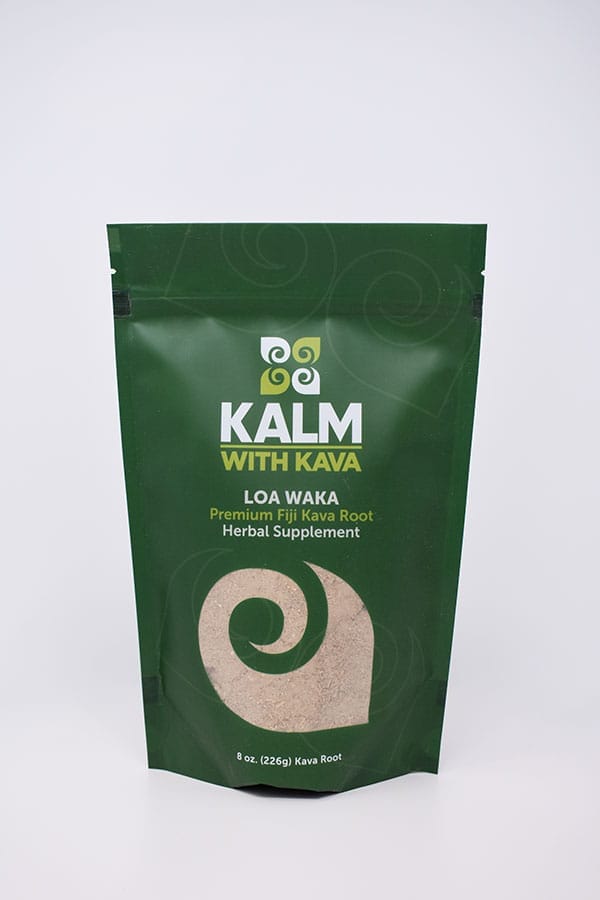


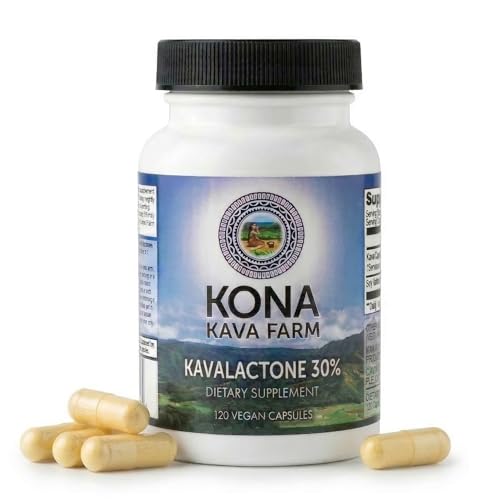
As an Amazon Associate we may earn from qualifying purchases, at no cost to you. 21+.
Why standard panels don't see kava
A drug test isn't a general scan of your bloodstream — it's a checklist. Each panel is built to flag a specific, named set of substances, and anything not on that list is invisible to it by design. The common workplace and legal panels are organized around the same families: a 5-panel typically targets THC (marijuana), cocaine, opiates, amphetamines, and PCP; a 10-panel adds substances like benzodiazepines, barbiturates, methadone, and others. The DOT panel used for federally regulated safety-sensitive roles is built around a comparably fixed federal list.
Kava is nowhere on those lists, and the reason is chemical. The active compounds in kava root are kavalactones — a class of molecules structurally unrelated to amphetamines, opiates, THC, cocaine, or PCP. The immunoassay antibodies a screen uses are shaped to recognize those target drugs and their close relatives; kavalactones don't fit those shapes, so a routine panel has no mechanism to register them. For a panel to detect kava, someone would have to specifically build it to look for kavalactones — which standard panels do not.
| Test | What it targets | Detects kava? | Detects kratom (mitragynine)? |
|---|---|---|---|
| 5-panel | THC, cocaine, opiates, amphetamines, PCP | No | No |
| 10-panel | The 5-panel list plus benzodiazepines, barbiturates, methadone and others | No | No |
| DOT panel | A fixed federal list for safety-sensitive roles | No | No |
| Dedicated kratom panel | Mitragynine and 7-hydroxymitragynine | No | Yes; this is the blend trap |
| Specialized kavalactone testing | Kavalactones, by deliberate order | Yes, if specifically ordered | Not its target |
| Confirmatory GC-MS / LC-MS/MS | Precise identification after a presumptive screen | Distinguishes kavain from an amphetamine | Identifies what is actually present |
The one documented lab quirk — and why it usually resolves
There's exactly one piece of this you should understand rather than worry about. Kava forums sometimes trade anecdotes about kava causing a "false positive," and most of those stories are just that — anecdote, unverified and untraceable. But there is a real, documented finding underneath the noise, and it's worth knowing precisely.
A peer-reviewed case report published in the Journal of Analytical Toxicology in 2022 (Madhavaram, Patel & Kyle) described three patients whose urine produced a false-positive on an amphetamine-type immunoassay screen. Follow-up testing by gas chromatography–mass spectrometry (GC-MS) found no amphetamines at all — what it found instead was kavain, one of the kavalactones in kava, which the authors showed cross-reacted with that particular amphetamine screening reagent. The authors reported it as the first such documented case of kavain interference with an amphetamine immunoassay.
Two things matter about how that reads in practice. First, this is an initial screen phenomenon, not a confirmed result — and that distinction is the whole point of how testing is structured. A presumptive positive on an immunoassay is supposed to be sent for confirmatory testing (GC-MS or LC-MS/MS), and in the documented case, confirmation is exactly what cleared it: the precise method found kava, not amphetamine. Second, it was reported as a notable, novel finding precisely because it's uncommon — not a routine outcome you should expect.
Specialized testing — the "if someone pays for it" asterisk
Here's the nuance that keeps the honest answer honest: a laboratory can test for almost anything. The reason kava doesn't show up isn't that it's undetectable — kavalactones are perfectly measurable with the right method — it's that no standard panel is configured to look. Specialized toxicology testing capable of detecting kavalactones exists, but it lives in research, clinical, and bespoke contexts, and it has to be deliberately ordered. It is not something a default employment or DOT panel does, and it's not something a lab tacks on for free.
What this means in plain terms: the question isn't really "can kava be detected?" — almost any substance can be, given a targeted test and a reason to run it. The useful question is "is my specific test looking for it?" — and for the panels nearly everyone actually encounters, the answer is no. Treat a specialized kava-targeting screen as a rare, intentional exception rather than a baseline risk.
Policy beats chemistry: the military and employer angle
This is the part people miss, because it has nothing to do with whether a test can detect kava. An organization can prohibit kava by policy regardless of testing. The clearest example is the military. In 2024, the U.S. Department of Defense added kava to its Prohibited Dietary Supplement Ingredients list, maintained through its Operation Supplement Safety (OPSS) program, citing concerns about sedation, readiness, and operational performance rather than any claim that kava behaves like a scheduled drug. Coverage and command guidance have described kava as a substance service members are directed to avoid unless authorized by a DoD health-care provider, with the branches taking a consistently restrictive stance.
Timeline, and the real trap: blends with kratom
For the practical timeline: kavalactones are fat-soluble and processed largely by the liver. A commonly cited elimination half-life is around 9 hours, and most people clear kava within roughly 24–48 hours, with the exact window shifting based on dose, how regularly you drink, body composition, and liver function. Because standard panels don't test for kava at all, this timeline is mostly about how long effects and the compounds themselves linger — not about "beating" a screen that was never looking.
Now the trap, and it's the most important practical point on this page: kava is not the only botanical sold in this space, and the others don't all test the same. A number of "feel-good," "tonic," or "euphoric" products are sold near kava, marketed in similar language, or blended together — and some of them contain kratom. Kratom is a different plant with a different molecule, and unlike kava, its marker compound mitragynine (and its metabolite 7-hydroxymitragynine) can be detected — not on a routine 5- or 10-panel, but on dedicated kratom panels that some employers and programs specifically order. So someone can correctly believe "kava doesn't show up," drink a kava-and-kratom blend, and run into a kratom-targeted test.
Ready to try one? Start with our verified picks
Wherever this guide landed you, these are the kavas our lab-report standard keeps ranking on top. Live price check on each.
As an Amazon Associate we may earn from qualifying purchases, at no cost to you. 21+.
Key terms
- 5-panel / 10-panel test
- The common workplace and legal urine screens, built around a fixed list of drug families. A 5-panel typically targets THC, cocaine, opiates, amphetamines, and PCP; a 10-panel adds substances such as benzodiazepines, barbiturates, and methadone. Kava is on neither — kavalactones aren't an analog of any target on the list.
- Kavalactone half-life
- How long it takes the body to eliminate half of the active kava compounds. A commonly cited figure is about 9 hours; combined with individual factors, that generally puts full clearance in the 24–48 hour range. Half-life governs how long the compounds linger, not whether a standard panel detects them (it doesn't).
- Metabolite
- A byproduct your body creates while breaking a substance down. Drug tests often look for a drug's metabolites rather than the parent compound, because they persist longer. For kava, the relevant point is that no standard panel is configured to look for kavalactones or their metabolites at all.
- Specialized panel
- A non-standard, deliberately ordered test that targets a substance outside the routine menu. Kavalactones are detectable with the right specialized method, but such testing has to be specifically requested and is uncommon — it's a rare, intentional exception, not part of a default screen.
- Mitragynine
- The primary alkaloid in kratom — a different plant from kava — and the marker that dedicated kratom panels look for, along with the metabolite 7-hydroxymitragynine. Unlike kava, kratom CAN be detected by a test specifically built for it. This is why kava-and-kratom blends are the real testing trap.
Questions, answered
Will kava make me fail a 10-panel drug test?
Not by design. A 10-panel screens for a fixed set of drug families — THC, cocaine, opiates, amphetamines, PCP, and additions like benzodiazepines, barbiturates, and methadone — and kava is on none of them, because kavalactones aren't chemically related to those targets. The one documented caveat is a peer-reviewed 2022 case in which kavain (a kavalactone) produced a false-positive on an amphetamine immunoassay screen; confirmatory GC-MS testing found kava, not amphetamine, and resolved it. That was reported as a notable, uncommon finding, and confirmatory testing is exactly what's designed to catch it. This isn't medical or legal advice.
Can I use kava in the military?
This is a policy question, not a testing one — and the policy is restrictive. In 2024 the U.S. Department of Defense added kava to its Prohibited Dietary Supplement Ingredients list (maintained through Operation Supplement Safety), citing sedation and readiness concerns rather than any claim that kava is a scheduled drug. Service members have generally been directed to avoid it unless authorized by a DoD health-care provider, and the branches have taken a consistent stance. The takeaway: a substance can be prohibited by policy even when no routine panel screens for it. Follow current DoD/OPSS guidance and your command's direction; we can't give legal advice, and policies change, so verify the current official source.
Does kava affect a CDL or DOT drug test?
The DOT panel used for federally regulated safety-sensitive roles is built around a fixed federal drug list, and kava is not on it — so a DOT screen is not testing for kavalactones. That said, "not on the test" is different from "clear to use on the job": kava is a relaxant, safety-sensitive duties have their own impairment and fitness-for-duty rules, and an employer can set policy beyond what the panel detects. If you hold a CDL or work a DOT-regulated role, check your employer's specific policy rather than assuming the panel is the whole story. Not legal advice.
How long does kava stay in my system?
A commonly cited elimination half-life for kavalactones is about 9 hours, and most people clear kava within roughly 24–48 hours — though the exact window depends on how much you drank, how often you drink, body composition, and liver function, since kavalactones are fat-soluble and liver-processed. Keep the context in mind, though: because standard panels don't screen for kava in the first place, this timeline is really about how long the effects and compounds linger, not about clearing a test that was never looking for it.
Can a kava blend make me fail a drug test?
Pure kava, no — but a blend is a different question, and this is the single most important thing on this page. Some "feel-good" or "tonic" products sold near kava, or blended with it, contain kratom. Kratom's marker compound, mitragynine, CAN be detected — not on a routine 5- or 10-panel, but on dedicated kratom panels that some employers specifically order. So someone can be entirely right that "kava doesn't show up," drink a kava-and-kratom blend, and still run into a kratom-targeted test. If you drink blends, read the full ingredient label; a blend doesn't necessarily behave like kava. We cover why in our feel free review.
Should I tell my employer I drink kava?
We can't give you legal or HR advice, and whether to disclose is a personal call that depends on your workplace, role, and policies. What we can offer is the factual frame: standard panels don't screen for kava, so there's usually nothing on the test to explain — but two situations make disclosure worth considering. One, if you take a screen where an initial-screen flag (like the documented amphetamine-immunoassay quirk) could carry consequences before confirmatory testing, mentioning recent kava use to the testing authority in advance can pre-empt confusion. Two, if your employer has a supplement or fitness-for-duty policy that addresses kava directly, that policy — not the test — governs. When in doubt, ask HR or qualified counsel.
Keep reading
Is Kava Safe?
The honest safety picture — what the research supports, the real cautions, and how to drink responsibly.
feel free Review
The kava-and-kratom blend everyone asks about — and exactly why a blend isn't the same as kava for a drug test.
Kava Dosage Guide
How much to drink, how it builds, and how the timeline of effects actually works.