Our Pick: Root of Happiness
Check PriceBest Value Kava (2026): The Most Kavalactones Per Dollar, Ranked
"Cheapest" and "best value" are not the same thing. We ranked the kava shelf on the only metric that lets you comparison-shop honestly — cost per 100 mg of disclosed kavalactones, plus cost per session for powders. Concentrate wins on raw efficiency, a pound of root wins on per-cup cost, and the no-number bargains get named for what they are: mysteries, not deals.
By The Kava Review DeskUpdated 2026-06-13~8 min read Ranked by the lab reportHow we research
 Best Overall
Root of Happiness KavaShot
Root of Happiness · 4.7
$6.50 / shot · $72.00 / case of 12 ($6.00/shot)
 Best Value
Wakacon Waka Kava Powder (16 oz)
Wakacon · 4.5
$64.99 / 16 oz (~$4.06/oz · ≈$8.12 per 4-cup batch)
If you want the most kava for your money, the overall value winner in 2026 is the Root of Happiness KavaShot: a 2 oz concentrate that discloses 500 mg of kavalactones for $6.00 a shot by the case, which works out to roughly $1.20 per 100 mg — the cheapest disclosed kavalactones we've found anywhere in kava. But "most kava per dollar" and "cheapest checkout" answer two different questions, and the cheapest way to drink kava every single day isn't a shot at all — it's a pound of traditional noble root, where the per-cup cost falls below what any can or shot can touch. This guide ranks both, and it ranks them on numbers, not stickers.
Here's the distinction the whole category would rather you not draw: the lowest sticker price is not the best value, and the difference between them is a disclosed kavalactone number. A $29.94 six-pack of cans is a low sticker; a $49.99 twelve-pack that tells you it holds 100 mg of kavalactones per can is the better value, because you can actually do the math. Worse, a $30 case of cans that discloses no kavalactone figure at all isn't a bargain — it's a coupon for a mystery. So we rank value the way we rank everything on this site: by cost per 100 mg of disclosed kavalactones, and for powders (which rarely print a flat mg-per-serving) by cost per session on a stated prep assumption. Products that won't print a number get reviewed for their value caveats, but they cannot be ranked on the metric. No disclosed number, no value ranking — full stop.
Below you'll find the best value in each format — the cheapest way to get kava overall (traditional powder), the best value ready-to-drink can, the best value shot, and the best value no-prep option — with the arithmetic shown every time, drawn from the same verified prices and label disclosures the rest of our guides are built on (checked June 2026). This is a value ranking, not a paid placement: nobody bought a slot here, and the picks are ordered by what the math says. The usual ground rules apply — kava is for adults, it can cause drowsiness, don't drive after drinking it, don't mix it with alcohol, and if you take medications or are pregnant, talk to your doctor first. None of this is medical advice.
The short version
- Best value overall (most kavalactones per dollar): the Root of Happiness KavaShot — 500 mg of kavalactones disclosed in a 2 oz shot for about $6.00 by the case, or roughly $1.20 per 100 mg, the cheapest disclosed kavalactones we've found.
- Cheapest way to drink kava daily: traditional noble powder. A pound of Wakacon Waka at $64.99 brews about eight 4-cup batches — roughly $8.12 a batch, or pennies per cup, far below any can or shot per serving.
- Best value can with a real number: MELO at $4.17 per 100 mg — the only major can that prints a flat 100 mg kavalactone figure, which is the entire reason it can be ranked at all.
- Cheapest sticker is not best value: a low price with no disclosed kavalactone number can't be ranked on our metric — we review it, flag the caveat, and refuse to invent a figure to fill the column.
- We rank by kavalactones, not price, because kavalactones are the thing you're actually buying — flavor and fizz are just delivery. A disclosed milligram count is to kava what ABV is to beer.
At a glance
| Pick | Format | Kavalactones per serving | Cost per 100 mg KL | Best value for | Check price |
|---|---|---|---|---|---|
| Root of Happiness KavaShot | 2 oz concentrate shot | 500 mg (disclosed) | $1.20–$1.30 — cheapest disclosed anywhere | Most kavalactones per dollar, on the go | Check Price |
| Wakacon Waka 16 oz | Traditional powder (1 lb) | Not a flat mg figure (Fijian noble root) | Compared per session: ≈$8.12 / 4-cup batch | Cheapest cost per session — a pound of root | Check Price |
| MELO Sparkling Kava | 12 oz sparkling can | 100 mg (disclosed) | $4.17 | Best value can with a disclosed number | Check Price |
| TRU KAVA Tropical Citrus | 12 oz can (root juice) | 65–75 mg (published average) | $6.65–$7.68 (~$7.13 midpoint) | Cheapest sticker entry into cans ($4.99/can) | Check Price |
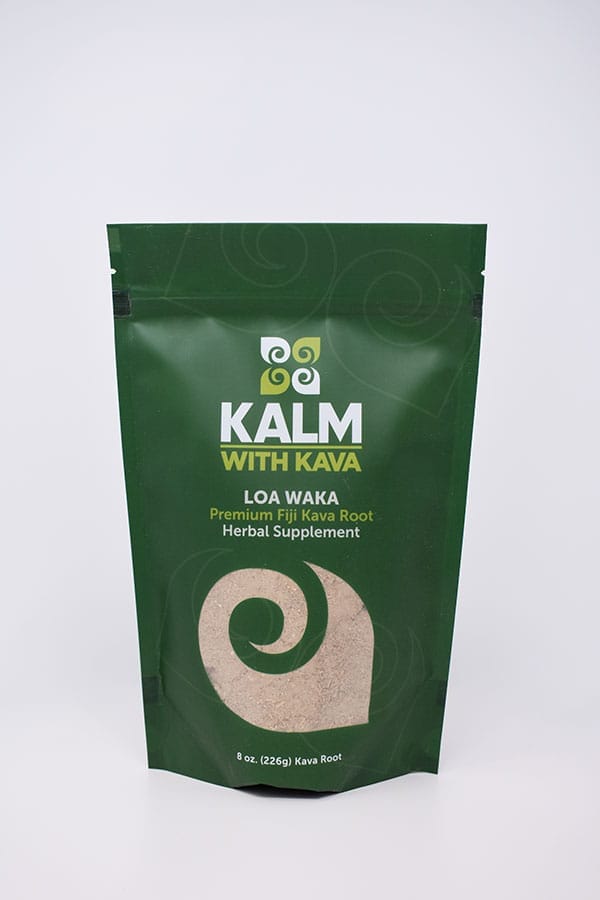
| Kalm with Kava Loa Waka | Traditional powder (8 oz) | Not a flat mg figure (named Fijian noble) | Compared per session: ≈$10.00 / 4-cup batch | Best value traditional grind for newcomers | Check Price |
| Root of Happiness Superior Vanuatu | Traditional powder (8 oz) | 6.2% total lactones (425 chemotype) | Compared per session: ≈$8.75 / 4-cup batch | Best value disclosed-chemotype powder | Check Price |
Best value by format, 2026 — prices and label disclosures reused from our verified per-category guides (June 2026). Cost per 100 mg is computed only from disclosed kavalactone numbers; powders are compared on cost per ~4-cup batch instead.
Root of Happiness KavaShot
Root of Happiness
500 mg of disclosed kavalactones for $6 a shot — about $1.20 per 100 mg, the cheapest disclosed kavalactones anywhere.
Our verdict: Nothing in kava prices its active compound lower. The Root of Happiness KavaShot discloses a flat 500 mg of kavalactones in a 2 oz bottle for $6.50 single, or $6.00 by the case — about $1.20–$1.30 per 100 mg, three to four times cheaper per milligram than the best disclosed can. It's pure kava (no kratom, no melatonin) from a maker that has done nothing but concentrates for over a decade. If your only question is "most kavalactones per dollar," this is the answer.
Lab report: Discloses 500 mg kavalactones per 2 oz shot, from Polynesian Gold noble Vanuatu kava — a flat number, not an extract weight. A 12-year concentrate specialist; we'd still like a public per-batch COA library to match the strong label figure.
Value, defined strictly, is cost per unit of the thing you actually want — and the thing you want in kava is kavalactones. On that definition, Root of Happiness's KavaShot is the most efficient kava sold. It states 500 mg of kavalactones in a 2 oz bottle — a clean flat number, not the "1,000 mg extract" hand-waving you see on lesser labels — drawn from the brand's Polynesian Gold noble Vanuatu kava. Run it: $6.50 a shot is $1.30 per 100 mg, and the $72.00 case of twelve drops that to $6.00 a shot, or $1.20 per 100 mg.
That efficiency is why this, not a can, is our overall value winner — but it's worth being precise about what "best value overall" means here. It's the lowest cost per 100 mg of disclosed kavalactones, the cleanest apples-to-apples figure in kava. It is not the lowest cost per cup of a daily kava habit — that title goes to a pound of traditional root, covered below. If you want a real, portable dose at the best per-milligram price and you don't want to own a strainer bag, this is the pick. Root of Happiness recommends a sublingual approach (hold it briefly under the tongue), the tropical mango sands the peppery edge off the root, and the brand's decade-plus in concentrates earns real benefit of the doubt.
What keeps it from being untouchable is paper, not price: there's no downloadable per-batch COA library to sit next to that excellent 500 mg disclosure. A brand this far ahead on the label should close the gap on the lab sheets. For the full shot shelf — including the lab-verified runner-up — see our best kava shots roundup.
Who should buy it
Buy the Root of Happiness KavaShot if your single deciding factor is most kavalactones per dollar — it's the cheapest disclosed kavalactones on this site and a pure-kava formula from a concentrate specialist. It's the right pick for the experienced drinker who wants a real dose on the go, and the case of twelve is the smart standing order once you know you like it.
What we don't like
No public, downloadable per-batch COAs — the 500 mg disclosure is excellent, but we want the lab sheets posted, not just implied by reputation. It's an extract rather than pressed root juice, so full-spectrum purists should look elsewhere, and mango is the only flavor we found. And while it's the cheapest per milligram, it's not the cheapest per daily cup — that's traditional powder.
- Kavalactones per shot
- 500 mg (disclosed by the brand)
- Cost per 100 mg KL
- $1.20–$1.30 — cheapest disclosed kavalactones on this site
- Size / format
- 2 oz shot; sublingual-friendly; pure kava extract (no kratom)
- Source
- Polynesian Gold noble kava, Vanuatu
- Pricing
- $6.50 single · $72.00 case of 12 ($6.00/shot)
What we like
- Cheapest disclosed kavalactones anywhere — roughly $1.20 per 100 mg by the case
- A flat 500 mg disclosure, not an extract weight
- Pure kava: no kratom, no melatonin, no second active
- Portable, sublingual-friendly, no strainer bag required
Worth noting
- No public per-batch COA library to back the label number
- Cheapest per milligram, but not per daily cup — see traditional powder
Wakacon Waka Kava Powder (16 oz)
Wakacon
A full pound of verified-noble Fijian root — the lowest cost per session of any format, if you'll work a strainer bag.
Our verdict: If "value" means the cheapest way to drink kava every day, buy a pound of root. Wakacon's $64.99 16 oz bag of Fijian noble Waka brews about eight 4-cup batches — roughly $8.12 a batch, which spread across four cups is pennies per serving, well under any can or shot. The catch is the strainer bag: this is the labor format. But for a standing daily habit, nothing beats a pound of verified-noble root on cost.
Lab report: Every batch tested at a US lab accredited to ISO/IEC 17025:2017; kavalactone content and nobility verified in both Fiji and the USA — the most specific lab-credential claim across our guides.
The overall value winner above is the cheapest per milligram. This is the cheapest per cup — and for a daily drinker, that's the number that actually empties your wallet. A pound of traditional kava root is the format the rest of the shelf is quietly more expensive than. Wakacon's Waka 16 oz is Fijian noble lateral root — the part of the plant that carries the highest kavalactone load — sold by the full pound at $64.99, which sounds like a lot until you divide it by how many sessions it makes.
What makes it a good value and not just a cheap one is that Wakacon doesn't cut the corner the cheap-bag trade is built to cut. It cites the most specific testing credential across our powder coverage: every batch checked at a US lab accredited to ISO/IEC 17025:2017, with nobility confirmed in both Fiji and the USA. A named accreditation standard beats a generic "lab-tested" every time — and the whole risk of buying cheap kava powder is getting sold under-tested or tudei root, which this guards against.
The honest cost of this value is labor and taste. Waka is a traditional grind, so every batch means a strainer bag and about ten minutes of kneading — see our how-to-make-kava guide. And lateral-root Waka extracts dark, strong, and frankly bitter; potency-seekers love it, newcomers may find it a steep first pour. If you want a gentler, balanced powder to start, the Kalm with Kava pick below is the friendlier on-ramp. But on pure cost per session, the pound of root wins.
Who should buy it
Buy the Wakacon pound if you drink kava regularly and want the lowest possible cost per session — and you don't mind a strainer bag and ten minutes of kneading per batch. It's the standing order for the daily traditionalist who wants strong, verified-noble Fijian Waka and the cost-per-cup that only a full pound of root delivers.
What we don't like
The value is real but the labor is too: traditional grind means a strainer bag every single batch, so it's the wrong pick if convenience is your priority. Waka's lateral-root bitterness and intensity make it a hard first kava, and at $64.99 the upfront sticker is the highest here even though the per-session math is the lowest. Wakacon cites its accredited lab more prominently than it posts per-batch COAs for download.
- Origin / cultivar
- Fijian noble — Waka (lateral root)
- Grind
- Traditional grind (strainer-bag prep)
- Price / size
- $64.99 / 16 oz (~$4.06/oz)
- Cost per session
- ≈$8.12 per ~4-cup batch (2 oz prep) — lowest per-serving cost in this guide
- Testing
- Every batch at an ISO/IEC 17025:2017-accredited US lab; nobility verified in Fiji and USA
What we like
- Lowest cost per session of any format — a full pound brews ~8 batches
- Most specific testing credential here: a named ISO/IEC 17025:2017 accreditation
- Nobility verified in both Fiji and the USA — value without cutting the safety corner
- Genuine strong Fijian Waka for potency-seekers
Worth noting
- Traditional grind: strainer bag and ~10 minutes of kneading every batch
- Waka's bitterness and intensity make it a tough first kava
- Highest upfront sticker ($64.99), even though per-session cost is lowest

MELO Sparkling Kava
MELO
The only major can that prints a flat 100 mg kavalactone number — which is the only reason it can be ranked on value at all.
Our verdict: Among ready-to-drink cans, value isn't really a contest — it's a disclosure test, and MELO is one of only two major cans that passes. It states a flat 100 mg of kavalactones per 12 oz can, which at $4.17 a can works out to exactly $4.17 per 100 mg — the best disclosed value in the entire can category. The no-number cans can't be compared to it, because they won't print the figure that would let you.
Lab report: Discloses 100 mg kavalactones per can — the cleanest potency number on the can shelf. Vanuatu farm-sourced; lab testing claimed, though we'd like to see a public COA library.
The "best value can" question is really the "which cans can even be ranked" question — and for most of the shelf the answer is: they can't. MELO Sparkling Kava is the can that does the one thing value-shopping requires: it prints the number. 100 mg of kavalactones per 12 oz can, stated as plainly as a brewery states ABV, from kava grown on the brand's own Vanuatu farm. At the $49.99 twelve-pack that's $4.17 a can — and because the disclosure is a clean round 100 mg, the cost per can is also the cost per 100 mg.
This is the cleanest illustration of the whole guide's thesis. There are cans with a lower sticker than MELO's $4.17 — a $29.94 six-pack works out to a lower per-can entry — but a lower sticker on a can that won't tell you its kavalactones isn't a better value, it's a cheaper unknown. MELO costs a touch more per can than the bargain-bin sticker and is dramatically better value, because you can actually compute what you're getting. That's the difference between cheap and valuable in one product.
As a drink it earns the fridge space: three zero-sugar, zero-calorie tropical flavors, a $19.99 four-pack that makes the first try cheap, and the relaxed, sociable ease many people reach for as an alcohol alternative. The gap we'd close is the same one almost every brand here has: post a downloadable per-batch COA library to back the excellent label number. The full can shelf — and the three cans that won't print a figure — is in our best kava drinks roundup.
Who should buy it
Buy MELO if you want a ready-to-drink can and you comparison-shop by the numbers — it's the only major can whose value math is fully checkable, and it happens to also be the best disclosed value in the category. It's the right pick for the sober-curious drinker replacing a beer and for anyone tired of guessing what's in the can.
What we don't like
No public, downloadable COAs — the 100 mg disclosure is excellent, but we want the batch paperwork posted, not just claimed. Per can it costs more than a no-number bargain six-pack (which is exactly the trap this guide warns against, but worth naming). And the flavor lineup is only three deep, all tropical-adjacent.
- Kavalactones per can
- 100 mg (disclosed by the brand)
- Cost per 100 mg KL
- $4.17 at list price — best disclosed value in the can category
- Can size / format
- 12 oz sparkling, zero sugar, zero calories
- Source
- Kava root from the brand's farm in Vanuatu
- Pack pricing
- $19.99/4-pack · $49.99/12-pack
What we like
- The only major can with a flat disclosed kavalactone number (100 mg)
- Best disclosed value in the can category at $4.17 per 100 mg
- Farm-grown Vanuatu kava, zero sugar, zero calories
- $19.99 four-pack makes the first try low-commitment
Worth noting
- No public COA library to back the label claim
- Costs more per can than a no-number bargain six-pack

TRU KAVA Tropical Citrus
TRU KAVA
The lowest sticker per can in the category — and a published number, so it's a real value and not a mystery one.
Our verdict: TRU KAVA is the cheapest way to start drinking kava cans — $29.94 for a six-pack, $4.99 a can, the lowest sticker in the category — and crucially, it earns the spot honestly. The brand publishes a 65–75 mg kavalactone average, so this is a low sticker with a real number behind it, not a low sticker hiding one. That pencils out to $6.65–$7.68 per 100 mg, pricier per milligram than MELO but the friendliest entry cost into the format.
Lab report: Publishes a 65–75 mg kavalactone average per serving and says every batch is third-party tested for all known contaminants; per-batch COAs aren't posted publicly.
Sometimes the value question is simply "what's the cheapest way in" — and for cans, this is it, with the honesty intact. TRU KAVA Tropical Citrus carries the lowest per-can sticker on the can shelf at $4.99 ($29.94 for six), and unlike the bargain cans we won't rank, it backs the price with a published figure: a 65–75 mg kavalactone average per serving. It's also the only can in our coverage built from actual pressed kava root juice rather than extract, which traditionalists value in its own right.
This is the worked example of the cheapest-vs-best-value split. TRU KAVA wins "cheapest sticker entry," not "best value can" — MELO is the better value per disclosed milligram. But TRU KAVA is the better cheap, because its low price comes with a disclosed figure, where the genuinely lowest-sticker cans on the wider market disclose nothing rankable. If you're spending the least to try the format, spend it on the can that tells you what's in it.
As a drink, root juice means it tastes like kava — earthy and peppery under the citrus, with a fast tongue-tingle. The 65–75 mg figure is a brand-wide average rather than a per-batch label number, the supporting COAs aren't posted for download, and the checkout pushes subscriptions hard (watch your cart). Full context in our best kava drinks guide.
Who should buy it
Buy TRU KAVA if you want the lowest-cost way to try canned kava without buying a mystery — it's the cheapest sticker on the shelf and still publishes a real kavalactone average, plus it's the only can made from pressed root juice. It's the pick for the curious first-timer and the traditionalist who wants real kava flavor in a can.
What we don't like
Cheapest sticker doesn't mean cheapest per milligram — MELO is the better value by that measure. The 65–75 mg figure is a brand average, not a per-batch label number, and the COAs behind the testing claim aren't posted. The rooty taste won't suit seltzer drinkers, and the subscription-forward checkout requires attention.
- Kavalactones per can
- 65–75 mg (published brand average per serving)
- Cost per 100 mg KL
- $6.65–$7.68 ($7.13 at the midpoint)
- Can size / format
- 12 oz carbonated, kava root juice base
- Sticker price
- $4.99 per can — lowest in the can category
- Pack pricing
- $29.94/6-pack; continental US shipping only
What we like
- Lowest per-can sticker in the category at $4.99
- Backs the low price with a published 65–75 mg kavalactone average
- Only can in our coverage made from pressed kava root juice, not extract
- Specific testing claim: every batch, third-party, all known contaminants
Worth noting
- Cheapest sticker, but not the cheapest per disclosed milligram (MELO wins that)
- Potency is a brand average, not a per-batch label number; COAs not posted
- Earthy taste and subscription-heavy checkout

Kalm with Kava Loa Waka (Medium Grind)
Kalm with Kava
A named, balanced Fijian noble that's worth a small premium per session for a beginner who won't be scared off.
Our verdict: Best value isn't always cheapest per session — for a newcomer, it's the bag that delivers traditional-powder economics without scaring you off the practice. Kalm with Kava's Loa Waka is a named Fijian noble marketed as "balanced and strong," which in practice is a rounder, friendlier pour than a straight Waka. At ≈$10.00 per 4-cup batch it's the priciest traditional grind here, but for someone learning the format, a forgiving, approachable noble is value the cheapest bitter Waka can't match.
Lab report: 100% noble Fijian kava, brand-stated lab-tested; Loa Waka is a named cultivar marketed as balanced and strong. Sold in both medium grind and micronized; testing claimed, per-batch COA library thinner than the leaders'.
The cheapest powder per session is also the most punishing to a beginner — and a bag you abandon after one bitter batch has terrible value, whatever the math said. That's the case for Kalm with Kava's Loa Waka as the newcomer's value pick. It's a named Fijian noble the brand describes as "balanced and strong," which translates to a more rounded, agreeable profile than the bracing lateral-root Waka in our cost-per-session winner above. It's 100% noble, lab-tested per the brand, and usefully sold in both traditional medium grind and a micronized instant — so you can pick your prep without switching brands.
As a drink it earns the "balanced" billing: it extracts cleanly, drinks earthy and peppery without the aggressive bitterness of a straight Waka, and lands for most people as a relaxed, sociable ease — a sensible first traditional kava. Kalm with Kava has sold noble powders and concentrates for years (it's the same house behind a seltzer we cover in our drinks guide), and that longevity is a genuine trust signal even where the public COA library is thinner than the category leaders'.
It's the newcomer's value pick, not the outright value leader. If you already know you like kava and want the lowest cost per session, the pound of Wakacon is the move; if you want the most quantified label, the Root of Happiness powder below prints its chemistry. For a first traditional bag you'll actually finish, this is the one. The whole powder shelf is ranked in our best kava powder guide.
Who should buy it
Buy Kalm with Kava's Loa Waka if you're new to making kava at home and want a named, balanced Fijian noble from an established house — ideally trying the medium grind and micronized of the same kava to learn which prep you prefer. Once you know you're in, the pound of Wakacon is the cheaper standing order.
What we don't like
It's the most expensive traditional grind here at ≈$10 per batch, so it's the newcomer's value pick rather than the outright cheapest. The "100% noble, lab-tested" claim isn't backed by as deep a public COA library as the leaders', and the balanced profile that suits beginners will read as too mild to veterans chasing a heavy Waka.
- Origin / cultivar
- Fijian noble — Loa Waka (named, "balanced and strong")
- Grind
- Medium grind; micronized instant also sold
- Price / size
- ~$39.99 / 8 oz (~$5.00/oz)
- Cost per session
- ≈$10.00 per ~4-cup batch (2 oz prep)
- Testing
- 100% noble, brand-stated lab-tested
What we like
- Named, balanced Fijian noble — the friendliest first traditional kava
- Sold in both medium grind and micronized — pick your prep, same kava
- Established kava house with years of noble-powder track record
- Per-cup cost on par with a can while you learn the cheaper format
Worth noting
- Most expensive traditional grind in the guide at ≈$10 per batch
- "Lab-tested" claimed, but the public COA library is thinner than the leaders'
- Balanced profile reads mild to veterans wanting a heavy Waka

Root of Happiness Superior Vanuatu
Root of Happiness
The rare powder that prints its chemotype and lactone percentage — the closest thing to a value figure a bag of root offers.
Our verdict: Powders rarely let you compute value the way a labeled can or shot does — except this one comes close. Root of Happiness's Superior Vanuatu prints its chemotype (425) and total kavalactone percentage (6.2%), the nearest thing to an ABV figure a bag of root offers. At ≈$8.75 per 4-cup batch it's a premium pour, but it's the best value if what you value is knowing the chemistry of what you're buying — the only powder here you can reason about by the numbers.
Lab report: Publishes chemotype (425) and total kavalactone content (6.2% on Superior Vanuatu) — disclosure almost no competitor matches. Noble Vanuatu cultivars, low-temp dehydrator dried to preserve lactones.
Everywhere else on this site we penalize products that won't print a number. This powder is the one that does — so it earns its own value lane. Root of Happiness Superior Vanuatu publishes its chemotype — 425, a desirable noble configuration — and a total kavalactone content of 6.2%. Almost no one else in the powder category prints a lactone percentage at all. For a value shopper who wants to compare strength per gram rather than trust an adjective, that disclosure is the entire pitch, and it's a strong one.
In the strainer bag it extracts richly and drinks like a properly heady Vanuatu noble — relaxed and sociable for most people, earthy and peppery, with the unmistakable tingle. The brand's Premium Vanuatu ($33/half-pound, 243/245 chemotype, 5.5% minimum lactones) is a slightly gentler, marginally cheaper step down with the same disclose-the-chemistry habit. Either way you're buying the most quantified bag on the shelf.
This rounds out the value map: cheapest per milligram is the shot, cheapest per daily cup is the pound of Wakacon, friendliest first powder is the Kalm with Kava, and best-quantified powder is this. We'd still like downloadable per-batch COAs sitting next to those stated percentages — a number is a claim until the lab sheet backs it — but no competitor tells you more about the chemistry of what's in the bag. Full powder rankings in our best kava powder guide; the science behind the numbers is in what are kavalactones.
Who should buy it
Buy Root of Happiness Superior Vanuatu if you want to shop powder by the chemistry — the chemotype and lactone-percentage disclosures make it the most quantifiable bag on the shelf, the best value for a buyer who refuses to guess at strength. If pure cost per session is your filter, the pound of Wakacon is cheaper; if you're brand-new, the Kalm with Kava is friendlier.
What we don't like
At ≈$8.75 per batch it's roughly double our cost-per-session leader, so it's a connoisseur's value, not a budget one. The stated lactone percentages would land harder with downloadable per-batch COAs beside them. And it's a traditional grind, so the strainer-bag labor is unavoidable.
- Origin / cultivar
- Vanuatu noble — 425 chemotype, 6.2% total kavalactones (Superior)
- Grind
- Traditional grind (strainer-bag prep)
- Price / size
- $35.00 / 8 oz (~$4.38/oz); Premium Vanuatu $33.00 / 8 oz
- Cost per session
- ≈$8.75 per ~4-cup batch (2 oz prep)
- Drying
- Commercial low-temp dehydrator to preserve lactones and oils
What we like
- Publishes chemotype and total kavalactone percentage — the most quantified powder here
- Lets you reason about strength per gram, the closest a powder gets to a value figure
- Low-temp dehydrator drying instead of commodity sun-drying
- Premium Vanuatu option ($33) for a gentler, cheaper step down
Worth noting
- Roughly double the per-session cost of our cost-per-session leader
- Stated percentages would be stronger with downloadable per-batch COAs
- Traditional grind means strainer-bag prep every time
More kava worth comparing
Beyond this guide: the highest-rated kava across every format, kavalactones verified, with a live price check on each.


As an Amazon Associate we may earn from qualifying purchases, at no cost to you. 21+.
Quick shop: every pick
Skip the scroll: the whole lineup, with a live price check on each.
- Root of Happiness KavaShotBest Value OverallRoot of Happiness · $6.50 / shot · $72.00 / case of 12 ($6.00/shot)Check Price
- Wakacon Waka Kava Powder (16 oz)Cheapest Way to Drink Kava DailyWakacon · $64.99 / 16 oz (~$4.06/oz · ≈$8.12 per 4-cup batch)Check Price
- MELO Sparkling KavaBest Value Ready-to-Drink CanMELO · $49.99 / 12-pack ($4.17/can)Check Price
- TRU KAVA Tropical CitrusCheapest Sticker Entry Into CansTRU KAVA · $29.94 / 6-pack ($4.99/can)Check Price
- Kalm with Kava Loa Waka (Medium Grind)Best Value No-Fuss Traditional Grind for NewcomersKalm with Kava · ~$39.99 / 8 oz (~$5.00/oz · ≈$10.00 per 4-cup batch)Check Price
- Root of Happiness Superior VanuatuBest Value Disclosed-Chemotype PowderRoot of Happiness · $35.00 / 8 oz (~$4.38/oz · ≈$8.75 per 4-cup batch)Check Price
How we chose
Cost per 100 mg of disclosed kavalactones is the spine of the ranking, and we only compute it from numbers brands publish themselves. The arithmetic is deliberately boring: the per-serving price (per shot, per can) divided by the kavalactone milligrams the brand discloses, normalized to 100 mg. The Root of Happiness KavaShot states 500 mg per 2 oz shot at $6.00–$6.50, which is $1.20–$1.30 per 100 mg. MELO states 100 mg per 12 oz can at $4.17 a can, which is $4.17 per 100 mg. If a brand discloses only an extract weight — "1,000 mg kava extract," "1500mg Kavalactone Extract" — we do not guess at purity and we do not estimate. The product gets a fair hearing and zero entries in the value column, because a fake number is worse than an honest blank.
Powders get a second metric — cost per session — because they almost never print a flat kavalactone figure. A bag of root is dried, ground kava; its strength lives in the cultivar and the prep, not on a Supplement Facts panel. So we use a stated, checkable assumption from our own how-to-make-kava guide: roughly 2 oz (≈56 g) of medium-grind root makes a standard ~4-cup batch. That makes an 8 oz bag about four batches and a 16 oz bag about eight. Wakacon's $64.99 pound is therefore ≈$8.12 per batch; Kalm with Kava's ~$39.99 half-pound is ≈$10.00 per batch. We show the assumption every time so you can re-run it with your own prep.
Then we sanity-check value against the rest of the picture — testing posture, sourcing, and drinkability — because the cheapest milligram you'll never finish is worth nothing. A pour you won't drink, a powder you won't strain, or a brand that won't show a COA all erode real-world value, and we say so. What we never do: invent test results, fabricate tasting panels, or make health claims. Kava is a centuries-old Pacific social drink that many adults find relaxing; it is not a treatment for anything, it can cause drowsiness, and anyone on medications should check with a doctor before drinking one. That's general caution, not medical advice.
Key terms
- Cost per 100 mg of kavalactones
- Our signature value metric: per-serving price (per can or shot) divided by the brand's disclosed kavalactones, normalized to 100 mg. The kava equivalent of pricing coffee by cost per milligram of caffeine. Only computable when a brand states a real number — which is exactly why we use it.
- Cost per session
- The value metric for powder, which rarely prints a flat kavalactone figure. We divide the bag price by the number of batches it makes, assuming a standard ~2 oz of root per ~4-cup batch. A 16 oz bag is about eight batches; an 8 oz bag about four. The honest unit for comparing powders, because nobody drinks an ounce — they brew a batch.
- Kavalactone %
- The share of a powder's weight that is actual kavalactones (e.g. 6.2%), the closest thing to an ABV figure a bag of root offers. Almost no powder brand prints one; a stated percentage lets you reason about strength per gram instead of trusting an adjective like "strong."
- Disclosed vs. undisclosed
- The line that decides whether a product can be value-ranked at all. A disclosed product prints a real kavalactone milligram count (or, for powder, a percentage). An undisclosed one prints an extract weight or nothing — and an extract weight is not a potency. We rank the disclosed; we review the undisclosed for caveats but never estimate a figure to rank them.
Questions, answered
What's the cheapest kava?
It depends on how you measure "cheapest." The cheapest per disclosed milligram of kavalactones is the Root of Happiness KavaShot at roughly $1.20 per 100 mg — concentrate strips out the packaging and water you'd otherwise pay for. But the cheapest per actual serving for a daily drinker is traditional noble powder: a $64.99 pound of Wakacon brews about eight 4-cup batches, putting a single cup around $2 or less, well under any can or shot. The cheapest sticker to simply try the category is TRU KAVA cans at $4.99 each. Different questions, different answers.
What's the best value kava overall?
By our metric — cost per 100 mg of disclosed kavalactones — the best value overall is the Root of Happiness KavaShot: a 2 oz concentrate disclosing 500 mg of kavalactones for about $6.00 a shot by the case, which is roughly $1.20 per 100 mg, the cheapest disclosed kavalactones we've found anywhere. If "best value" to you means the lowest cost for a daily habit rather than per milligram, the answer shifts to a pound of traditional noble powder, which is cheaper per cup than any ready-made format.
Are cheap kava cans a scam?
Not necessarily a scam, but a low-sticker can with no disclosed kavalactone number is impossible to value-rank, and that's a real problem for a shopper. Many bargain cans disclose only an "extract weight" like "1500mg Kavalactone Extract," which is the weight of an ingredient, not a count of the active compound — so you genuinely cannot tell whether you're getting a deal or paying for mostly water. Our rule is simple: a cheap price with a disclosed number (like TRU KAVA at $4.99 with a published 65–75 mg average) is a real value; a cheap price with no number is a mystery, and we won't rank it as a deal.
What's the cheapest way to drink kava daily?
Traditional noble kava powder, by a wide margin. A standard preparation uses about 2 oz of medium-grind root per ~4-cup batch, so a 16 oz bag makes roughly eight batches. A $64.99 pound of Wakacon works out to about $8.12 a batch — and a batch is four cups, putting a single serving around $2 or less, dropping further with a value-priced bag. Compare a single can ($4.17–$4.99) or shot ($6.00) for one serving. The trade is labor: powder needs a strainer bag and about ten minutes of kneading per batch, which our how-to-make-kava guide walks through.
Is powder really cheaper than cans?
Yes, per serving, and it isn't close. A pound of traditional powder brews around eight 4-cup batches — thirty-plus cups of kava — for the price of roughly a dozen cans. On a per-cup basis, powder runs around $2 or less while a single can is $4.17–$4.99 for one drink that also carries a lower disclosed kavalactone dose. The catch is convenience: cans and shots cost more per serving precisely because you're paying for no preparation, a shelf-stable package, and a flavor you'll actually choose. If cost per cup is your priority and you don't mind a strainer bag, powder wins every time.
Why rank kava by kavalactones instead of price?
Because kavalactones are the thing you're actually buying — they're the active compounds in kava root, and flavor, fizz, and packaging are just delivery vehicles. Ranking by sticker price alone rewards the brand that sells you the least kava for the lowest number, which is backwards. A disclosed kavalactone count is to kava what ABV is to beer or caffeine content is to an energy drink: the figure that makes honest comparison possible. So we rank by cost per 100 mg of disclosed kavalactones (and cost per session for powder), and the products that won't disclose a number can't be ranked on value at all — only reviewed for what their labels do and don't say.
Keep reading
Best Kava Drinks
The full canned-kava roundup — every major 12 oz can ranked by cost per 100 mg of kavalactones.
Best Kava Powder
Traditional and micronized root, ranked on stated cultivar, COA habit, and honest cost per session.
What Are Kavalactones?
The science behind the number we rank on — what kavalactones are and why a disclosed count matters.