Our Pick: Bula Kava House
Check PriceThe Best Kava Powder (2026): Traditional & Micronized, Ranked
If you want shell-strength kava at home, the bag of root is where it starts — and the bag is also where the sourcing claims get loosest. We ranked the major traditional and micronized kava powders on four things that actually matter: a stated origin and cultivar, a real lab-testing habit, honest cost-per-session math, and grind quality. Here's the shelf, ranked, with the COA paper trail checked.
By The Kava Review DeskUpdated 2026-07-26~9 min read Ranked by the lab reportHow we research
 Best Overall
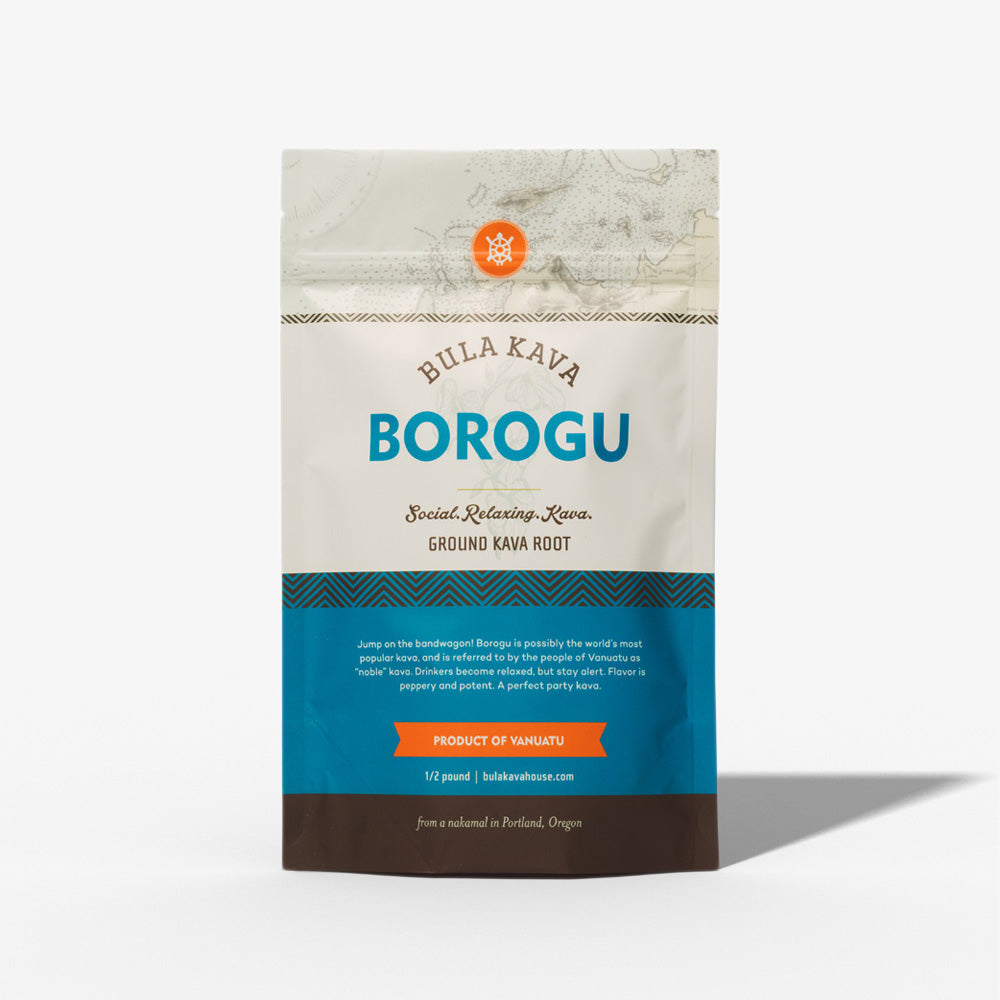
Borogu Traditional Medium Grind
Bula Kava House · 4.7
from $17.60 / 8 oz (~$2.20/oz · ≈$4.40 per 4-cup batch)
 Upgrade Pick
Wakacon Waka Kava Powder
Wakacon · 4.5
$64.99 / 16 oz (~$4.06/oz · ≈$8.12 per 4-cup batch)
The best kava powder of 2026 is Bula Kava House's Borogu, from $17.60 per half pound: a named noble Vanuatu cultivar with a posted Certificate of Analysis for every current product, and the lowest cost per session on this shelf at roughly $4.40 per 4-cup batch (~$2.20/oz). Updated July 2026. If you shop by the chemistry instead, Root of Happiness Superior Vanuatu ($35 per half pound) prints the most quantified label in the category, a 425 chemotype at 6.2% total kavalactones. Here is why disclosure decides the ranking: buying a kava drink in a can, you're trusting a label; buying a bag of kava root powder, you're trusting a supply chain. A powder is just dried, ground kava root, which means everything that matters about it happened before it reached the bag: which cultivar was grown, which island it came from, whether it's a noble kava bred for everyday drinking or a cheaper tudei variety, and whether anyone ran it through a lab before it shipped. None of that is visible in a tan powder. The only way to know is whether the brand tells you plainly, in writing, and then backs the telling with a certificate of analysis. So that's what we ranked on.
Our four criteria, in order of how much they move the ranking: a stated origin and cultivar (does the brand name the kava — Borogu, Loa Waka, a specific Vanuatu or Fijian noble — or just say "premium kava"?); a lab-testing and COA practice (does it post certificates of analysis, provide them on request, or merely claim "noble, lab-tested" with nothing to download?); honest cost (per ounce, and a per-session estimate we compute from a stated prep assumption); and grind quality (traditional medium grind for strainer-bag prep versus micronized instant that dissolves whole). We will not rank a powder above one that discloses more, on price alone. The brand that names its cultivar and posts its COA beats the cheaper bag that won't — every time.
Everything below was verified against the brands' own product pages and listings in June 2026 — prices, pack sizes, origin and cultivar claims, grind type, and the exact testing language each brand uses. Where a brand publishes something genuinely rigorous — a chemotype number, a total-kavalactone percentage, an ISO-accredited lab — we say so and reward it. Where a brand leans on "noble" and "lab-tested" without posting paper, we say that too. The usual ground rules apply: kava is for adults, it can cause drowsiness so don't drive after a session, don't mix it with alcohol, and if you take medications or are pregnant, talk to your doctor first. None of this is medical advice — it's a sourcing audit with a taste note attached.
The short version
- We rank kava powder on four things: a stated origin/cultivar (noble verification), a real lab-testing/COA habit, honest cost per ounce AND per session, and grind quality — not on price alone.
- Bula Kava House is our Best Overall: it publishes a Certificate of Analysis for every current product and names the cultivar and island, with Borogu medium grind starting around $17.60 per half-pound (~$2.20/oz).
- Root of Happiness is the pick for buyers who want the most rigorous label in the category — it publishes the chemotype (e.g. 425) and total kavalactone percentage (6.2% on its Superior Vanuatu, $35/half-pound), which almost no one else does.
- Cost per session beats cost per ounce: a standard ~2 oz (≈56 g) prep yields roughly 4 cups, so a $17.60 half-pound is about four batches — call it ~$4.40 per batch, the real unit you should compare.
- Traditional medium grind needs a strainer bag and ten minutes of kneading; micronized kava skips the bag and dissolves whole but tastes muddier and costs more per ounce — pick for your patience, not just your wallet.
At a glance
| Product | Origin / cultivar | Grind | Price | Cost per session | Check price |
|---|---|---|---|---|---|
| Bula Kava House Borogu | Vanuatu noble (Borogu) | Traditional medium grind | from $17.60 / 8 oz (~$2.20/oz) | ≈$4.40 / 4-cup batch | Check Price |
| Root of Happiness Superior Vanuatu | Vanuatu noble (425 chemotype, 6.2% lactones) | Traditional grind | $35.00 / 8 oz (~$4.38/oz) | ≈$8.75 / 4-cup batch | Check Price |
| Wakacon Waka | Fijian noble (Waka / lateral root) | Traditional grind | $64.99 / 16 oz (~$4.06/oz) | ≈$8.12 / 4-cup batch | Check Price |
| Kalm with Kava Loa Waka | Fijian noble (Loa Waka) | Medium grind (micronized also sold) | ~$39.99 / 8 oz (~$5.00/oz) | ≈$10.00 / 4-cup batch | Check Price |
| Kavafied Kava Supreme | Vanuatu noble (blend) | Traditional grind | ~$34.99 / 8 oz (~$4.37/oz) | ≈$8.74 / 4-cup batch | Check Price |
| Kona Kava Farm (powder) | Stated Pacific noble; lighter public COA habit | Micronized / instant | varies by listing | Not cleanly rankable — see review | Check Price |
The 2026 kava powder shelf at a glance — prices, origins, and testing disclosures verified June 2026. Cost per session assumes a standard ~2 oz (≈56 g) prep yielding ~4 cups; see methodology.
Borogu Traditional Medium Grind
Bula Kava House
Named cultivar, named island, and a posted COA for every product — at the best per-session price on the shelf.
Our verdict: Bula Kava House wins because it does the two things we ask of every powder: it names exactly what you're buying — Borogu, the main exported noble cultivar of Vanuatu — and it posts a Certificate of Analysis for every current product. That it's also the cheapest per session here (≈$4.40 per 4-cup batch at the $17.60 half-pound) is almost a bonus. This is the benchmark the rest of the shelf gets measured against.
Lab report: Publishes a Certificate of Analysis for every current product — the strongest COA habit in this guide. Borogu is a named Vanuatu noble cultivar; nobility is verifiable rather than merely asserted.
Our whole ranking rewards the brand that tells you what's in the bag, and Bula Kava House tells you the most. The Borogu medium grind is a single named noble cultivar — Borogu, Vanuatu's principal exported daily-drinking kava — not a "premium blend" hiding its origins. Bula has run as a Portland kava bar since 2011, sources directly from the South Pacific, and, crucially, publishes a Certificate of Analysis for every current product on its site. That last part is rarer than it should be: most brands say "lab-tested," few let you read the lab sheet.
As a drink, traditional medium grind means traditional work: you'll need a strainer bag, warm water, and about ten minutes of kneading to pull the kavalactones out of the root. Borogu rewards it. It's a "heady"-leaning Vanuatu noble that many drinkers describe as relaxed and sociable rather than heavy-legged, with the earthy, peppery base note and brisk tongue-tingle that tell you the kava is real and well-extracted. For someone learning to make kava the traditional way — the way our how-to-make-kava guide walks through — a named, COA-backed, inexpensive noble is exactly the bag to learn on.
Bula's catalog goes deep beyond Borogu — Melo Melo, Nangol Noble, micronized instants — and the COA habit holds across it, which is why it earns the top slot. The one thing to plan around: medium grind is a project, not an instant. If you want kava without a strainer bag, their micronized line (or another brand's) is the move.
Who should buy it
Buy Bula's Borogu if you're learning to make kava traditionally and want a named, lab-documented noble to learn on without overpaying. It's the right first half-pound for anyone who comparison-shops by what's actually disclosed — cultivar, island, COA — and the standing order for traditionalists who'd rather knead a strainer bag than stir an instant.
What we don't like
Medium grind is the most labor-intensive format here — strainer bag and ten minutes of kneading every time — so it's the wrong pick if you want instant. Stock rotates by cultivar and harvest, so a specific bag can sell out, and direct-from-roaster shipping adds to the rock-bottom per-ounce price at checkout.
- Origin / cultivar
- Vanuatu noble — Borogu (named single cultivar)
- Grind
- Traditional medium grind (strainer-bag prep)
- Price / size
- from $17.60 / 8 oz (~$2.20/oz)
- Cost per session
- ≈$4.40 per ~4-cup batch (2 oz prep)
- Testing
- Certificate of Analysis published for every current product
What we like
- Names the cultivar and island — Borogu, Vanuatu noble — not a vague "premium blend"
- Publishes a COA for every current product, the strongest testing habit in this guide
- Lowest cost per session on the shelf at ≈$4.40 per 4-cup batch
- Kava-bar pedigree since 2011 with direct South Pacific sourcing
Worth noting
- Medium grind requires a strainer bag and real kneading — not instant
- Specific cultivars rotate and can sell out by harvest

Superior Vanuatu Kava Powder
Root of Happiness
The most rigorous label in the category — it prints the chemotype and the total kavalactone percentage.
Our verdict: Root of Happiness is the bag for buyers who read the chemistry. Its Superior Vanuatu doesn't just say "strong noble kava" — it prints the chemotype (425) and the total kavalactone percentage (6.2%), the closest thing to an ABV figure that kava powder offers. At $35 a half-pound (≈$8.75 per batch) it's a premium pour, but you're paying for a label that actually tells you what you're getting.
Lab report: Publishes chemotype (425) and total kavalactone content (6.2% on Superior Vanuatu) — disclosure almost no competitor matches. Noble Vanuatu cultivars, low-temp dehydrator dried to preserve lactones.
If our drinks guide complains that no can prints its kavalactone number, this is the powder that comes closest to fixing the problem. Root of Happiness Superior Vanuatu publishes its chemotype — 425, a desirable noble configuration — and a total kavalactone content of 6.2%. Almost no one else in this category prints a lactone percentage at all. For a buyer who wants to actually compare potency rather than trust an adjective, that disclosure is the entire pitch, and it's a strong one.
The sourcing story backs the numbers. Unlike sun-dried commodity kava, the Superior is dried in a commercial low-temperature dehydrator — a method meant to preserve the kavalactones and volatile oils that heat and sun degrade. In the strainer bag it extracts richly and drinks like a properly heady Vanuatu noble: a relaxed, sociable ease for most people, earthy and peppery, with the unmistakable tingle. At ≈$8.75 per 4-cup batch it's double Bula's per-session cost, which is the honest tradeoff — you're paying for the dehydrator, the higher stated potency, and the label that proves it.
It's a traditional grind, so the strainer-bag routine applies. And while the chemotype-and-percentage disclosure is excellent, we'd still like to see downloadable per-batch COAs sitting next to those numbers; a stated percentage is a claim until the lab sheet backs it. Even so, no competitor here tells you more about the chemistry of what's in the bag.
Who should buy it
Buy Root of Happiness if you want to shop kava by the chemistry — the chemotype and lactone-percentage disclosures make it the most quantifiable powder on the shelf, and the right pick for experienced drinkers chasing a stated-strong, heady Vanuatu noble. If price-per-session is your first filter, Bula's Borogu does the basics for half the money.
What we don't like
At ≈$8.75 per batch it's roughly double our value leader, so it's a connoisseur's pour, not an everyday one. The stated lactone percentages would land harder with downloadable per-batch COAs beside them. And it's a traditional grind, so the strainer-bag labor is unavoidable.
- Origin / cultivar
- Vanuatu noble — 425 chemotype, 6.2% total kavalactones (Superior)
- Grind
- Traditional grind (strainer-bag prep)
- Price / size
- $35.00 / 8 oz (~$4.38/oz); Premium Vanuatu $33.00 / 8 oz
- Cost per session
- ≈$8.75 per ~4-cup batch (2 oz prep)
- Drying
- Commercial low-temp dehydrator to preserve lactones and oils
What we like
- Publishes chemotype and total kavalactone percentage — the most quantified label here
- Low-temp dehydrator drying instead of commodity sun-drying
- Genuinely strong, heady Vanuatu noble character
- Premium Vanuatu option ($33) for a slightly gentler, cheaper step down
Worth noting
- Roughly double the per-session cost of our value pick
- Stated percentages would be stronger with downloadable per-batch COAs
- Traditional grind means strainer-bag prep every time
Wakacon Waka Kava Powder
Wakacon
Fijian lateral-root Waka, nobility verified at an ISO-accredited lab in both Fiji and the USA.
Our verdict: Wakacon is the Fijian-Waka specialist's pick, and it has the most specific testing credential here: every batch checked at a US lab accredited to ISO/IEC 17025:2017, with nobility confirmed in both Fiji and the USA. Waka is the lateral root — typically higher in kavalactones, darker, more intense — so this is a stronger, more bitter pour. The full pound at $64.99 lands at ≈$8.12 per batch.
Lab report: Every batch tested at a US lab accredited to ISO/IEC 17025:2017; kavalactone content and nobility verified in both Fiji and the USA — the most specific lab-credential claim in this guide.
"Waka" isn't a flavor, it's a part of the plant — and Wakacon is built entirely around it. Waka refers to the lateral roots of Fijian kava, which tend to carry a higher kavalactone load, run darker, and taste more intense and bitter than the basal "lawena." The Wakacon Waka 16 oz is a single-purpose product for people who want that stronger Fijian profile, and the brand names exactly what it is rather than blending it into anonymity.
In the bag it's a traditional grind, so the strainer-bag routine applies. As a Waka, it extracts dark and drinks strong — earthy, peppery, frankly bitter, with a fast and emphatic tongue-numbing tingle. Seasoned drinkers will read that as potency delivered; newcomers may find it a steep first pour and might start gentler. At ≈$8.12 per 4-cup batch it sits in the premium tier with Root of Happiness, the cost of buying verified-noble lateral root rather than a commodity blend.
The honest caveat: Wakacon publishes the testing credential (the ISO-accredited lab, the dual-country verification) more prominently than it posts individual downloadable COAs. That's a step below Bula's per-product certificate library — strong language, slightly thinner paper trail — but the named accreditation standard still puts it among the most credible nobility claims on the shelf.
Who should buy it
Buy Wakacon if you specifically want strong Fijian Waka — lateral-root kava with a higher kavalactone profile — from a brand that cites a named ISO accreditation for its testing. It's the pick for experienced drinkers who like an intense, bitter, potent pour and want the nobility provably checked. First-timers may want a gentler, more balanced noble to start.
What we don't like
Waka's lateral-root intensity and bitterness make it a tough first kava; balance-seekers and newcomers should start elsewhere. The ISO-accredited testing is cited more than the per-batch COAs are posted for download. And at $64.99 for the pound it's the highest sticker here, even if the per-ounce math is reasonable.
- Origin / cultivar
- Fijian noble — Waka (lateral root)
- Grind
- Traditional grind (strainer-bag prep)
- Price / size
- $64.99 / 16 oz (~$4.06/oz)
- Cost per session
- ≈$8.12 per ~4-cup batch (2 oz prep)
- Testing
- Every batch at an ISO/IEC 17025:2017-accredited US lab; nobility verified in Fiji and USA
What we like
- Most specific testing credential here — a named ISO/IEC 17025:2017 accreditation
- Nobility verified in both Fiji and the USA
- Genuine strong Fijian Waka (lateral root) for potency-seekers
- Reasonable per-ounce price despite the high pound sticker
Worth noting
- Waka's bitterness and intensity make it a hard first kava
- Cites the accredited lab more than it posts downloadable per-batch COAs
- Highest sticker price in the guide at $64.99

Loa Waka Medium Grind
Kalm with Kava
A named Fijian noble that's "balanced and strong" — the most beginner-friendly profile from an established house.
Our verdict: Kalm with Kava's Loa Waka is the on-ramp bag: a named Fijian noble the brand markets as "balanced and strong," which in practice means a rounder, less punishing profile than a straight Waka. It's 100% noble and lab-tested, sold in both medium grind and micronized, from a vendor that's been a kava-house staple for years. At ≈$10 per batch it's the priciest traditional pour here — you're paying for approachability and brand reliability.
Lab report: 100% noble Fijian kava, brand-stated lab-tested; Loa Waka is a named cultivar marketed as balanced and strong. Available in both medium grind and micronized; testing claimed, per-batch COA library thinner than Bula's.
Most kava newcomers don't want the strongest bag — they want the one that won't scare them off. Kalm with Kava's Loa Waka is built for exactly that buyer: a named Fijian noble the brand describes as "balanced and strong," which translates to a more rounded, agreeable profile than the bracing lateral-root Waka above. It's 100% noble, lab-tested per the brand, and — usefully — offered in both traditional medium grind and a micronized instant, so you can pick your prep without switching brands.
As a drink it earns the "balanced" billing: it extracts cleanly, drinks earthy and peppery but without the aggressive bitterness of a straight Waka, and lands for most people as a relaxed, sociable ease — a sensible first traditional kava. Kalm with Kava has sold noble powders and concentrates for years (the same house behind a seltzer we cover in our drinks guide), and that longevity is a real trust signal even where the public COA library is thinner than Bula's per-product certificates.
The thing keeping it out of the top slots is exactly that: strong "100% noble, lab-tested" language, less posted paper than the brands above it, at the highest per-session price among the traditional grinds. Great starter kava; not the value or transparency leader.
Who should buy it
Buy Kalm with Kava's Loa Waka if you're new to making kava at home and want a named, balanced Fijian noble from an established house — ideally trying the medium grind and micronized of the same kava to learn which prep you prefer. Bargain hunters and disclosure maximalists will get more for less from Bula's Borogu.
What we don't like
It's the most expensive traditional grind here at ≈$10 per batch, and the "100% noble, lab-tested" claim isn't backed by as deep a public COA library as our top pick's. The balanced profile that suits newcomers will read as too mild to veterans chasing a heavy Waka.
- Origin / cultivar
- Fijian noble — Loa Waka (named, "balanced and strong")
- Grind
- Medium grind; micronized instant also sold
- Price / size
- ~$39.99 / 8 oz (~$5.00/oz)
- Cost per session
- ≈$10.00 per ~4-cup batch (2 oz prep)
- Testing
- 100% noble, brand-stated lab-tested
What we like
- Named Fijian noble with a balanced, beginner-friendly profile
- Sold in both medium grind and micronized — pick your prep, same kava
- Established kava house with years of noble-powder track record
- 100% noble sourcing claim
Worth noting
- Most expensive traditional grind in the guide at ≈$10 per batch
- "Lab-tested" claimed, but the public COA library is thinner than Bula's
- Balanced profile reads mild to veterans wanting a heavy Waka

Kava Supreme
Kavafied
A potent Vanuatu noble built to pair with the AluBall shaker — convenience-first, independently nobility-tested.
Our verdict: Kavafied Kava Supreme is the convenience play: a heavy, potent 100% noble Vanuatu kava made by the company behind the AluBall shaker, so it's tuned to skip the strainer bag. It's independently lab-tested for nobility and works for newcomers and veterans alike. At ≈$8.74 per batch it's mid-pack on cost; its edge is the prep ecosystem, not the paper trail.
Lab report: 100% noble Vanuatu, independently lab-tested for nobility per the brand. The official kava of the AluBall maker; tuned for shaker-bottle prep. Testing claimed; downloadable per-batch COAs not prominently posted.
This is the bag for people who want kava without the kava ritual. Kavafied makes the AluBall — a shaker-bottle kava maker that replaces ten minutes of strainer-bag kneading with thirty seconds of shaking — and Kava Supreme is the 100% noble Vanuatu root tuned to work in it. It's a heavy, potent noble that the brand pitches at both seasoned drinkers and newcomers, and it's independently lab-tested for nobility. If your blocker to drinking kava at home is the mess and effort of traditional prep, this is the ecosystem built to remove it.
On sourcing, it's a 100% noble Vanuatu kava with an independent nobility-testing claim — solid, and better than silence. What it doesn't foreground is a downloadable per-batch COA library the way Bula does, so the nobility claim sits a rung below "here's the certificate" on our trust ladder. As a pour it's genuinely potent and earthy, with the standard noble tingle; veterans get strength, newcomers get an easy on-ramp via the shaker.
It lands here, not higher, because the whole proposition is convenience rather than maximal transparency or value. If you'll happily use a strainer bag, Bula and Root of Happiness give you more disclosed information per dollar. If you won't, this is the bag — and the gadget — designed for you.
Who should buy it
Buy Kavafied Kava Supreme if convenience is your deciding factor — especially if you own or plan to buy an AluBall and want a potent noble Vanuatu kava tuned for shaker prep. It's a fine all-rounder for newcomers and veterans, but disclosure-first and value-first buyers will prefer Bula or Root of Happiness.
What we don't like
Shaker prep drinks slightly muddier than a strainer-bag batch, and the nobility claim isn't backed by a prominent downloadable COA library. At ≈$8.74 per batch you're paying premium-noble prices for a product whose main edge is convenience rather than transparency.
- Origin / cultivar
- Vanuatu noble (potent blend)
- Grind
- Traditional grind; tuned for AluBall shaker prep
- Price / size
- ~$34.99 / 8 oz (~$4.37/oz)
- Cost per session
- ≈$8.74 per ~4-cup batch (2 oz prep)
- Testing
- 100% noble, independently lab-tested for nobility (brand-stated)
What we like
- Built for no-strainer-bag convenience via the AluBall shaker
- Potent 100% noble Vanuatu kava that suits newcomers and veterans
- Independent nobility testing claimed
- Mid-pack pricing for a premium noble
Worth noting
- Shaker prep drinks muddier than a kneaded strainer-bag batch
- Nobility claimed without a prominent downloadable COA library
- Premium pricing for a convenience-first product
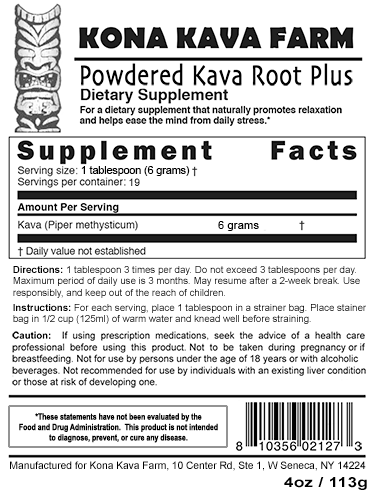
Kona Kava Farm Powder
Kona Kava Farm
A long-running Hawaiian brand with broad product lines but a lighter public COA habit than the leaders.
Our verdict: Kona Kava Farm is a long-established Hawaii-based brand spanning powders, extracts, and capsules, and it belongs in any honest survey of the category. But by our own rules it doesn't rank cleanly: its public cultivar and COA disclosure is lighter than the leaders', and powder pricing varies enough by listing that a clean per-session figure is hard to pin. Reviewed for completeness, not ranked on value.
Lab report: States Pacific noble sourcing, but posts a thinner public COA and cultivar paper trail than the top brands here. Reviewed for completeness; not value-ranked, because the disclosure to rank it cleanly isn't published.
We include Kona Kava Farm because a survey that only covers the most transparent brands isn't an honest survey of the market. Kona Kava Farm is a long-running Hawaii-based operation with one of the broadest catalogs in the space — traditional powders, extracts, tinctures, capsules, even edibles — and real name recognition among US kava buyers. For shoppers who want a one-stop Hawaiian brand across formats, it's a legitimate stop.
To be clear, this isn't a quality accusation — it's a transparency one. A brand can sell perfectly good noble kava and still under-document it, and plenty of longtime customers are happy. But our whole method is built on the idea that with a tan powder you can't see the supply chain, you can only read what the brand publishes — and on that axis the brands above simply publish more. If you do buy here, our advice is the same we'd give anywhere: ask for the COA and the cultivar by name before you commit to a large bag.
Who should buy it
Consider Kona Kava Farm if you specifically want a long-running Hawaii-based brand and value a broad one-stop catalog across powders, extracts, and capsules. But disclosure-first buyers — anyone who wants a named cultivar and a posted COA — will be better served by Bula, Root of Happiness, or Wakacon, and should ask Kona for both before buying.
What we don't like
Lighter public cultivar and COA documentation than the leaders, and powder pricing that varies enough by listing to defeat a clean per-session comparison — which is exactly why it isn't value-ranked. The breadth of the catalog can also make it harder to tell which specific noble you're actually buying.
- Origin / cultivar
- Stated Pacific noble; specific cultivar less consistently named
- Grind
- Micronized / instant and other formats
- Price / size
- Varies by listing and format
- Cost per session
- Not cleanly rankable (pricing varies; thinner disclosure)
- Testing
- Noble sourcing stated; public COA habit thinner than the leaders
What we like
- Long-running, name-recognized Hawaii-based brand
- Very broad catalog — powders, extracts, capsules, edibles in one place
Worth noting
- Thinner public cultivar and COA paper trail than the top brands
- Powder pricing varies by listing, defeating a clean per-session comparison
- Catalog breadth can obscure which specific noble you're buying
More kava worth comparing
Beyond this guide: the highest-rated kava across every format, kavalactones verified, with a live price check on each.




As an Amazon Associate we may earn from qualifying purchases, at no cost to you. 21+.
Quick shop: every pick
Skip the scroll: the whole lineup, with a live price check on each.
- Borogu Traditional Medium GrindBest OverallBula Kava House · from $17.60 / 8 oz (~$2.20/oz · ≈$4.40 per 4-cup batch)Check Price
- Superior Vanuatu Kava PowderBest for Potency HuntersRoot of Happiness · $35.00 / 8 oz (~$4.38/oz · ≈$8.75 per 4-cup batch)Check Price
- Wakacon Waka Kava PowderBest Fijian WakaWakacon · $64.99 / 16 oz (~$4.06/oz · ≈$8.12 per 4-cup batch)Check Price
- Loa Waka Medium GrindBest Balanced Pick for NewcomersKalm with Kava · ~$39.99 / 8 oz (~$5.00/oz · ≈$10.00 per 4-cup batch)Check Price
- Kava SupremeBest for AluBall / Instant-Maker UsersKavafied · ~$34.99 / 8 oz (~$4.37/oz · ≈$8.74 per 4-cup batch)Check Price
- Kona Kava Farm PowderThe Skeptic's-Eye EntryKona Kava Farm · Varies by listing — not cleanly rankableCheck Price
How we chose
We rank on disclosure first, price second. A powder's whole story is its origin, cultivar, and testing — none of which you can see in the bag — so a brand that names its kava (Borogu, Loa Waka, a specific Vanuatu or Fijian noble) and posts a Certificate of Analysis outranks a cheaper bag that says only "premium noble kava." We weight, in order: stated origin/cultivar, COA practice (posted publicly > on request > merely claimed), grind quality, then cost. We never rank a less-transparent powder above a more-transparent one on price alone.
Cost per session, not just cost per ounce. Per-ounce price is easy to print and misleading to compare, because nobody drinks an ounce — they brew a batch. We use a stated, checkable prep assumption from our own how-to-make-kava guide: roughly 2 oz (≈56 g) of medium-grind root per ~4-cup batch. That makes an 8 oz bag about four batches and a 16 oz bag about eight. So Bula's $17.60 half-pound is ≈$4.40 per batch; Wakacon's $64.99 pound is ≈$8.12. Micronized kava uses less root per serving but costs more per ounce, which is why we report both numbers and show the assumption every time.
We verify nobility claims against what the brand actually publishes, and we judge the grind as a drink. "Noble" is a sourcing claim worth seeing backed by testing — see our noble-vs-tudei explainer — so we note who proves it (a chemotype, a lactone percentage, an ISO-accredited lab) versus who asserts it. Then we prepare it: traditional medium grind kneaded in a strainer bag, micronized stirred straight in, judged on extraction, mouthfeel, and the honest earthy-peppery taste of real kava. What we never do: invent kavalactone test numbers, fabricate tasting panels, or make health claims. Kava is a centuries-old Pacific social drink, not a treatment for anything.
Key terms
- Noble kava
- The traditional cultivars Pacific growers raise for everyday drinking, prized for a smooth, agreeable, morning-after-friendly profile. "Noble" on a label is a sourcing claim worth seeing backed by a COA, a named lab, or a published chemotype — not taken on faith.
- Tudei kava
- "Two-day" kava — cheaper-to-grow cultivars higher in certain undesirable kavalactones and associated with heavier, longer, less pleasant effects. The thing nobility verification exists to keep out of your bag. See our noble vs. tudei explainer.
- Chemotype
- The numeric ordering of the six main kavalactones in a given kava (e.g. 425), which shapes whether it reads heady, balanced, or heavy. A stated chemotype is one of the most informative things a powder brand can print; almost none do.
- Waka vs. lawena
- Two parts of the Fijian kava plant. Waka is the lateral root — typically higher in kavalactones, darker, more intense and bitter. Lawena is the basal stump — milder and smoother. A brand naming which one you're buying is a brand being specific.
- Micronized kava
- Root ground fine enough to stir into water and drink whole, no strainer bag required. Faster and bag-free, but muddier-tasting and pricier per ounce than traditional medium grind, because you ingest the whole root and pay for the extra processing.
- COA (Certificate of Analysis)
- A lab document reporting what's actually in a batch — kavalactone content, nobility, contaminants. The buyer's trust ladder: posted per batch (best) > a named accredited lab > a published percentage > "lab-tested" with no document > silence (walk away).
Questions, answered
What's the best kava powder in 2026?
By our standard — a stated origin and cultivar, a real lab-testing/COA habit, honest cost per session, and grind quality — Bula Kava House's Borogu is the best overall kava powder in 2026. It names exactly what you're buying (Borogu, the main exported noble cultivar of Vanuatu), publishes a Certificate of Analysis for every current product, and is the cheapest per session at roughly $4.40 per 4-cup batch. Root of Happiness is the pick if you want the most quantified label — it prints the chemotype and total kavalactone percentage — and Wakacon is the pick for strong, verified-noble Fijian Waka.
How do you calculate cost per session for kava powder?
We take the per-ounce price and convert it to per-batch using a stated, checkable assumption from our how-to-make-kava guide: roughly 2 oz (about 56 g) of medium-grind root makes a standard ~4-cup batch. So an 8 oz bag is about four batches and a 16 oz bag about eight. Bula's $17.60 half-pound works out to about $4.40 per batch; Wakacon's $64.99 pound to about $8.12. We report cost per session alongside cost per ounce because nobody actually drinks an ounce — they brew a batch, and the batch is the honest unit to compare.
What's the difference between traditional and micronized kava powder?
Traditional medium grind is coarse root you knead in a strainer bag with warm water for about ten minutes, then strain and discard the solids — it tastes cleaner and costs less per ounce, but it's a small project each time. Micronized (instant) kava is ground fine enough to stir straight into water and drink whole, with no bag and no straining — it's far faster but tastes muddier and costs more per ounce. Buy traditional if you enjoy the ritual and want the cleanest, cheapest cup; buy micronized (or a shaker like Kavafied's AluBall) if your real blocker is the time and mess.
How do I know a kava powder is actually noble and not tudei?
You can't tell by looking — a tan powder hides its whole supply chain — so the only signal is what the brand will show you. The trust ladder runs: a downloadable Certificate of Analysis per batch (best, like Bula Kava House), then a named accreditation standard for the testing lab (Wakacon cites ISO/IEC 17025:2017), then published chemistry like a chemotype and lactone percentage (Root of Happiness), then a bare "100% noble, lab-tested" with nothing to download, then silence (walk away). Always find the cultivar name and the paper before buying a large bag; our noble vs. tudei guide covers why it matters.
Is more expensive kava powder stronger or better?
Not reliably. Our cheapest pick per session (Bula's Borogu, ~$4.40 a batch) is also our most transparent, while the priciest traditional grind here (Kalm with Kava's Loa Waka, ~$10 a batch) earns its premium on approachability and brand reliability rather than raw strength. Price tracks things like drying method, cultivar rarity, lateral-root (Waka) sourcing, and convenience format more than it tracks potency. The only honest way to compare strength is a stated chemotype or kavalactone percentage — which is exactly why we reward the brands that publish one.
Is kava powder safe to drink?
Kava has been prepared and consumed socially across the Pacific for centuries, and for most adults a traditional session is a mild, relaxed, sociable experience with a brief tongue-tingle that's completely normal. That said, we're reviewers, not doctors: kava can cause drowsiness, so don't drive after a session; don't mix it with alcohol; skip it during pregnancy or nursing; and if you take medications or have liver concerns, talk with your doctor first, since kava can interact with some prescriptions. Sticking to verified noble kava — the whole point of this guide's COA focus — is part of using it responsibly. None of this is medical advice.
Filed under Buyer's Guide
Part of Powders & Traditional
Keep reading
Koa Kava vs Root of Happiness
Two noble Vanuatu powders on Amazon, compared.
Kalm with Kava vs Kavafied
Root to root, with the AluBall question answered.
Kava Capsules vs Powder
Why powder wins on value, and when capsules win anyway.
How to Make Kava
The strainer-bag method, step by step — and the ~2 oz-per-batch prep our cost math is built on.
Noble vs. Tudei Kava
Why nobility is the claim that should decide your purchase — and how to verify it before you buy.
Best Instant Kava
No strainer bag, no waiting — the micronized and instant kavas ranked for the convenience crowd.
How to Set Up a Home Kava Bar
Where these roots get brewed: the four-station home bar that turns a $2.11 cup into a nightly ritual.