Our Pick: Kalm with Kava
Check PriceHow to Make Kava: Traditional, Micronized & Instant, Step by Step (2026)
Every weak, disappointing batch of kava traces back to one of three numbers: the ratio, the temperature, or the clock. This is the prep guide we wish existed when we started — exact root-to-water ratios for the strength you actually want, the warm-not-boiling temperature window (and why boiling water ruins a batch), a timed 10-minute knead, and the second-wash trick that stretches every bag by roughly half a session. Plus the two faster paths — micronized and instant — graded honestly on what they trade away.
By The Kava Review DeskUpdated 2026-06-12~8 min read Ranked by the lab reportHow we research
 Best Overall
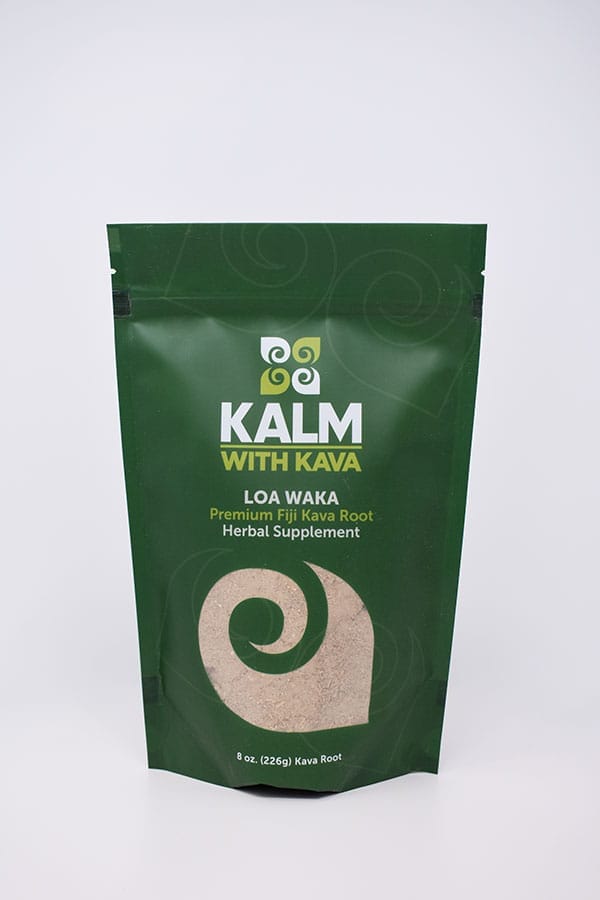
Kalm with Kava — Fiji Loa Waka (Traditional Grind)
Kalm with Kava · 4.7
~$39.99 / 8oz
Here is the uncomfortable truth about kava preparation: the plant does not meet you halfway. Coffee forgives sloppy technique — too hot, too long, wrong grind, you still get coffee. Kava does not. The compounds you're after, kavalactones, sit inside the root's cells bound up with starch and fiber, and they are barely water-soluble. They don't steep out the way caffeine does. You have to mechanically work them out — squeeze, press, knead — into warm (never hot) water, at a ratio generous enough to matter. Skip any one of those and you get what most first-timers get: a bowl of beige water, a shrug, and the wrong conclusion that kava doesn't work.
So this guide is built around the three numbers that decide everything. The ratio: roughly 1 part root to 10 parts water by weight for a standard-strength session — in kitchen terms, about 4 tablespoons (30–35 g) of medium-grind root per 2 cups (500 ml) of water; stretch to 1:15 for a lighter introduction, tighten toward 1:8 for a kava-bar-strength batch. The temperature: 100–110°F, bathwater warm — warm enough to soften the root and help extraction, cool enough to leave the kavalactones intact. The clock: a genuine 10 minutes of kneading, timed, not the 90 seconds of half-hearted dunking most people quit at. Get those three right and a $40 bag of good root outperforms almost anything you can buy in a can.
We'll walk all three prep paths in full: traditional grind (the strongest and cheapest per session, and the most work), micronized (stir, settle, drink — 2 minutes), and instant (dissolves completely, zero technique required). Then the supporting cast: the second wash that most guides never mention, the AluBall shaker that compresses the 10-minute knead into 60 seconds of shaking, and the honest playbook for kava's famously earthy taste. House rules as always: kava is a 21-and-up evening drink, the tongue-tingle is normal, first sessions often run mild (reverse tolerance is real — judge after three), and nothing here is medical advice — if you take medications, talk to your doctor before kava joins the rotation.
The short version
- The standard recipe, in numbers: ~1:10 root-to-water by weight — about 4 tablespoons (30–35 g) of medium-grind root kneaded into 2 cups (500 ml) of warm water for 10 timed minutes. Go 1:15 for mild, ~1:8 for strong.
- Water temperature is a window, not a vibe: 100–110°F (warm bathwater). Boiling water is the #1 prep mistake — high heat degrades kavalactones and cooks the starch into sludge.
- Kavalactones must be kneaded out, not steeped out — the 10-minute squeeze through a strainer bag is the entire difference between real kava and beige water.
- The second wash is free strength: re-knead the same spent root in half the water for 5 minutes and you recover a gentler half-batch most people pour down the drain.
- Micronized (stir + settle, ~2 minutes) and instant (stir, done) trade some strength-per-dollar for speed — and the AluBall shaker gets traditional-style results in about 60 seconds of shaking.
At a glance
| Method | Strength yield | Time | Gear needed |
|---|---|---|---|
| Traditional grind (knead + strain) | Highest — full extraction, plus a second wash | ~12–15 min | Strainer bag + wide bowl |
| AluBall shaker (with medium grind or micronized) | Near-traditional | ~1–2 min shaking | AluBall shaker (~$20) |
| Micronized (stir + settle) | Strong — whole root stays in the drink | ~2 min | A glass and a spoon |
| Instant (dehydrated juice) | Moderate — varies by brand | ~30 sec | A glass and a spoon |
The four ways to make kava, by strength yield, time, and gear
Kalm with Kava — Fiji Loa Waka (Traditional Grind)
Kalm with Kava
Lab-tested noble Fiji root strong enough that your technique — not the kava — is the only variable.
Our verdict: When you're learning to make kava, you want exactly one variable in play: your technique. Loa Waka removes the others. It's lab-tested, 100% noble, single-origin Fiji root with a strong reputation across the kava community — so when a batch comes out weak, you know it was the knead, not the bag. At ~$40 for 8 oz it works out to roughly $4–5 per properly made session, second wash included.
Lab report: Lab-tested, 100% noble kava; single-origin Fiji (Loa Waka cultivar).
The fastest way to ruin your kava education is to learn on mystery root. If the kava itself is weak, mislabeled, or non-noble, you can run the ratios and the clock perfectly and still conclude you did something wrong. Fiji Loa Waka traditional grind from Kalm with Kava solves that: it's a single-origin Fijian cultivar, lab-tested and 100% noble, with a strength reputation that's been consistent for years. Learn the 10-minute knead on this and your feedback loop is honest.
Practical notes for the learner: Loa Waka is a heady-leaning, briskly strong Fiji kava, which makes it a good calibration standard — a correctly made 1:10 batch announces itself clearly (tongue-tingle inside two minutes, the unmistakable settle inside thirty). Start at 1:10, not stronger; this is not a root that needs help. And weigh your root if you can — a $12 kitchen scale beats tablespoon estimates, because "4 tablespoons" of a fluffy grind can run 25% light. Once the hand-knead is second nature, the AluBall shaker from Kavafied is the proven shortcut: the same grind, about 60 seconds of hard shaking instead of 10 minutes at the bowl.
Who should buy it
Buy this if you're making traditional kava for the first time and want the root to be the one thing you don't have to second-guess — or if you've been burned by a cheap bag that made you doubt your technique. It's also the right benchmark kava: once you know what a correct Loa Waka batch feels like, you can evaluate every other root you ever buy against it.
What we don't like
You're paying a transparency premium — about 30–40% more per ounce than bulk options like Wakacon. The 8 oz size also goes quickly once kava becomes a habit; regulars should step up to the pound size or pair it with a bulk bag.
- Form
- Traditional (medium) grind kava root
- Cultivar
- Loa Waka — 100% noble, single-origin Fiji
- Size
- 8 oz (~225 g) — roughly 7–8 standard sessions
- Standard recipe
- 30–35 g per 500 ml warm water, 10-minute knead
- Testing
- Lab-tested for noble variety and quality
What we like
- Lab-tested, single-origin noble root — the trustworthy learning standard
- Strong enough that correct technique is unmistakably rewarded
- About $4–5 per session made traditionally; less with a second wash
- From one of the longest-standing US kava vendors
Worth noting
- Costs more per ounce than bulk bags
- 8 oz disappears fast once the ritual sticks
- Requires the strainer bag and the full 10-minute knead

Wakacon Fijian Waka Kava Powder (16oz)
Wakacon
A full pound of Fijian waka-grade root that drops your cost per session under $4.50.
Our verdict: Once the knead is muscle memory, the question changes from 'how do I make this' to 'how cheaply can I keep making this' — and a pound of Wakacon is the answer. It's noble Fijian kava ground from waka-grade lateral roots (the traditionally prized part of the plant), it's been sold in the US for over a decade, and at $64.99 a pound it runs about $4.30 per first-wash session — under $3 with the second wash.
Lab report: Noble Fijian kava ground from waka (lateral) roots; a US market fixture for over a decade.
Bulk root is where the traditional method's economics get almost unfair. A pound of Wakacon Fijian Waka powder is roughly 450 g — fifteen standard 30 g sessions before you count second washes, which effectively add another six or seven lighter ones. Run the numbers against any ready-to-drink can and it's not close: the same evening that costs $4-plus in a can costs under $3 made from this bag, at higher strength.
The honest caveats: Wakacon publishes less testing detail than Kalm with Kava, so you're leaning on track record rather than a lab page — that's the discount, plainly stated. And a pound is a commitment; this is the restock bag for someone whose technique and taste are already settled, not a first experiment — buy bulk only if you'll store it properly, since a sealed bag kept cool, dark and dry holds a year or two while a badly kept one fades in months (see how to store kava). Prep is identical to any traditional grind: 1:10 ratio, 100–110°F water, 10 minutes in the bag, second wash if you're smart.
Who should buy it
Buy Wakacon when the traditional ritual has already stuck and you're optimizing cost per session — the kava equivalent of graduating from coffee-shop cups to buying beans by the pound. It's also the right bag for households where more than one person drinks kava, where 8 oz bags evaporate.
What we don't like
Thinner published testing than our top pick, and sixteen ounces is the wrong first purchase — never buy a pound of anything you haven't tasted. The grind also runs slightly coarse in some batches, which rewards a full 10-minute knead and punishes a lazy one.
- Form
- Traditional grind kava root
- Grade
- Waka (lateral roots) — noble Fijian kava
- Size
- 16 oz (~450 g) — roughly 15 standard sessions plus second washes
- Standard recipe
- 30–35 g per 500 ml warm water, 10-minute knead
- Track record
- Sold to US kava drinkers since the early 2010s
What we like
- Lowest cost per session in this guide — about $4.30, under $3 with second washes
- Waka-grade lateral roots, the traditionally strongest part of the plant
- Over a decade of US market track record
- One bag covers a month of regular evening sessions
Worth noting
- Less published lab detail than Kalm with Kava
- A pound is too much kava to buy untasted
- Coarser batches demand the full, honest knead

Leilo Kava Tonic
Leilo
A disclosed ~125 mg kavalactone serving in a can — the zero-technique control group.
Our verdict: Every prep guide owes you the no-prep option, honestly priced. Leilo puts a 1,000 mg kava root blend — about 125 mg of kavalactones, printed right on the label — into a can that tastes like a drink instead of a riverbed. It can't match a well-made 1:10 traditional batch for strength or cost, and it isn't trying to: it's for the nights the strainer bag stays in the drawer.
Lab report: Lab-tested; kavalactone content disclosed (~125 mg per can).
Think of this as the control group for your home prep. The Leilo Kava Tonic delivers a known quantity — roughly 125 mg of kavalactones per can, lab-tested and disclosed — with zero technique in the loop. That makes it useful twice over: as the genuinely pleasant skip-the-prep option, and as a calibration point. If your traditional batches feel weaker than a can of Leilo, the can just told you something about your knead.
Where it fits in the prep hierarchy: most kava regulars end up running a two-format system — root for the weekend session, when the ritual is the point, and a cold can for weeknights, when the ritual is the obstacle. Leilo is the strongest case for that second slot because the kavalactone number is printed, the flavors are actually good, and there's no alcohol, no THC, and no morning tax. Same kava etiquette applies: sip it like an evening drink and stay out of the driver's seat.
Who should buy it
Buy Leilo if you want kava in your week without kava prep in your week — or as the weeknight partner to a weekend traditional ritual. It's also the format to hand a curious friend: self-explanatory, tasty, and labeled with an actual number instead of vibes.
What we don't like
Per milligram of kavalactones, it's the most expensive option in this guide, and the ceiling is fixed — you can't knead a can harder. Regulars who want traditional-batch strength from cans end up drinking two, which doubles the price gap.
- Kava per can
- 1,000 mg kava root blend (~125 mg kavalactones)
- Form
- Ready-to-drink canned kava tonic
- Cost per serving
- ~$4.17 at the 12-pack price
- Contains
- No alcohol, no THC
- Testing
- Lab-tested; kavalactone content disclosed on the label
What we like
- Disclosed kavalactone number — rare honesty in ready-to-drink kava
- Zero prep, zero cleanup, zero earthy taste
- A useful strength benchmark for judging your own batches
- No alcohol, no THC, no hangover
Worth noting
- Highest cost per milligram of kavalactones here
- Gentler than a properly kneaded 1:10 traditional batch
Traditional kava, the right way
- 1
Measure the root: ~1:10 by weight
Weigh 30–35 g of medium-grind kava root (about 4 level tablespoons) for a standard-strength session, and add it to a kava strainer bag — a fine-weave muslin or nylon bag, $5–10 online. Scale the ratio to your target: 1:15 (about 2 tablespoons per 500 ml) for a mild first batch, up toward 1:8 for kava-bar strength. A kitchen scale beats spoons; fluffy grinds measure light.
- 2
Heat the water to 100–110°F — warm, never boiling
Fill a wide bowl with 500 ml (2 cups) of warm water at 100–110°F — comfortable bathwater, pleasant to keep your hands in. Boiling water is the classic batch-ruining mistake: heat degrades kavalactones and turns the root's starch to sludge. No thermometer? Mix roughly two parts cold to one part just-boiled water and test with your wrist.
- 3
Knead the bag for 10 timed minutes
Submerge the bag and knead, squeeze, and wring it continuously — like washing a stubborn rag — for a full 10 minutes by the clock. This step IS the extraction: kavalactones don't steep out like caffeine; the mechanical pressure presses them out of the root and into the water, which should turn an opaque, muddy brown. Most weak batches are 2-minute kneads wearing a 10-minute alibi.
- 4
Wring hard and check the texture
Finish with one long, hard wringing of the bag — the last squeeze carries a disproportionate share of the extraction — then set the spent root aside (don't toss it yet). The finished brew should be smooth and silty with no grit. If you feel particles, pour it back through the empty bag once more.
- 5
Run the second wash
Refill the bowl with 250 ml (1 cup) of warm water — half the original — return the same spent root in its bag, and knead another 5 minutes. This 'second wash' recovers a meaningfully strong, gentler batch from root most people throw away, cutting your effective cost per session by roughly a third. Drink it as the session's later rounds, or chill it for tomorrow.
- 6
Chill, serve in shells, pace the session
Refrigerate an hour or pour over ice — cold kava is far more drinkable — and serve in half-cup rounds (the traditional 'shell'), each drunk briskly with a pineapple-juice chaser standing by. Expect the tongue-tingle within minutes and the settle within fifteen to thirty. If round one feels mild, that's kava's well-known reverse tolerance, not a failed batch: judge after three sessions, keep it occasional, don't drive afterward, and check with your doctor first if you take medications.
More kava worth comparing
Beyond this guide: the highest-rated kava across every format, kavalactones verified, with a live price check on each.




As an Amazon Associate we may earn from qualifying purchases, at no cost to you. 21+.
Quick shop: every pick
Skip the scroll: the whole lineup, with a live price check on each.
- Kalm with Kava — Fiji Loa Waka (Traditional Grind)Best Root to Learn OnKalm with Kava · ~$39.99 / 8ozCheck Price
- Wakacon Fijian Waka Kava Powder (16oz)Best Bulk ValueWakacon · $64.99 / 1lbCheck Price
- Leilo Kava TonicSkip the Prep EntirelyLeilo · $49.99 / 12-packCheck Price
How we chose
Numbers over folklore. Kava prep advice online runs from 'a few spoonfuls' to outright wrong (several big recipe sites still say boiling water). Every ratio, temperature, and time in this guide reflects the standing consensus of the kava community — vendors like Kalm with Kava, the long-running Kava Forums threads, and the New Zealand Kava Society's temperature work all converge on the same window — stated as exact, repeatable measurements you can run in your own kitchen.
We grade each method on yield per dollar and yield per minute, separately, because they're different questions. Traditional grind wins the first walking away; instant wins the second. Most kava drinkers eventually run two methods — one for the weekend ritual, one for the Tuesday night — and the guide is built to help you pick that pair.
Strict lane discipline on language: kava is described experientially — what it tastes like, how a session is paced, what the prep yields — never medically. No disease claims, no dosage-as-treatment talk. Where the community consensus has a range rather than a number, we print the range.
Key terms
- Strainer bag
- A fine-weave cloth bag (muslin or nylon, $5–10) that holds the grind while you knead, letting the kavalactone-rich liquid through and keeping the gritty root out of your drink. The one non-negotiable tool of traditional prep — metal tea strainers are too coarse, coffee filters too slow.
- Knead
- The 10 minutes of continuous squeezing and wringing that does the actual extraction. Kavalactones are barely water-soluble and won't steep out on their own; mechanical pressure forces them out of the root's cells. The single biggest strength variable in home prep — more than brand, grind, or ratio.
- Second wash
- Re-kneading the already-used root in half the original water for about 5 minutes, yielding a gentler second batch from grounds most people discard. Standard practice in kava households; it cuts effective cost per session by roughly a third.
- Micronized
- Kava root milled fine enough to stir directly into water and drink, sediment and all — no bag, no knead, about 2 minutes. Stronger per gram in the glass than a lazy knead (the whole root stays in the drink), at a higher price per ounce and a siltier texture.
- AluBall
- Kavafied's shaker-bottle system: a perforated ball that holds the grind inside a protein-style shaker, so 60 seconds of hard shaking stands in for the 10-minute hand knead. The most successful modern shortcut — near-traditional results, one bottle to wash.
- Shell
- The traditional serving of kava — historically a half coconut shell, functionally a half-cup round drunk briskly rather than nursed. Kava sessions are paced in shells over conversation; at a kava bar, you order by the shell, often to a chorus of 'bula!'
Questions, answered
What temperature should the water be for making kava?
100–110°F — warm bathwater, comfortable to keep your hands in, which is convenient since the knead requires exactly that. This window is the kava community's settled consensus, supported by vendor temperature testing: warm water softens the root and helps extraction, while genuinely hot water works against you twice — heat degrades the kavalactones you're extracting, and it gelatinizes the root's starch into a strainer-clogging sludge. If you're improvising from a kettle, mix roughly two parts cold water with one part just-boiled and check with your wrist. When in doubt, err cool: room-temperature water still extracts fine (the kneading does the real work), but an overheated batch can't be rescued.
What's the right kava-to-water ratio?
About 1:10 by weight for a standard session — 30–35 g of medium-grind root (roughly 4 level tablespoons) per 500 ml (2 cups) of warm water. Adjust by intent: 1:15 (about 2 tablespoons per 2 cups) makes a milder batch that's right for a first evening, while tightening toward 1:8 approaches kava-bar strength. Two practical notes: a $12 kitchen scale beats tablespoons, because fluffy grinds can measure 25% light by volume; and resist brewing extra-strong on night one — kava's reverse tolerance means early sessions often run mild regardless, and the fix is patience across two or three evenings, not a heavier hand.
Can I use a blender to make kava?
Yes — the blender method is the legitimate power-tool version of the knead, and kava veterans use it. Blend your grind with 100–110°F water on high for 3–4 minutes (the blades supply the mechanical extraction your hands otherwise would), then pour everything through your strainer bag and wring hard — you still need the bag, because blending puts all the root's sediment in the liquid. The result is comparable to a solid hand-knead in a quarter of the active time. Two cautions: keep the water in the warm window, since friction adds a little heat of its own, and expect a slightly siltier texture than a careful hand-strained batch. The AluBall achieves a similar shortcut with less cleanup.
Why does my kava taste weak?
Run the diagnostic in this order. (1) The knead: 10 honest minutes of continuous squeezing — the most common failure is a 2-minute dunk. (2) The ratio: weigh your root; 'a few spoonfuls' often means 15 g pretending to be 30. (3) The temperature: boiling water degrades kavalactones, and cold water slows extraction — aim for 100–110°F. (4) The root itself: old, stems-and-leaves-padded, or non-noble kava underdelivers at any technique, which is why we recommend learning on a lab-tested bag like Kalm with Kava's Loa Waka. (5) You, on night one: kava's famous reverse tolerance means many people genuinely feel little their first session or two — if the batch tingled your tongue and turned muddy brown, the prep worked; give it three evenings before you judge.
Should I make kava with milk or water?
Knead in plain warm water — that's the traditional method and the reliable one — and treat dairy or coconut as an optional finishing move, not the base. The exception with real island pedigree is coconut: kneading into coconut water, or adding a splash of coconut milk to the finished brew, genuinely softens kava's earthy edges, and a bit of fat in the liquid is a classic companion to a session. What we'd skip is the smoothie approach — burying kava in a big blended drink mostly creates a large glass of bad-tasting juice you're now committed to. The kava-bar method is better: drink the shell briskly, then chase with pineapple juice. Three seconds, palate reset, full strength preserved.
How long does brewed kava keep?
Refrigerated in a sealed container, brewed kava is at its best within 24 hours and reasonable for about 48; past two days, flavor and quality fall off and it's not worth drinking. It will separate in the fridge — that's the suspended root settling, not spoilage — so shake or stir before pouring, and always serve it cold (chilled kava tastes meaningfully better anyway). Never leave brewed kava out at room temperature overnight; it's a starchy plant liquid and spoils like one. The smarter storage play is upstream: dry root in a sealed bag keeps for many months in a cool, dark cupboard, so brew batches to fit the evening — and remember the second wash exists precisely so a single measure of root covers a long session.
Keep reading
What Is Kava?
The plant, the kavalactones, the culture — the explainer to read before your first shell.
Best Kava Powder
The roots worth kneading — our ranked picks across budgets and strength profiles.
Kava Dosage Guide
How sessions are actually paced — servings, shells, and the reverse-tolerance curve, in numbers.
How to Set Up a Home Kava Bar
Turn this technique into a station: the full gear checklist, three live-priced builds, and the per-cup math.