Our Pick: Leilo
Check PriceWhat Does Kava Taste Like? An Honest Answer (2026)
Earthy, peppery, faintly bitter, with a texture every honest drinker eventually calls muddy water — and then your tongue goes pleasantly numb. That's the whole truth, and most guides won't tell you because it doesn't sell. We will, because the taste is a solvable problem: there's a chemistry reason kava isn't delicious, a centuries-old fix the islands figured out (chase it, don't drown it), a clear hierarchy of taste-tricks ranked by what actually works, and an off-flavor that means stop drinking immediately. Here's all of it.
By The Kava Review DeskUpdated 2026-07-26~6 min read Ranked by the lab reportHow we research
Kava tastes earthy and peppery, faintly bitter, with a thick, silty texture that first-timers reliably reach for the same two words to describe: muddy water. It is, after all, a root pulverized and kneaded into a bowl, so the surprise would be if it tasted like a smoothie. Then comes the part nobody warns you about: a few sips in, your tongue and the inside of your lips go gently numb, like a very polite dose of clove oil. That's not a defect; that's the kava working, and it wears off in a minute or two. Updated July 2026.
Here is the thing the marketing won't say out loud: kava is not supposed to taste good, and the reason is chemistry, not bad luck. The compounds you're drinking it for — kavalactones — are oily, bitter, barely water-soluble plant molecules. 'Bitter, oily, and earthy' is not a flavor accident; it's a fairly accurate description of the active ingredients themselves. Asking kava to be delicious is like asking espresso to taste like dessert without the milk and sugar — you can dress it up, but the bare drink is going to taste like the strong, bitter thing it actually is. Once you accept that, the taste stops being a disappointment and becomes a logistics problem with known solutions.
So this page is the honest field guide to that logistics problem. We'll give you the real descriptor tour (and what good kava versus bad kava tastes like — because there's an off-flavor that's a genuine red flag, not just unpleasant). We'll rank the taste-fixes from 'what kava bars actually do' down to 'character-building suffering.' And we'll explain the acquired-taste arc that nearly every regular reports: the brew that made you grimace in month one becomes, by month three, the comforting earthy signal that the evening is winding down. House rules apply throughout — kava is a 21-and-up evening drink, the tongue-numbness is normal, and nothing here is medical advice.
The short version
- The honest descriptors: earthy, peppery, faintly bitter, with a thick silty texture most people call 'muddy water.' It's root tea — accurate, not an insult.
- It tastes that way for a reason: kavalactones, the compounds you want, are oily, bitter, barely-soluble plant molecules. Kava isn't supposed to be delicious; the strength and the flavor come from the same place.
- The tongue-and-lip numbness a few sips in is normal and brief (a minute or two) — a feature, not a flaw. It's the surest sign your batch actually came out right.
- The taste-fix hierarchy, ranked: chase it (best) > a coconut/citrus finish > a flavored can or shot (great for skipping it entirely) > white-knuckle it. Mixing kava into a big juice mostly makes a big glass of bad juice.
- A musty, sour, or mildew smell is a red flag — good kava smells like clean dry earth and pepper. Off-flavors can mean spoiled or poorly stored root; when in doubt, throw it out.
At a glance
| Format | How much it tastes like kava | The fix |
|---|---|---|
| Traditional grind (kneaded root) | Fully — earthy, peppery, muddy, the real thing | Chase briskly with pineapple or citrus juice; serve ice-cold |
| Micronized (stir + drink) | Strongly — same flavor, even siltier texture | Cold + a chaser; the grit, not the taste, is the hurdle |
| Instant (dehydrated juice) | Moderately — the earthiness is dialed back | Often drinkable straight, cold; chase if needed |
| Flavored shot | Lightly — masked by added flavor | Knock it back; the format IS the fix |
| Canned tonic | Barely — engineered to taste like a soft drink | None needed; this is the no-taste option |
How much each format actually tastes like kava — and the fix

Leilo Kava Tonic
Leilo
The canned tonic engineered so you taste a drink, not a riverbed — the no-earthy-taste option.
Our verdict: If the earthy taste is the dealbreaker — and for plenty of people it genuinely is — the most honest answer is to not taste it. Leilo's tonic puts a disclosed ~125 mg of kavalactones into a cold can that's flavored and carbonated to drink like a soft drink, not a bowl of grog. It won't deliver a traditional batch's full earthy punch, and it isn't trying to: it's the format whose entire job is making the taste a non-issue.
Lab report: Lab-tested; kavalactone content disclosed (~125 mg per can).
The flavored can is the taste-fix taken to its logical end: don't mask the earthiness, engineer it out. The Leilo Kava Tonic is built so the kava arrives inside a chilled, flavored, lightly carbonated drink — the muddy-water character that defines a traditional shell is mostly gone, replaced by something you'd happily hand a skeptical friend. The kavalactones are still there (about 125 mg per can, printed on the label), and so is the familiar gentle tongue-tingle; what's missing is the part people complain about.
Where it sits in the hierarchy: this is the bottom of the taste-fix ladder in the best sense — the format that solves the flavor problem so completely there's nothing left to fix. From Leilo, with no alcohol and no THC, it's the standing answer to 'I want kava but I cannot do the dirt-water thing.' Same etiquette as any kava: sip it like an evening drink and stay out of the driver's seat.
Who should buy it
Buy this if the taste is your actual obstacle — if you've tried traditional kava, didn't make it past the muddy-water shock, and want the effect without the flavor lesson. It's also the right pick for handing kava to a curious friend who'd quit at the first earthy sip of the real thing.
What we don't like
By dialing the earthiness down, it also dials the intensity down — a can lands gentler than a properly kneaded traditional batch, and per milligram of kavalactones it's the priciest way to drink kava. Purists will find it tastes 'like kava' the way a latte tastes 'like espresso': technically yes, but softened past recognition.
- Kava per can
- 1,000 mg kava root blend (~125 mg kavalactones)
- Form
- Ready-to-drink canned kava tonic
- Taste profile
- Flavored and carbonated — earthiness engineered out
- Contains
- No alcohol, no THC
- Testing
- Lab-tested; kavalactone content disclosed on the label
What we like
- The least-earthy way to drink kava — no chaser, no acquired taste required
- Disclosed kavalactone number, rare in ready-to-drink kava
- Cold, flavored, and friend-proof — hand it to a skeptic
- No alcohol, no THC
Worth noting
- Gentler than a traditional batch — the flavor and the strength were dialed down together
- Highest cost per milligram of kavalactones

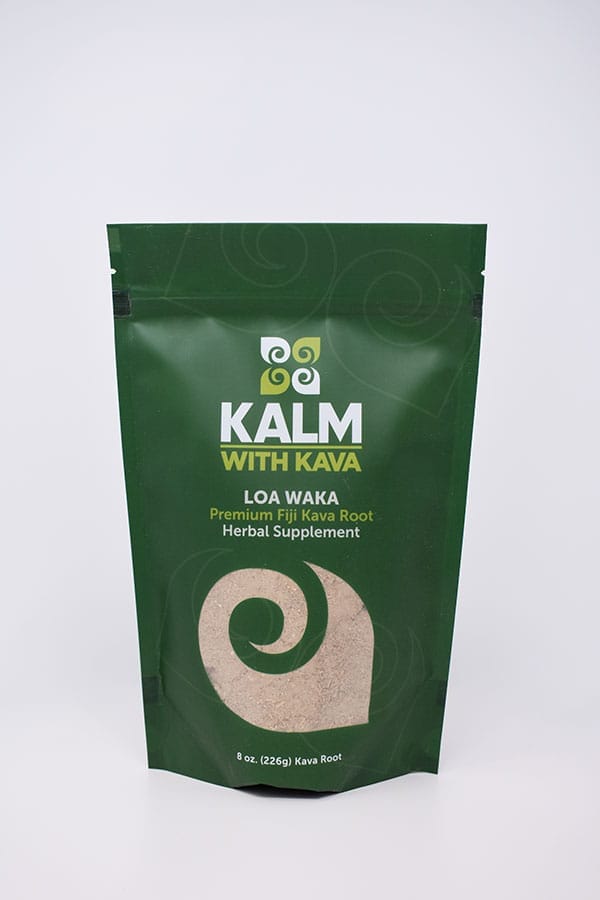
Kalm with Kava — Fiji Loa Waka (Medium Grind)
Kalm with Kava
Clean, lab-tested noble Fiji root — what kava is supposed to taste like when nothing's gone wrong.
Our verdict: If you want to learn what good kava actually tastes like — and learn to tell it apart from the off-flavors that signal trouble — you want clean, lab-tested noble root. Loa Waka is single-origin Fijian, 100% noble, and tastes the way fresh kava should: earthy and peppery, yes, but bright-clean underneath, never musty or sour. It's the reference flavor against which you'll judge every other bag you ever buy.
Lab report: Lab-tested, 100% noble kava; single-origin Fiji (Loa Waka cultivar).
The earthy taste is fine. The musty taste is the warning. The only way to tell those two apart is to know what clean, fresh kava is supposed to taste like — and Fiji Loa Waka from Kalm with Kava is a reliable reference. It's a single-origin Fijian cultivar, lab-tested and 100% noble, and a correctly made batch tastes the way good kava should: dry earth, black pepper, a faint clean bitterness — and crucially, none of the sour or mildew notes that mean root has been stored badly or has gone off.
How to make the real taste easy: serve it ice-cold (chilled kava is dramatically more drinkable than warm), drink each half-cup shell briskly rather than nursing it, and have pineapple or another sharp juice ready to chase. Done that way, Loa Waka isn't a flavor you tolerate — it's one a lot of regulars come to genuinely look forward to. For the full method, our prep guide has the ratios and the chase playbook in detail.
Who should buy it
Buy this if you want to taste real kava done right — and to build the calibrated palate that lets you spot bad kava by smell and flavor. It's the benchmark bag: once you know what a clean Loa Waka batch tastes like, every off-note in a cheaper kava becomes obvious.
What we don't like
It tastes fully like kava — earthy, peppery, the real deal — so if your goal is to avoid that flavor entirely, this is the opposite of what you want (start with a can). You're also paying a transparency premium of roughly 30–40% over bulk root for the lab testing and single-origin sourcing.
- Form
- Traditional (medium) grind kava root
- Cultivar
- Loa Waka — 100% noble, single-origin Fiji
- Taste profile
- Clean earthy-peppery; bright, never musty or sour
- Size
- 8 oz (~225 g) — roughly 7–8 standard sessions
- Testing
- Lab-tested for noble variety and quality
What we like
- The clean, correct reference flavor for what good kava tastes like
- Lab-tested, single-origin noble root — the trustworthy benchmark
- Earthy and bright, with none of the musty off-notes of poorly kept kava
- From one of the longest-standing US kava vendors
Worth noting
- Tastes fully like kava — wrong pick if you want to avoid the flavor
- Transparency premium over bulk bags
- Requires the strainer bag and proper prep to shine
More kava worth comparing
Beyond this guide: the highest-rated kava across every format, kavalactones verified, with a live price check on each.




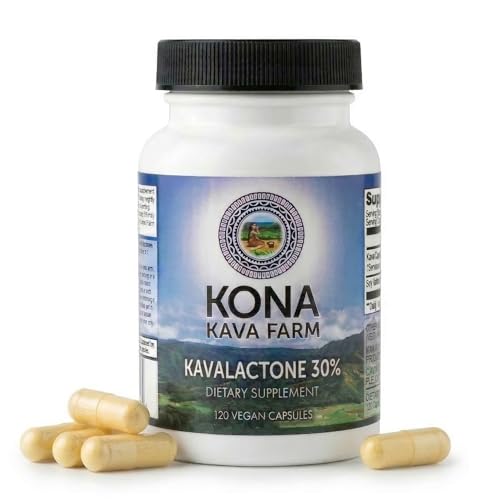
As an Amazon Associate we may earn from qualifying purchases, at no cost to you. 21+.
Quick shop: every pick
Skip the scroll: the whole lineup, with a live price check on each.
- Leilo Kava TonicTastes Least Like KavaLeilo · $49.99 / 12-packCheck Price
- Kalm with Kava — Fiji Loa Waka (Medium Grind)The Real Taste, Done WellKalm with Kava · ~$39.99 / 8ozCheck Price
Key terms
- Chase
- The fruit juice (classically pineapple) or bite of fruit you take immediately after a shell of kava to reset your palate. The single most effective taste-fix and standard practice at every kava bar — it beats mixing because it preserves the kava's full strength while erasing the earthy aftertaste in seconds.
- Makas
- The spent root pulp left in the strainer bag after kneading — the 'grounds' of kava. The makas carry the gritty, intensely earthy solids you specifically don't want in your cup; the entire point of straining is to leave the makas behind and keep only the liquid, which is why bag-strained kava tastes smoother than a stir-and-drink micronized batch.
- The numbing
- The gentle tingling numbness on the tongue and lips that arrives a few sips into a well-made shell and fades within a minute or two. Normal and harmless — caused by the kavalactones themselves — and one of the most reliable signs a batch came out strong. Absence of any tingle often means weak or poorly made kava.
- Acquired taste
- The well-documented arc by which kava's earthy flavor shifts from off-putting to comforting over weeks of regular drinking. The taste doesn't change — your relationship to it does, the way coffee and dark beer also start as 'how do people drink this.' Most regulars report the muddy-water flavor eventually becomes a welcome signal that the evening is winding down.
- Off-flavors
- Musty, sour, mildew, or sharply rancid notes that signal spoiled, moldy, or badly stored kava — distinct from kava's normal (and fine) earthy bitterness. Clean kava smells like dry earth and pepper; a musty or sour smell is a stop sign. When a batch smells wrong, don't drink it.
Questions, answered
Why does kava taste like dirt?
Because, in the most literal sense, it sort of is dirt-adjacent: kava is the root of a tropical plant, pulverized and kneaded into water, so 'tastes like the earth it grew in' is less a complaint than an accurate description. The deeper reason is chemistry. The compounds you're drinking kava for — kavalactones — are oily, bitter, barely-water-soluble plant molecules, and 'oily, bitter, and earthy' is a fair sketch of how the active ingredients themselves taste. The flavor and the effect come from the same place, which is why genuinely delicious kava and genuinely strong kava pull in opposite directions. The dirt taste isn't a flaw in the product; it's the product.
How do I make kava taste better?
Three moves, in order of effectiveness. First and best: chase it. Drink your shell briskly, then immediately follow with pineapple juice or a bite of fruit — the palate resets in seconds and the kava keeps its full strength, which is exactly what kava bars have done for generations. Second: finish with coconut or citrus — a splash of coconut milk rounds the edges, a squeeze of lime brightens it, both with real island pedigree. Third: serve it ice-cold, because chilled kava is dramatically more drinkable than warm. What to avoid is the rookie move of blending kava into a giant smoothie — you don't get tasty kava, you get a large glass of bad smoothie you now have to finish, and the earthiness is no weaker for it. If you'd rather skip the flavor entirely, a flavored shot or an engineered tonic is a legitimate option.
Is the numbness in my mouth normal?
Yes — completely normal, and arguably a good sign. A few sips into a well-made shell, your tongue and the inside of your lips will tingle and go gently numb, an effect that fades within a minute or two. It's caused by the kavalactones themselves making direct contact with your mouth, and it's one of the most reliable indicators that your batch actually came out strong — weak or poorly made kava often produces little to no tingle at all. So rather than a side effect to worry about, treat the numbing as the drink's way of confirming it's the real thing. (As always, this is experiential description, not medical advice — and if anything ever feels genuinely wrong, stop and check with your doctor.)
How can I tell if my kava has gone bad or moldy?
Trust your nose first. Good, fresh kava smells like clean, dry earth with a faint pepper note — earthy, but bright and clean underneath. The red flags are musty, sour, mildew-like, or sharply rancid smells, which are different in kind from kava's normal earthy bitterness and signal that the root has been stored badly, gotten damp, or grown mold. Any visible fuzz, clumping from moisture, or a smell that makes you wrinkle your nose is a stop sign. Dry root kept sealed in a cool, dark cupboard lasts many months, but kava that's been exposed to humidity can spoil — and brewed kava left out at room temperature spoils like any starchy plant liquid. The rule is simple: clean-earthy is fine, musty-sour is not, and when in doubt, throw it out.
Do canned kava drinks taste better than traditional kava?
By the usual definition of 'better,' yes — and that's exactly the trade. Canned tonics like Leilo are flavored and carbonated specifically to taste like a soft drink rather than a bowl of grog, so the earthy muddy-water character that defines traditional kava is largely engineered out. The catch is that the same dialing-down that removes the earthiness also tends to reduce the strength: a can typically lands gentler than a properly kneaded traditional batch, and per milligram of kavalactones it's the most expensive way to drink kava. So 'better tasting' and 'stronger and cheaper' point in opposite directions. A lot of regulars run both — a can for the nights they want kava without the flavor negotiation, and traditional root for the full-strength weekend session.
Will I get used to the taste of kava?
Almost certainly, if you stick with it — this is the single most consistent thing regular drinkers report. Kava is a textbook acquired taste, and the arc is well documented: the earthy, muddy flavor that made you grimace in week one becomes, over a few weeks of regular sessions, something closer to neutral, and eventually a comforting signal that the evening is winding down. The flavor itself doesn't change; your relationship to it does — the same way coffee, dark beer, and unsweetened tea all start as 'how does anyone drink this' and end up as daily companions. If you're not there yet, lean on the chase playbook and serve it cold; the fixes carry you through the early weeks until the acquired taste does the rest of the work for free.
Keep reading
How to Make Kava
The ratios, the warm-not-boiling water, the 10-minute knead, and the chase playbook in full.
Best Kava Drinks
The ready-to-drink cans and tonics that skip the taste problem — ranked and graded honestly.
Kava Dosage Guide
How sessions are actually paced — shells, servings, and the reverse-tolerance curve, in numbers.