Our Pick: MELO
Check PriceKavalactones, Explained: The Number That Tells You Everything (2026)
Kavalactones are to kava what caffeine content is to coffee — the single number that predicts how a product will actually feel. Yet most labels bury it, fudge it, or never print it at all. This is the rigorous, plain-English breakdown: the six kavalactones and their personalities, how to read a chemotype code like 4-2-6, how many milligrams hide in a tea bag versus a can versus a traditional shell, and the one label trick that fools almost everyone.
By The Kava Review DeskUpdated 2026-06-12~8 min read Ranked by the lab reportHow we research
Here is the fastest way to understand kava: it is to kavalactones what coffee is to caffeine. Coffee is the delivery vehicle; caffeine is the number that decides whether you get a polite lift or a wired afternoon. Kava works the same way. The plant — Piper methysticum, a Pacific Island pepper relative — is the vehicle. Kavalactones are the active compounds, and their total milligrams, plus the ratio between them, decide almost everything about how a given kava feels. Get fluent in that one number and you can predict a product before you ever taste it. Stay fuzzy on it and you are buying on vibes and pretty cans.
The trouble is that the kava aisle is built to keep you fuzzy. A drink will shout "made with real kava root" and print a big bold milligram figure — but the figure is grams of root, not milligrams of kavalactones, and those are not remotely the same thing. A 30% extract standardized from 100 mg of root delivers 30 mg of actual kavalactones, per the standard extraction math the literature uses; the other 70 mg is plant fiber doing nothing for you. Multiply that gap across a category with no labeling standard and you get a shelf where the loudest number is frequently the least useful one.
So this guide does the boring, rigorous thing. We will name the six kavalactones and give each a one-line personality, decode the chemotype code that tells you whether a kava will feel "heady" or "heavy," lay out a milligram ladder so you know what a tea bag (~30–50 mg) versus a canned drink (~100 mg+) versus a traditional shell (~150–250 mg+) actually delivers, and expose the root-milligrams-versus-kavalactone-milligrams trick in detail. Our standing rule at Kava Review is simple: no disclosed numbers, no ranking. The two products below earn their spots precisely because they put a real kavalactone figure on the record.
The short version
- Kavalactones are kava's active compounds — the milligram total is the "caffeine content of kava," the single best predictor of how a product will feel.
- There are six that matter: kavain, dihydrokavain, methysticin, dihydromethysticin, yangonin, and desmethoxyyangonin. Together they account for roughly 96% of kava's activity, per the pharmacology literature.
- A chemotype code (e.g. 4-2-6) ranks which kavalactones dominate. Kavain-led (starts with 4) skews "heady" and uplifting; dihydromethysticin-heavy (the 5) skews "heavy" and sedating.
- The mg ladder, by consensus ranges: a tea bag delivers ~30–50 mg of kavalactones, a canned kava drink ~100 mg+, and a traditional prepared shell ~150–250 mg+. Around 70 mg is the commonly cited minimum effective serving.
- The label trick to watch: "X mg of kava root" is NOT "X mg of kavalactones." A 100 mg / 30% extract is only 30 mg of actual kavalactones — the rest is inert plant material.
At a glance
| Format | Typical kavalactones per serving | Strength feel |
|---|---|---|
| Kava tea bag (steeped) | ~30–50 mg | Gentle — often below or near the ~70 mg threshold many cite as a minimum effective serving |
| Canned / bottled kava drink | ~100 mg+ (when disclosed) | Moderate — a defined, repeatable serving you can actually plan around |
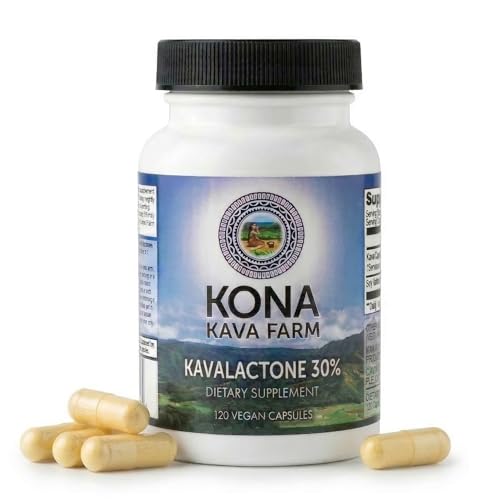
| Capsules / extract (per serving) | ~70–210 mg | Variable — depends entirely on the extract %; read the kavalactone line, not the root weight |
| Traditional prepared shell (aqueous) | ~150–250 mg+ | Full strength — the South Pacific reference point; multiple shells stack quickly |
The mg ladder — how many kavalactones each format typically delivers per serving. Ranges reflect category and literature consensus; always defer to a product's own disclosed number when it publishes one.

MELO Sparkling Kava
MELO
States 100 mg of kavalactones per can — a real, repeatable number in a category that usually hides it.
Our verdict: This is the can we point to when we explain why disclosure matters. MELO states 100 mg of kavalactones per serving — not milligrams of root, not a hand-wavy "made with kava" badge, but the number that actually predicts the experience. In a fridge full of products that won't tell you, a stated figure is worth more than any marketing adjective.
Lab report: Discloses 100 mg of kavalactones per can — the kind of stated, per-serving figure our no-number-no-ranking rule is built to reward.
If you want to feel the difference disclosure makes, start here. MELO Sparkling Kava puts a stated 100 mg of kavalactones on each can — and that single decision lets you do something most of the category won't let you do: plan. One can sits comfortably above the ~70 mg figure widely cited as a minimum effective serving and below the ~150–250 mg+ of a traditional shell, which lands it squarely in the "defined, sociable, repeatable" zone. You know what you're getting, and you can decide whether one is enough or whether you want two.
As a format, the sparkling can is the modern, low-friction way into kava: cold, carbonated, no grit, no straining a muddy bowl. It won't replicate the full earthy ritual of a traditionally prepared shell, and a purist will tell you so. But for a defined, transparent, grab-from-the-fridge serving, a stated 100 mg in a can is exactly the kind of honesty this guide exists to reward.
Who should buy it
Buy MELO if you want a kava you can actually reason about — a stated 100 mg per can means a defined serving, not a guess. It's the right pick for someone newer to kava who wants a clean, sociable, moderate strength without preparing a traditional bowl, and for anyone who (rightly) refuses to buy a kava product that won't disclose its kavalactone content.
What we don't like
A can of sparkling kava is, by design, not the full traditional experience — the depth and body of a properly prepared shell isn't something carbonation reproduces, and purists will miss it. At a moderate 100 mg, heavier sessions mean drinking several, which adds up in both cost and sugar. And as always with a single disclosed total, you're getting the milligram figure but not necessarily the full chemotype breakdown that would tell you exactly where on the heady-heavy axis it sits.
- Per can (stated)
- 100 mg kavalactones
- Format
- Sparkling canned drink — cold, carbonated, no preparation
- Strength
- Moderate — above the ~70 mg minimum, below a traditional shell
- Disclosure
- Publishes per-can kavalactone content (the reason it ranks)
What we like
- States 100 mg kavalactones per can — a real, disclosed, repeatable number
- Moderate, sociable strength that's easy to plan around
- Convenient sparkling format — no grit, no straining, no ritual required
- Transparency is exactly what our no-number-no-ranking rule rewards
Worth noting
- Not the full depth of a traditionally prepared shell
- Several cans needed for a heavier session
- Single total disclosed, not a full chemotype breakdown

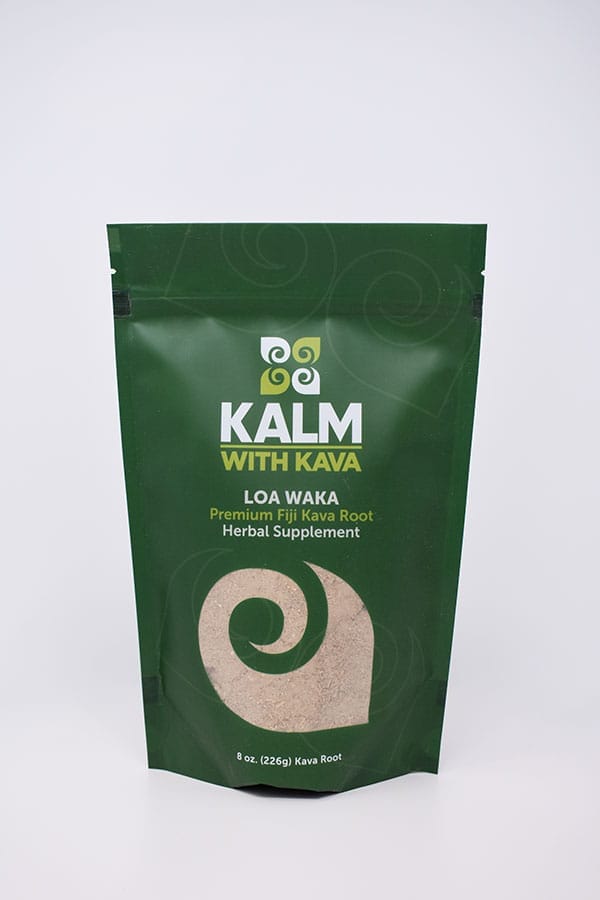
Kalm with Kava — Fiji Loa Waka
Kalm with Kava
A named noble Fijian cultivar prepared the traditional way — the full ~150–250 mg+ end of the ladder.
Our verdict: When the question is "what does real, full-strength kava deliver," this is the reference. Loa Waka is a named noble Fijian cultivar, prepared the traditional aqueous way, landing at the top of the mg ladder — the ~150–250 mg+ per shell that the South Pacific has used for centuries. It's the honest benchmark every canned drink is implicitly measured against.
Lab report: A named, single-origin noble Fijian cultivar (Loa Waka) — the cultivar transparency that lets you predict the chemotype and the experience.
This is the top rung of the ladder. Kalm with Kava's Fiji Loa Waka is a named noble cultivar — and the name matters, because a named cultivar means a knowable chemotype, which means a predictable experience. Prepared traditionally (kneaded in water and strained), a shell lands at the full-strength end of the ladder, roughly the ~150–250 mg+ of kavalactones that defines a real South Pacific serving. This is the reference point: the experience every convenient format is, knowingly or not, being compared against.
The honest trade-off is effort. This is real root powder, not a pop-top can — you prepare it, you strain it, you make peace with the earthy, peppery, unmistakably traditional taste, and you tune your own strength by how much you use and how long you knead. That's more work than cracking a can. But it's also the only way to meet kava at full strength and on its own terms, and it's why we keep a traditional preparation on the board as the benchmark the rest of the ladder reports to.
Who should buy it
Buy Loa Waka if you want the genuine article at full strength and you're willing to prepare it — a named noble Fijian cultivar is about as predictable as traditional kava gets. It's the pick for the drinker who has graduated past cans and wants to dial their own serving up the ladder, and for anyone who wants to taste what the convenient formats are approximating.
What we don't like
It's work. You're kneading and straining root powder, not opening a can, and the earthy, peppery taste is an acquired one that no amount of marketing softens. Because you prepare it yourself, the exact kavalactone milligrams per shell depend on your technique — the strength is real but self-determined, not printed on a serving. If you want a stated number with zero effort, this isn't that; it's the trade you make for full traditional strength.
- Cultivar
- Loa Waka — a named noble Fijian variety
- Format
- Traditional root powder (medium grind) — prepared and strained
- Strength
- Full — the ~150–250 mg+ traditional-shell end of the ladder
- Disclosure
- Named single-origin noble cultivar (knowable chemotype)
What we like
- Named noble Fijian cultivar — a knowable, predictable chemotype
- Full traditional strength, the reference point for the whole ladder
- Self-tunable: adjust strength by amount and preparation
- Cultivar transparency is chemotype transparency
Worth noting
- Requires real preparation — kneading and straining
- Earthy, peppery taste is an acquired one
- Per-shell mg depends on your technique, not a printed number
More kava worth comparing
Beyond this guide: the highest-rated kava across every format, kavalactones verified, with a live price check on each.



As an Amazon Associate we may earn from qualifying purchases, at no cost to you. 21+.
Quick shop: every pick
Skip the scroll: the whole lineup, with a live price check on each.
- MELO Sparkling KavaClearest Disclosed Number in a CanMELO · $49.99 / 12-packCheck Price
- Kalm with Kava — Fiji Loa WakaFull Traditional StrengthKalm with Kava · ~$39.99 / 8ozCheck Price
How we chose
We hold kava to one non-negotiable standard: show the number. A product earns a ranking spot only if it discloses its kavalactone content — total milligrams per serving, ideally with a chemotype and a third-party COA to back it. This is the same "show your work" bar serious supplement reviewers apply, and in a category with no mandated labeling, it is the single most protective thing a buyer can demand. Read the full policy in How We Research.
The two products below are not here because we love the brands. They are here because each puts a real, stated kavalactone figure on the record — a disclosed 100 mg per can in one case, and full traditional strength from a named noble cultivar in the other. Everything else in the category we mention by category, not by ranking, until the numbers exist to judge it.
Every effects claim here is experiential and attributed. We describe what the literature and the kava community consistently report — "heady," "heavy," "balanced" — and we do not say kava treats, fixes, or cures anything. Kava is for adults; legality and labeling vary; this is education, not medical advice.
Key terms
- Kavalactone
- The active compounds in kava — the molecules responsible for its effects, the way caffeine is responsible for coffee's. Total kavalactone milligrams per serving is the single best predictor of how a kava will feel, and the number serious labels disclose. Six of the ~18 kavalactones account for roughly 96% of kava's activity.
- Kavain
- The kavalactone most associated with the clear, uplifting, mildly euphoric "heady" feeling — and the digit 4 in a chemotype code. When a chemotype leads with 4, expect a heady, sociable kava rather than a sedating one. Its mellower relative, dihydrokavain (digit 2), tilts the same family toward calm.
- Chemotype
- The six major kavalactones ranked from most to least abundant, written as their digits — e.g. 4-2-6 means kavain, then dihydrokavain, then yangonin. The leading digit is your fastest read on where a kava sits on the heady-to-heavy axis. A named noble cultivar has a knowable chemotype, which is why cultivar transparency is so useful.
- Heady / heavy / balanced
- The axis kava drinkers use to describe a session. "Heady" is light, clear, uplifting, social — driven largely by kavain (4). "Heavy" is sedating, physical, melt-into-the-couch — driven largely by dihydromethysticin (5). "Balanced" sits between. A chemotype code lets you predict roughly where a kava lands before your first sip.
- "The number"
- Shorthand for the disclosed kavalactone milligrams per serving — the figure that should drive any kava buying decision. Crucially, it is NOT the same as milligrams of kava root: a 100 mg / 30% extract is only 30 mg of actual kavalactones. If a label states the kavalactone number, you can judge it; if it only brags about root weight, the real strength is unknown.
Questions, answered
How many milligrams of kavalactones should I look for?
As a working reference: around 70 mg of kavalactones is the figure most commonly cited as a minimum effective serving for the average person, so many people start there and adjust. A canned drink that discloses ~100 mg sits comfortably above that — a defined, sociable serving. A traditionally prepared shell lands far higher, in the ~150–250 mg+ range, which is full strength and where multiple shells add up fast. The right number is the one you can actually find on the label: a product that states its kavalactone content is one you can reason about, and that's worth more than any adjective. This is education, not a dosing recommendation — start low, go slow, and follow product labels.
What's a chemotype?
A chemotype is the six major kavalactones ranked from most abundant to least, written as a string of digits. The digits map to specific lactones: kavain is 4, dihydrokavain is 2, methysticin is 3, dihydromethysticin is 5, yangonin is 6, and desmethoxyyangonin is 1. So a code like 4-2-6 means kavain dominates, then dihydrokavain, then yangonin — and because it leads with kavain (the heady one), you'd expect an uplifting, sociable kava. A code that opens with 5 (dihydromethysticin) signals a heavier, more sedating profile. The first digit or two is your fastest read on how a kava will feel.
Why don't all brands disclose their kavalactone numbers?
Because in most markets, nothing forces them to. Kava labeling isn't standardized the way nutrition facts are, so disclosure is voluntary — and a brand that's vague about its kavalactone content faces no penalty for it. Some don't test their material rigorously enough to state a confident figure; some find a big "mg of root" number more flattering than an honest kavalactone one. That's exactly why we won't rank a product that won't disclose: in a category with no labeling standard, demanding the number is the buyer's main form of protection. See our full policy in How We Research.
Is more kavalactones always stronger?
More total kavalactones generally means a more intense serving, yes — but "stronger" and "better for you" aren't the same thing, and total milligrams don't tell the whole story. The ratio matters just as much as the total: 150 mg of a kavain-led (heady) kava feels very different from 150 mg of a dihydromethysticin-heavy (heavy, sedating) one. That's the point of the chemotype. So read both numbers — the total for intensity, the chemotype for character. A bigger total of the wrong profile for your evening isn't an upgrade.
Do kavalactones show up on a drug test?
Standard drug-screening panels look for specific substances — cannabis (THC), opioids, amphetamines, and the like — and kavalactones are not among the compounds those panels are designed to detect. Kava isn't cannabis and shares none of its chemistry. That said, we don't administer tests and can't speak to any specific employer's, sport's, or program's panel, which can vary; if a particular test matters to you, confirm with whoever runs it. This is general information, not legal or medical advice.
What's the difference between root mg and kavalactone mg?
This is the label trick worth memorizing. "Milligrams of kava root" is the weight of plant material; "milligrams of kavalactones" is the weight of the active compounds inside it — and only the second one predicts the effect. The industry math: a product listing 100 mg of root extract standardized to 30% kavalactones contains 100 × 0.30 = just 30 mg of actual kavalactones; the rest is inert fiber. So a label boasting a huge root number can deliver fewer kavalactones than a modest can that simply states its kavalactone figure. Always hunt for the kavalactone number — if a product only brags about root weight, treat its real strength as unknown.
Keep reading
What Is Kava?
The plain-English primer on the South Pacific root — what it is, what it feels like, and how to start.
Heady vs. Heavy Kava
The axis every kava sits on — and how the chemotype code predicts which side you're getting.
How to Read a Kava COA
The lab-sheet walkthrough: find the kavalactone line, decode the chemotype, spot what's missing.