Our Pick: MELO
Check PriceHeady vs Heavy Kava: Choosing by Chemotype (2026)
Every kava sits somewhere on one axis: heady (clear, social, daytime) at one end, heavy (sedating, body-melt, evening) at the other, and balanced in between. The good news is you can predict which side you're getting before you buy — the chemotype code gives it away in its first digit. This is the practical chooser: what each feels like, when to drink it, and how to read the code so you stop buying the wrong kava for the wrong hour.
By The Kava Review DeskUpdated 2026-07-27~7 min read Ranked by the lab reportHow we research
Heady kava is the clear, light, sociable end of the axis: a mental lift more than a body weight, suited to daytime and conversation, and associated with kavain-led chemotypes whose code opens with a 4. Heavy kava is the sedating, physical end: a heavy-limbed, melt-into-the-couch calm suited to evenings and winding down, associated with DHM-forward chemotypes loaded with a 5. Those two definitions, updated July 2026, are the whole decision. Two people can drink kava on the same night and have opposite experiences; one walks away chatty and clear-headed, the other melts into the couch and goes to bed early. They didn't dose differently. They drank different chemotypes. Drink a heavy kava at a Saturday lunch and you'll be useless by two. Drink a heady one at bedtime and you'll be wide awake at midnight wondering why kava is supposed to be relaxing.
Here's the part that makes this learnable instead of luck: the side a kava lands on isn't a mystery you discover by tasting. It's printed, if you know where to look, in the chemotype code — the string of digits that ranks a kava's kavalactones from most to least abundant. The community has spent decades mapping which digits lead to which feeling, and the headline is almost embarrassingly simple. A code that opens with a 4 skews heady. A code loaded with a 5 (often after a 2) skews heavy. Learn that one tell and you can read the side off a label before your first shell.
So this guide is the practical chooser. We'll describe what heady, balanced, and heavy each actually feel like; lay out when to reach for each (the social-daytime versus wind-down-evening split); teach the first-digit trick for reading the code; name the cultivars the kava community consistently sorts into each camp; and show how to use this exact axis to point yourself at the right side. Every effects description here is experiential and reflects the community consensus — the way longtime drinkers on the forums and vendor cultivar notes consistently describe these kavas — not a medical claim. Kava is for adults; this is education, not advice.
The short version
- Every kava sits on one axis: heady (clear, uplifting, social, daytime) ↔ balanced ↔ heavy (sedating, physical, body-melt, evening). Picking the right side for the hour matters more than picking the "best" kava.
- The fastest tell is the first digit of the chemotype code: a code that leads with 4 (kavain) skews heady; a code loaded with 5 (dihydromethysticin / DHM), often paired with 2, skews heavy.
- Heady kava is the daytime, social, get-things-done choice. Heavy kava is the evening, wind-down, prepare-for-sleep choice. Balanced kava is the versatile middle that flexes by serving size.
- Community-consensus examples: heady leans to kavain-led wakas like Vanuatu's Kelai and heady Fijian cultivars; heavy leans to DHM-forward kavas like Vanuatu's Borogu and many Tongan kavas; Loa Waka is the classic versatile, balanced-leaning all-rounder.
- Total kavalactones set the intensity; the chemotype sets the character. A bigger total of the wrong side for your evening isn't an upgrade — match the side first, then the strength.
At a glance
| Heady | Balanced | Heavy | |
|---|---|---|---|
| Feels like | Clear, light, mildly uplifting, talkative — a mental lift more than a body weight | A bit of both — gentle clarity up front softening into calm | Sedating, physical, heavy-limbed, melt-into-the-couch — a body weight more than a head lift |
| Best time | Daytime, social, before work that needs your head | Late afternoon / early evening — flexes by serving size | Evening, wind-down, the hour before bed |
| Chemotype tell | Code leads with 4 (kavain first) — e.g. 4-2-x | No single digit runs away with it; a mixed lead | Code loaded with 5 (DHM), often after a 2 — e.g. x-5-x, 2-5-x |
| Example cultivars (community consensus) | Vanuatu Kelai; heady Fijian wakas | Loa Waka (versatile — heady small, heavier large) | Vanuatu Borogu; many Tongan kavas |
The chooser at a glance. Effects descriptions reflect kava-community consensus (Kava Forums discussion and vendor cultivar notes), not effects we lab-verified ourselves; cultivar placements are how the community consistently sorts these kavas.

MELO Sparkling Kava
MELO
A clean, defined, daytime-friendly can — the easy way to test the lighter, more sociable end of the axis.
Our verdict: If you want to experience the lighter, more sociable side of kava without preparing a bowl, the can is the path of least resistance. MELO discloses 100 mg of kavalactones per serving — a defined, moderate, daytime-friendly dose. It won't pin you to the couch; it's built to be the social, grab-from-the-fridge kava, which makes it a natural way to feel what the "heady end" is reaching for.
Lab report: States 100 mg of kavalactones per can — a defined, repeatable serving you can plan a daytime session around.
Start here if you want the lighter end without the ritual. MELO Sparkling Kava is a cold, carbonated, no-grit can with a stated 100 mg of kavalactones — a defined, moderate, daytime-friendly serving. A canned drink is, by nature, the sociable, repeatable, plan-around-it format, which is exactly the role the heady end of the axis is built for: a clear, light, talkative lift you can carry into a porch hang or a Saturday afternoon without losing the day to sedation.
The trade-off is the same one every can makes: it isn't the full traditional depth, and it won't reproduce the body-heavy end of the spectrum even if you wanted it to. But for testing the lighter, social, daytime side of the heady-heavy axis — the side most people are actually looking for when they reach for kava before evening — a transparent, moderate can is the easiest on-ramp there is.
Who should buy it
Buy MELO if the kava you want is a daytime, social, keep-me-clear one — and you'd rather crack a can than knead a bowl. The defined ~100 mg serving is easy to reason about and easy to keep moderate, which suits the lighter end of the axis. It's the right pick for someone newer to kava who wants to feel the social side before committing to traditional preparation.
What we don't like
A can can't reach the heavy, body-melt end of the axis, and it isn't the full depth of a prepared shell — purists will miss both. A single disclosed total also means you know the intensity but not the precise chemotype, so you're trusting the format's daytime design rather than reading a code. And at a moderate strength, an evening wind-down session would mean several cans, which isn't what this product is for.
- Axis lean
- Built as a light, social, daytime serving
- Per can (stated)
- 100 mg kavalactones
- Format
- Sparkling canned drink — cold, carbonated, no preparation
- Disclosure
- Publishes per-can kavalactone content
What we like
- Defined, moderate, daytime-friendly serving — easy to keep social and clear
- States 100 mg kavalactones per can — a real, disclosed number
- Zero preparation — the lowest-friction way onto the lighter end of the axis
- Repeatable can format you can actually plan a session around
Worth noting
- Can't reach the heavy / body-melt end of the axis
- Single total disclosed, not a full chemotype breakdown
- Several cans needed for any heavier or longer session

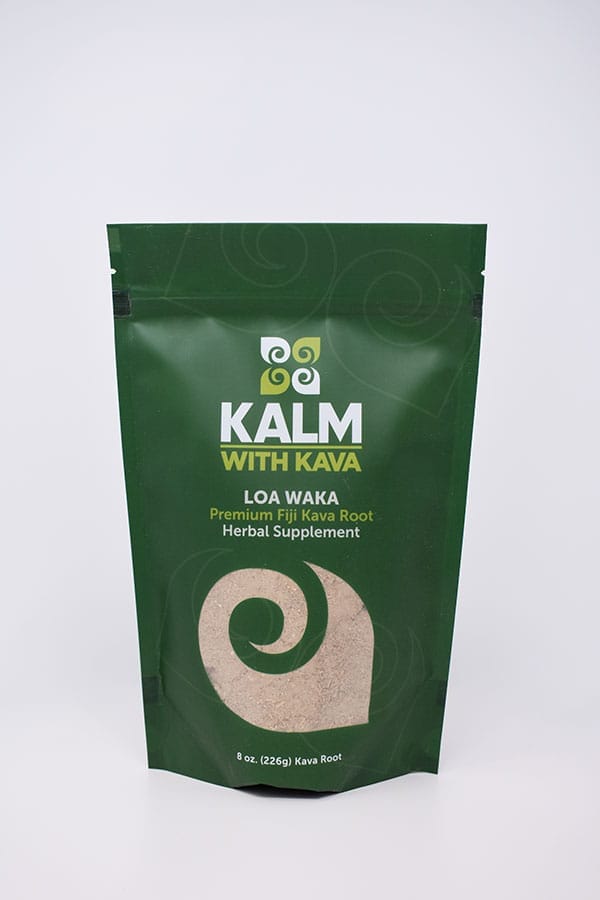
Kalm with Kava — Fiji Loa Waka
Kalm with Kava
The versatile noble Fijian classic — heady in small servings, heavier as you go up, so you choose the side.
Our verdict: Loa Waka is the cultivar that proves the axis is a dial, not a switch. The community consensus is that it runs balanced and versatile — heady and energizing in small servings, heavier and more grounding as you scale up. Prepared traditionally, it's the full-strength reference point, and because it's a named noble cultivar, its chemotype is knowable. If you want one kava that can play both ends of the axis, this is the classic answer.
Lab report: A named noble Fijian cultivar (Loa Waka) — a knowable, well-documented chemotype the community treats as a balanced all-rounder.
This is the versatile end of the axis in a single cultivar. Kalm with Kava's Fiji Loa Waka is the kava that demonstrates the axis is something you steer, not something you're stuck with. The community consensus on Loa Waka is consistent: well-rounded and versatile — in small servings it leans heady and energizing, good for the front of the day; in larger servings it takes on heavier, more grounding effects, better for winding down. One bag, both sides, tuned by how much you prepare.
The honest cost is effort and an acquired taste — this is real root powder you knead and strain, earthy and peppery, not a pop-top can. But it's also the most flexible, most traditional way to meet the full axis: dial it light and social early, or full and grounding late, all from one well-understood noble cultivar. It's why we keep a balanced classic on the board as the reference the convenient formats are measured against.
Who should buy it
Buy Loa Waka if you want one kava that can be heady when you want clarity and heavy when you want to wind down — and you're willing to prepare it. As a named noble Fijian cultivar with a knowable, balanced chemotype, it's about as predictable and versatile as traditional kava gets. It's the pick for the drinker ready to graduate past cans and steer their own place on the axis by serving size.
What we don't like
It's work: kneading and straining root powder, plus an earthy, peppery taste that's genuinely acquired. Because you prepare it yourself, where it lands on the axis depends on your technique and serving size rather than a printed number — the versatility is real but self-determined. If you want a single fixed side with zero effort, a purpose-built can is simpler; Loa Waka rewards the drinker who actually wants to steer.
- Axis lean
- Balanced / versatile — heady small, heavier large (community consensus)
- Cultivar
- Loa Waka — a named noble Fijian variety
- Format
- Traditional root powder (medium grind) — prepared and strained
- Disclosure
- Named single-origin noble cultivar (knowable chemotype)
What we like
- Versatile across the axis — steer heady or heavy by serving size
- Named noble Fijian cultivar — a knowable, balanced chemotype
- Full traditional strength when you want it — the reference all-rounder
- Self-tunable: you choose the side by how much you prepare
Worth noting
- Requires real preparation — kneading and straining
- Earthy, peppery taste is an acquired one
- Where it lands on the axis depends on your technique, not a printed side
More kava worth comparing
Beyond this guide: the highest-rated kava across every format, kavalactones verified, with a live price check on each.



As an Amazon Associate we may earn from qualifying purchases, at no cost to you. 21+.
Quick shop: every pick
Skip the scroll: the whole lineup, with a live price check on each.
- MELO Sparkling KavaThe Heady CanMELO · $49.99 / 12-packCheck Price
- Kalm with Kava — Fiji Loa WakaThe Balanced-Heavy ClassicKalm with Kava · ~$39.99 / 8ozCheck Price
How we chose
This is a chooser, not a ranking, so the bar is honesty about two different things. For the axis itself — heady, balanced, heavy — we report the consensus the kava community has built over decades on the forums and in vendor cultivar notes. These are experiential descriptions of how drinkers consistently report a cultivar feels, not effects we measured in a lab, and we label them that way.
For the products we put on the board, we apply the standard Kava Review rule: a pick earns its place by being transparent enough to predict — a disclosed kavalactone number, or a named cultivar with a knowable chemotype. The two below sit at opposite, illustrative ends of the axis precisely so you can feel the contrast: one clean daytime can, one full-strength traditional all-rounder.
Cultivar placements (Kelai as heady, Borogu as heavier, Loa Waka as versatile) are how the community consistently sorts them; individual batches vary, and the only way to know a specific lot's exact profile is its own chemotype. Every effects word here is experiential and attributed. We do not say kava treats, fixes, or cures anything. Kava is for adults; legality and labeling vary; this is education, not medical advice.
Key terms
- Heady kava
- The light, clear, uplifting, social end of the axis — a mental lift more than a body weight, suited to daytime and conversation. The community associates it with kavain-led chemotypes (codes that open with the digit 4). Vanuatu's Kelai and heady Fijian wakas are the consensus examples.
- Heavy kava
- The sedating, physical, body-melt end of the axis — a heavy-limbed, grounding calm suited to the evening and winding down toward sleep. The community associates it with dihydromethysticin (DHM)-forward chemotypes (codes loaded with the digit 5, often after a 2). Vanuatu's Borogu and many Tongan kavas are the consensus examples.
- Balanced kava
- The versatile middle of the axis — a bit of clarity up front softening into calm, with no single kavalactone running away with the profile. Balanced cultivars flex by serving size: lighter servings lean heady, larger ones lean heavy. Loa Waka is the classic all-rounder the community points to.
- First-digit trick
- The fastest read on a chemotype: look at the front of the code. A code that opens with 4 (kavain) skews heady and daytime; a code loaded with 5 (DHM), often paired with a 2, skews heavy and evening. The middle — no runaway digit — is balanced territory you steer by serving size.
- Chemotype
- The six major kavalactones ranked from most to least abundant, written as their digits (e.g. 4-2-6). For the heady-vs-heavy decision, the leading digit or two is what matters. A named noble cultivar has a knowable chemotype, which is why cultivar transparency lets you predict the side before you drink.
Questions, answered
What's the difference between heady and heavy kava?
They're the two ends of the single axis every kava sits on. Heady kava is light, clear, uplifting, and social — a mental lift more than a body one, which is why drinkers reach for it in the daytime and for conversation. Heavy kava is sedating, physical, and grounding — a heavy-limbed, melt-into-the-couch feeling better suited to the evening and winding down toward sleep. Balanced kava is the versatile middle. The descriptions here reflect the consensus longtime drinkers report on the kava forums and in vendor cultivar notes, not effects we measured in a lab; individual batches vary.
How do I tell if a kava is heady or heavy from its chemotype code?
Read the front of the code. A chemotype is the six kavalactones ranked most-to-least abundant as digits, and two of them do most of the predicting: 4 is kavain (heady) and 5 is dihydromethysticin or DHM (heavy). A code that opens with 4 — a 4-2-x pattern, say — leads with kavain and skews heady, clear, and daytime. A code loaded with 5, often after a 2 (an x-5-x or 2-5-x shape), skews heavy, sedating, and evening. Codes where no single digit dominates are balanced territory. So: leads with 4, drink it in daylight; heavy on 5, save it for night.
Which kava cultivars are heady, and which are heavy?
By community consensus — how drinkers on the forums and vendor cultivar notes consistently sort them — the heady, cerebral, daytime camp leans toward kavain-led cultivars like Vanuatu's Kelai (prized for a fast, clear, heady lift) and the heady-leaning Fijian wakas. The heavy, grounding, evening camp leans toward DHM-forward cultivars like Vanuatu's Borogu (a daily-drinker that opens gentle and settles into deep calm) and many Tongan kavas. Loa Waka is the classic balanced all-rounder. These are general placements, not guarantees: any specific batch's exact profile comes down to its own chemotype.
When should I drink heady kava versus heavy kava?
Match the side to the hour. Heady kava is the daytime, social, keep-me-clear choice — a porch hang, a creative afternoon, a sober social where you want to be present and talkative. Heavy kava is the evening, wind-down, pre-sleep choice — the end of a long day when the whole goal is to downshift. Drinking them backwards is the most common kava mistake: a heavy kava at lunch leaves you useless by mid-afternoon, and a heady one at bedtime can keep you up. If you want one kava for both, a balanced cultivar like Loa Waka lets you steer by serving size — lighter leans heady, larger leans heavy.
Is heavy kava stronger than heady kava?
Not necessarily — "heavy" describes character, not raw strength. Two things are separate: total kavalactones set how intense a serving is, while the chemotype (the ratio) sets whether that intensity feels heady or heavy. A heady kava can have a very high total and hit hard in a clear, uplifting way; a heavy kava can be moderate and still feel sedating because of its DHM-forward profile. So a big total of the wrong side for your evening isn't an upgrade. Read both: the total for intensity, the chemotype for which side of the axis you're getting.
How does the Kava Finder use the heady-heavy axis?
Our Kava Finder runs on the exact axis this guide explains. It asks what you want from the session — clear and social, deep and restful, or somewhere in between — and when you're drinking, then maps your answers onto the heady-to-heavy axis and points you at the side (and the format) that fits, whether that's a daytime can or a wind-down traditional cultivar. It's the same read you just learned to do by eye from a chemotype code; the Finder just does the matching for you and routes you to products transparent enough to predict.
Keep reading
Kavalactones, Explained
The number that predicts how a kava feels — the six kavalactones, the chemotype digit map, and the label trick to watch.
Noble vs Tudei Kava
Why the traditionally consumed noble cultivars are the ones to drink — and what tudei kavas are.
Best Kava Powder
The traditional-preparation picks, by named noble cultivar — including the balanced and heavy ends of the axis.