Our Pick: Kalm with Kava
Check PriceLoa Waka Kava (2026): The Strong Fijian Waka, Reviewed
Loa Waka isn't a brand — it's a single Fijian noble cultivar, made from 100% lateral roots, that's earned a reputation as one of the strongest kavas you can buy. We review the root itself: where it comes from, what the chemistry actually says, which grind to buy, and where to get it without overpaying. Here's the honest verdict, with the lab numbers checked.
By The Kava Review DeskUpdated 2026-06-17~8 min read Ranked by the lab reportHow we researchOfficial site ↗
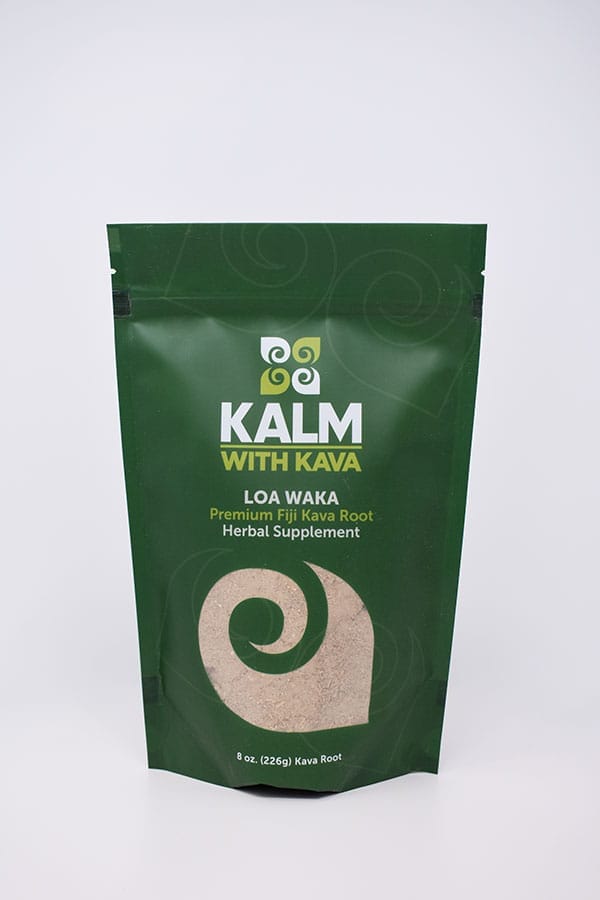
First, a clarification that changes how you should shop for it: Loa Waka is not a company. It's a cultivar — a single named Fijian noble kava, grown on the island of Taveuni and made from 100% lateral roots — that several vendors sell under that name. Most people meet it through Kalm with Kava, which offers it in medium grind, micronized, and instant, but you'll also find the same varietal listed on Amazon, Walmart, and through other Fijian importers. So reviewing "Loa Waka" is more like reviewing a single-origin coffee bean than reviewing a roaster: the question isn't really "is this brand legit," it's "is this root worth buying, in which form, and from whom." That's the guide we set out to write.
And the short answer is that Loa Waka has earned its reputation honestly. It's routinely described as one of the strongest Fijian kavas on the market, and unusually for kava, there's a public number behind the adjective. The official Kalm with Kava listing states a chemotype of 463251 — a kavain-forward configuration that tends to read heady and bright rather than couch-locked — and a community lab report on the kava forums cites a TK Group Labs HPLC assay putting it near 10% total kavalactones (9.69%). We'll be careful about that figure below, because there's an important difference between a number a hobbyist posted from a lab assay and a per-batch certificate of analysis printed on the bag you actually buy. But even with that caveat, Loa Waka is genuinely potent, and the chemistry points the same direction the drinkers do.
Everything below was verified against vendor product pages, retail listings, and public lab discussion in June 2026 — the origin, the waka grade, the stated chemotype, the formats, and the prices we could confirm. We are not paid by any vendor that sells Loa Waka and we have no relationship with Kalm with Kava or anyone else; this is an independent read. The usual ground rules apply throughout: kava is for adults 21 and over, it can cause drowsiness so don't drive after a session, don't mix it with alcohol, and if you take medications or are pregnant, talk to your doctor first. None of this is medical advice — it's a buyer's review of a kava varietal, written to help you decide whether this particular root is the right one to put in your strainer bag.
The short version
- Loa Waka is a varietal, not a brand: a single Fijian noble cultivar (Taveuni-origin) made from 100% lateral roots — the stronger "waka" cut — sold under that name by several vendors, most prominently Kalm with Kava.
- It's genuinely strong. The official listing states a kavain-forward 463251 chemotype (heady-leaning), and a community lab report cites a TK Group Labs HPLC assay near 9.69% total kavalactones — high for kava, though that figure is community-reported, not a per-batch COA on the bag.
- Best way to buy it: Kalm with Kava carries it in medium grind ($18.99 for 1/4 lb up to $304.49 for 5 lb), micronized (from $19.75 for 2 oz), and instant — so you can match grind to your patience without leaving the varietal.
- Get the medium grind if you own a strainer bag and want the cleanest, cheapest cup; get the micronized if your real blocker is the kneading and the mess. Same root, different deal on prep.
- The transparency caveat we apply to everything: the strength number lives on a forum, not on the vendor's product page as a downloadable per-batch certificate of analysis. The chemotype is published; the kavalactone percentage and COA are not. Ask for the COA on your batch before buying a large bag.
- Loa Waka leans heady and strong, not gentle. It's an excellent everyday kava for experienced drinkers; first-timers may want to start with a smaller serving or a more balanced cultivar and work up.
At a glance
| Format | Prep | Origin / grade | Price | Check price |
|---|---|---|---|---|
| Loa Waka Medium / Traditional Grind | Strainer-bag prep (knead & strain) | Fiji, Taveuni — 100% waka (lateral roots) | $18.99 (1/4 lb) – $304.49 (5 lb) | Check Price |
| Loa Waka Micronized | Mix-and-drink, no straining | Fiji — same waka varietal, milled fine | from $19.75 (2 oz); up to ~$64.49 | |
| Loa Waka Instant | Dissolve in cold water (dehydrated fresh juice) | Fiji — same varietal, concentrated | Premium per-oz; smallest serving size | |
| Loa Waka via Amazon / Walmart | Same formats, marketplace listings | Fiji — same varietal | Varies by listing and size |
The Loa Waka varietal across formats — confirmed pricing and details verified June 2026, primarily via Kalm with Kava (the most prominent seller); also listed on Amazon and Walmart. Prices vary by size and frequent sales; figures are representative.

Loa Waka Medium Grind
Kalm with Kava
The strong Fijian waka in its truest form — strainer-bag grind, single-origin Taveuni root, the lowest cost per serving.
Our verdict: If you want Loa Waka the way the cultivar is meant to be drunk, the medium grind is the pick. It's the single-origin Fijian waka in strainer-bag form, the cheapest per serving of any format, and the one that gives you the fullest expression of a genuinely strong, kavain-forward root. Kalm with Kava is the most reliable place to get it, sells it from $18.99 for a quarter-pound, and is the same vendor we cover in our full brand review. The one missing piece is the document: the chemotype is published, the kavalactone percentage and a per-batch COA are not.
Lab report: Made from 100% lateral roots (waka), sourced from Taveuni; the official listing states a kavain-forward 463251 chemotype. A community TK Group Labs HPLC assay reports ≈9.69% total kavalactones — but that figure is community-reported, not a downloadable per-batch COA on the product page. Rated 4.85/5 across 65 customer reviews.
This is Loa Waka in its truest form. The medium (traditional) grind is the coarse root you knead in a strainer bag — the authentic method, the cleanest-tasting cup, and the lowest cost per serving of any Loa Waka format. The varietal itself is a Fijian noble kava grown on the island of Taveuni and made from 100% lateral roots, the "waka" grade traditionalists prize because lateral roots tend to carry a higher kavalactone load than the basal stump. That's the entire reason Loa Waka reads as one of the stronger kavas on the shelf — and why the marketing tag "balanced and strong" is, for once, doing honest work.
As a drink, the medium grind is the connoisseur's format and the beginner's hurdle. You'll need a strainer bag, warm water, and about ten minutes of kneading to pull the kavalactones out — the routine our how-to-make-kava guide walks through. Loa Waka rewards the effort: a fast, emphatic tongue-numbing tingle up front, then a heady-leaning ease that many drinkers find sociable and clear-headed rather than couch-locking, with the unmistakable earthy, peppery base note of real kava. It's an excellent everyday root for someone who already drinks kava and wants a single strong cultivar to standardize on. Newcomers should respect the strength — start with a smaller serving and let reverse tolerance do its work over a few sessions before judging it.
On where to buy: Kalm with Kava is the most reliable source, carrying the medium grind from $18.99 for a quarter-pound up to $304.49 for five pounds, with the same varietal also listed on Amazon and Walmart. For the vendor-level verdict — sourcing, reputation, and the transparency gaps — see our full Kalm with Kava review.
Who should buy it
Buy the Loa Waka medium grind if you own a strainer bag, you want one of the stronger single-origin Fijian nobles to make your everyday kava, and you'd rather have the cleanest, cheapest cup than the fastest one. It's the right pick for the experienced drinker who wants a heady-leaning, genuinely potent waka to standardize on — and the best value within the varietal.
What we don't like
The transparency gap is the real knock: the chemotype is published, but the headline strength figure (≈9.69% kavalactones) lives on a forum as a community assay, not as a downloadable per-batch COA on the product page — so the strength claim is documented less rigorously than it could be. Medium grind also requires strainer-bag prep every time, and Loa Waka's strength makes it a steep first kava for true beginners.
- Varietal
- Loa Waka — single-origin Fijian noble kava (Taveuni)
- Root grade
- 100% lateral roots (waka) — the stronger cut
- Chemotype
- 463251 (kavain-forward; heady-leaning), per the vendor listing
- Strength
- Community TK Group Labs HPLC assay ≈9.69% total kavalactones (not a posted per-batch COA)
- Format
- Medium / traditional grind (requires a strainer bag)
- Price
- $18.99 (1/4 lb) – $304.49 (5 lb) via Kalm with Kava; also on Amazon/Walmart
What we like
- Genuinely strong, single-origin Fijian waka — 100% lateral roots from Taveuni
- Published 463251 chemotype (kavain-forward) — more chemistry than most listings give
- Lowest cost per serving of any Loa Waka format
- Strong customer rating (4.85/5 across 65 reviews) and wide availability
Worth noting
- Strength figure is a community forum assay, not a downloadable per-batch COA
- Medium grind requires strainer-bag prep and kneading every time
- Potency makes it a steep first kava for true beginners
More kava worth comparing
Beyond this guide: the highest-rated kava across every format, kavalactones verified, with a live price check on each.




As an Amazon Associate we may earn from qualifying purchases, at no cost to you. 21+.
How we chose
Because Loa Waka is a varietal sold by more than one seller, we review the root on its own merits and treat "where to buy" as a separate question. We judge the cultivar on four things, in order: what's actually known about its chemistry (a stated chemotype, any kavalactone figure, and how reliably it's documented), its sourcing and grade (origin island and whether it's genuinely waka — lateral root), how it drinks across formats, and honest cost. We verify every claim we can against vendor product pages and public listings, and we quote the wording rather than paraphrasing a marketing promise into a fact.
Our signature move is the transparency check, and Loa Waka is a useful case study in it. The vendor page publishes the chemotype (463251) — genuinely more than most kava listings offer. But the headline strength number you'll see quoted (≈9.69% total kavalactones, via a TK Group Labs HPLC assay) comes from a community lab report on the kava forums, not from a downloadable per-batch certificate of analysis on the bag you buy. That distinction matters: a forum assay tells you what one sample tested at; a per-batch COA tells you what's in your bag. We report the number, we attribute it honestly, and we never present a community figure as the vendor's published guarantee.
We prepare what we describe and we don't fabricate. We knead the medium grind in a strainer bag and stir the micronized straight in, and we describe the effect in plain experiential language drawn from how kava is commonly reported — earthy, peppery, a fast tongue-tingle, a heady-leaning relaxation for a kavain-forward chemotype like this one. We do not invent kavalactone test numbers, fabricate tasting panels, or make health claims. Kava is a centuries-old Pacific social drink that many adults find relaxing; it is not a treatment for anything, and reverse tolerance means your first session may speak more quietly than your second or third.
Key terms
- Loa Waka
- A single Fijian noble kava cultivar grown on the island of Taveuni and made from 100% lateral roots. It's a varietal sold by multiple vendors (most prominently Kalm with Kava), not a brand of its own — reputed to be one of the strongest Fijian kavas available.
- Waka (lateral roots)
- The lateral root grade of kava, generally higher in kavalactones than the basal stump or makas. "Loa Waka" being 100% lateral roots is the main reason it reads as strong and heady-leaning.
- Chemotype
- The numeric ordering of the six main kavalactones in a given kava. Loa Waka's stated 463251 puts kavain (4) first and methysticin (6) second — a kavain-forward profile that tends to read bright and heady rather than heavy.
- Total kavalactone percentage
- The share of a dried kava's weight made up of the six active kavalactones — kava's closest equivalent to an ABV figure. A community HPLC assay puts Loa Waka near 9.69%, which is high; but a percentage is only as trustworthy as the document behind it.
- COA (Certificate of Analysis)
- The lab document reporting what's actually in a batch — total kavalactone %, chemotype, contaminant screens. The trust ladder: posted per batch (best), available on request (acceptable), a community forum assay or a bare "lab tested" (a claim, not a guarantee).
- Reverse tolerance
- Kava's well-known quirk: first sessions often feel mild, with the effect arriving more clearly on the second or third try. Worth knowing before you judge a strong cultivar like Loa Waka on a single sitting.
Questions, answered
Is Loa Waka a brand or a type of kava?
It's a type — a single Fijian noble cultivar made from 100% lateral roots (waka), grown on the island of Taveuni. It's sold under the Loa Waka name by more than one vendor, most prominently Kalm with Kava, and also appears on Amazon, Walmart, and through other Fijian importers. Think of it the way you'd think of a single-origin coffee bean rather than a coffee roaster: you're buying the root, and you can buy it from different sellers.
How strong is Loa Waka kava?
It's widely considered one of the stronger Fijian kavas, and there's a number behind that reputation. The official listing publishes a kavain-forward 463251 chemotype (which tends to read heady), and a community lab report on the kava forums cites a TK Group Labs HPLC assay near 9.69% total kavalactones — high for kava. We quote that figure with a caveat: it's a community-reported assay of one sample, not a per-batch certificate of analysis printed on the bag you buy. So treat it as a strong signal, not a guarantee for your specific batch.
Where can I buy Loa Waka, and what does it cost?
The most reliable source is Kalm with Kava, which sells it in medium grind ($18.99 for a quarter-pound up to $304.49 for five pounds), micronized (from $19.75 for 2 oz, up toward $64.49 for larger sizes), and instant. The same varietal is also listed on Amazon and Walmart. For the cleanest cup at the lowest cost per serving, the medium grind is the best value; for convenience, the micronized skips the strainer bag.
Medium grind, micronized, or instant — which Loa Waka should I get?
It depends on how much prep you'll tolerate. Buy the medium grind if you own a strainer bag and want the cleanest, cheapest cup — it's the truest form of the varietal. Buy the micronized if your real blocker is the ten minutes of kneading and the mess; it stirs straight into water and drinks whole, slightly stronger per gram but grittier. Buy the instant if you want speed, portability, and precise dosing, and don't mind paying a premium per serving. Same root, three different deals on prep.
Is Loa Waka noble kava?
Yes — it's marketed and sold as a 100% noble Fijian kava, the traditional, agreeable cultivar grade as opposed to harsher tudei ("two-day") kava. Its published 463251 chemotype is consistent with a noble profile. That said, "noble" on any label is a claim worth seeing backed by documentation; the vendor publishes the chemotype but not a downloadable per-batch COA, so if nobility verification matters to you, ask for the certificate on your batch. Our noble vs. tudei guide explains why the distinction matters.
Is Loa Waka good for beginners?
It can be, but it's strong, so go gently. Loa Waka's kavain-forward 463251 chemotype reads heady and bright rather than heavily sedating, which many newcomers find approachable — but its potency (it's built from lateral roots and tests high in kavalactones) means a first-timer should start with a smaller serving and let reverse tolerance build over a few sessions before judging it. If you want the easiest on-ramp within the varietal, the micronized format skips the strainer-bag learning curve. If you'd rather start milder overall, a more balanced cultivar may suit you first.
Does Loa Waka publish a COA or kavalactone percentage?
Partially. The vendor product page publishes the chemotype (463251), which is more chemistry than most kava listings provide. But the headline strength figure you'll see quoted (≈9.69% total kavalactones, via a TK Group Labs HPLC assay) comes from a community lab report on the kava forums, not from a downloadable per-batch certificate of analysis on the bag. So the kavalactone percentage is documented by the community, not guaranteed by the seller per batch. If it matters to you, email the vendor and ask for the COA on your specific batch before buying a large bag.
What does Loa Waka taste and feel like?
Like real, strong Fijian kava: earthy and peppery, with a fast and emphatic tongue-numbing tingle, followed by a heady-leaning relaxation that many drinkers describe as sociable and reasonably clear-headed rather than couch-locking — consistent with its kavain-forward chemotype. It's not a kava people drink for the flavor; it's one they drink for the effect. As always, none of this is medical advice — kava can cause drowsiness, so don't drive after a session, and don't mix it with alcohol.
Keep reading
Kalm with Kava Review
The full vendor-level verdict on the house that sells Loa Waka — sourcing, range, pricing, and the transparency gaps.
Best Kava Powder
The full ranked field of traditional and micronized kava roots — where a strong Fijian waka fits against the rest.
Noble vs. Tudei Kava
Why "noble" on a label matters — the cultivar distinction at the heart of buying any single-origin kava.
Best Value Kava
Cost per session, honestly computed — how a strong waka like Loa Waka stacks up on price.
Best Kava Brands
The vendors worth trusting, ranked — including the ones that carry Loa Waka.