Our Pick: Bula Kava House
Check PriceBest Kava Tea (2026): Instant Mixes & Traditional Brews, Ranked
Here's the uncomfortable truth most "best kava tea" lists won't tell you: kavalactones barely dissolve in hot water, so a pre-bagged kava tea steeped like chamomile is the weakest way to drink kava. The strong cup is an instant mix or a traditional grind. We rank the real ways to brew a cup — judged the only way that matters, by cost per 100 mg of kavalactones where a lab report exists — and we say plainly when a product is a gentle flavor experience rather than a potent one.
By The Kava Review DeskUpdated 2026-08-07~8 min read Ranked by the lab reportHow we research
 Best Overall
Bula Kava House — Instant Kava Drink Mix
Bula Kava House · 4.7
Instant kava drink mix
 Best Value
Bula Kava House — Borogu (Traditional Grind)
Bula Kava House · 4.6
Borogu kava powder
 Upgrade Pick
Kava Kava Root Tea
Palm Beach Medicinal Herbs · 3.8
$21.95 / box (verified August 2026)
If you searched "best kava tea," you almost certainly pictured a tea bag: drop it in hot water, steep a few minutes, sip. We have to lead with the inconvenient lab fact, because everything else follows from it — kavalactones, the active compounds in kava, are only weakly soluble in water, and barely at all from a brief hot-water steep of dried root in a bag. That's why a traditional kava preparation is kneaded in lukewarm water for ten-plus minutes, not steeped: the mechanical work and the time are what coax the kavalactones out of the root fiber. A pre-bagged "kava tea" skips both. So the most common thing people mean by "kava tea" is, by a wide margin, the weakest way to drink kava.
That isn't a reason to avoid kava tea — it's a reason to choose the right kind. There are really three ways to end up with a hot (or cold) cup of kava, and they sit on a clear potency ladder. At the bottom: a pre-bagged kava tea, steeped like any herbal tea — light, pleasant, low-effort, and honestly more of a calming ritual than a strong drink. In the middle and genuinely potent: instant kava, a pre-extracted powder you simply stir into hot or cold water (no straining, full strength). And the original: traditional grind, real root powder you knead and strain — the strongest and cheapest per dose, but the most work. Our rankings cover all three, because the "best kava tea" for you depends entirely on which trade-off you want.
We judge them the way we judge everything on this site: by the only number that lets you compare a tea bag to a tin of instant to a pound of root — cost per 100 mg of kavalactones. A cheap-looking bag can be the most expensive kava you'll ever drink once you account for how little active compound it delivers. But here's our hard rule, and we apply it on this page without exception: if a vendor doesn't publish a Certificate of Analysis or a stated kavalactone content, we do not print a kavalactone number or a cost-per-100mg figure — we leave it qualitative. We never invent a percentage, a price, or a test result. Effects language here reflects kava-community consensus, not effects we measured. Kava is for adults; this is education, not medical advice.
The short version
- Bagged "kava tea" is the weakest format. Kavalactones barely dissolve in a hot-water steep, so a pre-bagged kava tea is a gentle, flavor-and-ritual product — not a strong cup. If you want potency, it's the wrong tool.
- Instant kava is the strong, easy "tea." Pre-extracted powder stirs straight into hot or cold water at full strength — no straining, no kneading. It's the best of both worlds for most people who searched "kava tea": potent and effortless.
- Traditional grind is the strongest and cheapest per dose — but it's a brew, not a steep. You knead root powder in water for 10+ minutes and strain it. Most cost-effective per 100 mg of kavalactones, most effort.
- Judge by cost per 100 mg of kavalactones, not sticker price. A small tin or a few tea bags can deliver very little active compound, making a "cheap" kava the priciest per dose. The metric is the great equalizer.
- No published COA, no number — and no health claims. We only print a kavalactone or cost-per-100mg figure when a vendor publishes one; otherwise the verdict stays qualitative. Kava is a calming adult beverage, not a treatment for anything. Never mix it with alcohol. Not medical advice.
At a glance
| Pick | Format | Potency | Effort | Cost per 100 mg kavalactones | Check price |
|---|---|---|---|---|---|
| Bula Kava House — Instant Kava (Our Pick) | Instant (pre-extracted powder, stir into water) | Strong — full-strength, no straining loss | Stir and sip — no kneading or straining | Confirm against the vendor's published COA at purchase | Check Price |
| Root of Happiness — Instant Kava (10% kavalactones) | Instant (pre-extracted powder) | Strong — vendor states a 10% kavalactone content | Stir and sip | Computable from the stated 10% content — verify the current price + COA | Check Price |
| Kona Kava Farm — Instant Kava Mix | Instant flavored mix (stir into water) | Moderate — flavored instant, an easy on-ramp | Stir and sip | Qualitative — confirm whether a COA / kavalactone figure is published | Check Price |
| Bula Kava House — Borogu (Traditional Grind) | Traditional grind (knead & strain) | Strongest, most controllable — a real brew | Highest — knead 10+ min, strain through a bag | Typically the lowest per dose; confirm against the vendor's COA | Check Price |
| Yogi — Kava Stress Relief Tea (bagged) | Pre-bagged tea (steep like herbal tea) | Weakest — a gentle steep, flavor & ritual | Lowest — drop a bag in hot water | Qualitative — no kavalactone content published, so no number from us | Check Price |
| Ethnospot — Kava Root Teabags (100% root) | Tea bag (pure kava root) | Gentle — steep-limited, strongest of the bags | Steep like any tea | Not printed — no published kavalactone figure | Check Price |
| Palm Beach Medicinal Herbs — Kava Root Tea | Tea bag (pure kava root) | Gentle — steep-limited | Steep like any tea | Not printed — no published kavalactone figure | Check Price |
The real ways to make a cup of kava, from weakest to strongest. THE HOUSE RULE: a cost-per-100mg figure appears only where the vendor publishes a Certificate of Analysis or a stated kavalactone content — otherwise the cell stays qualitative, because we never invent test data. Prices and serving counts change; always confirm on the vendor's page, which is also where you'll find any published COA. Effects descriptions reflect kava-community consensus, not effects we lab-verified. Not medical advice.
Bula Kava House — Instant Kava Drink Mix
Bula Kava House
Pre-extracted noble kava you stir into hot or cold water at full strength — the potent, no-strain answer to what people actually want from "kava tea."
Our verdict: If "kava tea" to you means a quick, hot (or cold) cup that actually does something, instant kava from a noble-kava vendor is the answer — and Bula Kava House is our pick for it. The powder is already extracted, so you stir it into water and drink it at full strength with no kneading and no straining. You get the potency of a real preparation with the effort of a tea bag. Bula's reputation for transparency means you can usually find a published lab report to verify strength and run the cost-per-100mg math yourself.
Lab report: Bula Kava House sells noble kava and has a long reputation for publishing lab reports — confirm the current COA and kavalactone figure on the product page, and compute cost per 100 mg from there.
The honest "best kava tea" for most people isn't a tea bag at all — it's instant kava. Bula Kava House's instant kava drink mix is pre-extracted noble root: the kavalactones have already been pulled out of the fiber and dried into a soluble powder, so you simply stir it into hot or cold water and drink. There's no bag to steep, no root to knead, and — crucially — no straining step where strength gets left behind. You get a full-strength cup with tea-bag effort. (For the whole format landscape, see our guide to the best instant kava.)
Bula Kava House has been one of the more transparency-minded U.S. vendors for years, and that's exactly why it's our pick over a generic instant: you can usually find a published lab report on the product page to confirm the kavalactone content — which is the only way to run the cost-per-100mg number honestly. We're not printing a figure here, because the right figure is the one on today's COA at today's price; check it at purchase and do the simple math (price ÷ servings ÷ mg per serving × 100). To be clear about what it is: a calming, traditional adult beverage in a convenient form — not a stimulant, not a treatment for anything. Keep it un-mixed with alcohol, and don't drive if you feel it.
Who should buy it
Buy Bula's instant if you searched "kava tea" wanting a quick, strong cup with zero ritual — stir it into hot or cold water and you're done, at full strength. It's the pick for the person who wants potency and convenience together, and who likes that the vendor publishes lab reports so the value math is verifiable. Choose a traditional grind instead only if you specifically want the lowest cost per dose and don't mind kneading and straining.
What we don't like
Instant kava costs more per dose than buying raw root and brewing it yourself — you're paying for the extraction and the convenience. Flavor is the earthy, peppery kava character concentrated, which not everyone loves on first sip. And as always: confirm the current COA and price before trusting any cost-per-100mg claim, including your own. It's a calming drink, not a stimulant or a remedy.
- Format
- Instant kava — pre-extracted powder, stir into water
- Preparation
- Stir into hot or cold water; no kneading, no straining
- Potency
- Full strength — no extraction loss in your cup
- Cultivar
- Noble kava (confirm cultivar + COA on the product page)
- Cost per 100 mg KL
- Compute from the vendor's published COA at purchase
What we like
- Full-strength cup with tea-bag effort — no kneading or straining
- Pre-extracted, so the weak-steep problem of bagged tea doesn't apply
- From a vendor with a long track record of publishing lab reports
- Works hot or cold — a genuine quick "cup of kava"
Worth noting
- Costs more per dose than brewing raw root yourself
- Concentrated earthy, peppery flavor is an acquired taste
- Verify the current COA + price before trusting any value math

Root of Happiness — Instant Kava (10% Kavalactones)
Root of Happiness
An instant kava that states a 10% kavalactone content on the label — the rare "tea" you can actually price per 100 mg without guessing.
Our verdict: This is the instant kava for people who want the number, not just the vibe. Root of Happiness states a 10% kavalactone content for its 50 g instant — meaning a disclosed strength you can actually plug into the cost-per-100mg formula instead of guessing. As an instant, it stirs into water at full strength like our top pick, but the stated content is its real edge: it turns the value question from a shrug into arithmetic. It's our pick for the disclosure-first drinker.
Lab report: Root of Happiness states a 10% kavalactone content for this 50 g instant kava — a disclosed figure, which is exactly what lets you compute cost per 100 mg honestly (always reconfirm the current spec and price).
The best "kava tea" for a numbers person is the instant that tells you its strength. Root of Happiness's instant kava does exactly that: the 50 g instant states a 10% kavalactone content on the label. That single disclosed figure is what separates a guessable kava from a priceable one — because cost per 100 mg of kavalactones is only honest when the kavalactone content is published. With a stated 10%, a 50 g tin is on the order of 5 g of kavalactones total, and from there the per-100mg math is straightforward against the current price.
In the cup it behaves like any quality instant: stir it into hot or cold water and drink at full strength, no straining. Root of Happiness is a vendor drinkers respect for disclosing chemotype and strength information across its range, which is the reason it's here. The honest caveats are the instant-kava caveats — you pay a convenience premium over raw root, and the flavor is concentrated and earthy. And reconfirm the stated content and current price at purchase before trusting any value figure, including your own math. It's a calming adult beverage, not a stimulant or a remedy; never with alcohol.
Who should buy it
Buy this if you want an effortless instant kava AND a disclosed strength you can actually price — the 10% stated content lets you compute cost per 100 mg without guessing. It's the pick for the transparency-first drinker who likes doing the value math. If you don't care about the number and just want a trusted strong cup, our top pick is just as easy.
What we don't like
A stated content is a vendor figure, not a substitute for reading the full COA — confirm both the strength and the current price at purchase before trusting any per-100mg number. Like all instants, it carries a convenience premium over raw root and a concentrated earthy flavor. And it's a calming drink, not a stimulant or treatment for anything.
- Format
- Instant kava — pre-extracted powder (50 g)
- Stated content
- 10% kavalactones (vendor-disclosed — verify at purchase)
- Preparation
- Stir into hot or cold water; no straining
- Vendor
- Root of Happiness — discloses chemotype/strength across its range
- Cost per 100 mg KL
- Computable from the stated 10% content + current price
What we like
- States a 10% kavalactone content — a rare, priceable disclosure
- Full-strength instant: stir and sip, no straining
- From a vendor known for disclosing strength and chemotype
- Lets you run the cost-per-100mg math honestly
Worth noting
- A stated figure isn't the full COA — verify both at purchase
- Convenience premium over brewing raw root
- Concentrated, earthy flavor; a calming drink, not a stimulant
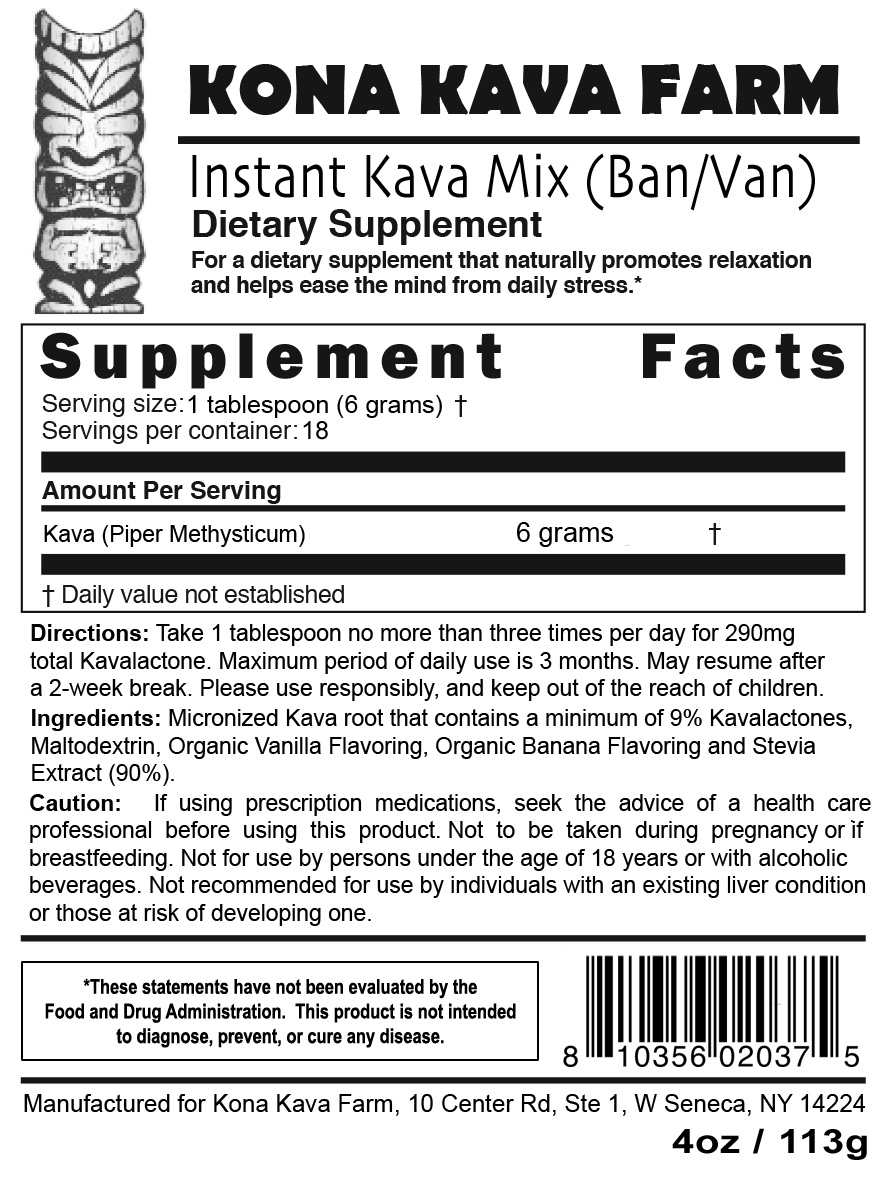
Kona Kava Farm — Instant Kava Mix
Kona Kava Farm
A flavored instant kava mix that stirs into water in seconds — the friendliest, most tea-like way in for someone who finds plain kava harsh.
Our verdict: For the person who searched "kava tea" because they wanted something gentle and pleasant to sip, Kona Kava Farm's flavored instant mix is the friendliest on-ramp. It stirs into hot or cold water in seconds, and the flavoring softens kava's famously earthy edge — closer to the tea-drinking experience newcomers expect. It's an instant, so it's stronger than a bagged steep, but we treat its potency qualitatively here: confirm whether a kavalactone figure is published before trusting any number.
Lab report: A flavored instant kava drink mix; confirm whether Kona Kava Farm publishes a kavalactone content or COA for this product before relying on any potency figure — if it doesn't, we don't print one.
If the appeal of "kava tea" was the easy, pleasant ritual, start here. Kona Kava Farm's instant kava mix is a flavored, pre-extracted powder that dissolves into hot or cold water in seconds. The flavoring is the point: plain kava is earthy and peppery in a way that surprises first-timers, and a flavored mix smooths that into something much closer to the gentle, sippable cup most people imagine when they search for kava tea. As an instant it's genuinely stronger than a bagged steep, while staying just as low-effort.
Treat this as the approachable middle ground: stronger and more honest than a tea bag, friendlier on the palate than a raw instant or a kneaded bowl. The caveats are the usual ones — a flavored mix leans on recipe rather than a disclosed chemotype, and you pay for convenience and flavoring. Reverse tolerance applies to any kava, so a first cup may feel mild; don't double up to chase it. And it remains a calming adult drink, not a stimulant or a remedy — never paired with alcohol, and don't drive if you feel it.
Who should buy it
Buy this if the gentle, sippable ritual is what drew you to "kava tea" and plain kava's earthy taste puts you off — a flavored instant is the friendliest on-ramp, stronger than a tea bag but easy and pleasant. It's the newcomer's pick. If you want maximum potency or a disclosed strength to price, our top two picks fit better.
What we don't like
A flavored mix leans on recipe and taste rather than a disclosed chemotype, and you should confirm whether any kavalactone figure or COA is published before trusting a potency claim — if none is, treat the strength as unstated. You also pay for the flavoring and convenience. It's a calming drink, not a stimulant or a treatment.
- Format
- Flavored instant kava mix — stir into water
- Preparation
- Dissolves in seconds, hot or cold; no straining
- Potency
- Moderate — stronger than a bagged steep (figure not assumed)
- Flavor
- Flavored — softens kava's earthy, peppery edge
- Cost per 100 mg KL
- Qualitative — confirm if a COA / KL figure is published
What we like
- Flavored and gentle — the friendliest, most tea-like on-ramp
- Stronger than a bagged steep while staying effortless
- Stirs into hot or cold water in seconds, no straining
- Lowers the barrier for anyone put off by raw kava's taste
Worth noting
- Recipe-based — confirm if a kavalactone figure / COA is published
- Convenience and flavoring premium over raw root
- A calming drink, not a stimulant — and reverse tolerance applies
Bula Kava House — Borogu (Traditional Grind)
Bula Kava House
A named noble Vanuatu cultivar you knead and strain into a real brew — the strongest, most controllable, and usually cheapest cup per 100 mg of kavalactones.
Our verdict: If "best kava tea" really means "the best cup of kava," the honest answer is a traditional grind — and Borogu from Bula Kava House is our pick for it. You knead the root powder in lukewarm water and strain it, which is how kavalactones actually come out of the fiber: this is the strongest and most controllable preparation, and almost always the lowest cost per 100 mg of kavalactones. The trade is effort. It's a brew, not a steep — but it's the real thing.
Lab report: Borogu is a named noble Vanuatu cultivar; Bula Kava House has a strong record of publishing lab reports, so confirm the COA and kavalactone figure on the product page and compute cost per 100 mg from there — this format is typically the lowest per dose.
The strongest, cheapest cup of kava is a brewed one, not a steeped one. Bula Kava House's Borogu is a named noble Vanuatu cultivar in traditional grind — real root powder you knead in lukewarm water for ten minutes or more, then strain through a bag. That kneading-and-straining is the whole reason it's potent: it's the mechanical extraction a bagged tea skips. The result is the most controllable cup on this page — you decide the strength by how much root and how much water — and, dose for dose, almost always the cheapest. (See how to make kava for the full technique, and our best kava powder guide for the full traditional-grind shelf, ranked by disclosure and cost per batch.)
The honest cost is effort and taste: kneading and straining takes ten-plus minutes, the earthy-peppery flavor is genuinely acquired, and there's a small learning curve to dialing your serving. Borogu is also a balanced-to-heavier cultivar, so it leans toward a relaxing, grounding cup — lovely in the evening, less so if you wanted something light and daytime. And the standing rules apply: it's a calming Pacific drink, not a stimulant or a treatment; keep it un-mixed with alcohol, expect reverse tolerance early on, and don't drive if you feel it.
Who should buy it
Buy Borogu if you want the real thing — the strongest, most controllable, and cheapest cup per dose — and you don't mind kneading and straining a brew. As a named noble cultivar from a transparency-minded vendor, it's about as predictable and verifiable as traditional kava gets. It's the pick for anyone willing to trade ten minutes of effort for the best value per 100 mg of kavalactones.
What we don't like
It's genuine work: kneading and straining root powder takes time, the earthy-peppery taste is acquired, and there's a learning curve to dialing your serving. Borogu leans relaxing-to-grounding, so it's an evening cup more than a light daytime one. Confirm the COA before trusting any value math — and remember it's a calming brew, not a stimulant or a remedy.
- Format
- Traditional grind — knead & strain (a brew, not a steep)
- Cultivar
- Borogu — a named noble Vanuatu variety
- Preparation
- Knead in lukewarm water 10+ min, strain through a bag
- Potency
- Strongest and most controllable — you set the dose
- Cost per 100 mg KL
- Typically the lowest; confirm against the published COA
What we like
- Strongest and most controllable cup — you dial the dose
- Usually the lowest cost per 100 mg of kavalactones
- Named noble Vanuatu cultivar from a lab-report-publishing vendor
- The authentic, traditional preparation — the real "best cup"
Worth noting
- Real effort — 10+ minutes of kneading and straining
- Earthy, peppery taste is acquired; a learning curve to dial in
- Leans relaxing/evening; a calming brew, not a stimulant
Yogi — Kava Stress Relief Tea
Yogi Tea
The familiar bagged "kava tea" — pleasant and effortless, but a gentle herbal-blend ritual rather than a potent cup, and we say so plainly.
Our verdict: This is the product most people picture when they search "kava tea," so it earns a place — but with a clear-eyed verdict. Yogi's Kava Stress Relief is a pleasant, widely available bagged herbal blend that includes kava among other botanicals. Steeped like any tea, it's gentle, soothing as a ritual, and effortless. What it is not is a strong kava cup: kavalactones don't extract well from a brief steep, and the blend publishes no kavalactone figure, so we print no potency number. Buy it for the calming ritual, not the punch.
Lab report: A bagged herbal tea blend that includes kava among other botanicals; no kavalactone content is published, so by our house rule we print no potency number and no cost-per-100mg figure — treat it as a gentle flavor-and-ritual product.
The bagged "kava tea" everyone pictures is a gentle ritual, not a strong drink — and that's fine, as long as you know it. Yogi's Kava Stress Relief is a widely stocked herbal blend that includes kava alongside other calming botanicals like carob and cinnamon. You steep a bag in hot water like any tea: it's pleasant, warming, soothing as a wind-down routine, and about as effortless as kava gets. For a lot of people, that easy ritual is genuinely the appeal.
Set your expectations accordingly and it's a fine thing to keep in the cupboard: low effort, low intensity, pleasant flavor, easy to find. Just don't judge "kava" by it — plenty of people try a bagged tea, feel little, and wrongly conclude kava does nothing, when the real culprit is the format. It's a gentle, calming herbal tea for adults, not a stimulant or a treatment for anything; as with all kava, don't pair it with alcohol. Not medical advice.
Who should buy it
Buy this if you want the easy, familiar bagged-tea ritual — a gentle, soothing, widely available cup for winding down, with no expectation of a strong kava effect. It's the pick for the cupboard, not for potency. Anyone who wants to actually feel what kava drinkers describe should start with an instant or a traditional grind instead.
What we don't like
It's the weakest format by chemistry, not by accident — kavalactones barely steep out of a tea bag — and it's a multi-botanical blend rather than pure kava, with no published kavalactone figure, so we can't (and don't) print a potency or value number. The real risk is that newcomers try it, feel nothing, and write off kava entirely. It's a calming herbal tea, not a strong cup or a remedy.
- Format
- Pre-bagged herbal tea — steep like any tea
- Composition
- A blend — kava among other botanicals
- Potency
- Weakest — poor steep extraction; gentle ritual
- Disclosure
- No kavalactone content published
- Cost per 100 mg KL
- Not printed — no published figure, per our house rule
What we like
- Effortless and familiar — the easy bagged-tea ritual
- Pleasant, warming flavor; widely available
- A gentle, low-intensity wind-down option
Worth noting
- Weakest format — kavalactones barely steep out of a bag
- A multi-botanical blend, not pure kava; no kavalactone figure published
- Risk: newcomers feel little and wrongly write off kava entirely

Kava Kava Root Teabags (100% Kava)
Ethnospot
Actual 100% kava root in the bag, no blend, which makes it the strongest a tea bag can honestly get.
Our verdict: If you are set on the tea bag ritual, this is the version to buy. Ethnospot fills the bag with 100% kava root and nothing else, so every gram in the steep is actually kava, unlike the multi-botanical blends that dominate the aisle. Steep chemistry still caps the strength, and no kavalactone number is published, but among bagged options this is the honest ceiling. Verified in stock at $19.99, August 2026.
Lab report: 100% kava root in a tea bag with no other botanicals. No kavalactone figure is published, so by our house rule we print no potency number; the pure-root fill still puts it a clear step above blended bags.
Most bagged kava tea is a blend; this one is just kava. Ethnospot's Kava Kava Root Teabags put 100% kava root in the bag, no carob, no cinnamon, no filler botanicals. That single decision moves it ahead of every blended bag: whatever a steep can pull from kava root, this pulls it from a full bag of the real thing.
It is the right pick for the tea drinker who wants the closest thing to a genuine cup of kava the bag format allows. Adults only, do not pair kava with alcohol, and none of this is medical advice.
Who should buy it
Tea-bag loyalists who want real kava rather than a kava-flavored blend, and anyone stepping up from Yogi before trying instant or traditional grind.
What we don't like
Steep extraction still caps potency regardless of the fill, and no kavalactone content is published.
- Format
- Pre-bagged tea, 100% kava root
- Composition
- Pure kava root, no blend
- Potency
- Gentle (steep-limited), strongest of the bag formats
- Disclosure
- No kavalactone figure published
- Verified price
- $19.99 in stock via the Creators API, August 2026
What we like
- 100% kava root in the bag, not a blend
- The honest ceiling of the tea bag format
- Simple, familiar preparation
Worth noting
- Still steep-limited by chemistry
- No published kavalactone number
Kava Kava Root Tea
Palm Beach Medicinal Herbs
The other pure kava root tea bag on the shelf, from a Florida herb house, for when you want options in the pure-root lane.
Our verdict: The second pure-root bag worth stocking. Palm Beach Medicinal Herbs sells a straight kava root tea in the same honest lane as Ethnospot: real root, no blend, gentle by chemistry. Between the two, buy on price and availability; both were verified in stock in August 2026, at $19.99 and $21.95.
Lab report: Pure kava root tea bags from Palm Beach Medicinal Herbs. As with every bagged product here, no kavalactone content is published, so no potency number is printed.
Competition in the pure-root lane is good for you. Palm Beach Medicinal Herbs' Kava Kava Root Tea is the same honest proposition as the Ethnospot bags above: actual kava root in a steepable bag, from a small Florida herb company that has been in the herbal tea trade for years.
Adults only, keep kava away from alcohol, and treat any tea bag as ritual strength rather than a dose. Not medical advice.
Who should buy it
Pure-root tea bag buyers comparison shopping the lane, or anyone whose first choice is out of stock.
What we don't like
Interchangeable with the pick above rather than distinct, and the same steep-extraction ceiling applies.
- Format
- Pre-bagged tea, pure kava root
- Composition
- Kava root, no blend
- Potency
- Gentle (steep-limited)
- Disclosure
- No kavalactone figure published
- Verified price
- $21.95 in stock via the Creators API, August 2026
What we like
- Real kava root, not a blend
- Established small herb house
- Good backup when the pick above sells out
Worth noting
- Steep-limited like every bag
- No published kavalactone number
How to brew kava tea that actually works
- 1
Pick a format that actually delivers
Skip the pre-bagged tea if potency is the goal. For an effortless strong cup, use instant kava (pre-extracted powder). For the strongest, cheapest cup, use a traditional grind of named noble root. A bagged kava tea is fine only if you specifically want a gentle, low-intensity ritual.
- 2
For instant: just stir it in
Add the vendor's recommended serving of instant kava to about 8–12 oz of hot or cold water and stir until dissolved. That's it — no straining. Because it's pre-extracted, it's already full strength. Start with one serving; reverse tolerance means early cups may feel mild.
- 3
For traditional grind: knead, don't steep
Put the root powder in a strainer bag in a bowl of lukewarm water (hot water can harm the kavalactones). Knead and squeeze the bag for 10+ minutes — this mechanical work is what extracts the kavalactones. Then wring the bag out and discard the spent root.
- 4
Mind the dose and the strength
Strength is set by the root-to-water ratio (traditional) or the scoop size (instant). Start modest, especially the first few times. Confirm the vendor's published kavalactone content so you know roughly what a serving delivers — and never estimate a strength a vendor hasn't disclosed.
- 5
Serve it right — and drink it responsibly
Kava tastes earthy and peppery; serve it cold or chase it with juice if that helps. Drink it as a calming adult beverage — never mix kava with alcohol, don't drive if you feel it, and talk to a doctor first if you take medications or have liver concerns. This is education, not medical advice.
More kava worth comparing
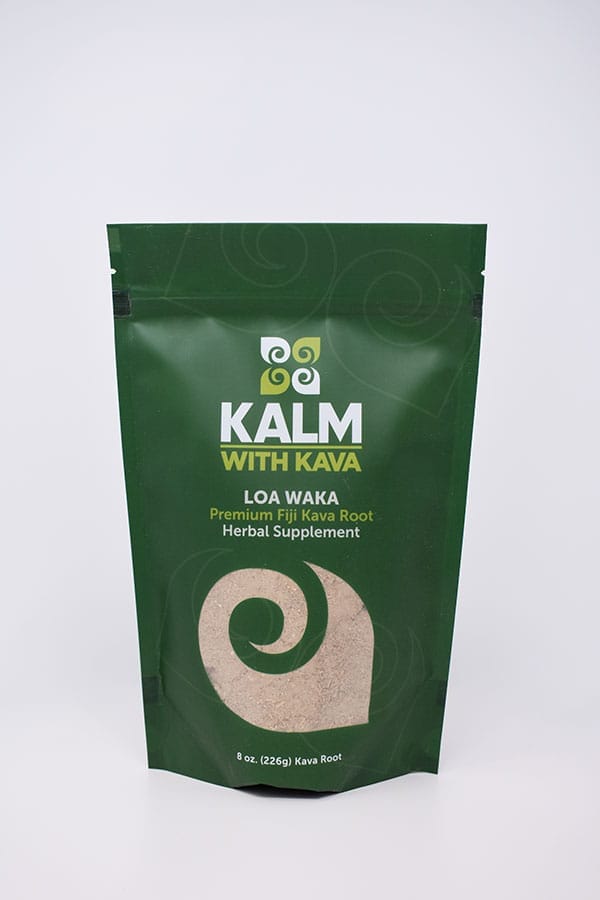
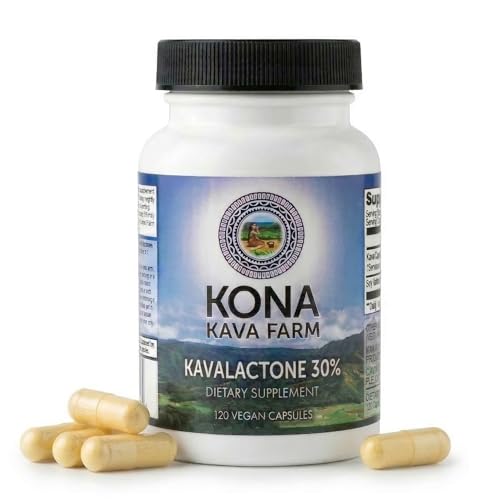
Beyond this guide: the highest-rated kava across every format, kavalactones verified, with a live price check on each.




As an Amazon Associate we may earn from qualifying purchases, at no cost to you. 21+.
Quick shop: every pick
Skip the scroll: the whole lineup, with a live price check on each.
- Bula Kava House — Instant Kava Drink MixThe Kava Review "Tea" for Most PeopleBula Kava House · Instant kava drink mixCheck Price
- Root of Happiness — Instant Kava (10% Kavalactones)The Disclosed-Strength InstantRoot of Happiness · 50 g instant kava (out of stock on Amazon, Aug 2026; button searches for restock)Check Price
- Kona Kava Farm — Instant Kava MixThe Easiest Flavored On-RampKona Kava Farm · Instant kava mix (out of stock on Amazon, Aug 2026; button searches for restock)Check Price
- Bula Kava House — Borogu (Traditional Grind)The Strongest, Cheapest Cup Per DoseBula Kava House · Borogu kava powderCheck Price
- Yogi — Kava Stress Relief TeaThe Gentle Bagged Kava TeaYogi Tea · Boxed kava tea bagsCheck Price
- Kava Kava Root Teabags (100% Kava)The Pure-Root Tea BagEthnospot · $19.99 / box (verified August 2026)Check Price
- Kava Kava Root TeaThe Pure-Root AlternativePalm Beach Medicinal Herbs · $21.95 / box (verified August 2026)Check Price
How we chose
We started from the chemistry, not the marketing. Kavalactones are poorly water-soluble and don't release well from dried root in a short hot-water steep — that's why the Pacific tradition kneads root in lukewarm water for ten minutes or more rather than steeping it. So we ranked the formats by how much active compound they actually deliver into your cup: instant kava (pre-extracted, full strength) and traditional grind (kneaded and strained) at the top, pre-bagged kava tea at the bottom. We say "bagged kava tea is weak" because the extraction method makes it so — not as an opinion about any one brand.
We judge value by cost per 100 mg of kavalactones, the one metric that lets you compare a tea bag, a tin of instant, and a pound of root on the same axis. And we apply our house rule strictly here: a kavalactone number — and any cost-per-100mg figure derived from it — appears ONLY when the vendor publishes a Certificate of Analysis or a stated kavalactone content. Where no such figure is published, we keep the assessment qualitative and tell you to confirm at purchase. We do not estimate, back-calculate from vibes, or invent a percentage to fill a cell. No published COA, no number.
Beyond potency and price, a pick has to be predictable and noble. We favor named noble cultivars, disclosed instant-kava strengths, and vendors with a track record of publishing lab reports — never mystery blends. No brand has paid for a ranking or placement on this page; offers are affiliate links that earn nothing until a deal is signed, and editorial picks are made independently of that. Finally, the standing cautions: kava is a centuries-old Pacific drink many adults find calming, not a stimulant or a treatment for anything; it can cause drowsiness, so don't drive if you feel it; never mix it with alcohol; and anyone on medications or with liver concerns should talk to a doctor first. That's general caution, not medical advice.
Key terms
- Kavalactones
- The six major active compounds in kava root and the thing you're actually paying for. They are lipophilic and only weakly water-soluble — which is exactly why a brief hot-water steep (a bagged tea) extracts so little, and why kava is traditionally kneaded or sold pre-extracted as instant. Cost per 100 mg of kavalactones is the metric that compares any two kavas fairly.
- Noble kava
- A traditionally consumed kava variety the Pacific selected over centuries for an agreeable, well-rounded, daily-drinkable profile — as opposed to "tudei" or non-noble kavas. Reputable vendors sell named noble cultivars (like Borogu) and back them with lab reports. We favor noble cultivars with a knowable profile over mystery blends.
- Instant kava
- Kava that has been pre-extracted and dried into a water-soluble powder, so you stir it into hot or cold water and drink at full strength — no kneading, no straining. It's the format that gives most "kava tea" searchers what they actually want: a potent cup with tea-bag effort.
Questions, answered
Does kava tea get you high?
No — "high" is the wrong word, and a bagged kava tea is the least likely format to make you feel much at all. Kava isn't psychedelic and doesn't produce intoxication the way alcohol or cannabis do. What drinkers consistently describe is a calm, relaxed, sometimes sociable and talkative feeling, and a mild numbing of the lips and tongue from a strong cup. A pre-bagged tea, steeped like chamomile, usually delivers very little of even that, because kavalactones barely extract in a hot-water steep — many people drink one and feel almost nothing. A proper instant or a kneaded traditional brew is where people feel the calming effect drinkers talk about. None of this is a "high," and none of it is medical advice.
Is bagged kava tea worth it?
It depends entirely on what you want. If you want a gentle, pleasant, low-effort wind-down ritual — something warm to sip before bed — then yes, a bagged kava tea can be a nice thing to keep around, and it's the easiest format there is. But if you want to actually feel the calming effect kava is known for, bagged tea is usually a poor value: kavalactones don't steep well out of a tea bag, so you're getting very little active compound, and most bagged kava teas are multi-botanical blends that don't publish a kavalactone figure. The common trap is a newcomer trying a bagged tea, feeling nothing, and concluding kava "doesn't work" — when the real issue is the format. For potency or value, an instant or a traditional grind is the better buy.
Why is instant kava stronger than a kava tea bag?
Because the hard part — extraction — is already done. Kavalactones are only weakly water-soluble and cling to the root fiber, so a few minutes of hot-water steeping (a tea bag) pulls out very little. Instant kava is pre-extracted at the factory and dried into a soluble powder, so when you stir it into water you get full strength with none of the extraction loss. It's the same reason traditional kava is kneaded for ten-plus minutes rather than steeped. Instant gives you that potency with tea-bag effort.
What's the best kava tea for sleep or relaxation?
For a genuine calming, relaxing cup, reach for a heavier-leaning instant or a traditional grind of a relaxing noble cultivar (Borogu is a good example) rather than a bagged tea, which is usually too weak to do much. Keep the serving modest and have it in the evening. That said, we don't make medical or sleep claims — we're describing the relaxing character drinkers report in the Pacific tradition, not a sleep aid or a treatment. Never mix kava with alcohol, don't drive if you feel it, and talk to a doctor first if you take medications. Not medical advice.
How do I make kava tea taste better?
Kava is earthy and peppery, and that's part of the deal — but a few things help. Serve it cold rather than hot; chill an instant or pour a brewed batch over ice. Chase a sip with fruit juice or a slice of citrus, or choose a flavored instant mix, which is built to soften the taste and is the friendliest on-ramp for newcomers. A pinch of sweetener or a splash of coconut or plant milk can round it out too. What you should not do is mix it with alcohol — that's the one hard rule. And don't over-steep a bagged tea hoping for strength; the flavor will get bitter long before the potency goes up.
Is kava tea safe to drink every day?
Kava is a centuries-old daily social drink across much of the Pacific, and many adults drink it regularly, but we can't give you a personal safety verdict — that's a conversation for you and a doctor, especially if you take any medications or have liver concerns, since those are the situations where caution matters most. General good practice: stick to named noble kava from vendors who publish lab reports, keep servings moderate, never combine kava with alcohol, and don't drive if you feel it. Kava is for adults only. This is education and general caution, not medical advice.
Keep reading
Best Instant Kava
The effortless strong cup, ranked — pre-extracted kavas you stir into water, judged by cost per 100 mg of kavalactones.
How to Make Kava
The full kneading-and-straining method for a traditional grind — why you knead instead of steep, and how to dial the strength.
How to Read a Kava COA
The lab report decoded — find the kavalactone content, spot a noble cultivar, and run the cost-per-100mg math yourself.