Kava's 3,000-Year Story: History, Ceremony & What We Borrowed (2026)
Before kava was a canned tonic in a Brooklyn bodega, it was — and still is — the social and ceremonial heart of an entire region of the planet. People have been preparing it the same basic way for something like three thousand years, and the cultures that grow it built welcome rites, chiefly protocol, and peace-making rituals around a shared bowl. This is the respect-building version of kava's history: where the plant comes from and how it spread, a tour of the living ceremonies island nation by island nation, what those rituals are actually for, and an honest reckoning with how Western kava culture relates to the people who gave us the drink — gratitude, not costume.
By The Kava Review DeskUpdated 2026-07-26~8 min read Ranked by the lab reportHow we research
A kava ceremony is the formal preparation and communal sharing of kava (Piper methysticum), a Pacific root drink, according to a community's prescribed protocol of presentation, mixing, and serving. Across the islands that grow it, the shared bowl has worked for roughly 3,000 years as social technology: the way a community welcomes guests, enacts chiefly authority, and makes peace. (Updated July 2026.) Most of what gets written about kava in the West skips straight to the chemistry — the kavalactones, the GABA system, the dosage charts — as if the drink arrived on a supplement shelf with no past. It did not. Kava is one of the oldest continuously prepared social drinks on earth, and for the cultures of the South Pacific it has never been a wellness product. It is the substance you pour to welcome a stranger, to mark a marriage or a death, to open a negotiation between communities, and to settle the kind of disputes that elsewhere might end in violence. To drink it without knowing any of that is to miss the entire point of the thing.
This page is the cultural companion to our main explainer. We will trace the long story — the consensus that the plant was domesticated in Vanuatu roughly three thousand years ago and carried across the ocean by the great Austronesian seafarers — and then we will travel, briefly and respectfully, through the living ceremonies that still organize island life: Fiji's sevusevu, Tonga's faikava, Samoa's 'ava, the dusk-lit nakamals of Vanuatu, Hawaii's 'awa, and the sakau bowls of Pohnpei. We describe these traditions from the outside, attributing what we report to ethnographers and to the cultural authorities of the islands themselves. We are not initiating anyone into a sacred rite, and we will not pretend to.
And we will end on the uncomfortable, necessary question: what does it mean that a root crop sacred to Pacific peoples is now sold by the can in American strip malls, often with a cheerful 'Bula!' on the wall? The honest answer is neither a celebration nor a scolding. There is a real difference between borrowing a custom with gratitude and wearing it as a costume, and the line runs through how much you know and how much you respect what you are drinking. That is, in the end, why origin still matters when you buy — a thread we pick up where the culture meets the cultivar. None of this is medical or legal advice; kava is for adults, and effects vary.
The short version
- The scholarly consensus is that kava (Piper methysticum) was domesticated in Vanuatu roughly 3,000 years ago and spread across the Pacific by Austronesian seafarers, who carried it as a prized commodity on their voyages of settlement.
- Each island nation built its own protocol around the bowl: Fiji's sevusevu presentation and cobo clap, Tonga's faikava circles and kalapu clubs, Samoa's hierarchical 'ava ceremony with its taupou, Vanuatu's nightly nakamals, Hawaii's 'awa, and Pohnpei's sacred sakau.
- The rituals are social technology. Across the region, ethnographers describe kava used to welcome guests, to enact chiefly authority, and — most strikingly — as a peace-making and conflict-resolution tool, where accepting a bowl carried real moral and legal weight.
- Kava ceremony is largely social and ceremonial rather than strictly 'religious,' though it has deep spiritual dimensions in places like Pohnpei and pre-missionary Hawaii, where it was tied to communion with gods and ancestors.
- Western kava culture sits on a spectrum from respectful appreciation to hollow appropriation. The difference is gratitude and knowledge versus costume — which is also why buying noble, origin-named kava is itself an act of respect. Not medical or legal advice; 21+.
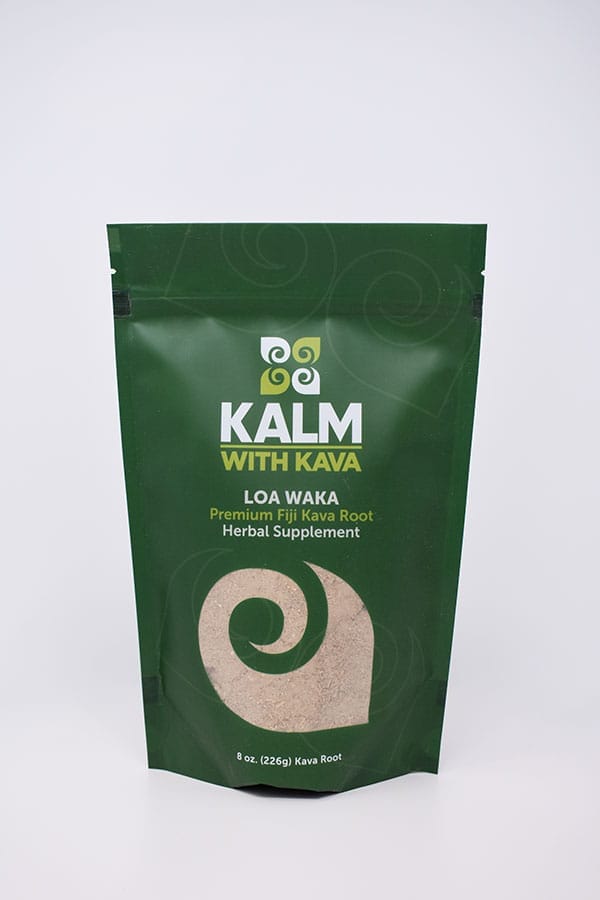
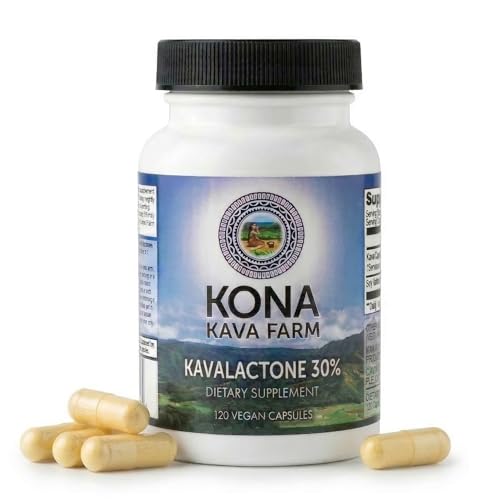
Our top-rated kava
Whatever you decide, these are the kavas we recommend: lab report read, kavalactones verified, ranked by cost per 100 mg. Live price check on each.




As an Amazon Associate we may earn from qualifying purchases, at no cost to you. 21+.
The 3,000-year story: domesticated in Vanuatu, carried across an ocean
Kava's history begins not on a shelf but in a garden. The plant — Piper methysticum, a sterile cultivar that cannot reproduce by seed and must be propagated by cuttings — is entirely a human creation, the product of generations of deliberate selection. And the scholarly consensus on where that selection began points to one place: Vanuatu, the Melanesian archipelago that researchers widely consider the plant's birthplace and the center of its cultivar diversity.
The timeline. Botanical and ethnographic work converges on a striking figure: human selection of kava for its desired chemical properties probably began around 3,000 years ago, with the plant's dispersal to other islands following within roughly two to three centuries thereafter. That window lines up with one of the great events in human history — the Austronesian expansion across the Pacific, the seafaring migration that populated the most remote islands on earth. The archaeological culture associated with that wave is known as the Lapita, named for their distinctive pottery, and the 3,000-year-old Lapita site at Teouma on Efate Island, Vanuatu, anchors the period in the literature.
How it spread. Kava traveled the way everything traveled in the ancient Pacific: in canoes. Austronesian-speaking voyagers carried cuttings with them as they settled new islands, and inter-island trade moved kava as a valued commodity from one community to the next. One careful note of nuance from the ethnographic record (for example, work published in the journal Ethnology on "Kava and the Lapita Peoples"): while the earliest Pacific settlers used kava, the elaboration of kava into a culturally central, ritualized institution appears to have developed somewhat later among their descendants, rather than arriving fully formed. The drink and the ceremony grew up together over centuries.
| Era | Development |
|---|---|
| ~3,000 years ago | Human selection of Piper methysticum begins in Vanuatu, the consensus birthplace and center of the plant's cultivar diversity; the Lapita site at Teouma on Efate anchors the period. |
| Within ~2–3 centuries of domestication | Dispersal across the Pacific: Austronesian seafarers carry cuttings in their canoes, and inter-island trade moves kava as a valued commodity. |
| The centuries that follow | Descendant cultures elaborate kava into culturally central, ritualized institutions: Fiji's sevusevu, Samoa's 'ava, Tonga's kava circles, Vanuatu's nakamal, Pohnpei's sakau. |
| Colonial era | Contact and missionization sharply reduce, and in places eliminate, traditional 'awa use in Hawaii; some traditions are interrupted rather than continuously preserved. |
| Late 20th century | Urbanization in Tonga gives rise to the kalapu, formalized kava clubs with elected presidents and dues; interrupted traditions are consciously revived. |
| Today | The ceremonies remain living practice across the islands, while kava bars and canned kava spread through the West. |
Kava's long arc at a glance. Eras are given at the centuries level the ethnographic record supports; no precise dates are asserted where scholarship gives ranges.
Why this is the load-bearing fact. Three thousand years of continuous, deliberate cultivation is not a footnote — it is the reason kava has the depth it does. This is a plant that an entire region of humanity shaped to its own purposes and then wove into the fabric of how it welcomes, governs, and reconciles. Everything that follows on this page grows out of that long history.
Fiji: sevusevu, yaqona protocol, and the cobo clap
In Fiji, kava is called yaqona (pronounced roughly "yang-GO-na"), and you do not simply walk into a village and drink it. You perform a sevusevu — a formal kava-presentation ceremony that, as Fijian cultural guides and the country's tourism authority describe it, serves as your official introduction to a community and your request for acceptance into it. It is not a tourist performance and it is not optional; according to Fiji Shores and Marinas' "Sevusevu 101," a bundle of dried yaqona root is presented by a spokesperson (the matanivanua) to the village head, formally asking the community's blessing and warding off any offense an outsider might give through ignorance.
The cobo. Woven through the ceremony is a piece of ritual percussion that newcomers always notice: the cobo, a slow, cupped-hand clap that punctuates the important moments. Cultural accounts describe a presenter clapping three times to signal "I am about to speak, thank you for listening," and drinkers clapping once before taking the bilo (the cup, traditionally half a coconut shell), draining it in one go, and clapping three times after. When the bowl is empty the room calls out "Maca!" — "it is empty" — and claps again. The tanoa, the large carved wooden bowl on legs in which the yaqona is mixed, sits at the ceremonial center of it all.
What matters for an outsider is the spirit behind the choreography: Fijian etiquette guides frame sevusevu as a gesture of humility and respect, a way of saying you understand you are a guest in a place with its own order. The protocol is the point.
Tonga and Samoa: the faikava circle and the 'ava ceremony
Move east and the bowl takes on different shapes. In Tonga, the characteristic form is the faikava — literally "to do kava" — a kava circle where friends, family, and community sit together for hours of conversation, music, and storytelling around a shared bowl of Piper methysticum. Cultural accounts (such as those collected by Tongan kava purveyors and in scholarship on Tongan kava in the diaspora) describe how, by the late twentieth century, urbanization gave rise to the kalapu — formalized kava clubs, each with an elected president and modest dues to buy root, often organized around a fundraising cause. What makes the faikava sociologically remarkable is its leveling effect: in the relaxed twilight of a kava circle, observers note, titles soften and a laborer might trade easy talanoa (open, frank dialogue) with a cabinet minister.
Samoa runs in the opposite direction — toward solemn hierarchy. The Samoan 'ava ceremony (the apostrophe marks a glottal stop) is described by institutions like the Auckland Museum and in anthropological accounts as the highest form of cultural welcome, conducted under chiefly authority, with every gesture prescribed: where people sit, the order in which cups are served, even the shoulder over which the strainer is tossed, all encode the social rank of those present. A ceremonial role often falls to the taupou, traditionally a high-ranking village woman who prepares and presents the 'ava. The drink is mixed in a many-legged tanoa bowl using a fau strainer of hibiscus bark. Where the Tongan faikava relaxes the social order, the Samoan 'ava ceremony performs and reaffirms it — two faces of the same shared root.
Vanuatu, Hawaii, and Pohnpei: nakamals, 'awa, and sacred sakau
Back in Vanuatu, kava's birthplace, the ritual is less a formal ceremony than a nightly rhythm. Kava is drunk in nakamals — traditionally the central meeting hut of a village, and today also the name for the simple, often open-air kava bars that, as the Vanuatu Tourism Office describes, open at dusk and come alive just before sunset. People arrive as the light fades, drink quietly, and stay a while. Accounts of nakamal etiquette emphasize that the ritual here is about communal presence rather than elaborate protocol: arriving, sitting, drinking in relative quiet, and staying is itself the form of respect. Vanuatu's kava is famously strong, and the mood is contemplative — a calm, near-silent winding down of the day rather than a party.
In Hawaii, kava is 'awa, and here the story carries a note of loss. Hawaiian accounts (such as those from kava sellers tracing the plant's island history) hold that 'awa arrived with the early Polynesian voyagers and was used heavily in religious and ceremonial life. But, as broader surveys of kava culture note, colonial contact and missionization sharply reduced and in places eliminated traditional 'awa use — a reminder that these traditions were not simply preserved but, in some places, interrupted and now consciously revived.
Farther north, in Pohnpei (Micronesia), kava is sakau, and the spiritual dimension is most explicit. UNESCO heritage documentation and academic work on Pohnpeian sakau describe it, in the island's oral tradition, as a gift from the spirits — initially used to symbolize the relationship between humans and their gods, and still central to social bonding and conflict resolution. The linguistic thread is its own quiet evidence of the 3,000-year story: Pohnpeian sa-kau and Hawaiian 'awa are cognates, echoes of a single root carried across thousands of miles of ocean and thousands of years of time.
What we borrowed: gratitude, not costume
Which brings us to the honest part. Kava bars now dot American cities — Austin alone has several — and canned kava tonics sit in convenience-store coolers. Often there is a "Bula!" on the wall (the Fijian greeting), a tanoa as decor, maybe a shell-shaped cup. So: is Western kava culture appreciation, or appropriation?
The honest answer refuses both easy verdicts. Voices from the Pacific have raised real concern — reporting and commentary (including a widely read Vice piece and coverage from Global Voices) document worry that the global kava boom strips the drink of its cultural context and repackages it as just another wellness fad, the way açaí or matcha were flattened for American consumers. One frequently cited critique puts it plainly: when you commodify kava in ways that disrespect the tradition and the people, "you have a problem on your hands." A practical complaint also recurs — that some Western "kava" products lean on extracts rather than the traditionally prepared root, selling an imitation of the thing.
And yet the same voices point toward a path that is not abstention but respect. Cultural commentators and educators repeatedly frame the difference as one of knowledge and gratitude: taking the time to learn where kava comes from, how it is used, and what the etiquette means transforms drinking it from appropriation into appreciation. The line, in other words, is not "should outsiders drink kava at all" — the islands have shared it freely for centuries — but how. A "Bula" offered with some understanding of what it means is hospitality echoed back; a "Bula" as marketing wallpaper, with no idea of the sevusevu behind it, is costume.
Ready to try one? Start with our verified picks
Wherever this guide landed you, these are the kavas our lab-report standard keeps ranking on top. Live price check on each.
As an Amazon Associate we may earn from qualifying purchases, at no cost to you. 21+.
Key terms
- Sevusevu
- The Fijian kava-presentation ceremony — a formal offering of yaqona (kava) root to a village's leadership that serves as a visitor's official introduction and request to be welcomed into the community. Fijian cultural authorities describe it as a non-optional gesture of humility and respect, not a tourist performance.
- Faikava
- The Tongan kava circle — literally 'to do kava.' A gathering, often held in a kalapu (kava club), where community members sit together for hours of conversation, music, and open dialogue (talanoa) around a shared bowl. Known for a leveling social effect, where rank and tension soften.
- Nakamal
- In Vanuatu, traditionally the central meeting hut of a village and, today, also the name for the simple kava bars that open at dusk. The nakamal ritual centers on quiet communal presence — arriving, sitting, drinking, and staying — rather than elaborate formal protocol.
- 'Ava
- The Samoan name for kava and for its highly formal ceremony, conducted under chiefly authority. Every detail — seating, the order of serving, even the direction the strainer is tossed — encodes social rank. A ceremonial role traditionally falls to the taupou, a high-ranking village woman.
- Tanoa
- The large, often many-legged carved wooden bowl in which kava is mixed and from which it is served, used across Fiji, Samoa, and the wider region. It sits at the ceremonial center of a kava session and is itself a prized cultural object.
- Bilo / shell
- The drinking cup of a kava session, traditionally a half coconut shell — which is why kava is often ordered and paced 'by the shell.' In Fiji the cup is the bilo; drinkers typically drain it in a single draught as part of the cobo (clapping) protocol.
Questions, answered
Where is kava from?
The scholarly consensus places kava's origin in Vanuatu, the Melanesian archipelago widely regarded as the plant's birthplace and the center of its cultivar diversity. Botanical and ethnographic work suggests humans began deliberately selecting Piper methysticum there roughly 3,000 years ago, and that the plant then spread across the Pacific — carried in canoes by Austronesian-speaking seafarers during the great migration that settled the islands, and traded between communities as a valued commodity. So kava is not from any one modern country so much as from the ancient Pacific as a whole, with Vanuatu as its cradle.
What is a kava ceremony like?
It depends entirely on where you are, but the common thread is a shared bowl and a sense of occasion. In Fiji, a sevusevu is a formal presentation of yaqona root to village leaders, punctuated by the cobo — a slow, cupped-hand clap — with cups (bilo) drained in one go. In Samoa, the 'ava ceremony is solemn and hierarchical, with seating and serving order encoding rank. In Tonga, a faikava is a long, social kava circle of conversation and music. In Vanuatu, a nakamal is quieter still — people gather at dusk, drink, and sit in calm. We describe these from the outside and attribute them to cultural authorities; we are not instructing anyone in how to perform a sacred rite.
Can visitors join a kava ceremony?
In many places, yes — kava has been shared as hospitality for centuries, and tourism authorities in Fiji and Vanuatu openly describe how visitors can take part respectfully. The key word is respectfully. In Fiji, a sevusevu is the expected, non-optional way an outsider is welcomed into a village, so participating correctly is itself a sign of respect. The right posture for a visitor is to follow local guidance, accept the protocol as offered rather than improvising, and treat the occasion as a guest in someone else's tradition. When in doubt, ask your hosts what is appropriate and follow their lead.
Is kava religious?
More social and ceremonial than strictly religious, though the line blurs and varies by place. Across most of the Pacific today, kava's central roles are hospitality, the enactment of chiefly authority, and conflict resolution — social functions more than acts of worship. But it carries genuine spiritual weight in some traditions: in Pohnpei, oral tradition describes sakau (kava) as a gift from the spirits that mediated the relationship between humans and their gods, and in pre-missionary Hawaii 'awa was used heavily in religious ceremony. So 'religious' is too narrow a word for the whole region, but kava's sacred dimensions are real where they exist.
What is sevusevu?
Sevusevu is the Fijian kava-presentation ceremony — the formal offering of dried yaqona (kava) root to a village's leadership when you arrive as a visitor. As Fijian cultural guides and the country's tourism authority describe it, a spokesperson presents the root bundle to the village head, formally requesting that the visitors be accepted and that any unintended offense be forgiven. It is the official introduction that makes an outsider a welcomed guest rather than an intruder, and it is treated as a genuine obligation of respect, not a show put on for tourists.
Is Western kava culture cultural appropriation?
It can be either, and honesty requires holding both possibilities. Voices from the Pacific have raised real concern that the global kava boom strips the drink of its cultural context and sells it as just another wellness fad, sometimes leaning on extracts rather than traditional root — and a 'Bula!' used as pure marketing wallpaper, with no understanding of the sevusevu behind it, is fairly read as costume. But the same voices point toward respect rather than abstention: the islands have shared kava as hospitality for centuries, and learning where it comes from, how it is used, and what the etiquette means turns drinking it into appreciation. The most concrete way to show that respect is also the way to get the best kava — buy noble, origin-named root from sellers who name the cultivar and support Pacific growers. Gratitude, not costume.
Keep reading
What Is Kava?
The complete rigorous explainer — the plant, the kavalactones, what it feels like, and how to start.
What Does 'Bula' Mean?
The Fijian greeting you see on every kava bar wall — what it actually means, and how to use it with respect.
What Is a Kava Bar?
How the Pacific tradition became an American social scene — what to expect, and how to drink there well.