Our Pick: Root of Happiness
Check PriceThe Strongest Kava (2026): Highest Disclosed Kavalactones, Ranked
Everyone wants the strongest kava. Almost no one agrees what "strongest" means — and the kava aisle is built to keep it that way, drowning the question in "maximum," "ultra," and big bold milligrams of root. So we set one rule: strength is a disclosed kavalactone number, full stop. We refuse to rank a single product that won't print one, and we rank the ones that do by the cost of those milligrams. The result is a ranking where the strongest kava and the most honest kava turn out to be the same shelf.
By The Kava Review DeskUpdated 2026-08-23~10 min read Ranked by the lab reportHow we research
 Best Overall
Root of Happiness KavaShot
Root of Happiness · 4.7
$6.50 / shot · $72.00 / case of 12 ($6.00/shot)
 Best Value
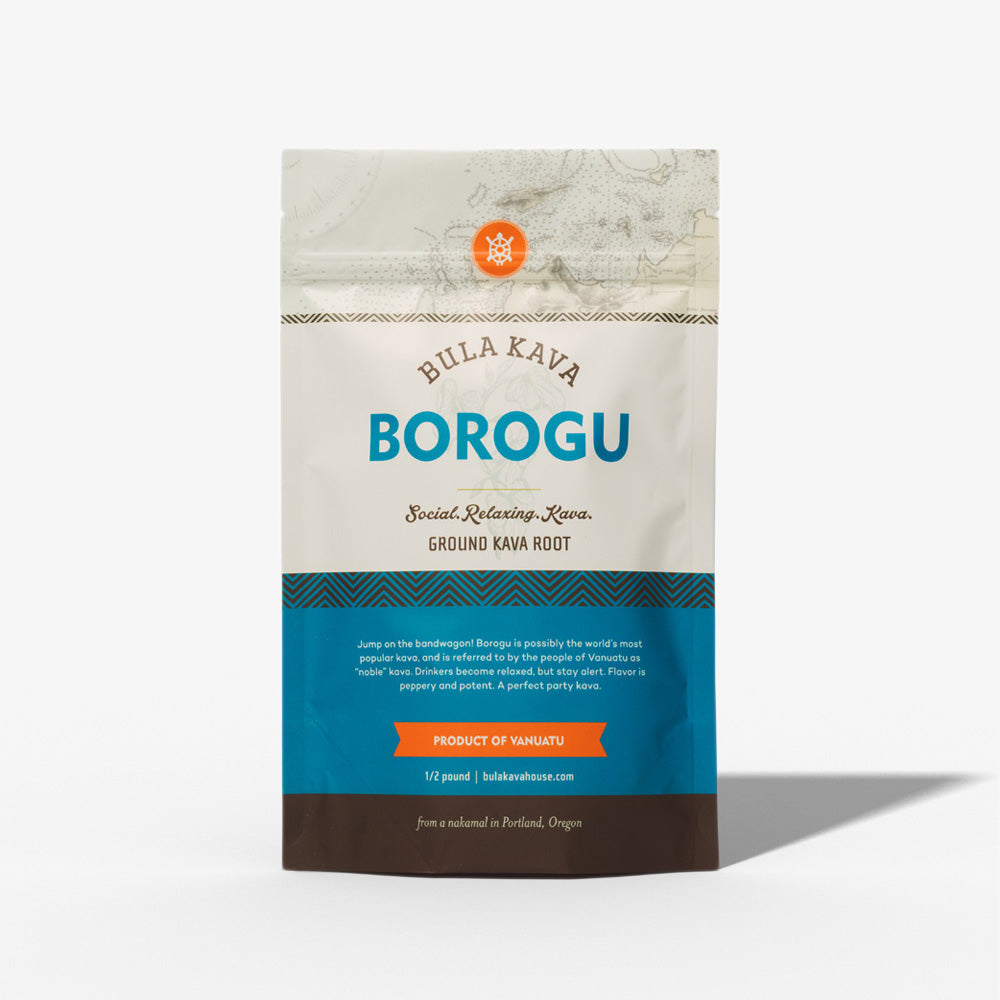
Borogu Traditional Medium Grind
Bula Kava House · 4.6
from $17.60 / 8 oz (~$2.20/oz · ≈$4.40 per 4-cup batch)
"What's the strongest kava?" is the most-asked question in the category and the one the category is worst at answering honestly. Walk the aisle and you'll see "maximum strength," "ultra potent," "extra strong," and a parade of big confident milligram figures — and almost none of it means anything, because none of those words is a defined term and most of those numbers are measuring the wrong thing. The single most common trick is a label that brags about "500 mg of kava root" and lets your brain read it as strength. It isn't: root weight tells you nothing about active content until you also know the extract percentage. A 100 mg / 30% extract delivers just 30 mg of actual kavalactones — the rest is inert plant fiber. The loudest number on the shelf is frequently the least useful one.
So this guide starts by defining its terms, because the definition is the whole point. The strength of a kava is its kavalactone content — the milligrams of the active compounds per serving, the figure that is to kava what ABV is to a spirit and caffeine content is to coffee. That is the only honest meaning of "strongest," and it is a number, not an adjective. Which leads directly to our standing rule, the one this entire site is built on: no disclosed number, no ranking. We will not crown a "strongest kava" we can't read off a published figure, because we can't, and neither can you. A product that hides its kavalactone count behind "premium" and "maximum" hasn't earned a strength claim; it's earned suspicion.
From the products that do disclose, we rank by the same metric we use everywhere — cost per 100 mg of kavalactones — so that "strong" and "honest about it" collapse into one axis. The picks below span the three formats where the strongest disclosed numbers actually live: the concentrated 2oz extract shot (the highest disclosed figure per serving here, a flat 500 mg), the traditionally prepared shell (full ~150–250 mg+ strength, self-tunable, from a named noble cultivar with a posted lab sheet), and the strongest convenient can that still prints a real number (100 mg). Everything was verified against brand pages and labels in June 2026. The usual ground rules: kava is for adults, stronger kava means stronger drowsiness so absolutely don't drive after a heavy session, don't mix it with alcohol, and if you take medications or are pregnant, talk to your doctor first. None of this is medical advice — it's a potency audit with a hard line on honesty.
The short version
- "Strongest" has one honest definition: the disclosed kavalactone milligram count per serving — not "maximum strength," not "ultra," and definitely not milligrams of root. We rank potency only from published numbers, and refuse to rank mystery-potency products at all.
- Watch the root-vs-kavalactone trick: "500 mg of kava root" at 30% extract is only 30 mg of actual kavalactones. A modest can that states "100 mg kavalactones" beats a loud bag that brags about root weight.
- Strongest disclosed serving here: Root of Happiness KavaShot, with a flat 500 mg of kavalactones in a 2oz bottle for $6.00–$6.50 — about $1.20–$1.30 per 100 mg, which also makes it the best value in the guide.
- Strongest you can tune yourself: a traditionally prepared shell of Bula Kava House's named Borogu noble lands at the full ~150–250 mg+ end of the ladder — and Bula posts a Certificate of Analysis for every product, so the strength is backed, not asserted.
- Strongest grab-and-go that's still honest: the disclosed-can ladder now runs Mitra9's pure-kava seltzer (150 mg of kavalactones stated per can) above MELO Sparkling Kava (100 mg per can, the cleanest zero-sugar disclosure) and TRU KAVA (65-75 mg published average). All three print numbers you can plan around; almost nobody else on the can shelf does.
- More milligrams isn't automatically "better." Total kavalactones drive intensity; the chemotype (the heady ↔ heavy ratio) drives character — so read both, and ramp up slowly. A bigger number of the wrong profile for your evening is not an upgrade.
At a glance
| Product | Disclosed kavalactones | Cost per 100mg KL | How the strength arrives | Check price |
|---|---|---|---|---|
| Root of Happiness KavaShot | 500 mg per 2oz shot (disclosed) | $1.20–$1.30 | Highest disclosed per-serving figure — concentrated extract | Check Price |
| Bula Kava House Borogu (traditional) | ~150–250 mg+ per prepared shell (ladder range) | ≈$4.40 / 4-cup batch (~$2.20/oz) | Full traditional strength — self-tunable by prep, COA-backed noble | Check Price |
| MELO Sparkling Kava | 100 mg per can (disclosed) | $4.17 ($49.99 / 12-pack) | Strongest zero-sugar can that prints a number | Check Price |
| Mitra9 Kava Seltzer (pure-kava line; see the drinks guide) | 150 mg per can (disclosed: 500 mg extract at 30%) | $3.31 (24-pack, $119.00 on Amazon) to $4.17 (12-pack direct) | Highest disclosed figure on the can shelf |
The strength shelf at a glance — only products that disclose a kavalactone number make the ranking. Figures and prices verified June 2026; value is computed solely from disclosed numbers.
Root of Happiness KavaShot
Root of Happiness
500 mg of disclosed kavalactones in a 2oz bottle — the highest stated per-serving figure here, at the lowest price per 100 mg.
Our verdict: If "strongest" means the biggest number a brand is willing to put on the record, Root of Happiness wins outright: a flat 500 mg of kavalactones disclosed in a single 2oz shot, from noble Vanuatu kava, at $6.50 single or $6.00 by the case. That's roughly $1.20–$1.30 per 100 mg — which makes the strongest disclosed serving here simultaneously the best value. It's a pure-kava extract from a maker that has done nothing but concentrates for over a decade. Strength you can read, in the cheapest milligrams in the guide.
Lab report: Discloses a flat 500 mg of kavalactones per 2oz shot, from Polynesian Gold noble Vanuatu kava — the single largest disclosed per-serving number in this guide. A 12-year concentrate specialist; we'd still like a public per-batch COA library to match the strong label number.
This is what "strongest" looks like when a brand actually proves it. Root of Happiness KavaShot states 500 mg of kavalactones in a 2oz bottle — a clean, flat number, not an extract weight and not "milligrams of root" — drawn from the brand's Polynesian Gold noble kava sourced from Vanuatu. That is the highest disclosed per-serving figure anywhere in this guide, and it earns the top slot precisely because it's disclosed: we're not inferring potency from an adjective, we're reading it off the label. Run our metric and the strength gets even more impressive: $6.50 a shot is $1.30 per 100 mg, and the $72.00 case of twelve drops it to $6.00 a shot, or $1.20 per 100 mg.
Why concentrate, and why this concentrate. A 2oz extract shot strips away the ten ounces of sparkling water you'd ship around a modest canned dose and sells you the active material directly — that's how a single bottle clears 500 mg where a can discloses 100. Root of Happiness has manufactured artisan kava concentrates for over a decade, and this is a pure-kava product: no kratom, no melatonin, no second active doing the heavy lifting. (That last point matters more than it sounds — the 2oz shot aisle is where kava gets quietly blended with other drugs, which we cover in our kava shots guide.) The brand recommends a sublingual approach — hold it briefly under the tongue before swallowing — which many people find brings the effect on faster.
A word on what 500 mg actually means for you, because strong is a responsibility, not just a brag. This sits well above a traditional shell's strength in a single small bottle, so treat it accordingly: take it on an empty stomach for the cleanest read, start with one, and remember kava's reverse tolerance means your first one or two may whisper before later sessions speak up. What would make it untouchable is a downloadable, per-batch COA library — the 500 mg disclosure is exactly the plain number we want, and a brand this far ahead on the label should close the gap on the paperwork.
Who should buy it
Buy the Root of Happiness KavaShot if you genuinely want the strongest disclosed serving you can find — it puts the largest verified kavalactone number in this guide in a single 2oz bottle, and it happens to be the cheapest per milligram too. It's the right pick for the experienced kava drinker who wants a real, big dose on the go, and the case of twelve is the smart standing order once you know you handle it well.
What we don't like
No public, downloadable per-batch COAs — the 500 mg disclosure is excellent, but we want the lab sheets posted, not implied by reputation. It's an extract rather than full-spectrum root juice, so traditionalists who want a pressed-root experience should drink Bula's Borogu instead. Mango is the only flavor we found. And 500 mg in 2oz is a lot of kava for a newcomer — this is not the bottle to start your kava life on.
- Disclosed kavalactones
- 500 mg per 2oz shot (the highest disclosed serving here)
- Cost per 100 mg KL
- $1.20–$1.30 — best value in this guide
- Size / format
- 2oz shot; sublingual-friendly; pure kava extract (no kratom)
- Source
- Polynesian Gold noble kava, Vanuatu
- Pricing
- $6.50 single · $72.00 case of 12 ($6.00/shot)
What we like
- Discloses a flat 500 mg of kavalactones — the strongest stated serving in the guide
- Best value too, at roughly $1.20–$1.30 per 100 mg
- Pure kava — no kratom, no melatonin, no second active behind the strength
- 12-year concentrate specialist; sublingual-friendly format
Worth noting
- No public per-batch COA library to back the label number
- Extract rather than full-spectrum root juice; single flavor
- 500 mg in 2oz is far too strong for a first-ever kava
Borogu Traditional Medium Grind
Bula Kava House
Full traditional-shell strength you dial yourself — a named Vanuatu noble with a posted COA for every product.
Our verdict: The strongest kava experience you can actually control comes from a bag, not a bottle. A traditionally prepared shell of Bula Kava House's Borogu lands at the full ~150–250 mg+ end of the kavalactone ladder, and because you brew it, you decide exactly where on that ladder you land — more root and a longer knead climbs higher. Crucially, Bula posts a Certificate of Analysis for every product and names the cultivar, so this is strength that's backed, not boasted. At ≈$4.40 per 4-cup batch it's also the cheapest way to reach traditional strength here.
Lab report: Publishes a Certificate of Analysis for every current product — the strongest COA habit in this guide. Borogu is a named Vanuatu noble cultivar, so the nobility behind the strength is verifiable, not merely asserted.
Shots and cans hand you a fixed dose; traditional root hands you the dial. Prepared the traditional way — kneaded in a strainer bag with warm water for about ten minutes — a shell of Bula Kava House's Borogu lands at the full-strength end of the kavalactone ladder, roughly the ~150–250 mg+ per shell that has defined a real South Pacific serving for centuries (the same ladder we lay out in our kavalactones explainer). And because you control the root-to-water ratio and the knead, you tune your own strength: use more root, work it longer, and you climb the ladder; ease off and you come back down. For the drinker who wants the strongest experience rather than the biggest printed number, this is the most powerful — and most adjustable — kava in the guide.
The cost math is the kicker. At $17.60 ÷ 8 oz = $2.20/oz — the lowest per-ounce price of any traditional kava we track — and a standard ~2 oz per 4-cup batch, a half-pound is about four batches, roughly $4.40 per batch. So the route to full traditional strength is also the cheapest pour on the shelf. As a drink, Borogu is a "heady"-leaning Vanuatu noble many drinkers describe as relaxed and sociable rather than couch-locking, with the earthy, peppery base and brisk tongue-tingle that tell you the kava is real and well-extracted. If you want strength that leans heavy and physical instead, that's a chemotype question — see heady vs. heavy.
The honest trade for all that power and control is effort. This is real root powder, not a pop-top — you knead, you strain, you discard the spent root, and you make peace with the genuinely earthy taste. The exact milligrams per shell depend on your technique rather than a printed serving, which is the price of self-tuned strength. If you want a strong number with zero work, the Root of Happiness shot is your bottle. If you want the strongest kava you can shape to your own evening, this is the bag.
Who should buy it
Buy Bula's Borogu if you want the strongest, most controllable kava and you're willing to prepare it — a named, COA-backed Vanuatu noble lets you dial a shell anywhere up the traditional ladder, and it's the cheapest route to full strength here. It's the right pick for the drinker who's graduated past cans and shots and wants to meet kava at full strength on its own terms.
What we don't like
It's work: a strainer bag and ten minutes of kneading every single time, which is the wrong deal if you want instant strength. Because you tune it yourself, the per-shell milligrams aren't a printed figure — the strength is real but self-determined. Borogu leans heady, so drinkers chasing a heavy, sedating profile may want a different cultivar, and specific stock rotates by harvest and can sell out.
- Disclosed kavalactones
- ~150–250 mg+ per prepared shell (traditional ladder range; self-tuned)
- Origin / cultivar
- Vanuatu noble — Borogu (named single cultivar)
- Grind
- Traditional medium grind (strainer-bag prep)
- Price / size
- from $17.60 / 8 oz (~$2.20/oz · ≈$4.40 per 4-cup batch)
- Testing
- Certificate of Analysis published for every current product
What we like
- Reaches full traditional strength (~150–250 mg+ per shell), and you tune it yourself
- Named Vanuatu noble cultivar with a posted COA for every product — verified, not asserted
- Cheapest route to traditional strength at ≈$4.40 per 4-cup batch
- Kava-bar pedigree since 2011 with direct South Pacific sourcing
Worth noting
- Strainer-bag prep and real kneading every time — not instant strength
- Per-shell milligrams depend on your technique, not a printed number
- Heady-leaning profile; heavy-seekers and specific harvests may want to look elsewhere

MELO Sparkling Kava
MELO
100 mg of disclosed kavalactones per can — the strongest zero-sugar can that prints a real number, and the cleanest disclosure on the shelf.
Our verdict: Not everyone who asks for the strongest kava wants to slam a 500 mg shot or knead a strainer bag — some just want the strongest thing they can grab cold from a fridge that's still honest about what's inside. That's MELO. It states a flat 100 mg of kavalactones per can — not root weight, not an adjective — which sits above the ~70 mg figure widely cited as a minimum effective serving and makes it the strongest zero-sugar can we'd stand behind. (If you want the raw ceiling of the format, Mitra9's pure-kava seltzer discloses 150 mg per can; it carries calories and a dual kava-and-kratom house behind it, which is why the cleanest-label crown stays here.) It's not as strong as a shot or a shell, and it doesn't pretend to be; what it is, is a defined serving you can plan around.
Lab report: Discloses 100 mg of kavalactones per can — a stated, per-serving figure, not milligrams of root and not a vague "made with kava" badge. The kind of number our no-number-no-ranking rule is built to reward.
The honest answer to "strongest convenient kava" is whichever one prints the highest real number — and on the zero-sugar shelf, that's a disclosed 100 mg. MELO Sparkling Kava puts a stated 100 mg of kavalactones on each can, and that single decision is what earns it a place here. A "100 mg kavalactones" claim is one you can hold a brand to — it implies they know their extract strength and are willing to commit it to the label, the opposite of the cans that brag about "milligrams of root" while telling you nothing about active content. In a fridge full of products that won't disclose, the strongest one is the one that proves its number.
As a format, the sparkling can is the modern, low-friction way into kava: cold, carbonated, no grit, no straining a muddy bowl, no strainer bag to clean. It won't replicate the earthy ritual or the raw power of a traditionally prepared shell, and a purist will happily tell you so. But ranking it against the shot and the bag on raw strength misses the point — within its own lane, the strongest convenient kava is the one that hands you a real, stated, plannable number, and that's exactly what MELO does.
Who should buy it
Buy MELO if you want the strongest convenient kava that's still honest — a stated 100 mg per can means a defined serving you can reason about and stack predictably (two cans = a disclosed 200 mg). It's the right pick for someone who wants real, plannable strength without preparing a bowl or committing to a big extract shot, and for anyone who refuses to buy a kava that won't disclose its number.
What we don't like
It is, by design, the least strong pick in a guide about strength — a can of sparkling kava can't match the 500 mg shot or a full traditional shell, so heavier sessions mean drinking several, which adds up in cost and sugar. The disclosure is a single per-can total, not a full chemotype breakdown, so you get the intensity number without the heady-vs-heavy character detail. And the depth of a properly prepared shell isn't something carbonation reproduces.
- Disclosed kavalactones
- 100 mg per can (stated)
- Format
- Sparkling canned drink — cold, carbonated, no preparation
- Strength
- Moderate — above the ~70 mg minimum, well below a shot or a traditional shell
- Pricing
- $49.99 / 12-pack
- Disclosure
- Publishes per-can kavalactone content (the reason it ranks)
What we like
- States 100 mg kavalactones per can — the strongest convenient format here that prints a real number
- Stackable strength you can plan: a second can is a disclosed 200 mg
- Convenient sparkling format — no grit, no straining, no ritual
- Transparency is exactly what our no-number-no-ranking rule rewards
Worth noting
- The least strong pick in a strength guide — no match for a shot or a shell
- Several cans needed for a heavier session (cost and sugar add up)
- Single total disclosed, not a full chemotype breakdown
More kava worth comparing
Beyond this guide: the highest-rated kava across every format, kavalactones verified, with a live price check on each.


As an Amazon Associate we may earn from qualifying purchases, at no cost to you. 21+.
Quick shop: every pick
Skip the scroll: the whole lineup, with a live price check on each.
- Root of Happiness KavaShotStrongest Disclosed Serving / Best OverallRoot of Happiness · $6.50 / shot · $72.00 / case of 12 ($6.00/shot)Check Price
- Borogu Traditional Medium GrindStrongest Traditional (Self-Tunable, COA-Backed)Bula Kava House · from $17.60 / 8 oz (~$2.20/oz · ≈$4.40 per 4-cup batch)Check Price
- MELO Sparkling KavaStrongest Zero-Sugar Can That Prints a NumberMELO · $49.99 / 12-packCheck Price
How we chose
We define strength as disclosed kavalactones, and we rank from nothing else. The active compounds in kava are its kavalactones; their milligrams per serving are the only honest measure of how strong a product is — the way ABV is the honest measure of a spirit. So a product earns a place in this ranking only if it states a kavalactone figure (a flat per-serving milligram count, or, for traditional root, a named noble cultivar whose preparation lands at a known point on the ladder). "Maximum," "ultra," "extra strength," and "500 mg of root" are not numbers we can rank — they're marketing, and we treat the real strength as unknown until proven otherwise. This is the same no-number-no-ranking rule we apply across the site.
We separate root milligrams from kavalactone milligrams every single time, because this is where strength claims go to lie. Extracts are described by their kavalactone percentage: a "100 mg of root extract standardized to 30% kavalactones" delivers 100 × 0.30 = 30 mg of actual kavalactones, with the other 70 mg inert. That means a label boasting a huge root number can easily be weaker than a humble can that simply states its kavalactone count. We ignore root weight entirely and hunt for the kavalactone figure — and so should you.
Then we rank the disclosed products by cost per 100 mg of kavalactones, our signature value metric — per-serving price divided by the disclosed milligrams, normalized to 100 mg — so strength and honest pricing share one axis. For a concentrated shot the math is exact; for a traditional powder where you tune your own shell strength, we report per-session cost instead and say so. What we never do: invent a kavalactone number to fill a column, estimate potency, fabricate a tasting panel, or make a health claim. Kava is a centuries-old Pacific social drink that many adults find relaxing; it is not a treatment for anything, stronger servings mean stronger drowsiness, and anyone on medications should check with a doctor. General caution, not medical advice.
Key terms
- Strongest kava (defined)
- The kava with the highest disclosed kavalactone content per serving. "Strongest" is a number, not an adjective — it is to kava what ABV is to a spirit. "Maximum strength," "ultra," and "extra strong" are undefined marketing terms; if a product won't print a kavalactone figure, treat its strength as unknown.
- Kavalactones
- The active compounds in kava and the only honest measure of its strength. Total milligrams per serving predict intensity; six of the ~18 kavalactones account for roughly 96% of kava's activity. A disclosed kavalactone number is what makes one kava honestly comparable to another.
- Root mg vs. kavalactone mg
- The strength trap to memorize. "Milligrams of kava root" is plant weight; "milligrams of kavalactones" is active-compound weight, and only the second predicts the effect. A 500 mg / 30% extract is just 150 mg of actual kavalactones — so a loud root number can be weaker than a modest stated kavalactone one.
- The kavalactone ladder
- The rough strength ranking by format, in disclosed/consensus ranges: a tea bag ~30–50 mg, a canned drink ~100 mg+, a traditional prepared shell ~150–250 mg+, and a concentrated extract shot up to 500 mg disclosed. Around 70 mg is the commonly cited minimum effective serving.
- Chemotype
- The six major kavalactones ranked from most to least abundant, written as digits (e.g. 4-2-6). It governs character, not raw strength: a kava leading with kavain (4) feels heady and uplifting; one heavy in dihydromethysticin (5) feels sedating. Same milligrams, different chemotype, very different night.
- Cost per 100 mg KL
- Our signature value metric — per-serving price divided by disclosed kavalactones, normalized to 100 mg — used here so strength and honest pricing share one axis. The Root of Happiness shot's 500 mg at $6.00–$6.50 works out to about $1.20–$1.30 per 100 mg, the cheapest strength in the guide.
Questions, answered
What is the strongest kava you can buy in 2026?
By the only honest definition — the highest disclosed kavalactone count per serving — the Root of Happiness KavaShot is the strongest kava we'd rank in 2026: a flat 500 mg of kavalactones stated in a single 2oz bottle, at $6.50 single or $6.00 by the case, which is also the best value at about $1.20–$1.30 per 100 mg. If you want the strongest experience you can tune yourself, a traditionally prepared shell of Bula Kava House's named Borogu noble reaches the full ~150–250 mg+ traditional-strength range and is backed by a posted COA. We won't crown any product that hides its kavalactone number behind words like "maximum" or "ultra."
Why won't you rank kava labeled "maximum strength" or "extra strong"?
Because those phrases aren't defined terms — they're marketing, with no measurable meaning. Strength in kava is a quantity: kavalactone milligrams per serving. A brand that won't disclose that number hasn't earned a strength claim, and we have no honest way to rank it against products that do disclose, so we don't. It's the same no-number-no-ranking rule we apply across the site. A "maximum strength" label with no kavalactone figure could deliver more than a traditional shell or less than a tea bag, and nothing on the package lets you tell which — so we treat its real strength as unknown.
Isn't "500 mg of kava root" stronger than a can with "100 mg of kavalactones"?
Not necessarily — and assuming so is the most common way kava labels mislead. Root weight isn't active content. A "500 mg of kava root" extract standardized to 30% kavalactones delivers 500 × 0.30 = 150 mg of actual kavalactones, and if the percentage is lower or undisclosed it could be far less. A can that plainly states "100 mg of kavalactones" tells you exactly what you're getting. So the loud root number can easily be the weaker product. Ignore root weight entirely and hunt for the kavalactone figure — that's the only number that predicts strength.
Are kava shots stronger than cans or traditional kava?
In disclosed milligrams per serving, yes — a concentrated 2oz extract shot can disclose 500 mg, where a canned drink discloses around 100 mg and a single traditionally prepared shell lands around 150–250 mg+. The shot is so high because it's concentrate: it strips away the ten-plus ounces of liquid a can ships around its dose. But "per serving" matters — a traditional kava session is often several shells, which stacks well past a single shot, and you tune a shell's strength yourself by how much root you use. Strongest single serving: the extract shot. Strongest tunable experience: traditional root.
Is stronger kava better?
Not automatically. More total kavalactones means a more intense serving, but "stronger" and "better" aren't the same thing, because the ratio matters as much as the total. 200 mg of a kavain-led (heady, uplifting) kava feels completely different from 200 mg of a dihydromethysticin-heavy (heavy, sedating) one — that's the chemotype. So read both numbers: the total for intensity, the chemotype for character. The best kava is the one whose strength and profile match the evening you actually want, not simply the biggest number on the shelf.
How much kava is too strong if I'm new to it?
Start well below the strongest options here. Around 70 mg of kavalactones is a commonly cited minimum effective serving, so a 100 mg can (like MELO) is a sensible, plannable starting strength; a 500 mg extract shot or a heavy traditional shell is far too much for a first session. Take the smallest unit, wait, and remember kava's reverse tolerance — your first sessions can feel milder than later ones, which tempts people into over-pouring early. Never mix kava with alcohol, don't drive after a strong session, and if you take medications, are pregnant or nursing, or have liver concerns, talk to your doctor first. This is general caution, not medical advice.
What is the strongest kava drink in a can?
By disclosed numbers, Mitra9's pure-kava seltzer is the strongest can we track: the brand states 500 mg of kava extract at 30% kavalactones per can, which is a disclosed 150 mg of kavalactones, above MELO's stated 100 mg and TRU KAVA's published 65-75 mg average. The caveats are real: Mitra9 is a dual kava-and-kratom company (its kava seltzer line contains no kratom, but check what you are buying), while MELO remains the cleanest zero-sugar disclosure on the shelf. Every other major can we checked discloses only an extract weight, which is not a strength figure at all. The full can-by-can ranking is in our best kava drinks guide.
What is the strongest instant kava?
Among true dehydrated-brew instants, Kalm with Kava's Instant Loa Waka is our strength pick (fresh green juice of the strongest Fijian cultivar the house carries, strained and dehydrated), while Root of Happiness's Instant "No Strain" is the only instant that prints an actual figure (a brand-stated 5.81% kavalactone content, 462 chemotype), which makes it the strongest instant you can quantify. Remember that instant is concentrated by nature: dehydrating a finished brew packs more kavalactones into each gram than ground root carries. Our best instant kava guide ranks the whole dehydrated-brew shelf on exactly this disclosure standard.
Does stronger kava show up on a drug test?
Strength doesn't change this: standard drug-screening panels look for substances like cannabis (THC), opioids, and amphetamines, and kavalactones aren't among the compounds those panels are designed to detect — whether the kava is mild or very strong. Kava isn't cannabis and shares none of its chemistry. That said, we don't administer tests and can't speak to any specific employer's, sport's, or program's panel, which can vary; if a particular test matters to you, confirm with whoever runs it. This is general information, not legal or medical advice.
Keep reading
Root of Happiness Kava Shot Review
500 mg disclosed per 2 oz shot, the strongest sealed dose on Amazon.
Root of Happiness Liposomal Capsules Review
250 mg per capsule, the highest disclosed capsule dose we track.
How Much Kava Is Too Much?
Where the ceiling sits once you go strong.
Kavalactones, Explained
The number that defines strength — the six kavalactones, the chemotype code, and the mg ladder from tea bag to shot.
Best Kava Shots
The concentrated 2oz format ranked by cost per 100 mg — where the highest disclosed numbers live, and which shots hide a second drug.
Best Kava Powder
Traditional and micronized root ranked on cultivar, COA, and cost per session — how to reach full traditional strength honestly.
Heady vs. Heavy Kava
Strong isn't one thing — the axis that decides whether a strong kava lifts you up or sinks you into the couch.
Kava Dosage Guide
How many kavalactones is a real serving, and how to climb the strength ladder deliberately instead of by accident.
Best Instant Kava (2026)
The strongest true instants ranked. Dehydrated-brew kava is concentrated by nature, and one brand prints its percentage.