Our Pick: MELO
Check PriceKava vs CBD (2026): How They Actually Differ
Kava and CBD get filed together as "the calm-down options," but they're built differently. Kava is a Pacific root you brew or drink that delivers an acute, you-feel-it-tonight relaxation with a clear head — a fast, social, evening-shaped calm. CBD is a hemp cannabinoid, usually an oil or gummy taken daily, that users more often describe as a slow, cumulative background ease with little acute "event." So the real question isn't which is stronger; it's whether you want a ritual you feel tonight (kava) or a daily routine that works over weeks (CBD). We sell and rate kava; we cover CBD neutrally, as the editorial half of an honest comparison.
By The Kava Review DeskUpdated 2026-06-14~7 min read Ranked by the lab reportHow we research
 Best Value
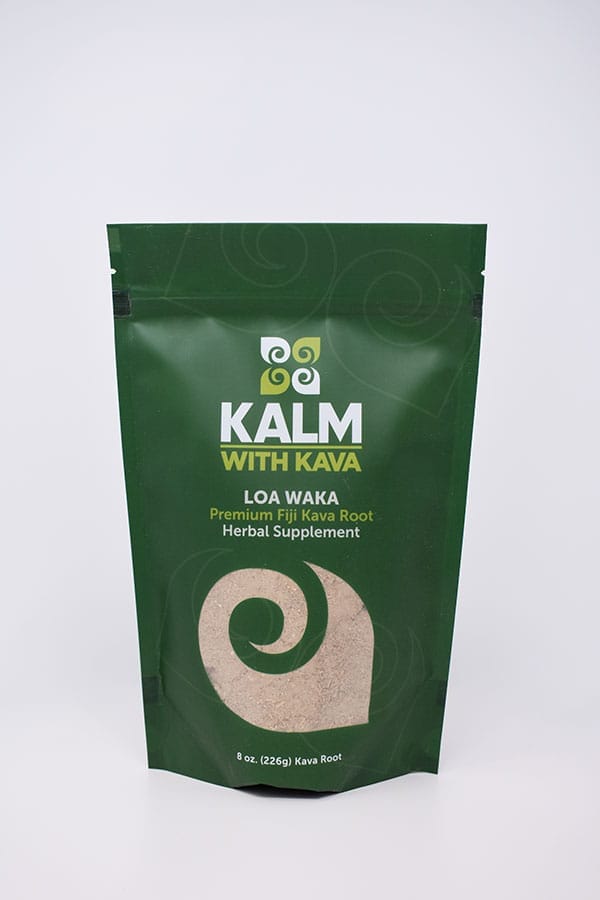
Kalm with Kava — Fiji Loa Waka (Traditional Grind)
Kalm with Kava · 4.7
~$39.99 / 8oz
If you've been trying to wind down at the end of the day and you've narrowed it to "kava or CBD," you've already sorted the two most-asked-about plants for unwinding into the same bucket — and that's fair, because both are reached for by people who want to take the edge off without alcohol. But the bucket hides the most useful fact: these two work on a different schedule and feel different in the body, so the honest comparison isn't "which is stronger," it's "which shape of calm do you actually want?"
Kava is a root from the South Pacific — the same one in our complete guide to kava — that you prepare as a drink. Its active compounds, the kavalactones, produce an acute, same-session relaxation: drinkers describe a relaxed body and a sociable, present, clear head, usually within the hour, lasting a few hours, and then easing off. It's a thing you do and feel tonight — a ritual with an arc, which is why kava bars exist and why people drink it socially. (If you want the mechanism, our kavalactones explainer goes deep.)
CBD — cannabidiol — is a different animal. It's one of the non-intoxicating cannabinoids from hemp, sold mostly as oils, capsules, and gummies, and the way most users talk about it is the opposite of acute: a subtle, cumulative, take-it-every-day background ease that builds over weeks rather than announcing itself in an hour. Many people report little obvious "event" from a single dose; the value, as users describe it, is in the routine. So one is a tonight thing you can feel; the other is an over-time thing you mostly notice in its absence. Below we put them head to head — what each is, how each feels, onset, tolerance, taste, the legal picture, and cost-to-effect — then handle the inevitable "can I take both?" question plainly. Honest disclosure: we rate and link kava products (the half of this we know cold and stake our name on); CBD we cover neutrally and recommend no CBD brands. None of this is medical advice, neither is a treatment for anything, effects vary, and both are for adults 21+.
The short version
- Different schedules, not different brands of the same thing. Kava is an ACUTE, feel-it-tonight relaxation (within the hour, lasts a few hours). CBD is more often described as a CUMULATIVE, take-it-daily background ease that builds over weeks — many users feel little from a single dose.
- Kava is a drink and a ritual; CBD is a routine. Kava has an arc you experience in a session (which is why kava bars exist); CBD is mostly a daily habit you notice in its absence, not an evening event.
- Neither is a medicine. We make no claim that kava or CBD treats anxiety, pain, sleep problems, or anything else — this is experiential, lawful comparison only. 21+, effects vary, not medical advice.
- We sell kava, not CBD — and we say so. The kava picks below are real products we link; CBD we cover neutrally with zero product recommendations, because honest comparison shouldn't hide who pays the bills.
- If "I want to feel relaxed tonight, socially, with a clear head" is the goal, kava is built for that job. If "I want a low-key daily background habit" is the goal, that's the lane people use CBD for.
At a glance
| Kava | CBD | |
|---|---|---|
| What it is | A South Pacific root you drink; active compounds are kavalactones | Cannabidiol, a non-intoxicating cannabinoid from hemp (oils, gummies, capsules) |
| How it feels | Acute, same-session: relaxed body, sociable and present, head largely clear | Most users describe a subtle, cumulative background ease; often little acute "event" |
| Onset | Within roughly an hour; lasts a few hours, then eases off | Single-dose effect is often faint; many report value building over days to weeks |
| Tolerance | Reverse tolerance is common — many drinkers feel little at first, then more as the body adjusts | Users commonly report taking it daily; experiences with tolerance vary widely |
| Taste / format | Earthy, peppery, acquired (traditional); ready-to-drink cans tame it | Oils can be grassy; gummies and capsules largely hide the taste |
| Legality (plain-speak) | Federally legal in the U.S.; a few local restrictions exist — see our legality guide | Hemp-derived CBD is broadly legal federally, but state rules and product limits vary; not legal advice |
| Cost-to-effect | Pay per session; you know if tonight worked. Disclosed-dose cans make the math clean | Pay for an ongoing supply; the "did it work" signal is slower and harder to read |
Kava vs CBD — acute ritual vs cumulative routine, honestly

MELO Sparkling Kava
MELO
A cold, sparkling, disclosed-dose kava that makes the acute evening calm as simple as opening a can.
Our verdict: If you're coming from the "maybe I'll just try CBD gummies" world and want to feel the difference kava's acute calm makes, this is the cleanest on-ramp. MELO is cold, sparkling, and disclosed-dose, so you know exactly what you're getting and you'll know tonight whether it worked — which is the whole point of choosing the acute lane over the cumulative one. It's our pick because it turns "trying kava" into opening a can.
Lab report: Brand publishes kavalactone content per can and lab testing for its kava sourcing.
The fastest way to feel the kava-vs-CBD difference is to drink something with a known dose and notice how the evening goes. A can like MELO Sparkling Kava is built for exactly that test: it's cold, carbonated, and disclosed-dose, so unlike a CBD gummy whose effect many people struggle to feel from a single serving, you get an acute, same-session calm you can actually evaluate — relaxed body, clear head, a sociable wind-down within the hour.
Treat it as a relaxing evening drink, not an all-day habit — the value of the acute lane is that you reach for it when you actually want to wind down, then put it back. And the one hard rule everywhere on this site: never mix kava with alcohol. New to all of this? Start with best kava for beginners for the gentle on-ramp, or run the 20-second matcher to find your fit.
Who should buy it
Buy MELO if you're deciding between kava and CBD and want to feel kava's acute calm with the least possible friction — no brewing, no guesswork, a known dose in a cold can. It's the right pick for the curious first-timer who wants a tonight-you'll-know answer rather than a take-it-daily-and-wait routine.
What we don't like
At $49.99 for a 12-pack it's priced like a premium functional beverage, so per-can it's a treat, not a bargain — the cost of a disclosed, tested product. It's a sparkling flavored drink rather than a traditional brewed bowl, so purists chasing the full earthy ritual will want a grind instead. And it's emphatically a relaxant: if you wanted an all-day, barely-there background ease, that's the CBD lane, not this.
- Format
- Sparkling, ready-to-drink kava (canned)
- Pack
- 12-pack
- Best for
- The lowest-friction first taste of kava's acute calm
- What's verified
- Brand states per-can kavalactone content and kava lab testing
What we like
- Disclosed-dose — you know the kavalactones per can
- Acute, same-session calm you can actually evaluate tonight
- Cold, sparkling, zero prep — opening a can is the whole ritual
- A genuinely easy on-ramp for anyone coming from CBD gummies
Worth noting
- Premium per-can pricing
- Flavored RTD, not a traditional brewed bowl

Leilo Kava Tonic
Leilo
A flavored, friendly kava tonic that's as effortless to reach for as a CBD gummy, but you feel it the same evening.
Our verdict: A lot of people lean toward CBD purely because a gummy is easy — pop it and move on. Leilo matches that ease on the kava side: a flavored, sweetened, ready-to-drink tonic that's friendly on the first sip and asks nothing of you, except it delivers an acute calm you can feel that night rather than a habit you have to keep up. The convenient way into the tonight-lane.
Lab report: Brand states its kava extract content per can and publishes testing for its sourcing.
If the appeal of CBD was "it's easy and tastes fine," kava has an answer that's just as low-effort. Leilo Kava Tonic is a flavored, sweetened, ready-to-drink tonic that goes down easy with no acquired taste required and no preparation — the kava equivalent of grabbing a gummy, but with an acute effect you actually experience the same evening.
Same rule as always: it's a relaxing drink, never to be mixed with alcohol, and best treated as something you reach for when you want to wind down rather than an everyday autopilot. For the full ready-to-drink field, our best kava drinks guide is the menu.
Who should buy it
Buy Leilo if the thing pulling you toward CBD was sheer convenience and palatability — a flavored, no-prep, no-acquired-taste option that's friendly from the first sip. It's the right pick for newcomers who want kava's acute, feel-it-tonight calm in the easiest possible package.
What we don't like
Like the rest of the ready-to-drink category it's a premium buy at $49.99 a 12-pack. It's also light by design — a gentle daytime-or-evening calm rather than a strong session — so a seasoned kava drinker chasing depth will find it mild, and it's a sweetened packaged beverage rather than pure root-and-water kava, which purists will note.
- Format
- Flavored kava tonic, ready-to-drink (canned)
- Pack
- 12-pack
- Best for
- The easiest grab-and-go entry to kava's acute calm
- What's verified
- Brand states per-can kava extract content and testing
What we like
- Flavored and friendly — easy first sip, no acquired taste needed
- Zero prep, single-serve — as effortless as a gummy
- Acute, same-evening effect, not a wait-and-see routine
- Light, sociable calm by design — won't knock you out
Worth noting
- Premium 12-pack pricing
- Mild for veterans; a sweetened beverage, not pure root kava
Kalm with Kava — Fiji Loa Waka (Traditional Grind)
Kalm with Kava
A single-origin noble Fijian root for the unwinding ritual a CBD gummy can never give you.
Our verdict: Here's where kava decisively does something CBD doesn't: the ritual. A CBD gummy is a swallow and a shrug; brewing kava is a deliberate ten minutes that becomes the wind-down itself. Loa Waka is a respected single-origin Fijian noble cultivar you prepare by hand, and it's the pick for anyone whose real goal is a relaxing ceremony — the strongest, most authentic expression of the acute lane.
Lab report: Noble Fijian cultivar; the brand details origin and preparation — confirm the current lot on the product page.
If part of what you want from "relaxing" is a ritual — not just a substance — that's the clearest place kava separates from CBD. Where a CBD gummy is over in a second, a traditional grind is the wind-down: Kalm with Kava is a long-running specialist sourcing named, single-origin Pacific cultivars, and Loa Waka is a well-regarded Fijian noble variety — the daily-drinking class, the opposite of the harsh tudei roots we warn against — made to be brewed by hand.
This asks more of you than a can — you knead the ground root in warm water in a straining bag, squeeze for a few minutes, and drink the milky result — and the taste is earthy and acquired. That's the trade for a stronger, fuller, more authentic serving whose strength you control. Same hard rules at this depth: adults 21+, never with alcohol, no driving on a heavy serving. New to brewing? Our how to make kava guide walks the whole ritual.
Who should buy it
Buy this if what you actually want from unwinding is a ritual — the brewing, the pause, the bowl — and a swallow-and-move-on gummy was never going to scratch that itch. It's the right pick for the drinker ready to trade convenience for a genuine hands-on ceremony and a stronger, single-origin noble serving they control.
What we don't like
It's real work: kneading and straining every serving is messier and slower than a can or a gummy, and the earthy traditional taste is an acquired one a newcomer may not be ready for. The strength is also less forgiving — easy to overdo if you're new — so it's the opposite of CBD's set-and-forget routine in every way, demands and rewards alike.
- Format
- Traditional grind (knead & strain)
- Origin
- Fiji — single origin
- Cultivar
- Loa Waka (noble)
- Size
- 8oz
- Best for
- The full hands-on unwinding ritual
What we like
- A named, single-origin noble Fijian cultivar — real quality
- The brewing ritual IS the wind-down — something CBD can't offer
- Stronger, fuller serving whose strength you control
- From a long-running kava specialist, not a generic reseller
Worth noting
- Real effort — kneading and straining every serving
- Earthy acquired taste; easy to overdo at strength

Root of Happiness Instant Kava
Root of Happiness
Stir-and-sip instant kava that splits the difference: real root strength without the brewing or the can price.
Our verdict: If you liked the idea of a gummy's convenience but wanted the actual strength of brewed root rather than a light tonic, instant kava is the bridge. Root of Happiness's instant dissolves in water — no straining bag, no mess — while delivering a fuller, more traditional serving than the cans. The middle path for someone who wants kava's acute calm at strength, the easy way.
Lab report: Brand states a kavalactone figure for its instant kava and publishes sourcing — confirm the current lot.
The convenience that pulls people toward CBD gummies and the strength that pulls them toward traditional kava don't have to be a trade-off. Root of Happiness Instant Kava stirs into water and goes — no straining bag, no kneading — but it's made from real kava, so the serving lands closer to a brewed bowl than to a light flavored tonic. You get an acute, fuller calm with roughly gummy-level effort.
Same rules: a relaxant for adults 21+, never with alcohol, and you control the dose — start modest, since instant lands harder than a tonic. Pricing and the per-serving panel shift, so confirm the current product page before you stock up. For where instant sits among the formats, see best instant kava.
Who should buy it
Buy this if you want the convenience that made CBD gummies tempting but the real strength of brewed kava — instant dissolves in seconds yet delivers a fuller, more traditional serving than a can. It's the right pick for the person who wants kava's acute calm at meaningful strength without committing to the knead-and-strain ritual.
What we don't like
Because it lands stronger than a tonic, it's easier to overdo if you treat it like a light drink — start small. The taste is more present than a flavored can (it's closer to real kava), pricing and the per-serving kavalactone panel can change between lots, and like everything kava it's an acute relaxant, not the all-day background routine some people want from CBD.
- Format
- Instant kava (stir into water)
- Size
- 50g
- Best for
- Brewed-root strength with stir-and-go convenience
- What's verified
- Brand states a kavalactone figure (verify current lot)
What we like
- Dissolves in seconds — gummy-level effort
- Fuller, more traditional strength than a flavored can
- Dose is in your control — dial it up or down
- Travels well; no straining bag or mess
Worth noting
- Lands harder than a tonic — easy to overdo if you're new
- Pricing and per-serving panel shift between lots — verify
More kava worth comparing
Beyond this guide: the highest-rated kava across every format, kavalactones verified, with a live price check on each.



As an Amazon Associate we may earn from qualifying purchases, at no cost to you. 21+.
Quick shop: every pick
Skip the scroll: the whole lineup, with a live price check on each.
- MELO Sparkling KavaThe Easiest Way to Try KavaMELO · $49.99 / 12-packCheck Price
- Leilo Kava TonicEasy Grab-and-Go CalmLeilo · $49.99 / 12-packCheck Price
- Kalm with Kava — Fiji Loa Waka (Traditional Grind)The Real Traditional RitualKalm with Kava · ~$39.99 / 8ozCheck Price
- Root of Happiness Instant KavaTraditional Strength, Gummy-Level ConvenienceRoot of Happiness · Check current 50g pricingCheck Price
How we chose
We compare kava and CBD the way a buyer actually decides between them — by the shape of the experience (acute vs cumulative), the format and ritual, onset, tolerance, taste, the legal picture, and cost-to-effect — not by chasing a "winner." The kava side reflects the same hands-on, COA-first standard we apply across this site: we favor named noble cultivars and disclosed-dose products, and we treat published lab testing as the price of entry.
On the CBD side we stay deliberately neutral and general. We do not sell CBD, we recommend no CBD brands, and we make no medical claims about it; we describe how CBD users commonly characterize the experience so the comparison is honest, not so we can route you to a product. No brand paid for placement here — not on the kava side, not anywhere. Our only commercial interest is in the kava products we link, and we'd rather tell you kava isn't your answer than sell you the wrong calm.
Everything here is experiential and lawful. Neither kava nor CBD is presented as a treatment for any condition; effects vary person to person, both are for adults 21+, and none of this is medical or legal advice.
Key terms
- Kavalactones
- The family of active compounds in kava root that give it its relaxing character — chiefly six of them, with the ratio (a kava's "chemotype") shaping how it feels. A kava's strength is usually described by its total kavalactone content, which is why a disclosed-dose can or a published lab figure matters: it tells you how much you're actually getting. Our kavalactones explainer goes deeper.
- Reverse tolerance
- A quirk many kava drinkers report: rather than needing more over time, you may feel little or nothing the first few sessions and then more once your body adjusts. It's the opposite of how tolerance usually works, and it's a big reason newcomers wrongly conclude "kava doesn't work for me" — they quit before the reverse tolerance breaks. CBD users, by contrast, more often describe a slow cumulative build for different reasons; the two patterns aren't the same thing.
- COA (Certificate of Analysis)
- An independent lab report verifying what's actually in a product — for kava, the kavalactone content and screening for contaminants. We treat a published COA (or at minimum a disclosed per-serving figure) as the price of entry for any kava we link, because "no COA, no number" is how you avoid mystery product. See our guide on how to read a kava COA.
Questions, answered
Is kava or CBD better for relaxing?
Neither is "better" outright — they relax you on different schedules, so it depends on the job. Kava is acute: it's a drink whose kavalactones produce a same-session calm you feel within about an hour, with a clear head, and then it eases off. CBD is more often described as cumulative: a subtle daily background ease that users say builds over weeks, with little obvious effect from a single dose. So if you want to wind down tonight, sociably and noticeably, kava is built for that. If you want a low-key daily routine you mostly notice in its absence, that's the lane people use CBD for. Frame it as which-shape-of-calm, not which-is-better. Neither is a treatment for anything; effects vary; 21+, not medical advice.
Which is stronger, kava or CBD?
"Stronger" is the wrong yardstick, because they're not on the same scale. Kava produces a clear, acute effect you can feel in a single session — most people would call that the more noticeable experience tonight. CBD, as users describe it, is intentionally subtle per dose and works cumulatively, so on any given evening it can feel like "nothing happened" even when the daily routine is what people value. So kava feels stronger in the moment; CBD's whole proposition is that it isn't supposed to. Comparing their "strength" head-to-head mostly tells you they're built for different goals. Effects vary; neither is a medicine; 21+, not medical advice.
Can you take kava and CBD together?
Some people do use them together — typically a daily CBD routine plus the occasional kava session — and anecdotally report no problem, but that's a description of what people do, not an endorsement, and we make no medical claim either way. Whether it's appropriate for you depends on your health, your other medications, and factors only a doctor or pharmacist who knows your situation can weigh, so that's the right person to ask. Experientially, the sensible approach is to introduce one thing at a time so you can actually tell what each is doing, start low, and not stack unknowns when you need to be sharp. The one firm line we'll draw is unrelated: never mix kava with alcohol. 21+, effects vary, not medical advice.
Does kava get you high like THC?
No. Kava is non-intoxicating in the THC sense — there's no "high," no impairment of the head the way cannabis produces; drinkers describe a relaxed body with a clear, present mind. CBD is also non-intoxicating (it's the cannabinoid people reach for precisely because it doesn't get you high), so on the "does it make you high" question the two are similar: both are about calm, not intoxication. Kava's calm is just acute and same-session, while CBD's is described as a subtle cumulative thing. Neither is a medicine; effects vary; 21+, not medical advice.
Is kava legal where CBD is legal?
Broadly, both are legal at the U.S. federal level — kava as a dietary ingredient and hemp-derived CBD under the federal hemp framework — but the details differ and rules change, so this is general information, not legal advice. Kava has only a handful of localized restrictions; hemp-derived CBD is widely available but subject to varying state rules and product limits. The practical upshot: in most of the country you can buy either, but check your own state for both. Our <a href="/journal/is-kava-legal">kava legality guide</a> covers the kava side in detail.
Why do you only recommend kava products and not CBD ones?
Because we sell kava and we don't sell CBD — and we think it's more honest to say that out loud than to bury it. The kava picks in this guide are real products we link and earn a commission on if you buy through them; CBD we cover neutrally, recommend no brands for, and make no money on. That asymmetry is exactly why we'll happily tell you when the CBD lane fits your goal better: our credibility is the business, so we'd rather lose a click than steer you to the wrong kind of calm. No brand paid for placement here. Effects vary; neither is a treatment for anything; 21+, not medical advice.
Keep reading
What Is Kava? The Complete Guide
The full rundown on the plant, the kavalactones, what it feels like, and how to start — the foundation under this comparison.
Best Kava for Beginners
If kava's the lane you're leaning toward, this is the gentle on-ramp — the easiest, most forgiving ways to start.
Kava vs Coffee, Honestly
The other big "kava vs" question — calm focus vs jittery energy, and which cup to actually swap.