Our pick. Root of Happiness
Check priceRoot of Happiness vs Kalm with Kava (2026): The Transparency Test
Two of the most-trusted noble-kava houses in the US, head to head. Kalm with Kava is the 15-year traditionalist's favorite, selling root by named single-origin cultivar. Root of Happiness is the lab-transparency standout, printing the kavalactone percentage and chemotype right on the page from its own FDA-registered facility. We scored both on disclosure, sourcing, range, and value — and the verdict splits cleanly by what kind of buyer you are.
By The Kava Review DeskUpdated 2026-06-27~7 min readRanked by the lab reportHow we research
 Best Overall
Root of Happiness — Superior Vanuatu Kava Powder (1/2 lb)
- Root of Happiness
- 4.6
- Price
- ~$35 / 1/2 lb
If you ask a room of serious kava drinkers to name two American noble-kava houses they trust, Root of Happiness and Kalm with Kava both come up fast. They sit at the premium end of the powder market, they both sell genuine noble root by origin, and they both have years of community goodwill behind them. But put their product pages side by side and you're not really comparing two bags of kava. You're comparing two philosophies of how much a vendor owes you in writing.
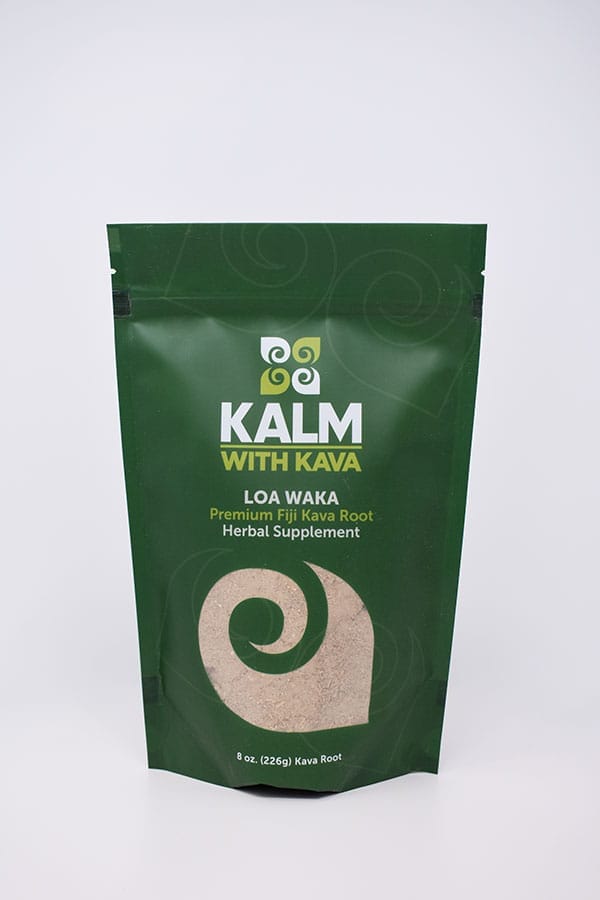
Kalm with Kava is the elder traditionalist — founded in 2010, a fixture on the kava forums, and one of the few US vendors that still sells root by named single-origin cultivar. Its flagship Loa Waka is a Fijian noble made from 100% lateral roots, the stronger waka cut, in the medium grind you knead in a strainer bag. Root of Happiness is the rigorist — a Sacramento-area company that runs its own FDA-registered, cGMP-compliant facility, issues certificates of analysis through the American Kava Association, and does the thing almost no competitor does: prints the total-kavalactone percentage and the chemotype directly on the product page (its Superior Vanuatu lists 6.2% kavalactones and a 425 chemotype).
Everything below was checked against our own verified brand reviews of each company. To be clear up front: this is not a paid placement and neither brand sponsored it; we have no relationship with either. Both are legitimate — that's not the question. The question is which one is right for you, and the honest answer splits by whether you rank published lab numbers first or cultivar heritage first. Usual ground rules: kava is for adults 21+, it can cause drowsiness, don't drive after drinking it, don't mix it with alcohol, and if you take medications or are pregnant, talk to your doctor. None of this is medical advice.
The short version.
- Disclosure is the whole fight, and Root of Happiness wins it outright: it prints a total-kavalactone percentage (6.2%) and chemotype (425) on the Superior Vanuatu page, processes root in its own FDA-registered cGMP facility, and issues COAs via the American Kava Association. Kalm with Kava says it's 'third-party lab tested' but, as of our checks, publishes no per-batch COA or stated kavalactone figure we could find.
- Cultivar heritage goes to Kalm with Kava. It's a 15-year noble-only house that sells single-origin root by name — Loa Waka (Fiji), Borogu (Vanuatu) — across traditional grind, micronized, and instant. If you shop kava the way a coffee drinker shops single-origin beans, that's its real edge.
- Value-per-disclosed-milligram only exists for Root of Happiness. Its Superior Vanuatu (~$35 / half-pound at a stated 6.2%) lets you actually do the cost-per-100mg math; Kalm's Loa Waka Traditional Grind (~$38.99 / 8 oz) doesn't publish a percentage, so there's no denominator to divide by.
- Pick Root of Happiness if you want the numbers proven on the page, the best documented value, and a vertically integrated vendor that shows its work. Pick Kalm with Kava if you want named single-origin cultivars, a beloved community track record, and you don't strictly need a posted lab sheet.
- Both share a fair caveat: a published percentage (Root of Happiness) is a label figure, not a re-assay of your bag, and freshness is the recurring soft spot for both — buy current stock, not clearance.
At a glance.
| Root of Happiness | Kalm with Kava | |
|---|---|---|
| Kavalactone % disclosed | Yes — 6.2% on the Superior Vanuatu page (instant lists 5.81%) | No — 'third-party lab tested' is claimed; no stated percentage we found |
| Chemotype disclosed | Yes — 425 (Superior Vanuatu); 462 (instant) printed on the page | Not published on the product pages we checked |
| COA transparency | Own FDA-registered cGMP facility; COA via American Kava Association; HPLC + microbial | Marketed 'lab tested for safety, strength, and nobility'; no downloadable per-batch COA found |
| Origin & grade (flagship) | Superior Vanuatu — noble, traditional grind; 425 balanced-Vanuatu profile | Loa Waka — Fiji, noble, 100% lateral roots (waka), the stronger cut |
| Flagship price | ~$35 / 1/2 lb (traditional grind) | ~$38.99 / 8 oz (traditional grind) |
| Range | Powders, water-extracted instant, Kava Shots, in-house 70% CO2 extract + capsules | Named cultivars across traditional grind, micronized, instant, and a seltzer |
| Our verdict | The verifiable one — best for buyers who want the numbers proven | The traditionalist's favorite — best for named-cultivar heritage |
Root of Happiness vs Kalm with Kava at a glance — specs drawn from our verified brand reviews. The value row only computes where a brand publishes a real kavalactone number.
Root of Happiness — Superior Vanuatu Kava Powder (1/2 lb)
Root of Happiness
The traditional-grind Vanuatu noble that prints its kavalactone % and chemotype on the page — the transparency pick that's also the value pick.
Our verdict: Superior Vanuatu wins this matchup on the single axis we weight hardest: it tells you the numbers. 6.2% total kavalactones and a 425 chemotype, printed on the page, from a Vanuatu noble root processed in the brand's own FDA-registered facility. At ~$35 for a half-pound, that disclosed potency makes it not just the honest pick but a strong cost-per-100mg value. The only asterisk is freshness — buy current stock.
Lab report. Discloses 6.2% total kavalactones and a 425 chemotype on the product page; root is processed in the brand's own FDA-registered cGMP facility and issued a certificate of analysis via the American Kava Association — the strongest published paper trail in this matchup.
This is the bag for the drinker who wants a number, not a vibe. Root of Happiness Superior Vanuatu is a traditional-grind Vanuatu noble that carries the two strings our desk hunts for and rarely finds: a stated 6.2% total kavalactone content and a 425 chemotype, printed right on the product page. The 425 leans toward a balanced, everyday Vanuatu profile, and 6.2% is a respectable potency for a half-pound you'll prepare in a strainer bag. Against Kalm with Kava's Loa Waka — a genuinely fine Fijian waka that simply doesn't publish a percentage — the difference isn't quality so much as proof: here you can read the number, not just trust it.
As a drink, traditional grind is the connoisseur's format and the beginner's hurdle: you need a strainer bag, a few minutes of kneading, and a tolerance for kava's earthy, peppery slurry. The payoff is the fullest expression of the root and the lowest cost per serving. Reverse tolerance applies — your second and third sessions tend to speak louder than your first — so don't judge a balanced Vanuatu cultivar on a single bowl. The one thing the published number can't promise is that your specific bag is fresh, which is the brand's one recurring community knock; order current stock and store it sealed.
Who should buy it.
Buy Superior Vanuatu if you comparison-shop by the numbers, own a strainer bag, and want a vendor that proves its potency on the page. It's the right everyday pick for someone graduating to home preparation who refuses to shop blind — and the side of this matchup with the best documented value per dollar of active compound.
What we don't like.
It's traditional grind, so first-timers face the strainer-bag learning curve. The 6.2% figure is a published label number rather than a re-assay of your individual bag, and the brand's one recurring community complaint is older stock — so buy current, not clearance. And while the chemotype is disclosed, it's a Vanuatu balanced profile, not the head-forward Fijian waka some drinkers specifically want.
- Origin
- Vanuatu (noble kava)
- Kavalactones
- 6.2% total (disclosed on product page)
- Chemotype
- 425 (disclosed on product page)
- Format
- Traditional grind (requires a strainer bag)
- Testing
- Own FDA-registered cGMP facility; HPLC + microbial; COA via American Kava Association
- Price
- ~$35 / 1/2 lb
What we like.
- Total kavalactone % (6.2%) and chemotype (425) printed on the page — rare
- Strong cost per 100 mg of active compound at ~$35 / 1/2 lb
- Processed in the brand's own FDA-registered cGMP facility, COA via AKA
- Balanced Vanuatu noble profile for everyday drinking
Worth noting.
- Strainer-bag prep is a barrier for first-timers
- Published % is a label figure, not a guarantee for your individual bag
- Buy fresh — the brand's one recurring community knock is older stock

Kalm with Kava — Loa Waka (Medium Grind)
Kalm with Kava
Named single-origin Fijian waka root made from 100% lateral roots — the cultivar-heritage pick from a 15-year house, minus a published number.
Our verdict: Loa Waka is the product that explains why traditionalists default to Kalm with Kava. It's a named single-origin Fijian cultivar made from 100% lateral roots — the waka grade prized for potency — in the medium grind you knead in a strainer bag, from a 15-year house the community broadly trusts. At ~$38.99 for 8 oz it isn't bulk-cheap, and the one thing missing is the document: 'lab tested' is claimed, not posted, and there's no chemotype or percentage on the page.
Lab report. Marketed as 100% noble, made from 100% lateral roots (waka), and described as third-party lab tested for safety, strength, and nobility — but we found no downloadable per-batch COA or stated kavalactone percentage on the product page.
If this fight were scored on heritage, Kalm with Kava would win going away. Loa Waka is a single-origin Fijian kava sold by cultivar name — not a blend, not a mystery 'premium' label — made from 100% lateral roots, the waka grade traditionalists prize. The medium grind is the format you knead in a strainer bag the old way, and the brand markets Loa Waka as the strongest, most balanced cultivar it carries: heady up front, heavier as the session goes. For someone who already drinks kava and wants to choose their root the way a coffee drinker chooses a single-origin bean, Kalm with Kava is one of the few US vendors that makes that possible.
As a drinking experience, the medium grind delivers the fullest expression of the root and the lowest cost per serving in the lineup, with Loa Waka's balanced profile — the tongue-numbing tingle arrives quickly, the relaxation settles over the first half hour — exactly what most people want in an everyday kava. Reverse tolerance applies as always. If a posted lab sheet matters to you, ask Kalm with Kava for the COA on your batch before buying; a vendor this serious should be able to send it.
Who should buy it.
Buy Loa Waka if you own a strainer bag, you care which cultivar and island your root comes from, and you want a trusted 15-year vendor rather than the cheapest unnamed powder. It's the right pick for the drinker who values single-origin cultivar specificity and a beloved community track record over a published lab number.
What we don't like.
The transparency gap is the real knock against Root of Happiness here: 'lab tested' is claimed, but we couldn't find a downloadable COA, a chemotype, or a stated kavalactone percentage, so the strength claim is a promise rather than a published figure. The price is firmly premium versus bulk importers, and traditional grind requires straining — beginners may want the micronized version instead.
- Cultivar
- Loa Waka (single-origin Fijian noble kava)
- Root grade
- 100% lateral roots (waka) — the stronger cut
- Format
- Medium / traditional grind (requires a strainer bag)
- Testing
- Marketed 100% noble, "third-party lab tested" — no public per-batch COA or stated % found
- Origin
- Fiji
- Price
- ~$38.99 / 8 oz
What we like.
- Named single-origin Fijian cultivar — not a generic blend
- Made from 100% lateral roots (waka), the stronger grade
- Trusted 15-year vendor with a strong community reputation
- Broad range — same cultivar in traditional grind, micronized, and instant
Worth noting.
- No downloadable per-batch COA, chemotype, or stated kavalactone % we could find
- Premium pricing versus bulk kava importers
- Strainer-bag prep is a barrier for first-timers
More kava worth comparing
Beyond this guide: the highest-rated kava across every format, kavalactones verified, with a live price check on each.




As an Amazon Associate we may earn from qualifying purchases, at no cost to you. 21+.
Quick shop: every pick.
Skip the scroll: the whole lineup, with a live price check on each.
- Root of Happiness — Superior Vanuatu Kava Powder (1/2 lb)The Verifiable OneRoot of Happiness · ~$35 / 1/2 lbCheck price
- Kalm with Kava — Loa Waka (Medium Grind)The Traditionalist's FavoriteKalm with Kava · ~$38.99 / 8 ozCheck price
Key terms
- Chemotype
- The rank order of the six major kavalactones, written as a six-digit string (e.g. 425). It's the fingerprint that predicts whether a kava drinks heady or heavy. Root of Happiness prints it on its pages (425 / 462); Kalm with Kava does not.
- Kavalactone percentage
- The proportion of a powder that is active kavalactones — the figure that lets you reason about strength and cost per 100 mg. Root of Happiness states 6.2% on Superior Vanuatu; Kalm with Kava publishes no percentage we found.
- Waka (lateral roots)
- The lateral root grade, generally higher in kavalactones and prized for a brighter, more sociable session. Kalm with Kava's Loa Waka is made from 100% lateral roots — its central potency claim.
- COA (Certificate of Analysis)
- The lab document reporting what's in a batch — kavalactone %, chemotype, contaminant screen. The trust ladder: posted per product (best), on request (acceptable), 'we lab test' with nothing shown (a claim). Root of Happiness sits at the top rung; Kalm with Kava, on its public pages, sits lower.
- Reverse tolerance
- Kava's well-known quirk: first sessions often feel mild, with the effect arriving more clearly on the second or third try. Worth knowing before you judge either brand on a single bowl.
Questions, answered
Root of Happiness or Kalm with Kava — which is better?
It depends on what you're optimizing for, and the verdict splits cleanly. For verifiable transparency and documented value, Root of Happiness wins: it's the only one of the two that prints a kavalactone percentage (6.2%) and chemotype (425) on the page, runs its own FDA-registered facility, and issues COAs via the American Kava Association. For named single-origin cultivar heritage, Kalm with Kava wins: it's a beloved 15-year noble-only house selling root by cultivar (Loa Waka, Borogu) with a deep community track record. Numbers-first buyer → Root of Happiness. Cultivar-and-heritage buyer → Kalm with Kava.
Is Root of Happiness or Kalm with Kava more noble — and stronger?
Both sell genuine noble kava, so neither is 'more noble' in kind — the difference is proof. Root of Happiness backs its noble claim with a published chemotype (425 on Superior Vanuatu) and a 6.2% kavalactone figure, processed in its own FDA-registered facility. Kalm with Kava markets its Loa Waka as 100% noble and made from 100% lateral roots (the stronger waka grade), but doesn't publish a chemotype or percentage we could find. On documented strength, Root of Happiness states 6.2%; on grade, Kalm's Loa Waka is all lateral roots, which traditionally runs potent. We won't crown a strength winner where only one side publishes a number.
Which is better value, Root of Happiness or Kalm with Kava?
Root of Happiness is the only one you can rank on value, because it's the only one that publishes a kavalactone percentage. Its Superior Vanuatu at ~$35 for a half-pound at a stated 6.2% works out to a low cost per 100 mg of active compound. Kalm with Kava's Loa Waka Traditional Grind runs ~$38.99 for 8 oz, but with no published percentage there's no kavalactone denominator to divide by — so we can't compute its value, only its sticker. Same premium tier, very different certainty about what you're getting for the money.
Do both brands publish lab results / COAs?
No — this is the core difference. Root of Happiness publishes total-kavalactone percentages and chemotypes directly on its product pages, runs its own FDA-registered cGMP facility, and issues certificates of analysis through the American Kava Association. Kalm with Kava says its kava is third-party lab tested for safety, strength, and nobility — the right posture — but as of our checks we couldn't find a downloadable per-batch COA or a stated kavalactone percentage on its product pages. If a posted COA is your dealbreaker, Root of Happiness is the safer pick, or ask Kalm with Kava for the COA on your specific batch.
Is this comparison sponsored or paid?
No. This is not a paid placement, and neither Root of Happiness nor Kalm with Kava sponsored or reviewed it. We may earn an affiliate commission if you buy through our links, but that never changes the verdict — our scoring rewards disclosure and verifiable strength, which is exactly why the brand with the cleaner paper trail (Root of Happiness) takes the transparency win over a beloved heritage vendor. We answered the question the way a shopper would, including where the honest answer is 'it depends on who you are.'
Keep reading.
Root of Happiness Review
Our deep-dive on the lab-transparency standout — the chemotype and kavalactone % it prints on the page, and the FDA-registered facility behind them.
Kalm with Kava Review
Our full read on the 15-year traditionalist's favorite — named single-origin cultivars, format range, and the one transparency gap.
Best Noble Kava
The noble cultivars and brands we trust most — where both of these houses land in the wider field.