Our Pick: MELO
Check PriceKava vs Kratom: Different Plants, Different Stakes (2026)
They share a bar, a shelf, and a reputation — and almost nothing else. Kava is a Pacific pepper root that works through the brain's calming GABA system; kratom is a Southeast Asian coffee-family leaf whose alkaloids dock onto the same opioid receptors as morphine. The pharmacology isn't similar, the dependence record isn't similar, and the legal status isn't similar. We put the two side by side at the level that matters — mechanism, dependence read criterion by criterion, legality — and then make the case that selling them like cousins is the single most consequential confusion in this corner of the wellness aisle.
By The Kava Review DeskUpdated 2026-06-12~8 min read Ranked by the lab reportHow we research
Kava and kratom are treated as a matched set, and the treatment is almost entirely an accident of retail. They turn up on the same "kava bar" menus, they pour out the same earthy brown, they both wear botanical names most people can't pronounce — and from that surface coincidence the public has inferred a kinship that does not exist. The honest framing is closer to coffee and chamomile: two plants that share a category in the consumer's mind and share nothing in the body. One is a root from the South Pacific; the other is a leaf from Southeast Asia. One modulates the brain's primary calming system; the other binds the receptors that opioids bind. Reading them as variations on a theme is not a small error. It is the error.
This piece is deliberately built differently from the friendly "which one should I try" comparisons you'll find elsewhere, including the plainer companion explainer on our sister sites. We're not here to talk you onto a barstool. We're here to do the forensic version: lay the two plants side by side at the level of botany and mechanism, walk their dependence records through the same clinical criteria one at a time, map their genuinely different legal terrain, and then confront the thing those first three sections make unavoidable — that the market sells these two as interchangeable precisely where the stakes of confusing them are highest. The title is the thesis: different plants, different stakes.
Two ground rules, stated once. Everything below is attributed to its source — the FDA's published position on kratom, the World Health Organization's assessment of kava, the pharmacology literature, and named reporting — because a comparison this consequential should be checkable line by line. And none of it is medical or legal advice; we describe what the record documents, we don't diagnose or prescribe, and the lawful-adult framing (21+, legality varies by state) governs throughout. Where we land on harm reduction for people already using kratom is offered in that same spirit: information, not a sermon.
The short version
- Different plants, different families, different continents: kava is the root of Piper methysticum (pepper family, South Pacific); kratom is the leaf of Mitragyna speciosa (coffee family, Southeast Asia). The names of their actives tell the story — kava's are kavalactones, kratom's are mitragynine and 7-OH.
- Different mechanisms, and this is the load-bearing difference: kavalactones act largely as GABA-system modulators (the brain's "ease off" signal); kratom's alkaloids are mu-opioid-receptor agonists — per the FDA, the same docking stations targeted by oxycodone and morphine. Calm via GABA is not calm via opioids.
- Different dependence records: walked through the clinical criteria, kava shows no conventional tolerance and no significant withdrawal syndrome (per the WHO's 2007 assessment); kratom shows documented tolerance, a real opioid-style withdrawal on heavy daily use, and active FDA concern — including a July 29, 2025 recommendation to schedule concentrated 7-OH.
- Different legality: kava is legal US-wide with no asterisks; kratom is legal federally but banned in roughly half a dozen states, with a shifting patchwork of local bans (Rhode Island actually reversed its ban effective April 2026) and FDA import alerts in force. "Sold at the same bar" hides a real legal gap.
- The conflation is the hazard. Kava bars sell kratom because the economics reward it — better margins, overlapping customers — and per Bloomberg's reporting kratom has been driving kava-bar growth. The fix is not fear; it's separation and disclosure. Order by plant name, read the ingredient list (the packaged cautionary tale is Feel Free), and treat "kava bar" as a venue name, not an ingredient guarantee.
At a glance
| Kava | Kratom | |
|---|---|---|
| Plant & part used | Piper methysticum — the root of a Pacific pepper-family plant (Vanuatu, Fiji, Tonga). Active compounds: kavalactones. | Mitragyna speciosa — the leaf of a Southeast Asian coffee-family tree (Thailand, Malaysia, Indonesia). Active alkaloids: mitragynine and 7-OH. |
| Mechanism of action | Largely GABA-system modulation — enhancing the brain's primary inhibitory "ease off" signal. No meaningful opioid-receptor activity. | Mu-opioid-receptor agonism — per the FDA, mitragynine and 7-OH bind the same receptors as oxycodone and morphine; mitragynine flips from stimulant (low dose) to opioid-like (high dose). |
| Dependence record | No conventional tolerance, no significant withdrawal syndrome for typical use (WHO 2007). Edges are behavioural — heavy daily use, dermopathy — not physiological dependence. | Documented tolerance and a real opioid-style withdrawal (irritability, aches, restlessness) on heavy daily use; large quit-support communities; the concentrated-7-OH wave steepens the risk further. |
| Legality (US, 2026) | Legal in all 50 states — no federal ban, no state bans, no import alerts. | Legal federally but banned in roughly half a dozen states, with shifting local bans and standing FDA import alerts; 7-OH scheduling under DEA review. |
| Our coverage policy | The plant we cover. We review and link disclosed, pure-kava products. | Editorial-only. We do not sell, recommend, or link a single kratom product — not even for a commission. |
Kava vs kratom at the level that actually matters — botany, mechanism, dependence, legality, and our coverage policy. Mechanism and legality facts attributed in the sections below; verified June 2026.

MELO Sparkling Kava
MELO
The cleanest way to settle the question for yourself: pure kava, no kratom, and an actual kavalactone number on the can.
Our verdict: If the relaxed, sociable, alcohol-alternative feeling is what drew you to this whole category, that's the appeal of kava — not kratom. MELO delivers it from kava alone, with no kratom in the can and a flat 100 mg kavalactone disclosure so you can actually see your dose. It's the right pour for anyone who, after reading the mechanism contrast above, decided they wanted the GABA plant and not the opioid one.
Lab report: Discloses 100 mg of kavalactones per 12 oz can — a readable potency figure, exactly what a blended tonic won't give you. Noble kava sourced from Vanuatu; lab testing claimed.
This is the can for the reader who finishes the mechanism section and thinks: right, I want the kava one. MELO Sparkling Kava is pure kava — no kratom, no second active riding along — sourced from noble kava the brand grows in the South Pacific, and it does the one thing almost nothing else in this aisle does: it prints a real potency number. 100 mg of kavalactones per 12 oz can, stated the way a brewery states ABV. Against a blended tonic that won't tell you its kavalactone count or its kratom milligrams, a drink you can dose by reading the label is categorically easier to reason about.
Who should buy it
Buy MELO if, having read why kava and kratom differ, you want the kava experience cleanly — from a can that contains no kratom and discloses a real kavalactone number. It's the honest swap for anyone who reached for a blended "kava" tonic without realizing kratom was in it, and the standing pick for the sober-curious drinker who wants the GABA-side calm, verifiable and on the label.
What we don't like
No public, downloadable COA library yet — the 100 mg label figure is excellent, but we want the batch paperwork posted, not just claimed. The lineup is only three tropical-leaning flavors, and list price reads craft-beverage at roughly $4.17 a can.
- Plant
- Kava only (Piper methysticum) — no kratom, no second active
- Disclosed dose
- 100 mg of kavalactones per 12 oz can (stated by the brand)
- Mechanism lane
- GABA-side calm — no opioid-receptor activity
- Format
- 12 oz sparkling, zero sugar, zero calories
- Source
- Noble kava sourced in the South Pacific (Vanuatu)
- Pack pricing
- $19.99/4-pack · $49.99/12-pack
What we like
- Pure kava — contains no kratom and no second calming active
- Discloses a real dose: 100 mg of kavalactones per can
- GABA-side calm with no opioid-receptor mechanism in the can
- $19.99 four-pack makes a first try low-commitment
Worth noting
- No public COA library to back the label claim
- Only three flavors, all in the tropical-seltzer lane
The dependence contrast, walked criterion by criterion
Clinicians don't ask "is it addictive?" as a yes/no question — they decompose dependence into separable criteria and test a substance against each. We've applied that frame to kava on its own elsewhere; here we run both plants through the same three pillars, side by side, because the comparison is where the difference becomes undeniable.
Tolerance — the upward escalation that powers a dependence curve. Kava runs the wrong way: it's widely reported to show reverse tolerance (effects strengthening with familiarity, not fading), and a three-week mouse study observed no tolerance developing. Kratom does the opposite — tolerance to its opioid-receptor activity is well documented, and heavy users describe needing more over time to reach the same effect. One plant resists escalation; the other invites it.
Withdrawal — a defined, reproducible syndrome on stopping. The WHO's 2007 risk assessment concluded kava does not produce the withdrawal or compulsive cravings characteristic of alcohol or opioids; heavy daily kava drinkers at most report mild, self-limiting restlessness. Kratom's withdrawal, by contrast, is opioid-shaped and real — irritability, aches, restlessness, disturbed sleep — which is exactly what you'd predict from a mu-opioid agonist, and which is why large quit-support communities exist for it.
Compulsion — the behavioural core, bound to dopamine-reward circuitry. Kava largely doesn't pull that lever: investigators report at most mild, indirect dopamine effects, so there's no strong reward signature to train a chase. Kratom's opioid activity engages reinforcement directly, which is the mechanistic root of its compulsion risk.
The legality map — one plant has no asterisks, the other is a patchwork
The legal terrain mirrors the pharmacology, and the gap is wider than "sold at the same bar" would ever suggest.
Kava is legal in all 50 states. No federal ban, no state bans, no import alerts — which is part of why kava bars spread from the Pacific to American cities without legal drama, and why we can cover the category without a state-by-state disclaimer on every product.
Kratom is a patchwork. It is legal at the federal level — the DEA has not scheduled the plant, and Congress hasn't banned it — but a handful of states prohibit it outright (the consistently-banned set includes Alabama, Arkansas, Indiana, Vermont, and Wisconsin, with the exact roster shifting), and various cities and counties impose their own local bans inside otherwise-legal states. The map genuinely moves: Rhode Island reversed its long-standing kratom ban effective April 2026, replacing prohibition with a regulatory act — a reminder that any state count is a snapshot, not a fixed fact. Layered on top, the FDA has standing import alerts that allow detention of kratom shipments, and on July 29, 2025 the FDA formally recommended that the DEA schedule concentrated 7-OH products under the Controlled Substances Act — a recommendation still under DEA review as of mid-2026. (None of this is legal advice; check your own state and city's current rules.)
If you currently use kratom — a harm-reduction note, not a lecture
We've been clear about where the risk lives, but plenty of people reading this already use kratom, and talking past them helps no one. So, briefly and without moralizing — information you can act on, framed the way we'd want it framed for us.
Know which product you have. Natural leaf kratom and concentrated 7-OH isolate are not the same risk. 7-OH is the minor alkaloid present in only trace amounts in real leaf, concentrated into tablets, shots, and gummies that behave far more like a potent opioid — and it's the form the FDA singled out for a scheduling recommendation. The single most consequential harm-reduction step is to avoid concentrated 7-OH products and know which one you're actually holding.
Watch the format and the dose. The grab-and-go tonic format — sweet, fast, sold by the register — is where misread dosing happens, because it's pleasant enough to drink quickly and often holds more than one serving per bottle. Reading the label, knowing your milligrams, and not stacking kratom with alcohol or other sedatives are the basic, non-negotiable steps. And if heavy daily use has become hard to stop, the opioid-style withdrawal is real and treatable — large peer communities and clinicians who understand kratom exist, and reaching out is a reasonable thing to do, not a failure.
More kava worth comparing
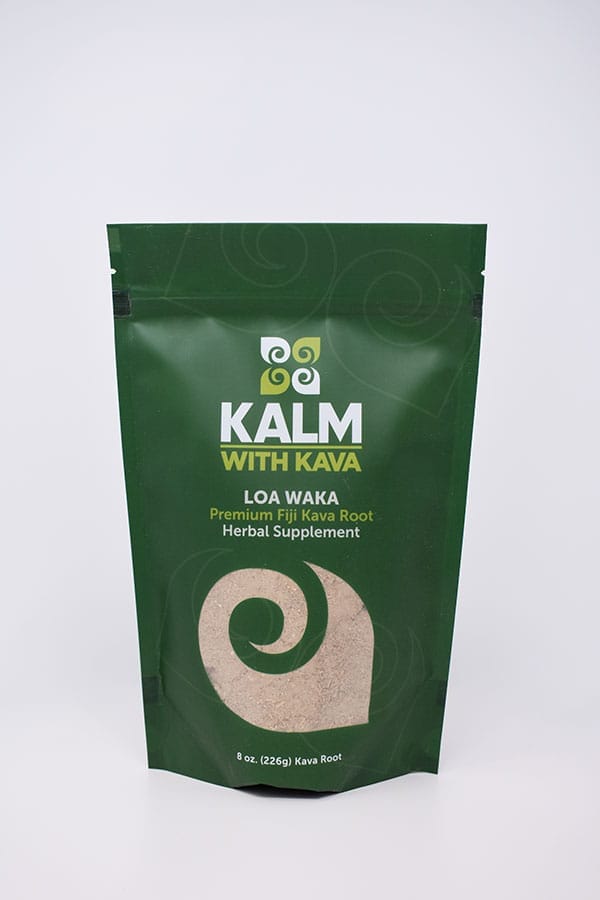
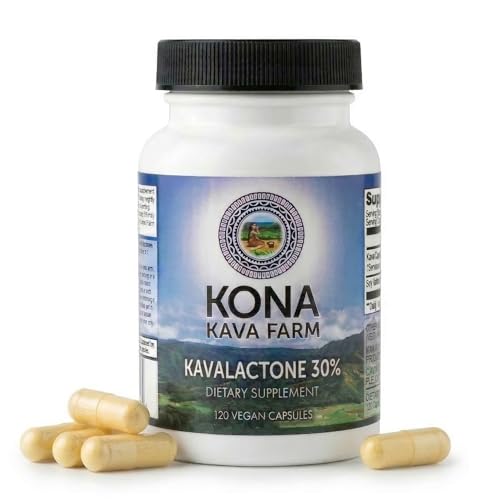
Beyond this guide: the highest-rated kava across every format, kavalactones verified, with a live price check on each.



As an Amazon Associate we may earn from qualifying purchases, at no cost to you. 21+.
Key terms
- GABA modulation (plain speak)
- GABA is the brain's primary "ease off the gas" signal. Kavalactones are described as acting largely by enhancing GABA activity, which is why kava reads as a calm, clear-headed social relaxant. Crucially, this is a different lever from the opioid system kratom uses — and different again from the reward circuitry that trains compulsion.
- Mu-opioid agonist
- A compound that activates the mu-opioid receptor — the same receptor targeted by oxycodone, hydrocodone, and morphine. Per the FDA, kratom's principal alkaloids act as mu-opioid agonists, which is the mechanistic source of its dependence-and-withdrawal risk. Kava engages no such pathway; this single fact is the spine of the whole comparison.
- Mitragynine
- The most abundant active alkaloid in kratom leaf, and dose-biphasic: stimulant-like at low doses, increasingly opioid-like (sedation, analgesia) as the dose rises. It binds mu-opioid receptors. Kava contains no mitragynine — its actives are kavalactones, an unrelated class of molecules.
- 7-OH (7-hydroxymitragynine) — avoid concentrated forms
- A minor kratom alkaloid present only in trace amounts in natural leaf, but a far more potent mu-opioid agonist than mitragynine. Concentrated 7-OH products (tablets, shots, gummies) are the FDA's central kratom concern: the agency issued warning letters and, on July 29, 2025, recommended DEA scheduling. Treat concentrated 7-OH as categorically more dangerous than leaf, and avoid it.
- Withdrawal (compared)
- A defined, reproducible cluster of symptoms on stopping a substance. The WHO's 2007 assessment found kava produces no significant withdrawal syndrome for typical use; kratom, acting on opioid receptors, produces a real opioid-style withdrawal (irritability, aches, restlessness) on heavy daily use. Same word, opposite records — which is the entire reason the plants can't be treated alike.
Questions, answered
Are kava and kratom the same thing?
No — and the assumption that they are is the central confusion this article exists to clear up. Kava is the root of Piper methysticum, a Pacific pepper-family plant, and its active kavalactones work largely through the brain's calming GABA system. Kratom is the leaf of Mitragyna speciosa, a Southeast Asian coffee-family tree, and its alkaloids (mitragynine and 7-OH) act on mu-opioid receptors — per the FDA, the same receptors as oxycodone and morphine. Different plants, different families, different continents, and most importantly different mechanisms. They get conflated only because they share "kava bar" menus and a similar earthy look, not because they're pharmacologically related.
Which is safer, kava or kratom?
Read against the clinical criteria of dependence, kava has the far gentler record: no conventional tolerance (it's widely reported to show reverse tolerance instead), no significant withdrawal syndrome for typical use per the WHO's 2007 assessment, and no opioid-receptor mechanism — its main caution is simple moderation and product quality. Kratom carries a meaningfully higher caution because its alkaloids are mu-opioid agonists: heavy daily use can produce genuine tolerance, dependence, and opioid-style withdrawal, the market is largely unregulated, and concentrated 7-OH products drew an FDA scheduling recommendation in July 2025. Different risk levels, for one clear mechanistic reason. This is general information, not medical advice.
Can I take kava and kratom together?
We'd steer firmly away from it. You'd be stacking two sedating botanicals that work through entirely different systems — kava through GABA, kratom through opioid receptors — and combining sedatives compounds in ways that are hard to predict, especially when the kratom market is unregulated and product strength varies bottle to bottle. There's also no need: if a gentle, lower-risk unwind is the goal, kava alone is the mechanistically cleaner choice, with no opioid-receptor exposure to weigh. If you take any medications, this is a conversation for your doctor or pharmacist. Not medical advice.
Why do kava bars sell kratom?
Because the economics reward it, not because the plants belong together. Kratom carries better retail margins than kava and draws a heavily overlapping customer base — people seeking a natural alternative to alcohol or stimulants — so adding it raises revenue per customer. Per Bloomberg's reporting, kratom has been a primary driver of kava-bar growth even at venues branded entirely around kava. A survey of kava-bar listings found 19 of 20 venues advertising kava also advertised kratom, and commentators argue the pairing lets the more controversial leaf hide behind kava's friendlier name. The practical takeaway: "kava bar" is a venue name, not an ingredient guarantee — order by plant name and ask which one is in your cup.
Is kratom legal?
It's legal at the federal level — the DEA has not scheduled the plant and Congress hasn't banned it — but the state map is a shifting patchwork. A handful of states ban it outright (the consistently-banned set includes Alabama, Arkansas, Indiana, Vermont, and Wisconsin, with the roster changing over time), some cities and counties have their own local bans, and the FDA maintains standing import alerts that allow detention of kratom shipments. The map genuinely moves — Rhode Island reversed its ban effective April 2026 — and the FDA recommended DEA scheduling for concentrated 7-OH in July 2025. Kava, by contrast, is legal in all 50 states with no asterisks. Check your own state and city's current rules; none of this is legal advice.
What if I currently use kratom?
Then a few practical, non-judgmental points are worth more than a lecture. First, know your product: natural leaf and concentrated 7-OH isolate are very different risks, and avoiding concentrated 7-OH — the form the FDA flagged for scheduling — is the single highest-value step. Second, mind the format and dose: grab-and-go tonics are easy to over-consume, so read labels, know your milligrams, and never stack kratom with alcohol or other sedatives. Third, if heavy daily use has become hard to stop, kratom's opioid-style withdrawal is real and treatable — peer communities and clinicians familiar with it exist, and reaching out is sensible, not a failure. And if calm was the goal, that's mechanistically what kava offers, through GABA, without opioid-receptor exposure. General information, not medical advice.
Keep reading
Feel Free Review
The packaged version of the conflation problem — a "feel-good" tonic that blends kava with kratom, and why the second ingredient is the whole story.
Is Kava Addictive?
Kava's own dependence case, walked criterion by criterion against the documented record — the deep-dive behind this comparison's kava column.
What Is Kava?
Start here if the root itself is new to you — what kava is, where it comes from, and what the GABA-side calm actually feels like.