Is Kava Addictive? The Evidence, Read Properly (2026)
"Addictive" is a loaded word that hides three precise clinical criteria: tolerance, withdrawal, and compulsion. The serious way to answer the question is to define dependence by those criteria and then walk kava through each one against what the literature actually documents. That's what we do here — including the genuine edges, the reverse-tolerance paradox that makes kava behave backwards from most psychoactives, and the careful, attributed contrasts with alcohol and kratom.
By The Kava Review DeskUpdated 2026-06-12~7 min read Ranked by the lab reportHow we research
"Is kava addictive?" is a reasonable question asked imprecisely. "Addictive" is a colloquial umbrella, and underneath it sit three separable clinical phenomena that the research community treats as distinct: tolerance (needing more for the same effect), withdrawal (a defined syndrome on stopping), and compulsion (loss of control over use). A substance can show one without the others. So the only rigorous way to answer the question is to refuse the umbrella, take the three criteria one at a time, and ask what the documented record says about kava against each — rather than reaching for a single yes or no.
That is the structure of this piece, and it is deliberately different from the friendly one-line treatments elsewhere. We define dependence the way clinicians do, then test kava against each pillar in turn using attributable sources — the World Health Organization's 2007 risk assessment, the pharmacology of how kavalactones act, and the human record of traditional use. Where the evidence is reassuring, we will say so plainly. Where there are real edges — heavy daily use, the distinction between a behavioural habit and a physiological dependence — we will be just as plain. The aim is calibration, not comfort.
Two ground rules first. This is not medical advice and contains no health or disease claims in either direction; we describe what researchers and the long human history of kava document, attribute it, and leave clinical decisions to you and a professional who knows your circumstances. And everything here concerns lawful, quality kava used by adults — 21+ — not the blended or adulterated products that confuse the question, which we flag where they matter.
The short version
- Read against the three clinical criteria of dependence — tolerance, withdrawal, compulsion — kava scores low on all three for typical use. The WHO's 2007 risk assessment concluded kava does not produce the withdrawal or compulsive cravings characteristic of alcohol or opioids.
- The mechanism explains the record. Kavalactones act largely as GABA-system modulators; researchers describe at most mild, indirect dopamine effects — kava does not produce the fast, strong reward-pathway signal in the nucleus accumbens that trains classic dependence.
- Tolerance is the strangest finding: kava is widely reported to show reverse tolerance — effects that strengthen with familiarity rather than fade — and a three-week mouse study observed no tolerance developing. This is the opposite of the escalation that defines a dependence curve.
- The honest edges are behavioural, not physiological. Heavy daily users sometimes describe a psychological pull and report mild restlessness or poor sleep on stopping; heavy traditional-volume use is linked to reversible kava dermopathy and lethargy. None of this is the medically serious withdrawal seen with alcohol or benzodiazepines.
- The comparison set matters: alcohol drives reward signalling and has a documented, sometimes dangerous withdrawal; kratom acts on opioid receptors and carries real dependence risk. Kava shares neither mechanism — which is exactly why blended products (kava sold with kratom) are the genuine hazard, not kava itself.
Our top-rated kava
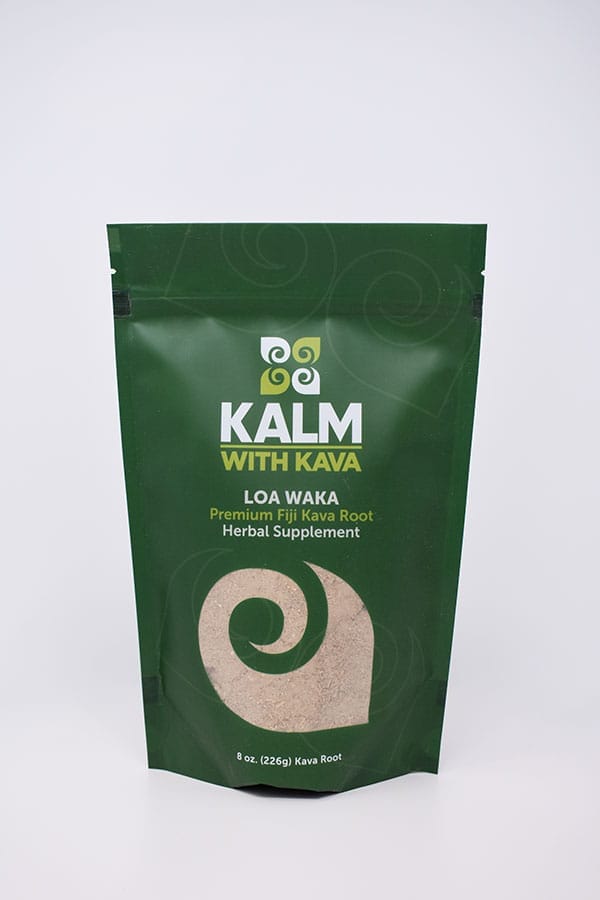
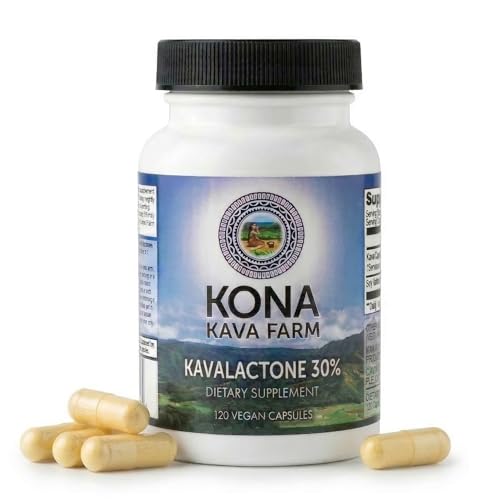
Whatever you decide, these are the kavas we recommend: lab report read, kavalactones verified, ranked by cost per 100 mg. Live price check on each.




As an Amazon Associate we may earn from qualifying purchases, at no cost to you. 21+.
First, define the word: what "dependence" actually means
Before kava enters the conversation, the term has to be pinned down, because almost every confused kava-addiction debate is really two people using "addictive" to mean different things. In the clinical literature, what laypeople call addiction is decomposed into measurable components. Three of them carry the weight.
Tolerance is a pharmacological adaptation: with repeated exposure the same dose produces a smaller effect, so the user escalates to chase the original result. It is the engine of a classic dependence curve — consumption trends upward over time.
Withdrawal is the body's protest at cessation: a defined, reproducible cluster of symptoms that appears on stopping and resolves on resuming. Its severity ranges from the merely unpleasant to, in the case of alcohol and benzodiazepines, the medically dangerous.
Compulsion is the behavioural core — loss of control, continued use despite harm, the craving that overrides intention. It is the criterion most tightly bound to the brain's dopamine reward circuitry, the system that tags an experience as worth repeating and, when hijacked, trains the chase.
Criterion 1 — Tolerance: the reverse-tolerance paradox
Run kava against the first pillar and you get not just a low score but an inverted one. Where a dependence-prone substance demands escalation, kava is widely reported to do the opposite — a phenomenon drinkers and vendors alike call reverse tolerance. New drinkers often feel little from their first one or two sessions; the characteristic effect tends to arrive only after several exposures, as if the body has to learn to respond.
The honest caveat is that reverse tolerance rests largely on consistent anecdote and traditional report rather than robust controlled trials — it is a well-documented observation, not a settled mechanism, and the popular explanation (that the GABA system becomes more fluent at engaging kavalactones with repeated exposure) is a plausible hypothesis, not proof. What the controlled record does offer points the same direction: a three-week study in mice using both aqueous and lipophilic kava extracts observed no development of tolerance over the period.
Criterion 2 — Withdrawal: what the cessation record shows
The second pillar is where the strongest documentary evidence sits, because cessation is something the literature has actually examined. The World Health Organization's 2007 assessment of the risk of kava concluded that traditional water-based kava does not exhibit the withdrawal symptoms or compulsive cravings characteristic of substances like alcohol or opioids. The plain reading: there is no significant, defined kava withdrawal syndrome documented for ordinary use.
That is the headline, and we will not soften the genuine nuance behind it. Some heavy daily users — not occasional drinkers — report mild discomfort on stopping: restlessness, irritability, disturbed sleep. These reports are real and worth naming. But the consensus framing is critical: any such effect is described as far milder than, and categorically different from, the medically serious withdrawal that alcohol and benzodiazepines can produce. Kava cessation does not carry the seizure or delirium risk that makes alcohol withdrawal a medical event.
Criterion 3 — Compulsion: the mechanism that isn't there
The third pillar is the behavioural core of addiction, and it is bound to the brain's dopamine reward circuitry — the fast, salient signal in the nucleus accumbens that tags an experience as worth repeating and, with the strongly addictive drugs, escalating. Compulsion is what you get when that signal is reliably and powerfully triggered. So the question becomes mechanistic: does kava pull that lever?
The pharmacology says largely not. Kavalactones are described by researchers as acting principally through the GABA system — the brain's primary inhibitory, "ease off" signalling — which is why kava reads as calming. Where dopamine is concerned the picture is muted and mixed: investigators report at most mild, indirect dopamine effects, and animal work on kava extract and individual kavapyrones in the nucleus accumbens has found inconsistent, dose-dependent results rather than the clean, strong reward spike that defines a reinforcing drug. Notably, kava's GABA action is also not identical to a benzodiazepine's — researchers describe differences in how the two engage receptor systems — which is part of why the dependence profiles diverge.
The honest distinction: a behavioural habit is not a physiological dependence
Having walked the three criteria, we owe you the edge they sharpen rather than erase. The reassuring record does not mean a person can never form an attachment to kava. It means the attachment people sometimes report is of a particular, milder kind — and naming that kind precisely is the difference between rigour and reassurance.
A behavioural or psychological habit is the pull of a ritual: the regular kava drinker who looks forward to the evening bowl, feels its absence as a gap in the routine, and may notice mild restlessness when it's gone. This is a real human pattern, and the literature acknowledges it for frequent, long-term users. A physiological dependence is a different animal — the body chemically adapted such that cessation triggers a defined withdrawal syndrome, driven by the tolerance-and-reward machinery examined above. The documented record places kava's risk firmly in the first category, not the second.
The other genuine edge is volume. The best-documented downside of kava is not dependence at all but heavy, daily, traditional-volume use: large amounts over long stretches are linked to kava dermopathy — dry, scaly skin — and to reports of lethargy, both of which the consensus describes as reversible once intake drops. These are signals of too much, too often, not of a substance with a hook.
The comparison set — and where the real hazard hides
People rarely ask about kava in isolation; they ask relative to the things it sits near on the shelf. Setting those contrasts side by side, carefully and with attribution, is the fastest way to locate kava on the risk map.
Versus alcohol. Both touch the GABA system, which is why each can feel relaxing — but alcohol also drives reward signalling, builds tolerance quickly, and has a well-documented, sometimes medically serious withdrawal. Kava drives no comparable reward signal, is reported to resist tolerance, and shows no significant withdrawal for typical use. The two belong in different risk conversations despite the surface similarity. (The one firm rule both share: never combine them — stacking two calming agents is the wrong kind of compounding.)
Versus kratom. This is the contrast that most needs care, because the two are constantly mentioned together and are mechanistically unalike. Kratom's alkaloids act on opioid receptors — the same docking stations opioids use — which is why heavy daily kratom use carries genuine dependence and withdrawal risk. Kava does not engage those pathways at all.
Ready to try one? Start with our verified picks
Wherever this guide landed you, these are the kavas our lab-report standard keeps ranking on top. Live price check on each.
As an Amazon Associate we may earn from qualifying purchases, at no cost to you. 21+.
Key terms
- Dependence vs. habit
- Two different things the word "addiction" conflates. A physiological dependence means the body has chemically adapted so that stopping triggers a defined withdrawal syndrome, driven by tolerance and reward machinery. A behavioural (psychological) habit is the pull of a ritual — missing it as a gap in routine. The documented record places kava's risk in the second category, not the first.
- Tolerance
- A pharmacological adaptation in which the same dose produces a smaller effect over time, driving the user to escalate. It is the engine of a classic dependence curve. Kava is unusual for running the other way — see reverse tolerance — and a three-week mouse study observed no tolerance developing.
- Withdrawal
- A defined, reproducible cluster of symptoms that appears on stopping a substance and resolves on resuming. The WHO's 2007 assessment found kava does not produce the withdrawal characteristic of alcohol or opioids; heavy daily users at most report mild, self-limiting restlessness — categorically different from medically serious alcohol or benzodiazepine withdrawal.
- Reverse tolerance
- Kava's widely reported tendency for effects to strengthen with familiarity rather than fade — new drinkers often feel little for the first session or two. Largely an anecdotal and traditional observation rather than a settled mechanism, it is nonetheless the structural opposite of the escalation that defines conventional tolerance.
- GABA modulation (plain speak)
- GABA is the brain's primary "ease off the gas" signal. Kavalactones are described as acting largely by enhancing GABA activity, which is why kava reads as calming. Crucially, this is a different lever from the fast dopamine-reward signal that trains compulsion — kava turns the volume down without delivering the reward spike addictive drugs rely on.
Questions, answered
Is kava addictive?
Read against the three clinical criteria of dependence, kava scores low on all of them for typical use. It shows no conventional tolerance (and is widely reported to show reverse tolerance instead); the WHO's 2007 assessment found no significant withdrawal syndrome of the kind alcohol or opioids produce; and mechanistically it acts largely through calming GABA pathways rather than the dopamine-reward circuitry that trains compulsion. Heavy daily users sometimes describe a behavioural pull and mild restlessness on stopping, which is a habit rather than a physiological dependence. None of this is medical advice.
Can you get withdrawal from kava?
For typical, occasional use the record documents no significant withdrawal syndrome — the WHO's 2007 risk assessment concluded kava lacks the withdrawal characteristic of alcohol or opioids. Heavy daily users sometimes report mild, self-limiting effects on stopping, such as restlessness, irritability or disturbed sleep. The consensus framing is that any such effect is far milder than, and categorically different from, the medically serious withdrawal alcohol and benzodiazepines can cause. This is general information, not medical advice.
Is it safe to drink kava every day?
The reassuring findings — low dependence potential, no significant withdrawal — are clearest for occasional use, and the genuine edges cluster at the heavy-daily end. Heavy, traditional-volume use is linked to kava dermopathy (dry, scaly skin) and reports of lethargy, both described as reversible once intake drops, and it's the pattern in which a behavioural habit is most likely to form. Our house framing is occasional, not nightly — a ritual rather than a routine. Anyone considering regular use should raise it with a healthcare professional.
How does kava compare to alcohol for dependence?
Both engage the GABA system, which is why each can feel relaxing, but the risk pictures diverge sharply. Alcohol also drives reward signalling, builds tolerance quickly, and has a well-documented, sometimes dangerous withdrawal. Kava drives no comparable reward signal, is reported to resist tolerance, and shows no significant withdrawal for typical use — which is why many people reach for it as a lower-risk way to unwind. The firm rule they share: never combine kava and alcohol, since stacking two calming agents is the wrong kind of compounding.
How does kava compare to kratom?
They are constantly mentioned together but are mechanistically unalike. Kratom's alkaloids act on opioid receptors, which is why heavy daily kratom use carries genuine dependence and withdrawal risk; kava does not engage those pathways at all and is generally regarded as non-habit-forming in moderation. The practical hazard isn't kava but blended products — "kava" drinks or shots that also contain kratom, sometimes without clear disclosure, which carry kratom's risk profile under kava's gentle name. We cover one such blend in our feel free review.
When is kava use actually a problem?
Not at the occasional, social end the evidence reassures about, but at the heavy-daily end and in two specific situations. First, heavy traditional-volume use is the documented source of kava dermopathy and lethargy and the pattern where a behavioural habit is most likely to take hold. Second, and more urgent, the real risk is adulterated or blended products — kava sold combined with kratom or other actives — and combining kava with alcohol or sedatives. Verify that a product is actually just quality noble kava, keep use occasional, and treat any liver concern or medication interaction as a conversation for a doctor or pharmacist. This is general information, not medical advice.
Keep reading
Is Kava Safe?
The full safety picture — quality, dose, interactions and the standard precautions, read calmly.
Kava and Your Liver
The early-2000s case cluster, decoded — what later analysis pointed to, and why noble + quality + occasional is the standard.
feel free Review
The cautionary tale: a kratom-containing "kava" blend, and why ingredient disclosure matters more than the pharmacology.