Kava-to-Water Ratio: How Much Powder Per Cup (2026)
A sensible starting point for traditional prep is roughly 2–4 tablespoons of root per 1–2 cups of warm water per serving — but treat that as a starting range, not a law. It shifts with the prep type, the root's potency, and your own reverse tolerance. Here's the honest version: the ratio matters far less than total kava mass and how strong the root actually is.
By The Kava Review DeskUpdated 2026-06-17~7 min read Ranked by the lab reportHow we research
If you typed "kava to water ratio" into a search bar, here's the answer up top, no fog: for traditional grind, a sensible place to START is roughly 2–4 tablespoons of root per 1–2 cups (about 250–500 ml) of warm water, per serving. Lighter end for a first, gentle batch; heavier end once you know the root and want a fuller session. That's a starting range a beginner can use tonight and adjust from there — not a fixed formula, because the right ratio is genuinely personal and depends on how strong your particular root runs.
But here is the part most ratio guides bury, and it's the most useful thing on this page: the ratio is a proxy. What actually determines how strong your bowl lands is the total MASS of kava root you used and the POTENCY of that root — how rich it is in kavalactones, the active compounds. Water is mostly the carrier. Two batches at the same "1:10 ratio" can differ wildly in strength if one root is twice as potent, or if you weighed grams in one and eyeballed fluffy tablespoons in the other. So we'll give you a clean starting ratio, show you how to scale it for a whole session and dial it stronger or weaker — and then we'll explain why thinking in mass-and-potency, not ratio, is what separates people who get consistent kava from people who get random kava.
House rules first, because they don't bend for a measurement post: kava is a 21-and-up evening drink, traditionally taken some evenings rather than all day. The brief tongue-tingle is normal. First sessions often run mild — that's reverse tolerance, not a weak batch — so judge a root over three evenings, not one. Never mix kava with alcohol, and never drive after a session. Nothing here is medical advice; if you take medications or have any health concern, that's a conversation for your doctor, not a ratio chart.
The short version
- Sensible STARTING ratio for traditional grind: ~2–4 tablespoons of root per 1–2 cups (250–500 ml) of warm water, per serving. Start light, adjust up once you know the root.
- Ratio is a proxy, not the real lever — what actually sets strength is total kava MASS × the root's POTENCY (kavalactone richness). Same ratio + a stronger root = a much stronger bowl.
- Weigh, don't eyeball: a kitchen scale beats tablespoons, because a fluffy grind can measure 25%+ light by volume and quietly weaken your ratio.
- Scale by serving, not by guesswork: a 3-person session is roughly 3× the single-serving root and 3× the water, kneaded in batches the strainer bag can handle.
- Water temperature is fixed regardless of ratio: warm bathwater, ~100–110°F. Boiling water ruins any ratio by degrading kavalactones and turning the starch to sludge.
- Prep type changes the ratio: traditional grind gets strained out (so you can run it tight), while micronized and instant stay in the cup, so a little goes further and over-dosing the scoop gets silty fast.
- When a batch lands wrong, fix MASS and root choice before fiddling with the water — adding water dilutes, but it was rarely the water that made it weak.
At a glance
| Prep type | Sensible starting point (per serving) | Why it's different | Adjust by |
|---|---|---|---|
| Traditional grind (knead + strain) | ~2–4 Tbsp root per 1–2 cups warm water | Root is strained out — water is just the extraction medium, so you can run it tight | More root or a longer knead, not less water |
| Micronized (stir + settle, stays in cup) | Start lighter — about 1–2 Tbsp per cup | The whole root stays in the drink, so less powder delivers more in-glass | Texture is the limit — too much scoop turns it to silt |
| Instant (dissolves, stays in cup) | Follow the brand's scoop; usually ~1 Tbsp per cup | Pre-extracted and concentrated — potency per gram varies a lot by brand | Trust the label first, then nudge to taste |
Starting ratios by prep type — ranges to begin from, not fixed laws
Our top-rated kava
Whatever you decide, these are the kavas we recommend: lab report read, kavalactones verified, ranked by cost per 100 mg. Live price check on each.


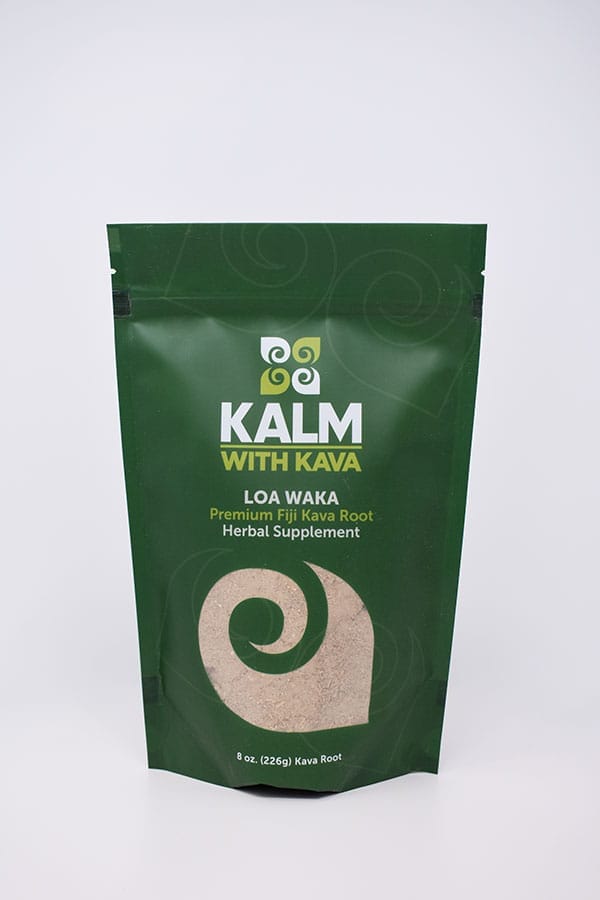


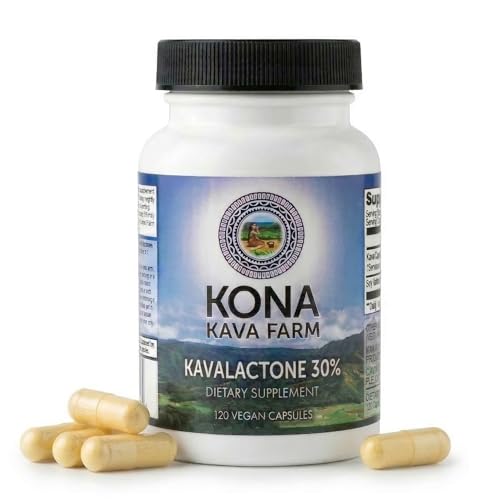
As an Amazon Associate we may earn from qualifying purchases, at no cost to you. 21+.
The starting ratio, stated plainly
For traditional grind kava, begin here: about 2–4 tablespoons of root per 1–2 cups (250–500 ml) of warm water, per serving. If you prefer the way prep guides usually phrase it, that's in the neighborhood of a 1:10 root-to-water relationship by weight for a standard batch — roughly 2 tablespoons toward the milder, first-timer end and 4 toward a fuller session. Our full step-by-step how-to-make-kava guide walks the whole method around these numbers; this page is about the number itself and how to bend it.
Two honest caveats live inside that range. First, "a tablespoon" is a volume, and kava is sold ground to different coarseness, so a fluffy grind genuinely weighs less per spoon than a dense one — which is why we keep pushing the scale (more on that below). Second, the range is wide on purpose. A beginner on a gentle root and a regular on a brisk Fijian noble can both be "right" at very different points in that band. Start toward the light end, see how it lands, and walk it up over a few sessions rather than trying to nail the perfect ratio on night one.
The thing ratio guides won't tell you: it's mass × potency
Here's the reframe that makes everything else easier. Ratio is a convenience, not a strength setting. What actually determines how strong your bowl lands is two things: the total mass of kava root you put in, and the potency of that root — how rich it is in kavalactones, the active compounds (our kavalactones explainer covers what those are and how potency varies). Water is mostly the vehicle that carries the extraction; it's not the active ingredient.
The practical upshot: ratio is how you keep a known root consistent with itself. Once you've learned that a given root makes a session you like at, say, 3 tablespoons per 2 cups, that ratio is a reliable recipe — for that root. The moment you switch roots, the ratio carries over but the strength may not, and you re-calibrate. Strength tracks the kava, not the water line in the bowl. If you want to think in the unit that actually matters across every format — milligrams of kavalactones per session — that's exactly what our kava dosage guide is built around.
Weigh it — why tablespoons quietly lie
If you take one upgrade from this page, make it a $12 kitchen scale. Tablespoons measure volume; strength tracks mass. A fluffy or coarse grind can pack 25% or more less root into the same tablespoon than a dense, fine grind, so "4 tablespoons" can mean meaningfully different amounts of actual kava depending on the bag. People who measure by spoon and get a weak session often didn't under-knead — they under-weighed without knowing it.
Weighing also makes the mass-times-potency idea usable. Once you find the gram amount that makes a session you like from a particular root, you can write it down and repeat it exactly — and when you switch to a new root, you start from that same mass and adjust, instead of starting from scratch. Volume measurements can't give you that repeatability. Tablespoons are fine for your very first exploratory batch; grams are how you stop guessing.
Scaling a whole session (and serving more than one person)
A "ratio" is written per serving, but a kava session is several servings — the brew gets portioned into shells you sip 15–20 minutes apart (the pacing is covered in the dosage guide). To scale, you multiply both sides: more root and proportionally more water, keeping the ratio steady.
So if your single-serving starting point is roughly 3 tablespoons of root per 2 cups of water, a relaxed evening for one might be that doubled; a three-person session is roughly triple — about 9 tablespoons of root into 6 cups of warm water. One practical limit: a small strainer bag can only knead so much root at once. For larger sessions, knead in two or three batches into the same bowl rather than overstuffing the bag, which leaves root unkneaded and quietly weakens the whole pot. And don't forget the second wash — re-kneading the spent root in about half the water recovers a gentler extra round, effectively stretching your mass further without changing the first-wash ratio at all.
Water temperature is fixed — it's not part of the ratio dial
One number does not flex no matter how you set your ratio: temperature. Use warm bathwater, about 100–110°F — comfortable to keep your hands in for the full knead, which is convenient since traditional prep requires exactly that. This is the kava community's settled consensus, and it works against you two ways if you ignore it. Genuinely hot or boiling water degrades the kavalactones you're trying to extract, and it gelatinizes the root's starch into a strainer-clogging sludge that releases less, not more.
So no ratio can rescue a boiled batch, and no ratio is penalized by warm water. Think of temperature as a fixed precondition and ratio as the variable you actually tune. If you're improvising from a kettle, mix roughly two parts cold to one part just-boiled and check with your wrist; when in doubt, err cool, because cool water still extracts (the kneading does the real work) while overheated water can't be undone.
How prep type changes the ratio
The starting ranges in the table aren't arbitrary — they follow from one structural difference between the three prep methods, which our micronized vs. instant vs. traditional comparison covers in full.
Traditional grind gets strained out of the drink — the water is purely the extraction medium, the root leaves before you sip — so you can run a tighter ratio (more root per cup) without the texture suffering, and the knead is what governs how much actually makes it into the liquid. Micronized kava is milled fine enough that the whole root stays in the glass, sediment and all; because nothing is discarded, less powder delivers more in-cup, so you start lighter, and the real ceiling is texture — over-scoop and you're drinking silt. Instant kava is pre-extracted and concentrated, with potency-per-gram that varies a lot between brands, so here the honest move is to trust the brand's scoop first and only nudge from there. In short: traditional lets you run it strong because you strain it; the stay-in-cup formats reward restraint because everything you add, you drink.
Strength tuning: what to actually change
When a batch lands too weak or too strong, the instinct is to move the water line. Usually that's the wrong lever. Run the fixes in this order:
Too weak? (1) Add root mass or knead longer — both raise the kava in the glass; weak batches are far more often under-kneaded or under-weighed than over-watered. (2) Check the root itself — an old, padded, or low-potency bag underdelivers at any ratio, which is the mass-times-potency point in action. (3) Consider you, on night one — reverse tolerance means early sessions genuinely run mild; if the brew tingled your tongue and turned muddy brown, the prep worked, so give it three evenings before escalating. Too strong or silty? Pull back the root mass first, and only then add a little water to soften it. The honest rule: adjust mass and root choice before you adjust water — diluting fixes "too strong," but almost nothing about "too weak" is solved by the water line.
Ready to try one? Start with our verified picks
Wherever this guide landed you, these are the kavas our lab-report standard keeps ranking on top. Live price check on each.
As an Amazon Associate we may earn from qualifying purchases, at no cost to you. 21+.
Key terms
- Ratio (root-to-water)
- The proportion of kava root to water in a batch — commonly framed around 1:10 by weight, or in kitchen terms ~2–4 tablespoons of root per 1–2 cups of water per serving. Useful as a repeatable recipe for a root you know, but a proxy for strength, not a guarantee of it.
- Mass × potency
- The real driver of how strong a bowl lands: the total grams of root used times how rich that root is in kavalactones. Two batches at the same ratio can differ a lot in strength because their mass-times-potency was never equal.
- Potency
- How concentrated a given root is in kavalactones, the active compounds. Varies by cultivar, plant part (waka/lateral roots run strong), freshness, and grade. The reason a ratio that's perfect for one bag may be light or heavy for the next.
- Second wash
- Re-kneading already-used root in about half the original water to recover a gentler extra round. It stretches your kava mass further without changing the first-wash ratio — extra strength from root most people throw away.
- Strained vs. stay-in-cup
- The structural split between prep types. Traditional grind is strained out, so the water is just an extraction medium and you can run it tight; micronized and instant stay in the glass, so less powder goes further and over-scooping gets silty.
Questions, answered
How much kava powder should I use per cup of water?
As a starting point for traditional grind, about 2–4 tablespoons of root per 1–2 cups (250–500 ml) of warm water per serving — lean toward 2 for a milder first batch, toward 4 once you know the root and want a fuller session. Treat that as a sensible range to begin from, not a fixed rule, because the right amount depends heavily on how potent your particular root is. Micronized and instant kava run lighter, since the powder stays in the cup rather than being strained out — for those, start around 1–2 tablespoons (micronized) or simply follow the brand's scoop (instant). And weigh if you can: a fluffy grind can measure 25% light by the tablespoon.
What is the best kava-to-water ratio?
There isn't a single best ratio, and any guide that gives you one precise number is overselling it. A reliable starting band for traditional grind is roughly 2–4 tablespoons of root per 1–2 cups of water — often described as around 1:10 by weight. The reason it's a range rather than a number is that strength is really set by total root mass and how potent the root is, not by the water line. The practical approach: pick a starting point in that band, see how it lands over a couple of sessions, and adjust the root amount up or down. Once you find what a specific root makes that you like, that becomes your reliable ratio for that root.
Does adding more water make kava stronger or weaker?
More water makes a given batch weaker per sip, because you're spreading the same kava across more liquid — but water is rarely the lever that fixes a weak session. Strength is driven by how much root you used and how potent it is, plus how thoroughly you kneaded it. So if a batch is too weak, add root mass or knead longer rather than reaching for the water; if it's too strong or too silty, pull back the root first and only then add a splash of water to soften it. Think of water as the carrier and the root as the strength dial.
Why does the ratio matter less than people think?
Because the ratio is a proxy for the thing that actually matters: total kava mass times the root's potency. Two batches mixed at the exact same ratio can land completely differently if one root is fresher, stronger, or a higher grade than the other — the water proportion was identical but the kavalactones in the glass were not. That's also why measuring by volume is shaky: tablespoons measure space, not mass. Once you reframe around mass and potency, the ratio becomes what it really is — a handy recipe for keeping one known root consistent, not a universal strength setting. Our kavalactones explainer and dosage guide go deeper on the unit that actually counts.
How do I scale the ratio for more than one person?
Multiply both sides and keep the ratio steady: more root and proportionally more water. If your single-serving starting point is about 3 tablespoons of root per 2 cups of water, a three-person session is roughly 9 tablespoons into 6 cups of warm water. One catch — a small strainer bag can only knead so much root at once, so for larger pots, knead in two or three batches into the same bowl rather than overstuffing the bag, which leaves root unkneaded and weakens the whole thing. And remember the second wash can stretch the same root into extra rounds.
Does water temperature change the right ratio?
No — temperature is a fixed precondition, not part of the ratio you tune. Use warm bathwater, about 100–110°F, for any ratio. Boiling or genuinely hot water doesn't make a tighter ratio stronger; it works against you by degrading kavalactones and turning the root's starch into a strainer-clogging sludge. So set your ratio however you like and keep the water warm-not-hot regardless. If you're mixing from a kettle, roughly two parts cold to one part just-boiled gets you in the window — and when in doubt, err cool, since the kneading does the real extraction.
Should the ratio be different for micronized or instant kava?
Yes. Traditional grind is strained out of the drink, so the water is just an extraction medium and you can run a tighter ratio. Micronized kava stays in the glass — the whole root is suspended in what you drink — so less powder delivers more, and the limit is texture: over-scoop and you're drinking silt, so start lighter, around 1–2 tablespoons per cup. Instant kava is pre-extracted and concentrated with potency that varies a lot by brand, so the honest move is to follow the brand's recommended scoop first and only nudge to taste. Same idea throughout: anything that stays in the cup rewards restraint, while strained traditional kava lets you go strong.
Why is my kava weak even when I follow the ratio?
Following the ratio isn't enough on its own, because the ratio doesn't capture the two things that actually set strength — how much root by mass you used and how potent that root is. Check, in order: did you weigh the root or eyeball it (fluffy grinds measure light)? Did you knead a full 10 timed minutes, or quit early? Is the root fresh, noble, and decent grade, or old and padded? And is it simply early days — reverse tolerance means first sessions often run mild regardless of a perfect ratio. If the brew tingled your tongue and turned muddy brown, your prep worked; give the root three evenings before judging it weak.
Keep reading
How to Make Kava, Step by Step
The full method these ratios live inside — temperature, the 10-minute knead, and the second wash.
Kava Dosage Guide
The honest milligram numbers your ratio is really a proxy for — sessions, shells, and pacing.
What Are Kavalactones?
The active compounds behind 'potency' — why mass times potency, not the water line, sets strength.
Micronized vs. Instant vs. Traditional
Why the right ratio changes by prep type — strained traditional versus stay-in-cup formats.