Our Pick: Kalm with Kava
Check PriceKava King vs Kalm with Kava (2026): Old-Guard Instant vs Modern Transparency
Two long-running US kava names that could not be more different in how much they tell you. Kava King is the old-guard instant — micronized whole root you stir into cold water, widely available, almost no disclosure. Kalm with Kava is the noble-kava house that sells single-origin root by named cultivar and claims third-party testing. We scored both on transparency, sourcing, convenience, value, and who each one is really for — and the verdict turns on how much you care about knowing what's in your cup.
By The Kava Review DeskUpdated 2026-06-17~8 min read Ranked by the lab reportHow we research
 Best Overall
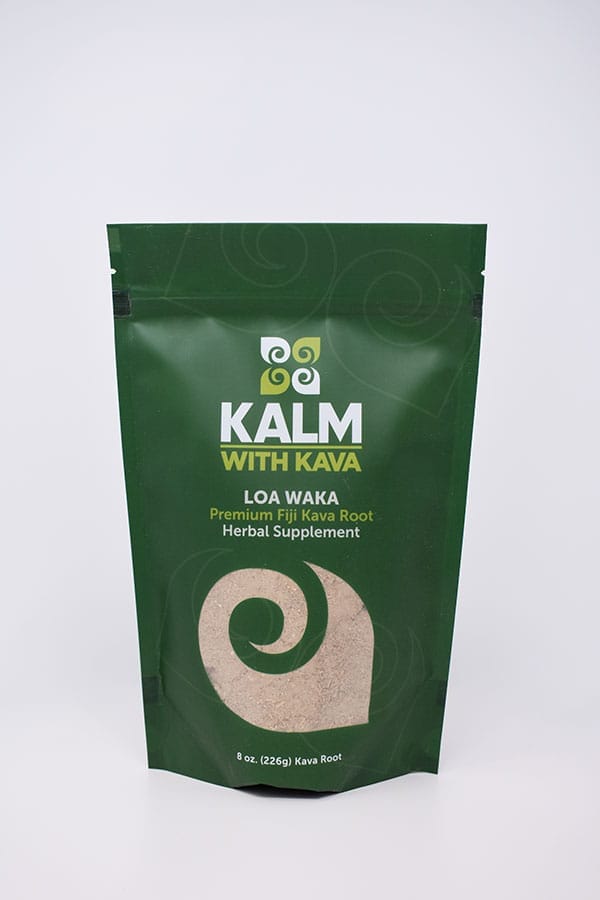
Kalm with Kava — Loa Waka Traditional Grind
Kalm with Kava · 4.5
~$38.99 / 8 oz
Put Kava King and Kalm with Kava next to each other and you're not really comparing two products. You're comparing two eras of the US kava market. Kava King — made by Kava King Products Inc out of Ormond Beach, Florida — is the old-guard convenience play: one of the longest-running instant kava brands in the country, a micronized whole-root drink mix you stir or shake into cold water with no strainer bag and no ritual. Kalm with Kava, founded in 2010 and now run by the founder's wife after his passing, is the noble-kava house the community defaults to: it sells single-origin root by named cultivar — Loa Waka from Fiji, Borogu from Vanuatu — the way a coffee roaster sells beans by farm. One brand is built to be easy. The other is built to be specific.
Our desk judges every kava seller on the same thing first, and it isn't taste or price — it's the paper trail. Does the brand tell you, in writing, what's actually in the bag? Named cultivar, documented origin, noble certification, a total-kavalactone percentage, and ideally a downloadable certificate of analysis (COA) per batch. On that axis the two brands land far apart, but not as far as their marketing might suggest. Kalm with Kava names its cultivars, commits to noble-only sourcing, and says it third-party lab tests — a genuinely modern, transparent posture. Kava King discloses a country and stops. That's the spine of this comparison, and it's also where we'll be most careful to separate what each brand proves from what it merely claims.
Everything below was verified in June 2026 against both brands' own materials and live retail listings, and it's drawn straight from our full standalone reviews of each. This piece is independent and unpaid: Kava Review has no affiliate relationship with Kava King at publication, no relationship with Kalm with Kava, and neither company reviewed this before it went up. The honest headline is a split decision — Kava King wins convenience and availability outright; Kalm with Kava wins transparency, sourcing, and trust by a wide margin, even though it too stops short of posting its lab sheets. Usual ground rules: kava is for adults 21+, it can cause drowsiness, don't drive after drinking it, and if you take medications or are pregnant, talk to a doctor first. None of this is medical advice.
The short version
- Transparency is the whole fight, and Kalm with Kava wins it clearly: it sells by named single-origin cultivar (Loa Waka/Fiji, Borogu/Vanuatu), commits to 100% noble kava, and markets third-party lab testing. Kava King discloses origin only as "Vanuatu" — no named cultivar, no kavalactone percentage, no COA we could find.
- But neither brand clears the top rung of our COA ladder. Even Kalm with Kava asserts testing rather than publishing a downloadable per-batch COA or a stated kavalactone % on its product pages — so "modern transparency" here means it names and claims, not that it posts the sheet. Kava King is near the bottom of the ladder; Kalm is far up it.
- Convenience goes to Kava King, decisively. Its entire line is instant micronized whole root — stir into cold water, no strainer bag, no kneading — and it's one of the most widely available US instants. Kalm's flagship traditional grind requires a strainer bag and real prep.
- Sourcing and format range go to Kalm with Kava: the same trusted cultivar is sold as traditional grind, micronized, and instant, so a beginner and a strainer-bag veteran can shop the same source. Kava King is one format (instant) with origin disclosed only at the country level.
- Value can't be scored on a clean per-milligram basis for either — neither publishes a kavalactone number. Kalm sits at premium-vendor pricing (Loa Waka Traditional Grind ~$38.99/8 oz; Micronized ~$36.49–$66.99 by size); Kava King's current price couldn't be verified across channels (Amazon fluctuates, iHerb lists the Vanuatu Blend as discontinued), so we don't quote one.
- The verdict splits by what you want: easiest possible cup and broad availability → Kava King. Knowing your cultivar, origin, and that you're drinking noble root from a 15-year vendor → Kalm with Kava.
At a glance
| What we check | Kava King | Kalm with Kava |
|---|---|---|
| Named cultivar | No — origin given only as "Vanuatu Blend" | Yes — Loa Waka (Fiji), Borogu (Vanuatu), and others |
| Noble certification | Not published | Markets 100% noble kava only |
| Lab testing / COA | No published COA or kavalactone % found | Says third-party lab tested — but no public per-batch COA or kavalactone % found |
| Format | Instant micronized whole root — no straining | Traditional grind, micronized, and instant (range) |
| Price | Not verifiable across channels — omitted, not invented | Premium tier — Loa Waka Traditional Grind ~$38.99/8 oz |
| Availability | Amazon + own site; uneven elsewhere (iHerb discontinued) | Own site plus Amazon/Walmart; international customs delays reported |
| Our verdict | The convenient on-ramp — easiest cup, least disclosure | The traditionalist's pick — named, noble, trusted; still owes us the COA |
Kava King vs Kalm with Kava at a glance — verified June 2026. We omit figures we could not confirm rather than estimating them, and we treat a missing COA as a finding, not a number to invent.
Kalm with Kava — Loa Waka Traditional Grind
Kalm with Kava
Named single-origin Fijian waka root, noble-only, from a 15-year vendor — the side of this fight that tells you what's in the bag.
Our verdict: Loa Waka Traditional Grind is why traditionalists default to Kalm with Kava, and why it wins this matchup on transparency. It's a named single-origin Fijian cultivar made from 100% lateral roots, noble-only, from a vendor with a 15-year community reputation — everything Kava King leaves blank, this brand fills in. At roughly $38.99 for 8 oz it's premium, not bulk, and it asks for strainer-bag prep. The one thing still missing is the document itself: "lab tested" is claimed, not posted.
Lab report: Marketed as 100% noble, made from 100% lateral roots (waka), and described as third-party lab tested for safety, strength, and nobility — but we found no downloadable per-batch COA or stated kavalactone percentage on the product page. Far up our trust ladder, not yet at the top.
This is the product that explains the entire comparison. Loa Waka Traditional Grind is a single-origin Fijian kava sold by cultivar name — not a blend, not a mystery "premium" label — made from 100% lateral roots, the waka grade traditionalists prize for potency. Kalm with Kava markets it as the strongest, most balanced cultivar it carries, and crucially it tells you what it is: the island, the grade, the noble commitment. Set that beside Kava King's "Vanuatu Blend," which names a country and nothing else, and the gap is the whole point of this piece. One brand sells you a specified root; the other sells you a convenient unknown.
As a drink, traditional grind is the connoisseur's format and the beginner's hurdle: you need a strainer bag, a few minutes of kneading, and a tolerance for kava's earthy, peppery slurry. The payoff is the fullest expression of the root at the lowest cost per serving in the brand's lineup. Loa Waka's balanced profile — the tongue-numbing tingle arrives quickly, the relaxation settles over the first half hour — is what most people want in an everyday kava, and reverse tolerance applies as always, so your second and third sessions tend to speak louder than your first. If the strainer bag is a dealbreaker, Kalm's micronized version of the same cultivar skips it; if convenience is your only criterion, that's where Kava King re-enters the conversation.
Who should buy it
Buy Loa Waka Traditional Grind if you care which cultivar and island your root comes from, you own (or will buy) a strainer bag, and you want a trusted noble-only vendor rather than a convenient unknown. It's the pick for the drinker graduating to home preparation, and for anyone who wants to standardize on one balanced everyday cultivar from a source the community broadly trusts.
What we don't like
The transparency gap is the real knock even on the winning side: "lab tested" is asserted, not posted — we found no downloadable COA or stated kavalactone percentage for this product, so the strength claim is a promise, not a published figure. The price is firmly premium versus bulk importers, and traditional grind requires straining, which is a genuine barrier for first-timers (the micronized version of this same cultivar removes it).
- Cultivar
- Loa Waka (single-origin Fijian noble kava)
- Root grade
- 100% lateral roots (waka) — the stronger cut
- Format
- Traditional / medium grind (requires a strainer bag)
- Testing
- Marketed as 100% noble, "third-party lab tested" — no public per-batch COA found
- Origin
- Fiji (named cultivar + island)
- Price
- ~$38.99 / 8 oz (also sold via Amazon and Walmart)
What we like
- Named single-origin Fijian cultivar — not a generic blend or country-only label
- Made from 100% lateral roots (waka), the stronger grade; 100% noble commitment
- Trusted 15-year vendor with a strong community reputation
- Same cultivar offered as micronized + instant, so a beginner can shop the same source
Worth noting
- No downloadable per-batch COA or stated kavalactone % we could find
- Premium pricing versus bulk kava importers
- Traditional grind requires a strainer bag and real prep