Our pick. Happy Warrior
Check priceHappy Warrior vs Happy Kava (2026): They're Not the Same Brand
First, the thing most people are searching for: Happy Warrior and Happy Kava are two different companies, and it's an easy mix-up. Happy Warrior is a Hawaii-based brand selling 100% noble Fijian waka with a checkable freshness story. Happy Kava is a separate brand selling a Vanuatu Borogu that prints its 2-4-3 chemotype and 8–10% kavalactone range right on the label. Here's how to tell them apart — and which to buy for what.
By The Kava Review DeskUpdated 2026-06-27~7 min readRanked by the lab reportHow we research
 Best Overall
Happy Warrior — Premium Noble Waka Kava from Fiji (8 oz)
- Happy Warrior
- 4.0
- Price
- 8 oz (½ lb) Fijian noble waka — confirm the current price on the listing
 Best Value
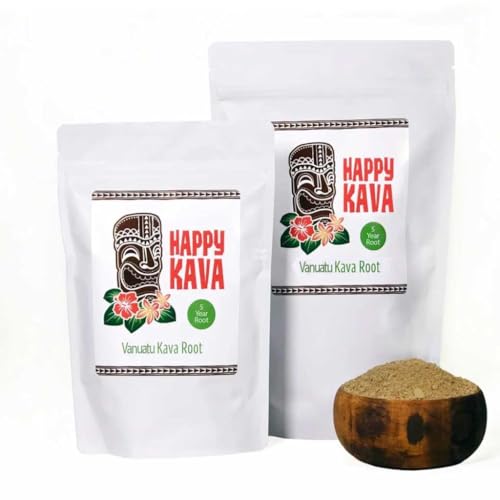
Happy Kava — Vanuatu Borogu Kava Root Powder (Noble, 2-4-3, 8–10%)
- Happy Kava
- 4.3
- Price
- ~$17.99 (4 oz) · ~$54.99 (1 lb) — single-origin noble Vanuatu Borogu
Let's answer the question almost everyone arrives with first: no, Happy Warrior and Happy Kava are not the same brand. The names collide in search results constantly, but they're two separate companies selling two different kavas from two different countries. If you came here just to confirm that and figure out which one you actually want, this is the comparison for you — and we'll make the distinction unmissable before we get into anything else.
Happy Warrior is a Hawaii-based brand whose kava is grown and harvested in Fiji. The product is a 100% noble Fijian waka — the thin lateral roots, the bright, heady, high-kavalactone part of the plant — sold in an 8 oz (½ lb) bag. Its signature move is a checkable freshness story: a clear, see-through bag so you can see the golden lateral-root color, and a new shipment flown in monthly by air freight from Fiji. Happy Kava — sold as 'Happy Kava Brand' — is a separate company whose flagship is a Vanuatu Borogu noble powder, and its signature move is the opposite kind of disclosure: it prints the chemotype (2-4-3) and the total kavalactone range (8–10%) right in the product title. One sells on visible freshness; the other sells on printed numbers.
Everything below was checked against our own verified brand reviews of each company. To be clear up front: this is not a paid placement, neither brand sponsored it, and at publication we have no affiliate relationship tied to the verdict. Both are credible noble vendors with one shared limitation — neither posts a full certificate of analysis — and we hold both to that equally. Usual ground rules: kava is for adults 21+, it can cause drowsiness, don't drive after drinking it, don't mix it with alcohol, effects vary person to person, and none of this is medical advice.
The short version.
- They are DIFFERENT brands. Happy Warrior = Hawaii-based, sells 100% noble FIJIAN WAKA (lateral root), 8 oz, checkable freshness story. Happy Kava = 'Happy Kava Brand,' sells a VANUATU BOROGU that prints its 2-4-3 chemotype and 8–10% kavalactone range on the label. Don't conflate them.
- Quickest way to tell them apart: country. Happy WARRIOR is Fijian waka; Happy KAVA is Vanuatu Borogu. If the label names a chemotype (2-4-3) and a kavalactone band (8–10%), it's Happy Kava.
- On-label disclosure goes to Happy Kava: it prints both the chemotype and the kavalactone percentage — the two numbers most vendors dodge. Happy Warrior names its grade (noble waka) and sells on a freshness signal you can see, but publishes no chemotype or percentage.
- Neither posts a full COA. Happy Kava's 2-4-3 / 8–10% are printed label specs, not a lab sheet; Happy Warrior states 'noble' and 'waka' but no COA, lab name, chemotype, or percentage. Both are claims, not posted lab documents, as of June 2026.
- Pick Happy Warrior if you specifically want fresh Fijian waka with a freshness signal you can eyeball (clear bag, monthly air freight). Pick Happy Kava if you want a label that states its chemotype and strength band on a single-origin Vanuatu Borogu, often at a lower per-bag price (4 oz ~$17.99).
At a glance.
| Happy Warrior | Happy Kava | |
|---|---|---|
| Same brand? | No — Hawaii-based brand, Fijian waka | No — 'Happy Kava Brand,' Vanuatu Borogu |
| Origin | Fiji (Hawaii-based company) | Vanuatu |
| Cultivar / grade | 100% noble lateral-root WAKA (stated) | Borogu, noble variety (stated) |
| Chemotype disclosed | No — not published (June 2026) | Yes — 2-4-3 printed on the label |
| Kavalactone % disclosed | No — not published (June 2026) | Yes — 8–10% printed on the label |
| Signature trust signal | Checkable freshness — clear bag, monthly air freight from Fiji | On-label numbers — chemotype + kavalactone band |
| Full COA / named lab | Not found (June 2026) | Not found (June 2026) |
| Size & price | 8 oz (½ lb) — confirm price on the listing | 4 oz ~$17.99 · 16 oz ~$54.99 (kava.com) |
Happy Warrior vs Happy Kava at a glance — they are different brands, with specs drawn from our verified brand reviews. Neither posts a full COA; Happy Kava prints its chemotype and kavalactone band on the label, Happy Warrior does not.
Happy Warrior — Premium Noble Waka Kava from Fiji (8 oz)
Happy Warrior
100% noble Fijian lateral-root waka sold on a freshness story you can actually check — minus a published COA or chemotype.
Our verdict: Happy Warrior is the Fijian-waka half of this mix-up: a Hawaii-based brand selling 100% noble lateral-root waka — the bright, heady, high-kavalactone part of the plant — on a freshness story you can partly check yourself (clear bag showing the golden color, stated monthly air freight from Fiji). The 8 oz is a sensible try-and-stock size. The reservation: no published COA, named lab, chemotype, or kavalactone figure, so you're trusting the noble-waka claim rather than a lab sheet or a printed number like Happy Kava's.
Lab report. Stated: 100% noble lateral-root waka, single-origin Fiji, 100% natural, shipped in a clear bag (visible golden lateral-root color) with a new shipment arriving monthly via air freight. NOT found as of June 2026: a published COA, a named lab, a stated chemotype, or a kavalactone percentage — so 'noble' and 'waka' are stated grade/sourcing claims, not lab-documented.
If the bag says Fiji and sells you on freshness, it's Happy Warrior. Happy Warrior Kava Powder ships in a clear, see-through bag specifically so you can see the yellowish, golden color the brand attributes to older, more potent lateral roots, and Happy Warrior — a Hawaii-based company — says a new shipment arrives every month by air freight from Fiji. That's a freshness pitch you can partly verify with your own eyes, which is genuinely more useful than another 'premium' adjective. The grade is the headline: 100% noble lateral-root waka, the brightest, most heady, high-kavalactone fraction — the clear-headed, sociable Fijian profile people specifically seek Fiji out for.
As a drink it's traditional grind — a fine powder made for easy straining, but still strain-to-brew. You knead it into water in a strainer bag, work it for several minutes, discard the fibrous makas, and drink the cloudy, earthy result. Expect the tongue tingle within a minute or so and kava's reverse-tolerance curve — the first session or two often feel mild. The brand site doesn't list a price (it directs to Amazon) and we won't invent one, so confirm it on the listing. If you specifically want fresh Fijian lateral-root waka and you value a freshness signal you can see, this is a reasonable bag — just know the lab paper trail isn't there.
Who should buy it.
Buy Happy Warrior if you specifically want fresh, single-origin Fijian noble waka — the bright, heady, sociable lateral-root profile — from a brand that sells on a freshness story you can actually check. The 8 oz is a sensible try-and-stock size for a drinker who likes grade clarity and a visible freshness signal and doesn't strictly need a printed chemotype or a posted lab sheet.
What we don't like.
It names the grade and makes a checkable freshness pitch, but doesn't (as of June 2026) publish a COA, a named lab, a chemotype, or a kavalactone percentage — so 'noble' and 'waka' are stated claims, not data, and unlike Happy Kava it doesn't even print a chemotype on the label. It's also traditional grind (earthy, strain-to-brew), and the brand site doesn't list a price, so you'll confirm it on the listing.
- Brand / base
- Happy Warrior — Hawaii-based company
- Origin
- Fiji
- Grade
- 100% noble lateral-root waka (stated) — the heady, high-kavalactone fraction
- Freshness
- Clear bag (visible golden color); new shipment monthly via air freight (per brand)
- Chemotype
- Not published, as of June 2026
- Kavalactone content
- Not published, as of June 2026
- Format
- Fine traditional grind for easy straining — still strain-to-brew
- Testing
- No published COA, named lab, or contaminant screen found (June 2026)
- Size
- 8 oz (½ lb)
- Price
- Not listed on the brand site — confirm on the Amazon listing
What we like.
- Checkable freshness story — clear bag and stated monthly air freight from Fiji
- States the grade — 100% noble lateral-root waka, the heady high-kavalactone part
- Single-origin Fijian root; 100% natural, no preservatives or additives (per brand)
- Fine grind made for easy straining; sensible 8 oz try-and-stock size
Worth noting.
- No published COA, named lab, chemotype, or kavalactone figure — claims are stated, not documented
- Doesn't print a chemotype on the label the way Happy Kava does
- Traditional grind: still strain-to-brew, earthy flavor; price not listed on the brand site
Happy Kava — Vanuatu Borogu Kava Root Powder (Noble, 2-4-3, 8–10%)
Happy Kava
Prints its chemotype (2-4-3) and kavalactone range (8–10%) on the label — the two numbers most vendors hide — at a fair price.
Our verdict: Happy Kava is the Vanuatu-Borogu half of this mix-up, and the one that prints its numbers: the label states a noble variety, a 2-4-3 chemotype, and an 8–10% total kavalactone band — specific figures most brands won't commit to in writing — on a fairly priced single-origin powder (4 oz ~$17.99). The one reservation: those are printed specs, not a posted lab sheet. It's traditional grind, so there's real straining homework, and like all kava the first couple of sessions may feel mild.
Lab report. Stated on the label: noble variety, chemotype 2-4-3, total kavalactone 8–10%, single-origin Vanuatu Borogu. These are the brand's published specs — rare and useful — but as of June 2026 we did not find a published COA, a named lab, or a contaminant screen, so the figures are stated, not lab-documented.
If the bag says Vanuatu Borogu and prints a chemotype, it's Happy Kava. The Vanuatu Borogu Kava Root Powder is sold under a title that reads, verbatim, 'Noble Variety | 2-4-3 Chemotype | 8–10% Kavalactone.' In a category where most powders tell you essentially nothing measurable, that line names the chemotype (the ordered fingerprint of the cultivar's main kavalactones) and states the total kavalactone content — exactly the two figures a careful buyer wants and almost never gets. Where Happy Warrior sells Fijian waka on visible freshness, Happy Kava sells a Vanuatu Borogu on printed disclosure. Different brand, different country, different cultivar.
As a drink it's traditional grind, so the preparation tax is real: knead the powder into water in a strainer bag, discard the makas, drink the cloudy, earthy result. Expect the tongue tingle and kava's reverse-tolerance curve. The brand describes its Borogu as micro-batch and freshly rotated, sourced from Vanuatu farmer collectives. On price it's reasonable for single-origin noble — about $17.99 for 4 oz and $54.99 for a pound on kava.com — so the 4 oz is a low-risk way to try the cultivar (and often a cheaper per-bag entry than Happy Warrior's 8 oz).
Who should buy it.
Buy Happy Kava's Borogu if you want a single-origin noble Vanuatu powder from a brand that actually prints its chemotype and kavalactone range, and you read labels. It's the right pick for a value-minded drinker who'd rather have a kavain-forward 2-4-3 stated in writing at a fair price than trust a freshness story alone. The 4 oz is a sensible, low-cost first buy.
What we don't like.
The label gives you the numbers, but the brand doesn't (as of June 2026) back them with a published COA, a named lab, or a contaminant screen — so 2-4-3 and 8–10% are stated specs, not lab data we could verify. It's also traditional grind (earthy, strain-to-brew), and like all kava, expect a mild first session or two. It's a Vanuatu Borogu, so if you specifically want the brighter Fijian waka profile, Happy Warrior is the other bag.
- Brand / base
- Happy Kava Brand
- Cultivar
- Borogu — noble variety, single-origin Vanuatu
- Chemotype
- 2-4-3 (dihydrokavain · kavain · dihydromethysticin) — stated on label
- Kavalactone content
- 8–10% total — stated on label (not a verified COA figure)
- Roots
- Lateral and underground roots (per brand); micro-batch, rotated stock
- Format
- Traditional grind — requires straining to brew
- Testing
- No published COA, named lab, or contaminant screen found (June 2026)
- Sizes
- 4 oz · 8 oz · 16 oz
- Price
- ~$17.99 (4 oz) · ~$54.99 (1 lb) on kava.com
What we like.
- Prints the chemotype (2-4-3) AND kavalactone range (8–10%) on the label — rare disclosure
- Named single-origin noble cultivar (Vanuatu Borogu), not an anonymous blend
- Kavain-forward, classically social Borogu profile; micro-batch per brand
- Fairly priced — ~$17.99 for a 4 oz starter, often cheaper per bag than Happy Warrior
Worth noting.
- No published COA, named lab, or contaminant screen — specs are stated, not lab-documented
- Traditional grind: straining homework and an earthy flavor
- It's a Vanuatu Borogu — not the brighter Fijian waka if that's what you want
More kava worth comparing
Beyond this guide: the highest-rated kava across every format, kavalactones verified, with a live price check on each.




As an Amazon Associate we may earn from qualifying purchases, at no cost to you. 21+.
Quick shop: every pick.
Skip the scroll: the whole lineup, with a live price check on each.
- Happy Warrior — Premium Noble Waka Kava from Fiji (8 oz)The Fresh Fijian Waka (Hawaii-Based Brand)Happy Warrior · 8 oz (½ lb) Fijian noble waka — confirm the current price on the listingCheck price
- Happy Kava — Vanuatu Borogu Kava Root Powder (Noble, 2-4-3, 8–10%)The Chemotype-on-the-Label Vanuatu BoroguHappy Kava · ~$17.99 (4 oz) · ~$54.99 (1 lb) — single-origin noble Vanuatu BoroguCheck price
Key terms
- Chemotype
- A six-digit code listing kava's six major kavalactones in order of abundance. Happy Kava prints '2-4-3' on its Borogu label (dihydrokavain, kavain, dihydromethysticin lead) — a kavain-forward noble profile. Happy Warrior does not publish a chemotype.
- Waka (lateral root)
- Kava milled from the thin lateral roots — the brightest, most heady, high-kavalactone fraction. Happy Warrior's Fijian powder is sold as noble lateral-root waka; Happy Kava's Borogu uses lateral and underground roots.
- Borogu
- A noble Vanuatu cultivar and the everyday favorite across much of Vanuatu, known for a balanced, sociable, kavain-leaning character. Happy Kava sells it single-origin; it is not what Happy Warrior sells (Fijian waka).
- Air-freight freshness
- Happy Warrior's signature practice: a stated monthly air-freight shipment from Fiji, plus a clear bag so the golden lateral-root color is visible. A checkable supply-cadence signal — not a lab document.
- COA (Certificate of Analysis)
- A lab document reporting what's in a batch — chemotype, total kavalactone %, contaminant screen. Neither brand posts one as of June 2026: Happy Kava prints specs on the label (better than silence, still not a COA), and Happy Warrior states grade and freshness only.
Questions, answered
Are Happy Warrior and Happy Kava the same brand?
No. They are two different companies, and the names are easy to confuse. Happy Warrior is a Hawaii-based brand that sells 100% noble Fijian waka (lateral root) in an 8 oz bag, with a checkable freshness story (a clear bag showing the golden root color and a stated monthly air-freight shipment from Fiji). Happy Kava — sold as 'Happy Kava Brand' — is a separate company whose flagship is a Vanuatu Borogu noble powder that prints its 2-4-3 chemotype and 8–10% kavalactone range right on the label. Different country, different cultivar, different trust signal. The fastest way to tell them apart: if it names a chemotype and a kavalactone band, it's Happy Kava; if it sells Fijian waka on visible freshness, it's Happy Warrior.
Is Happy Warrior or Happy Kava stronger / more noble?
Both are sold as noble, and only one publishes a number, so we won't crown a strength winner on figures one of them doesn't post. Happy Kava prints an 8–10% kavalactone band and a 2-4-3 chemotype on its Vanuatu Borogu label — a stated, specific potency range. Happy Warrior states '100% noble lateral-root waka' (the heady, high-kavalactone Fijian fraction) but publishes no chemotype or percentage. So Happy Kava gives you a stated strength band to compare; Happy Warrior gives you a grade claim and a freshness signal. Note that neither figure is confirmed by a posted COA, and a higher percentage isn't automatically 'better' — the chemotype shapes the character as much as the total.
Which is better value, Happy Warrior or Happy Kava?
On the figures we can verify, Happy Kava is the more transparent value: it prints a chemotype and an 8–10% kavalactone band, and on kava.com its Borogu runs about $17.99 for 4 oz and $54.99 for a pound — a low-risk, often cheaper-per-bag entry. Happy Warrior's 8 oz price isn't listed on the brand site (it directs to Amazon), so you'll confirm it on the listing, and it publishes no percentage, so there's no kavalactone number to compute value against. Neither posts a full COA, so 'value' here is about price plus how much the label tells you — and on label disclosure, Happy Kava gives you more for your money.
Do either Happy Warrior or Happy Kava publish a COA?
Neither posts a full certificate of analysis as of June 2026 — that's their shared gap. Happy Kava does the rare, good thing of printing the chemotype (2-4-3) and kavalactone range (8–10%) on the label, but we found no published COA, named lab, or contaminant screen. Happy Warrior states 'noble' and 'waka' and sells on a checkable freshness story, but publishes no COA, lab name, chemotype, or percentage. Both are claims (Happy Kava's more specific) rather than posted lab documents. If a COA is your dealbreaker, ask whichever brand directly for the lab sheet on the batch you're considering before ordering.
Which should I buy — Happy Warrior or Happy Kava?
Pick by what you want. If you specifically want fresh Fijian waka — the bright, heady, sociable lateral-root profile — and you like a freshness signal you can see (clear bag, monthly air freight), buy Happy Warrior. If you want a single-origin Vanuatu Borogu with its chemotype and strength band stated in writing, often at a lower per-bag price, buy Happy Kava. Different cultivars from different countries, so it partly comes down to whether you're after Fijian waka or Vanuatu Borogu. Either way, both are traditional grind (you'll be straining), both are noble by the brand's claim, and neither posts a full COA.
Keep reading.
Happy Warrior Kava Review
Our full read on the Hawaii-based Fijian-waka brand — the checkable freshness story, the noble lateral-root grade, and the COA gap.
Happy Kava Review
Our deep-dive on the Vanuatu Borogu that prints its 2-4-3 chemotype and 8–10% kavalactone range on the label.
Best Noble Kava
The noble cultivars and brands we trust most — where a fresh Fijian waka and a chemotype-printing Borogu each fit.