Kava Reverse Tolerance: Why Your First Kava Did Nothing (2026)
Kava runs backwards: it often does less the first few times, not more. A meaningful share of newcomers feel almost nothing from a textbook first session — and that's normal, not a defect. Here's the honest state of the evidence, the typical arc, and the patience protocol that actually works (it isn't a bigger dose).
By The Kava Review DeskUpdated 2026-06-12~6 min read Ranked by the lab reportHow we research
It is the single most common thing a first-time kava drinker says: "I tried it and felt nothing." Before you write kava off, understand that this is so common it has a name. Kava has a reverse tolerance — it tends to do less the first few times you drink it, not more. With almost everything else people consume for an effect, tolerance builds in the usual direction: you need more over time for the same result. Kava is the strange exception. A meaningful share of newcomers report little or nothing from their first session, sometimes their first two or three, even when they did everything right. Then, with consistent moderate use, the effect arrives — and keeps getting more reliable at the same amount. The community calls this reverse tolerance, or sensitization, and it is the answer to the most-asked question in all of kava.
Here is where we will be honest in a way most pages aren't: the phenomenon is well-reported, but the mechanism is genuinely contested. The reverse-tolerance effect is attested widely enough across vendors, kava bars, and long-running community forums that we treat the phenomenon itself as real and reportable. But why it happens is unsettled. As one vendor explainer puts it plainly, reverse tolerance "is well studied in other substances, but frustratingly, when it comes to kava, there is very little research about it" — people report it, and "science hasn't caught up." So this guide does two things at once: it tells you the phenomenon is real and what to do about it, and it refuses to hand you a confident mechanism that doesn't exist. The hypotheses below are labeled as hypotheses. That honesty is the point.
And one warning up front, because it's the costly mistake: the instinctive fix for a quiet first session — take more, a lot more — is the wrong one. The kava community is unusually unanimous here. The move is not to escalate; it's to repeat. Same moderate session, several separate evenings, patience. Tripling the dose to force an effect mostly buys nausea, not bliss — kava has what one community guide calls a "built-in mechanism to deter abuse," where too much produces queasiness and heavy tiredness rather than more calm. Below: what reverse tolerance is, the honest state of the evidence, the typical arc, the patience protocol, and how to tell when "nothing" actually means your product or prep is the problem — not your tolerance.
The short version
- Kava has a REVERSE tolerance: it often does less the first few sessions, not more — a meaningful share of newcomers feel almost nothing at first, and that is normal, not a defect.
- The phenomenon is well-reported across vendors, kava bars, and forums; the mechanism is genuinely contested and under-researched. We present the explanations as hypotheses, not facts.
- Community consensus on timing: a handful of consistent sessions — roughly a few days to a couple of weeks of moderate use — before the effect reliably shows up.
- The fix is patient repetition at a NORMAL session size, on separate evenings. Never triple-dose to force it — that buys nausea, not effect.
- Sometimes 'nothing' isn't reverse tolerance at all: a weak or tudei product, or poor prep, will underwhelm forever no matter how patient you are. Rule those out too.
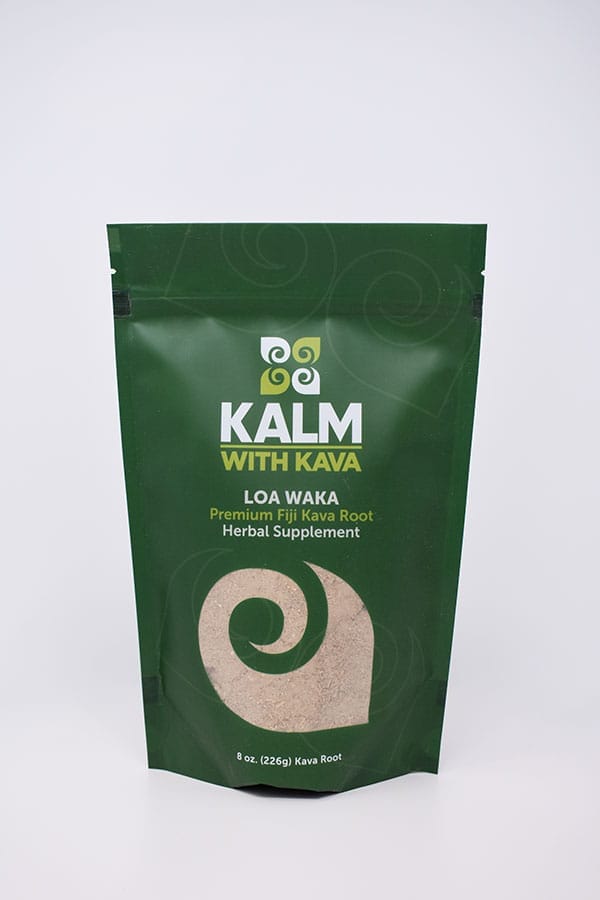
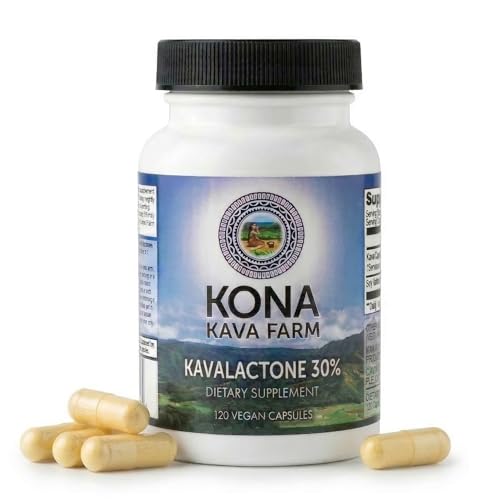
Our top-rated kava
Whatever you decide, these are the kavas we recommend: lab report read, kavalactones verified, ranked by cost per 100 mg. Live price check on each.




As an Amazon Associate we may earn from qualifying purchases, at no cost to you. 21+.
What reverse tolerance actually is
Reverse tolerance is the observation that kava commonly works better with repetition rather than worse. In the normal world of tolerance, the body adapts to a substance so that the same amount delivers a smaller effect over time — that's why most things require escalating amounts to keep working. Kava is widely reported to run the opposite way: many people feel little to nothing on their first encounter and, after several consistent sessions, find that the same moderate amount now lands clearly. The community's preferred technical word for this is sensitization — the body becoming more responsive to a substance with exposure, not less.
The practical upshot is the part newcomers most need to hear: a quiet first session is not a verdict. It is, for a large share of people, the expected opening move. Kava bars and vendors describe the same pattern so consistently — first night underwhelming, effects clarifying over subsequent sessions — that the entire community treats "judge kava on one night" as a rookie error. As one vendor explainer frames it, on "the first, second, or even third attempt, people don't feel the expected effects at all," and only "with prolonged exposure do effects gradually develop." That is reverse tolerance in one sentence.
The honest state of the evidence — hypotheses, not facts
This is where rigor matters more than reassurance. Reverse tolerance in kava is, in the words of one vendor's own explainer, a phenomenon that "is well studied in other substances, but frustratingly, when it comes to kava, there is very little research about it." There is no settled, peer-reviewed mechanism. What circulates in the community and the trade literature is a set of candidate explanations — every one of which is a hypothesis, and we label them as such:
Hypothesis 1 — Metabolic adaptation (the most-repeated one). The idea is that when you first drink kava, your body isn't yet efficient at processing kavalactones; with repeated exposure, "the central nervous system and digestive enzymes adapt to interact more effectively," so the same dose registers more. This is the explanation most vendor pages reach for. It is plausible and untested. Hypothesis, not fact.
Hypothesis 2 — Kavalactone accumulation / fat-solubility. Kavalactones are fat-soluble, and one proposal is that "fat-soluble molecules like kavalactones may be sequestered in fatty tissues before they can circulate freely," so early doses are partly absorbed into tissue before reaching the nervous system, with later sessions building on a fuller reservoir. Mechanistically tidy, empirically unconfirmed. Hypothesis.
Hypothesis 3 — Learning to notice the effect. Kava's effects are "calm, body-centered, and gradual rather than dramatic." Several explainers note that part of "reverse tolerance" may simply be the drinker getting better at recognizing a subtle effect they were having all along, plus improving their preparation technique. This is the placebo-adjacent edge of the question (see the term defined below): not a claim the effect is imaginary, but an acknowledgment that perception and expectation are entangled with a gentle, non-dramatic substance. Honestly labeled: hypothesis.
You may notice these hypotheses are not mutually exclusive — adaptation, accumulation, and perception could all contribute. That's exactly the state of the field: multiple plausible stories, no decisive evidence sorting them. A rigorous page tells you that instead of picking a winner it can't defend.
The typical arc — how long it actually takes
Strip the mechanism debate away and the practical timeline is where the community is most consistent. The recurring answer to "how long until it works?" is a handful of sessions — not one, and not dozens. Vendor and community guidance clusters tightly: effects tend to "clarify and become much more noticeable" over "a few days or even a week" of consistent use, and the low-responsiveness window broadly runs "from a few days to a couple of weeks, depending on body chemistry, dose, and frequency."
So the realistic expectation looks like this. Session one may genuinely do little — that's the modal first-timer experience, not a bad sign. Sessions two through four or five, spaced over consecutive or near-consecutive evenings at a normal moderate amount, are where most people start to feel the relaxed, settled, sociable calm clearly. By the time you've put a week or two of consistent moderate sessions behind you, reverse tolerance has, for most drinkers, resolved — and the same amount that did nothing on night one now lands. Body chemistry varies, so some people cross over faster and a few take longer, but the operative word everywhere is handful, not marathon.
The patience protocol — repeat, don't escalate
Here is the entire fix, and it is deliberately boring: same moderate session, separate evenings, several repetitions. Patience is the dose. The community's verified playbook is to keep the amount in the normal first-timer-to-occasional range (see our dosage guide for actual milligram numbers) and simply repeat it across days, optionally nudging the serving size up gradually only after several sessions — not jumping it in one night.
Two supporting moves make the protocol work. First, consistency beats intensity — near-daily moderate sessions during your trial window do more to resolve reverse tolerance than occasional big ones. Second, control the confounds so you're actually testing reverse tolerance and not something else. The two biggest: drink on an empty-ish stomach (the traditional norm is a few hours after your last real meal — food noticeably blunts kava and is the most common reason a session "does nothing"), and prepare it properly. A weak knead or a tea-bag's worth of kavalactones will underwhelm regardless of how sensitized you are. Our how-to-make-kava guide covers technique; the next section covers product.
When 'nothing' isn't reverse tolerance
Reverse tolerance gets blamed for problems it didn't cause. Patience only fixes a quiet session if the session was capable of working in the first place. Before you settle in for a two-week sensitization trial, rule out the two confounds that no amount of patience will solve:
Weak or wrong product. If your kava is underpowered, mislabeled, or — worse — a heavy tudei-type root sold as noble, no number of sessions will produce the clean, balanced effect you're after. Noble kava is the traditional, daily-drinkable type; tudei kava is stronger, longer-lasting, and not meant for casual sessions, and the two are routinely confused or substituted by careless vendors. Verifying you bought a properly-tested noble kava is the first thing to check when sessions underwhelm — see our noble vs. tudei breakdown. A genuinely weak or adulterated product is a product problem, not a tolerance problem.
Wrong prep. Traditional kava strength is almost entirely a function of technique: how much root, how long you knead, water temperature, and format. A brief knead or a low-kavalactone format (a tea bag carries a fraction of a real session) will report back as "nothing" forever. Our preparation guide walks through getting real kavalactones out of the root.
Ready to try one? Start with our verified picks
Wherever this guide landed you, these are the kavas our lab-report standard keeps ranking on top. Live price check on each.
As an Amazon Associate we may earn from qualifying purchases, at no cost to you. 21+.
Key terms
- Reverse tolerance
- Kava's signature quirk: many newcomers feel little or nothing for the first several sessions, with effects emerging and strengthening through consistent moderate use — the opposite of normal tolerance. Well-reported as a phenomenon; its mechanism is contested and under-researched.
- Breakthrough
- Community shorthand for the session where reverse tolerance resolves and kava 'clicks' — the point at which the same moderate amount that did nothing early on finally produces the clear, settled calm. For most drinkers it arrives within a handful of consistent sessions.
- Session
- A full evening's kava — typically 2–4 servings spaced 15–20 minutes apart. The session, not the single serving, is the unit that matters; reverse tolerance is measured in sessions repeated over days, not in single pours.
- Threshold
- The minimum effective session for a given drinker. Reverse tolerance is essentially your effective threshold falling with repeated exposure: early on it sits above a normal session (so you feel nothing); after sensitization, a normal session clears it comfortably.
- Placebo-adjacent
- Defined honestly: not a claim that kava's effect is imaginary, but an acknowledgment that one hypothesis for reverse tolerance is partly perceptual — drinkers learning to notice a genuine but subtle, non-dramatic effect, with expectation and technique improving alongside. Labeled as a hypothesis, not a verdict.
Questions, answered
Why didn't I feel anything the first time I drank kava?
Most likely reverse tolerance — kava commonly does less the first few sessions, not more, and a meaningful share of newcomers feel almost nothing at first. That's the modal first-timer experience, not a defect. Before concluding kava isn't for you, rule out the other two usual suspects: a full stomach (kava is traditionally drunk a few hours after eating) and a weak or wrong product. If you used a verified noble kava, prepped it properly, and drank it on an empty-ish stomach, reverse tolerance is the likely answer — and the fix is repetition, not a bigger dose.
How many sessions until kava works?
Community consensus lands on a handful — not one, not dozens. Effects tend to clarify over a few days to a couple of weeks of consistent moderate use, with most people noticing a clear effect somewhere across sessions two through five. Body chemistry varies, so a few cross over faster and a few take longer, but the operative word everywhere is 'handful.' Commit to a multi-session trial rather than judging kava on a single night.
Should I just take more kava to feel it?
No — this is the cardinal newcomer mistake. Tripling the dose to force a quiet session mostly produces nausea, a heavy wobbly sluggishness, and a wasted bag of root, not more calm. Kava has a built-in deterrent: too much makes you queasy and tired rather than more relaxed. The community's playbook is the boring one — keep the amount in the normal moderate range and repeat it across separate evenings. Patience is the dose, not escalation.
Is reverse tolerance just placebo?
We won't pretend to know, and that honesty is the point. One genuine hypothesis is that part of reverse tolerance is perceptual — drinkers learning to notice a real but subtle, non-dramatic effect, with technique improving alongside. That's the placebo-adjacent edge of the question, and it's plausible. But it sits next to mechanistic hypotheses (metabolic adaptation, fat-soluble accumulation) that don't depend on perception at all. The honest answer: the phenomenon is well-reported, the mechanism is contested and under-researched, and 'it's all placebo' is no better supported than the alternatives.
Does everyone get past reverse tolerance eventually?
Most consistent drinkers do, but we won't promise universality — body chemistry varies, and the timeline genuinely differs from person to person. The strong majority pattern is that a handful of moderate sessions over a week or two resolves it. If you've given kava a real multi-session trial with verified noble product and proper prep and still feel nothing, kava may simply not be your substance — which is a legitimate outcome, not a failure of patience.
Could my kava just be weak instead of reverse tolerance?
Absolutely, and it's the confound people most often miss. Patience only fixes a session that was capable of working. An underpowered product, a mislabeled root, or a heavy tudei-type kava sold as noble will underwhelm forever no matter how many sessions you log. Likewise, a brief knead or a low-kavalactone format (a tea bag carries a fraction of a real session) reports back as 'nothing.' Rule out product and prep first — see our noble vs. tudei and how-to-make-kava guides — before chalking it up to tolerance.
Keep reading
How Much Kava Should You Drink?
The honest milligram numbers, so each session of your reverse-tolerance trial is actually in range.
Noble vs. Tudei Kava
When 'nothing' is really a weak or wrong product — how to verify you bought a proper noble kava.
How to Make Kava
Prep is half the dose — getting real kavalactones out of the root so your trial isn't sabotaged by technique.