Our Pick: Gourmet Hawaiian Kava
Check PriceGourmet Hawaiian Kava Review (2026): Real Farm-Direct 'Awa, No COA
Gourmet Hawaiian Kava (now branded Gourmet Hawaiian 'Awa) is the rare thing in this category: an actual single-strain, noble-only kava farm on the Big Island, run by a grower with three decades in the soil — selling Hawaiian cultivars you cannot buy fresh anywhere else, including a true dehydrated-juice instant. That provenance is its whole case. But it comes at a steep premium over Pacific imports, and for a farm this serious about the plant, the lab paperwork is essentially absent. Here's the honest verdict.
By The Kava Review DeskUpdated 2026-06-17~7 min read Ranked by the lab reportHow we researchOfficial site ↗
Almost every bag of kava sold in the US started its life on a different ocean. The root is grown in Vanuatu, Fiji, Tonga, or Papua New Guinea, dried, packed into sacks, and shipped across the Pacific in a container before it ever reaches a vendor's warehouse. Gourmet Hawaiian Kava — recently rebranded Gourmet Hawaiian 'Awa — is one of the very few exceptions. It is a small family farm on the Big Island of Hawaii, run by Chris Allen, a grower who describes more than thirty years studying and cultivating the plant. The kava is grown, harvested, and processed in Hawaii and shipped to you from there. As the farm likes to put it, nothing here spent weeks in a shipping container crossing the sea — and that single fact is the entire argument for buying it.
So this review isn't really about whether the farm is legitimate; an owner-operated Hawaiian 'awa farm selling single-strain noble cultivars by name is about as real as kava sourcing gets. The harder, more useful question our desk asks of every vendor is where it genuinely excels, where it falls short, and whether what you pay maps to what you get. Gourmet Hawaiian Kava excels on provenance and rarity: it sells named Hawaiian cultivars — common ones like Mahakea, rare ones like Hiwa and the royalty-reserved Papa ele ele — that you simply cannot get fresh from a bulk importer, and it carries a genuine true instant made by dehydrating fresh kava juice rather than grinding root into filler. Where it falls short is twofold: the price sits well above imported Pacific kava, and for a farm this devoted to the plant, there is almost no published lab paperwork on the products you actually buy.
Everything below was verified against the farm's own pages in June 2026 — the cultivars, the noble-only stance, the formats, and the prices we could confirm. We are not paid by Gourmet Hawaiian Kava, we have no relationship with the farm, and nothing here was reviewed or approved by it; this is an independent read. The usual ground rules apply throughout: kava is for adults, it can cause drowsiness, don't drive after drinking it, and if you take medications or are pregnant, talk to your doctor first. None of this is medical advice — it's a buyer's review of a kava farm, written to help you decide whether this is the right place to spend your money.
The short version
- Gourmet Hawaiian Kava (now Gourmet Hawaiian 'Awa) is a genuinely Hawaii-grown family farm on the Big Island, run by longtime grower Chris Allen — not a reseller. The kava is grown, harvested, and processed in Hawaii, never shipped across the Pacific in a container.
- It sells single-strain Hawaiian cultivars by name — common ones like Mahakea and Pana ewa, and rare ones like Hiwa and the royalty-reserved Papa ele ele puu puu — as part of a stated mission to keep the 13 known Hawaiian 'awa varieties alive. That single-origin Hawaiian rarity is the real reason to shop here.
- Noble kava only. The farm is explicit: "Pure Hawaiian 'Awa = Noble Kava. No tudei (Isa) kava here." That's the right posture, and a meaningful trust signal in a category where tudei adulteration is the classic risk.
- Its instant is a TRUE instant — non-micronized dehydrated kava juice, the fresh drink dried down so you just mix and sip, no kneading or straining. That's the real article, not the micronized-root-plus-filler many brands sell as "instant."
- The central honesty point: we found NO public per-batch certificate of analysis or product kavalactone percentage. The "as high as 20.8%" figure that circulates is cited from an ethnobotany book about a cultivar — historical literature, not a lab test of the bag you buy.
- Best for the buyer who values true Hawaiian provenance, named cultivars, and noble-only sourcing — and is willing to pay a premium for it. Verified June 2026: Mahakea Medium Grind runs $35–$65 (1/2 lb to 1 lb); the Mahakea true instant tops out around $110 for the largest size. That is well above bulk Pacific imports.
At a glance
| Product | Type | What it actually is | Price (verified) | Check price |
|---|---|---|---|---|
| Mahakea Medium Grind | Traditional root powder | Single-strain Hawaiian noble root, ground for strainer-bag prep | $35–$65 (1/2 lb–1 lb) | Check Price |
| Mahakea Instant Kava | True instant (dehydrated juice) | Fresh kava drink dried down — non-micronized, mix-and-drink | up to ~$110 (50–200 g) | |
| Rare cultivars (Hiwa, Papa ele ele) | Single-strain root / instant | Heritage Hawaiian strains, including royalty-reserved 'awa | Premium, small lots by availability | |
| Sample packs | Multi-cultivar sampler | Small portions to compare strains before committing | By pack | |
| Fresh kava | Fresh / minimally processed root | Farm-fresh 'awa — the format imports physically cannot match | By availability |
The Gourmet Hawaiian Kava range at a glance — what each format actually is and confirmed pricing verified June 2026. Prices vary by cultivar and size; figures shown are representative of the Mahakea line, the farm's most available strain. Rarer cultivars (Hiwa, Papa ele ele) are offered in smaller, higher-priced lots.
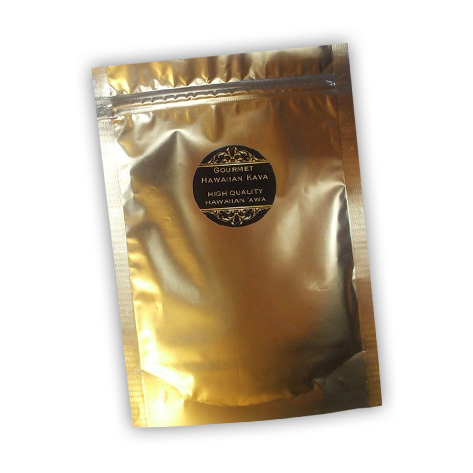
Mahakea Medium Grind (Hawaiian Noble Root)
Gourmet Hawaiian Kava
Genuinely Hawaii-grown single-strain noble root you can't get fresh from an importer — at a real premium, with no public COA.
Our verdict: Mahakea Medium Grind is the farm's most available strain and its clearest case. It is single-strain Hawaiian noble 'awa, grown and processed on the Big Island and shipped from there — fresher provenance than any imported bag, ground for traditional strainer-bag prep. The farm calls it "better than average potency with nice balanced effects," which squares with Mahakea's reputation as a versatile everyday cultivar. You pay handsomely for the Hawaiian origin, and there's no public COA. But if true provenance is what you're buying, this is the real thing.
Lab report: Noble-only, single-cultivar, farm-direct from the Big Island — the provenance is about as strong as kava sourcing gets, and the no-tudei stance is explicit. But we found no downloadable per-batch certificate of analysis or product kavalactone percentage; the quality is grown and stated, not documented batch-by-batch in public.
This is the product that makes the case for the whole farm, because almost no one else can sell it. Gourmet Hawaiian Kava's Mahakea Medium Grind is single-strain Hawaiian noble 'awa — ground root meant for traditional strainer-bag preparation — grown, harvested, and processed on the Big Island and shipped to you from Hawaii rather than across the Pacific in a container. Mahakea was historically a common Hawaiian cultivar, fast-growing and vigorous, and the farm describes this grind as having "better than average potency with nice balanced effects," which lines up with Mahakea's reputation as a versatile, do-everything strain rather than a one-note heady or heavy kava. Verified in June 2026, it runs $35 for a half-pound and $65 for a pound.
The honest counterweight is price and paperwork. At $65 a pound this is well north of what bulk Vanuatu or Fiji root costs by weight, so you are paying a real Hawaiian-provenance premium and should go in expecting it. And for a farm this devoted to the plant, the lab documentation is thin: we could not find a downloadable per-batch certificate of analysis or a product kavalactone percentage for what's actually in the bag. The noble-only stance and the single-cultivar sourcing are meaningful trust signals on their own — but they're claims and provenance, not a printed lab number, and we cover exactly what that distinction means in our how to read a kava COA guide. Reverse tolerance applies as always — your second and third sessions tend to speak louder than your first.
Who should buy it
Buy the Mahakea Medium Grind if true Hawaiian provenance and noble-only, single-cultivar sourcing are what you value most, and you're willing to pay a premium for kava grown in the US rather than shipped from the Pacific. It's a balanced, everyday strain well suited to a drinker who wants to taste what domestically-grown 'awa is actually like. If you rank published, batch-level lab numbers above origin — or you're optimizing cost per serving — this isn't the value pick.
What we don't like
The price sits well above comparable imported Pacific kava by weight, so you're paying a real Hawaiian-provenance premium. And despite the farm's obvious devotion to the plant, we found no downloadable per-batch COA or product kavalactone percentage — the quality is grown and asserted, not documented where you can read it. The single circulating big number ("20.8%") is a historical book figure about a cultivar, not a test of this product.
- Type
- Single-strain Hawaiian noble root, medium grind (strainer-bag prep)
- Cultivar
- Mahakea (common Hawaiian 'awa; balanced everyday profile)
- Origin
- Grown & processed on the Big Island of Hawaii (USA)
- Chemotype
- Noble only — farm states "No tudei (Isa) kava here"
- Public COA
- None found — provenance & noble claim asserted, not documented per batch
- Sizes / price
- 1/2 lb and 1 lb, $35–$65 (verified June 2026)
What we like
- Genuinely Hawaii-grown, single-cultivar noble 'awa — not an import or a reseller
- Farm-direct freshness no container-shipped Pacific root can match
- Explicit noble-only, no-tudei sourcing from a named family farm
- Balanced, versatile everyday strain (Mahakea) at a real Hawaiian-provenance level
Worth noting
- Premium price well above bulk imported Pacific kava by weight
- No public per-batch COA or product kavalactone percentage found
- The circulating "20.8%" figure is a historical book citation, not a product lab test
More kava worth comparing
Beyond this guide: the highest-rated kava across every format, kavalactones verified, with a live price check on each.




As an Amazon Associate we may earn from qualifying purchases, at no cost to you. 21+.
How we chose
We judge a kava brand on four things, in order: sourcing and format transparency (does it tell you what's actually in each product, by cultivar and origin, or lean on a marketing name), the paper trail (does it publish certificates of analysis and a kavalactone figure per batch, or merely describe its quality), range and fit (can a beginner and a veteran both shop it), and price against comparable vendors. We verify every claim we can against the brand's own pages, and we quote the brand's wording rather than paraphrasing its promises into facts.
Our signature move is the transparency check, and with a farm-direct grower it has two parts. First, the sourcing ladder: a vendor naming a single cultivar grown on its own farm sits at the top of the provenance ladder — far above "premium Pacific blend" with no origin. Gourmet Hawaiian Kava clears this bar cleanly, and its explicit noble-only, no-tudei stance clears the chemotype-safety bar too. Second, the COA ladder: "we grow noble kava" is a sourcing claim; a published per-batch certificate of analysis is evidence. We looked for downloadable COAs or a product kavalactone percentage and could not find them, so we say so — and we are careful not to launder a historical book figure into a product lab result.
We do not taste-score by inventing a panel, we do not fabricate lab results, and we make no health claims. This review is not paid for and was not commissioned, reviewed, or approved by Gourmet Hawaiian Kava. Kava is a centuries-old Pacific social drink that many adults find relaxing; it is not a treatment for anything. Where we describe effects, we use plain experiential language drawn from how kava is commonly described, and we keep the cautions on the label: drowsiness is real, don't drive on it, and check with a doctor if you take medications.
Key terms
- Hawaiian 'awa
- 'Awa is the Hawaiian name for kava (Piper methysticum). Hawaiian 'awa cultivars descend from plants Polynesian voyagers brought by canoe, and there are 13 known named varieties — a heritage Gourmet Hawaiian Kava is explicitly trying to preserve by growing them all.
- Single-strain / single cultivar
- Kava sold as one named variety (e.g., Mahakea, Hiwa) rather than an anonymous blend. Single-strain sourcing sits at the top of the provenance ladder because you know exactly what plant — and often what farm — produced it.
- Noble kava
- The class of kava cultivars traditionally selected for daily drinking, with a kavalactone balance long favored for a clean, pleasant experience. The opposite is tudei ("two-day") kava, associated with heavier, longer-lasting effects and avoided by quality vendors. Gourmet Hawaiian Kava states it sells noble only.
- True instant kava
- A dehydrated finished brew — fresh root juiced, fibers strained out, the liquid dried into a powder that dissolves with no straining. Gourmet Hawaiian Kava's instant is this. It's distinct from a flavored "instant mix" built on micronized root plus filler, which many brands sell under the same word.
- Micronized kava
- Whole kava root ground extremely fine so it mixes without a strainer bag. Convenient, but you drink the fiber too, and "instant mixes" built on micronized root are often cut with carriers like maltodextrin — which is exactly what a true dehydrated-juice instant is not.
- COA (Certificate of Analysis)
- The lab document reporting what's actually in a batch — total kavalactone %, chemotype, and contaminant screens. The trust ladder: posted per batch (best), on request (acceptable), "we test" with little downloadable (a claim, not evidence). We found no public product COA from Gourmet Hawaiian Kava.
Questions, answered
Is Gourmet Hawaiian Kava legit?
Yes. Gourmet Hawaiian Kava — recently rebranded Gourmet Hawaiian 'Awa — is a real, owner-operated family farm on the Big Island of Hawaii, run by grower Chris Allen, who describes more than thirty years studying and cultivating kava. It grows, harvests, and processes single-strain Hawaiian 'awa cultivars in Hawaii and ships from there rather than importing dried Pacific root. It sells noble kava only. The honest knock isn't legitimacy or provenance — both are excellent — it's that we found no public per-batch certificates of analysis and a price premium over imported kava. We have no relationship with the farm; this is an independent assessment.
Is Gourmet Hawaiian Kava actually grown in Hawaii?
Yes — that's its core distinction. Unlike most US kava sellers, who import dried root from Vanuatu, Fiji, Tonga, or Papua New Guinea, this is a Big Island farm growing its own Hawaiian 'awa cultivars and shipping them domestically. The farm makes the freshness point directly: its kava never spent weeks crossing the Pacific in a shipping container. For a buyer who values true domestic provenance and the freshness that comes with it, that's a genuine and rare edge — and a large part of what you're paying the premium for.
Is Gourmet Hawaiian Kava noble or tudei kava?
Noble only. The farm is explicit: "Pure Hawaiian 'Awa = Noble Kava. No tudei (Isa) kava here." That's the right stance and a meaningful trust signal, because tudei ("two-day") kava adulteration is the classic quality risk in the category. Hawaiian 'awa cultivars like Mahakea, Hiwa, and Papa ele ele are noble varieties selected over generations for drinking. If you want more on why this distinction matters, see our noble vs. tudei kava guide.
Does Gourmet Hawaiian Kava publish COAs or kavalactone numbers?
Not that we could find. As of our June 2026 check, there were no downloadable per-batch certificates of analysis and no product kavalactone percentages on the items you buy. The one number that circulates — "as high as 20.8%" for the Papa ele ele cultivar — comes from the book "Hawaiian 'Awa: Views of an Ethnobotanical Treasure," so it's a historical literature figure about a strain, not a lab test of a specific product lot. The farm's noble-only sourcing and single-cultivar provenance are strong signals on their own, but they're claims and origin, not documented batch numbers. It's the main gap keeping the farm from a top-tier transparency score.
Is Gourmet Hawaiian Kava's instant a real instant kava?
Yes — and it's the honest kind. The farm describes its Mahakea Instant as non-micronized dehydrated kava juice: a batch of fresh kava drink dried down into a powder you mix and sip, no kneading or straining. That's a true instant — the finished brew minus the water — rather than the micronized root plus maltodextrin filler that many brands sell as "instant mix." It dissolves cleanly and isn't bulked out with starch, which puts it on the right side of the line we draw in our best instant kava guide.
Is Gourmet Hawaiian Kava worth the price?
It depends on what you're buying. Verified in June 2026, the Mahakea Medium Grind runs $35–$65 (half-pound to pound) and the Mahakea true instant tops out around $110 for the largest size — both well above bulk imported Pacific kava by weight. If what you value is genuine Hawaiian provenance, named single cultivars you can't get fresh elsewhere, and noble-only sourcing from a real grower, the premium is defensible and the product is rare. If you're optimizing cost per serving or you rank published lab numbers above origin, imported noble kava with a posted COA will give you more documentation for less money.
How does Gourmet Hawaiian Kava compare to Kona Kava Farm?
Both have Hawaii in their name, but they're different operations. Gourmet Hawaiian Kava is a small grower selling its own single-strain Hawaiian cultivars farm-direct, noble-only, with a true dehydrated-juice instant — its edge is provenance and rarity. Kona Kava Farm carries the widest format range in the category (instant mix, powder, capsules, kavalactone paste, tinctures) and runs a GMP facility with in-house HPLC, but its flagship "instant" is a micronized-plus-maltodextrin mix and its public COA habit is thin. Neither publishes robust per-batch COAs. Choose Gourmet Hawaiian Kava for true single-cultivar Hawaiian provenance; choose Kona for format breadth and lab infrastructure.
What cultivars does Gourmet Hawaiian Kava sell?
Named single-strain Hawaiian 'awa varieties. Mahakea is the most available — a balanced, versatile everyday cultivar — alongside Pana ewa, and the farm also grows rarer strains like Hiwa (traditionally a priests' 'awa) and Papa ele ele puu puu (historically reserved for royalty, sometimes called "the queen's 'awa"). The farm's stated mission is to grow and preserve all 13 known Hawaiian kava varieties, which is why you'll see strains here you can't find from a Pacific importer.
Keep reading
Best Kava Powder
The full ranked field of traditional-grind kava roots — where farm-direct Hawaiian 'awa sits against imported Pacific noble powder.
Noble vs. Tudei Kava
Why the noble-only stance Gourmet Hawaiian Kava advertises is the single most important sourcing claim in the category.
How to Read a Kava COA
What a certificate of analysis tells you — and why even an excellent farm-direct grower should be publishing one per batch.
Best Kava Brands
Our ranked overview of the kava vendors worth your money, and where a single-farm Hawaiian grower fits among them.