Our pick. Samarogen
Check priceSamarogen Kava Review (2026): The 55% Liposomal Capsule — But It's a Blend
Samarogen's kava capsule states a 55% kavalactone extract — high for the category, and we give it full credit — delivered in a liposomal softgel. The catch a kava drinker needs up front: it's not pure kava. The capsule pairs kava with ashwagandha, chamomile, lemon balm, and passionflower, which makes any effect harder to pin on the kava alone, and the listing doesn't give a per-serving kavalactone milligram figure, a noble cultivar, an origin, or a published COA, as of June 2026. Here's the honest verdict.
By The Kava Review DeskUpdated 2026-06-27~8 min readRanked by the lab reportHow we research
Samarogen's kava capsule leads with a number that genuinely caught our eye: a 55% kavalactone extract. Most of the capsule shelf hovers around a 30% standardization or refuses to state a percentage at all, so a stated 55% is, on its face, a strong potency claim — and we give Samarogen full credit for putting a high, specific concentration in writing. Pair that with a liposomal softgel (a carrier the brand says improves absorption) and CO2 extraction (the listing says it avoids ethanol and acetone solvents), and the supplement-shelf pitch is real: a concentrated, modern-format kava capsule.
But there's a caveat a kava drinker needs before anything else, and it reframes the whole product: this is not a pure-kava capsule. Samarogen pairs the kava with ashwagandha, chamomile, lemon balm, and passionflower, and markets the result for "relax & good sleep." That's not hidden — it's right in the product title — but it changes what you're actually buying and what you can conclude from it. When four other calming botanicals ride along with the kava, any effect you feel is the blend's, not the kava's, and you can't attribute it cleanly to the plant we're here to review. A multi-herb sleep blend is a legitimate product; it's just a different thing from a single-ingredient kava extract, and we judge it as the blend it is.
This review is independent and unpaid. Kava Review has no affiliate relationship with Samarogen — we earn no commission if you buy, and nobody at the company reviewed this before publication. We verified every fact below against the Amazon listing (ASIN B0FP5NFXDH) and the brand's listing copy in June 2026: the 55% kavalactone concentration, the liposomal softgel format, the 60-count bottle, the CO2 extraction, and the ashwagandha/chamomile/lemon balm/passionflower blend. We treat the "relax & good sleep" language as the brand's marketing claim, never as fact. And because this is a capsule, you can neither see nor taste the source root — so transparency matters even more, and we flag plainly what the listing doesn't disclose. The ground rules apply throughout: kava is for adults 21+, it can cause drowsiness, don't drive after taking it, never mix it with alcohol, and none of this is medical advice. Effects vary.
The short version.
- Samarogen states a 55% kavalactone extract — high for the category, where ~30% is typical and many labels state nothing. We credit the high, specific concentration claim; it's a genuine strength of the listing.
- It is a BLEND, not pure kava. The capsule pairs kava with ashwagandha, chamomile, lemon balm, and passionflower (a "relax & good sleep" formula). That means any effect you feel is the blend's, not the kava's — you can't attribute it cleanly to the kava, which is the main reason a kava purist may want a single-ingredient extract instead.
- Format: liposomal softgels, 60 per bottle (listing copy = 2 softgels per serving, ~30-day supply), made with CO2 extraction (the listing says it avoids ethanol and acetone solvents). The liposomal carrier is the brand's absorption pitch.
- Key disclosure gap: a "55% extract" is a CONCENTRATION, not a derivable milligram dose. The listing doesn't state a per-serving kavalactone milligram figure or the individual herb amounts, so you can't compute how many milligrams of kavalactones you're actually getting — NOT specified, as of June 2026.
- Also not specified on the listing, as of June 2026: a noble-vs-tudei designation, a named country/cultivar of origin, and a published per-batch COA. Verdict: a concentrated, modern liposomal capsule with a strong stated potency — but a multi-herb blend with a missing milligram dose and no published noble/COA receipts. Good if you want a calming blend; not the pick if you want clean, single-ingredient, documented kava.
At a glance.
| Product | Kava-only? | Dose & lab transparency | Format & notes | Check price |
|---|---|---|---|---|
| Samarogen Kava Kava Capsules (Liposomal, 55%) | No — kava + ashwagandha, chamomile, lemon balm, passionflower | 55% kavalactone concentration stated; no per-serving mg, no noble/origin, no COA found | Liposomal softgel · 60 ct (2/serving) · CO2 extraction | Check price |
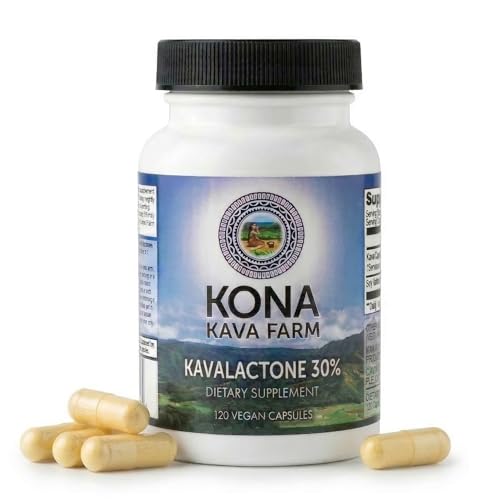
| A single-ingredient kava capsule (e.g. Kona Kava Farm 30%) | Yes — kava only | Often label-derivable kavalactone mg (e.g. 300 mg × 30% ≈ 90 mg) | Veg capsule · effect attributable to kava alone | |
| Traditional kava-bar shell (for scale) | Yes — kava only | ~150–250 mg kavalactones per 4 oz (commonly estimated) | Strained brew · the yardstick a capsule is measured against |
Samarogen Kava Kava Capsules at a glance, and how a multi-herb liposomal blend sits against a single-ingredient kava capsule and a real brew — figures verified June 2026. A "55% extract" is a concentration, not a per-serving milligram dose; the listing doesn't state the kava-extract weight per serving, so we can't derive the kavalactone milligrams.

Samarogen Kava Kava Capsules (Liposomal, 55% Kavalactones, with Ashwagandha)
Samarogen
A 55% kavalactone liposomal softgel — high stated potency — but a multi-herb blend with no per-serving mg, noble status, or COA.
Our verdict: Samarogen's capsule earns real credit for one thing: it states a 55% kavalactone extract, a high and specific concentration most of the shelf won't commit to, in a modern liposomal softgel. But two structural facts hold it back for a kava drinker. First, it's a blend — kava paired with ashwagandha, chamomile, lemon balm, and passionflower — so any effect is the formula's, not cleanly the kava's. Second, a "55% extract" is a concentration, not a milligram dose, and the listing gives no per-serving kavalactone milligrams, no noble status, no origin, and no published COA, as of June 2026. A reasonable pick if you want a calming multi-herb capsule; not the one if you want clean, single-ingredient, documented kava.
Lab report. Stated on the listing: a 55% kavalactone extract (high for the category, and we credit it), liposomal softgels, CO2 extraction (the listing says it avoids ethanol/acetone). What we did NOT find on the public listing: a per-serving kavalactone MILLIGRAM figure (a "55% extract" is a concentration, not a derivable dose without the extract weight per serving), the individual herb milligram amounts, a noble-vs-tudei designation, a named country/cultivar of origin, or a published per-batch certificate of analysis — all not specified, as of June 2026.
Credit where it's due first: the 55% is a genuinely strong claim, and we don't discount it. Samarogen Kava Kava Capsules state a 55% kavalactone extract, delivered in a liposomal softgel, with CO2 extraction the listing says avoids ethanol and acetone. In a category where ~30% is the typical standardization and plenty of labels print no percentage at all, putting a high, specific concentration in writing is exactly the kind of disclosure we reward. If all you knew about this product was that number, it would read as a concentrated, modern-format kava capsule from a brand willing to commit to potency on the label.
The dose math that the 55% doesn't actually give you. Here's the catch a careful buyer has to see: a "55% extract" is a concentration of the kava extract — not a milligram dose. To know how many milligrams of kavalactones you're getting, you'd also need the kava-extract weight per serving, and the public listing doesn't state it. (For contrast, a label that prints "300 mg extract, 30% kavalactones" lets you do honest arithmetic — 300 × 30% ≈ 90 mg; Samarogen gives you the percentage but not the weight, so the multiplication is impossible.) The listing also doesn't break out how many milligrams of ashwagandha, chamomile, lemon balm, or passionflower are in each serving. So the 55% is a real, creditable concentration claim, but it is not a dose you can plan around. Our explainer on what kavalactones are shows why the per-serving milligram figure — not the percentage alone — is the number that lets you compare capsules honestly.
And the receipts a capsule most needs are missing. Because you can't see or taste a softgel's source root, the disclosures matter more here than anywhere — and as of June 2026 the listing doesn't say whether the kava is a noble cultivar or tudei, doesn't name a country or cultivar of origin, and we found no published per-batch certificate of analysis. The liposomal carrier and CO2 extraction are reasonable formulation choices, and the 55% is a strong potency claim — but a strong claim without a milligram dose, a noble designation, or a lab sheet is still a claim. If you want a calming blend and the 55% headline appeals, it's a defensible buy; if you want clean, single-ingredient, documented kava, this isn't the one.
Who should buy it.
Buy Samarogen's capsule if what you actually want is a calming multi-herb blend — kava alongside ashwagandha, chamomile, lemon balm, and passionflower — in a modern liposomal softgel, and a high stated kavalactone concentration (55%) appeals to you. It suits the buyer shopping for a relax-and-wind-down formula rather than kava specifically, who is comfortable that the effect can't be pinned on the kava alone and doesn't need a per-serving milligram dose or a published COA.
What we don't like.
It's a blend, not pure kava — kava paired with ashwagandha, chamomile, lemon balm, and passionflower — so any effect is the formula's and can't be attributed cleanly to the kava; expect a milder, less-attributable kava experience by design. The 55% is a concentration, not a derivable milligram dose: the listing gives no kava-extract weight per serving, so you can't compute the kavalactone milligrams, and the individual herb amounts aren't broken out either. As of June 2026 there's also no stated noble-vs-tudei designation, no named origin, and no published per-batch COA — and a softgel hides the source root, so those gaps matter more. Combining several botanicals (especially with any medication) is a question for a healthcare professional; a rare liver-injury risk applies to kava, and never mix it with alcohol.
- Form
- Liposomal softgels (60 per bottle; listing copy = 2 per serving, ~30-day supply)
- Kava-only?
- No — a blend with ashwagandha, chamomile, lemon balm, and passionflower
- Kavalactone concentration
- Stated 55% (high for the category — credited; but a concentration, not a milligram dose)
- Per-serving kavalactone mg
- Not stated — no kava-extract weight per serving disclosed, so not derivable (as of June 2026)
- Extraction
- CO2 (listing says it avoids ethanol and acetone solvents)
- Noble vs. tudei
- Not specified, as of June 2026
- Origin
- Not specified (no named country/cultivar on the listing), as of June 2026
- Testing
- No published per-batch COA found on the listing, as of June 2026
- Price
- Varies by retailer — check the listing (we don't print an unverified number)
What we like.
- States a high, specific 55% kavalactone extract — most of the capsule shelf is at ~30% or states nothing
- Modern format: liposomal softgels with CO2 extraction (listing says it avoids ethanol/acetone solvents)
- 60-count bottle, roughly a 30-day supply at the listing's 2-softgel serving
- A coherent calming blend (kava + ashwagandha, chamomile, lemon balm, passionflower) if a multi-herb formula is what you want
Worth noting.
- A blend, not pure kava — any effect is the formula's, not cleanly the kava's (milder, less-attributable kava experience by design)
- "55% extract" is a concentration, not a milligram dose — no kava-extract weight per serving stated, so the kavalactone mg isn't derivable
- Individual herb milligram amounts not broken out; noble-vs-tudei and origin not specified (as of June 2026)
- No published per-batch COA found — and a softgel hides the source root, so the missing receipts matter more
More kava worth comparing
Beyond this guide: the highest-rated kava across every format, kavalactones verified, with a live price check on each.




As an Amazon Associate we may earn from qualifying purchases, at no cost to you. 21+.
How we chose.
We judge a kava capsule on disclosure first, because a capsule hides its source root — you can neither see nor taste it — so the label is all you have. Samarogen does one thing here that we genuinely credit: it states a 55% kavalactone extract, a high and specific concentration in a category where ~30% is typical and many labels state nothing at all. Putting a high, specific percentage in writing is exactly the kind of disclosure we reward, and we don't discount it. We also verified the liposomal softgel format, the 60-count bottle (listing copy puts it at two softgels per serving, a roughly 30-day supply), and the CO2-extraction claim against the Amazon listing in June 2026.
Then we mark the gaps rather than paper over them, and the first is the most important: a "55% extract" is a concentration of the kava extract, not a derivable milligram dose. To compute how many milligrams of kavalactones you're actually getting, you'd also need the kava-extract weight per serving — and the public listing doesn't state it, nor does it break out the individual milligram amounts of the ashwagandha, chamomile, lemon balm, or passionflower. So the 55% is a real and creditable concentration claim, but it is not, by itself, a dose you can plan around. We also did not find, on the listing as of June 2026, a noble-vs-tudei designation, a named country or cultivar of origin, or a published per-batch certificate of analysis. We do not invent any of those; where Samarogen is silent, we say "not specified, as of June 2026."
The second structural fact is that this is a blend, and we judge it as one. Because kava rides with four other calming botanicals, any effect a user reports is the formula's, not the kava's — so we describe it experientially and decline to attribute anything to the kava alone. Finally, we never make health claims: kava is a centuries-old Pacific social drink that many adults find relaxing, and this is a multi-herb capsule, not a treatment for anything. We treat the brand's "relax & good sleep" line as the brand's marketing claim, not our finding. Kava can cause drowsiness, should never be mixed with alcohol, and a rare but severe risk of liver injury may be associated with kava-containing products — and blends raise an extra caution, because combining several botanicals (especially with any medication) is a question for a healthcare professional. That's general caution, not medical advice — and this review is not sponsored.
Key terms
- Kava blend (vs. single-ingredient)
- A capsule that combines kava with other botanicals — here ashwagandha, chamomile, lemon balm, and passionflower. A blend is a legitimate calming formula, but it means any effect is the mixture's, not the kava's, so you can't attribute a result cleanly to kava. A single-ingredient kava capsule is the cleaner instrument for evaluating or dosing kava itself.
- Kavalactone concentration vs. dose
- A "55% kavalactone extract" is a concentration — how potent the kava extract is — not a dose. The milligrams of kavalactones per serving are only derivable if the label also states the kava-extract weight per serving (mg of extract × 55%). Samarogen states the percentage but not the weight, so the per-serving milligram dose isn't computable from the public listing, as of June 2026.
- Liposomal softgel
- A softgel in which the extract is carried in a lipid (fat) vehicle, which makers say improves absorption of fat-soluble compounds like kavalactones. It's a reasonable formulation choice and Samarogen's delivery pitch — but the carrier doesn't, by itself, tell you the dose, the cultivar, or the lab results.
- CO2 extraction
- A solvent-free extraction method that uses pressurized carbon dioxide instead of ethanol or acetone. Samarogen's listing says it uses CO2 and avoids those solvents — a clean-label point in its favor for the extraction step, separate from the questions of dose, noble status, and per-batch testing.
- Noble vs. tudei kava
- The most important quality split for a drinker. Noble cultivars are the traditional Pacific everyday-drinking kavas, prized for a smoother effect; tudei ('two-day') kava is the harsher type associated with heavier next-day effects that serious buyers and the industry steer away from. Samarogen does not specify which this is, as of June 2026.
Questions, answered
Is Samarogen kava pure kava or a blend?
It's a blend, not pure kava. The capsule pairs kava with ashwagandha, chamomile, lemon balm, and passionflower, marketed as a "relax & good sleep" formula — and that's right in the product title. The practical consequence for a kava buyer is that any effect you feel is the blend's, not the kava's, so you can't attribute it cleanly to the kava; expect a milder, less-attributable kava experience by design. If you specifically want to evaluate or dose kava on its own, a single-ingredient kava capsule is the cleaner choice. If you want a calming multi-herb formula, the blend is a legitimate product.
Is Samarogen kava noble?
We can't confirm it from the public listing. As of June 2026, Samarogen's listing doesn't state whether the kava is a noble cultivar or tudei, and it doesn't name a country or cultivar of origin. Noble vs. tudei is the single most important quality question for a kava drinker — noble cultivars are the traditional everyday-drinking types, while tudei is the harsher kind the industry steers away from. Because this is a softgel, you also can't see or taste the source root, so a missing noble designation matters even more. If a stated noble cultivar is important to you, a kava specialist that discloses it is the safer pick.
How much kavalactone is in Samarogen kava?
The listing states a 55% kavalactone extract — which is high for the category and worth crediting — but that's a concentration, not a per-serving dose. To compute the actual milligrams of kavalactones, you'd also need the kava-extract weight per serving, and the public listing doesn't state it, as of June 2026. (By contrast, a label that prints "300 mg extract, 30% kavalactones" lets you multiply to about 90 mg; Samarogen gives the percentage but not the weight, so the math isn't possible.) So you get a strong concentration claim, but not a milligram dose you can plan around — and the individual herb amounts aren't broken out either.
Does Samarogen publish lab tests or a COA for its kava?
We did not find a published, downloadable per-batch certificate of analysis on the public Amazon listing, as of June 2026. The listing makes formulation claims — a 55% kavalactone extract, liposomal softgels, CO2 extraction that it says avoids ethanol and acetone — which are reasonable signals, but they're not the same as a lab sheet tied to the batch you receive. Because a softgel hides the source root, a per-batch COA matters more here, not less. If lab verification is important to you, ask the brand for the COA on the batch you're considering before ordering, and check that it names the kava, the kavalactone content, and a contaminant screen.
What's the 55% liposomal claim, and is the absorption better?
"55%" refers to the concentration of the kava extract (its kavalactone percentage), and "liposomal" refers to the delivery: the extract is carried in a lipid vehicle that makers say improves absorption of fat-soluble compounds like kavalactones. We credit the high, specific 55% concentration as a strong label claim. On absorption, the liposomal carrier is the brand's pitch, not something we measured — we describe it as the format's claim, not a proven outcome. Neither the percentage nor the carrier tells you the per-serving milligram dose, which the listing doesn't state.
Is Samarogen kava safe to use, and how should I take it?
The listing puts it at two softgels per serving (a 60-count bottle is roughly a 30-day supply). The general kava cautions apply: a rare but severe risk of liver injury may be associated with kava-containing products, so ask a healthcare professional before use if you have or have had liver problems, drink alcohol frequently, or take any medication. Because this is a blend of several botanicals, the multi-herb combination is an extra reason to check with a professional — especially alongside any medication. Kava is for adults 21+, can cause drowsiness, should never be mixed with alcohol, and you shouldn't drive after taking it. We treat the brand's "relax & good sleep" language as its marketing claim, not a fact; this is general caution, not medical advice.
Is this review sponsored by Samarogen?
No. Kava Review has no affiliate relationship with Samarogen at publication — we earn no commission if you buy, and the company did not review or approve this article. We verified every fact against the Amazon listing (ASIN B0FP5NFXDH) and the brand's listing copy in June 2026, including the 55% kavalactone concentration, the liposomal softgel format, the CO2 extraction, the ashwagandha/chamomile/lemon balm/passionflower blend, and the absence of a per-serving milligram dose, a noble designation, an origin, or a published COA. Our verdict reflects the Kava Review transparency standard, not a paid placement.
Keep reading.
Best Kava Capsules & Pills (2026)
The no-taste, no-prep format ranked by disclosed kavalactone dose — where a 55% liposomal blend like Samarogen's sits against single-ingredient picks.
Best Kava Extracts (2026)
Concentrated extracts ranked on disclosed dose, noble status, and lab transparency — the lens that exposes a blend's missing milligram figure.
How to Read a Kava COA
The exact disclosures — noble status, cultivar, kavalactones, contaminants — that Samarogen's listing leaves out, and why a capsule needs them most.