Our pick. Root of Happiness
Check priceKava Strains & Cultivars Explained: A Variety-by-Island Guide (2026)
Borogu, Loa, Mahakea, Mo'i, Melomelo — kava is sold under a sprawling vocabulary of cultivar names, and almost nobody maps them properly. This is the rigorous version: what a kava "strain" actually is (a clonally propagated cultivar, not a cannabis-style seed strain), the noble / tudei / wichmannii classification that decides quality, and a guided tour of the named varieties island by island — Vanuatu, Fiji, Tonga, Hawaii, Samoa, Papua New Guinea, and Pohnpei — with the documented heady-versus-heavy tendencies of each.
By The Kava Review DeskUpdated 2026-06-25~13 min readRanked by the lab reportHow we research
Spend any time shopping for kava and you'll hit a wall of names: Borogu, Boroguru, Melomelo, Palarasul, Kelai from Vanuatu; Loa and Damu from Fiji; Mahakea, Mo'i, and Hiwa from Hawaii. They get called "strains," the same word the cannabis world uses, and the comparison quietly misleads everyone who makes it. Kava strains are not bred from seed and they are not interchangeable marketing labels. They are named clones — individual plants, selected and propagated by hand across thousands of years — and understanding that one fact reorganizes everything else on this page.
Here's the botany, plainly. The kava plant, Piper methysticum, is effectively sterile: it does not set viable seed and is propagated only from stem and root cuttings. Every kava plant of a given cultivar is, genetically, a clone of the same original individual. Researchers — most notably the ethnobotanist Vincent Lebot, whose cultivar surveys are the backbone of the field — describe P. methysticum not as a wild species but as a group of sterile cultivars derived from the wild Piper wichmannii, shaped entirely by human selection of useful mutations. So a kava "strain" is really a cultivar or morphotype: a named, clonally maintained line with a stable look and a characteristic effect, tied to the island and the people who selected it.
That reframing is why this guide is organized the way it is. Before any island names matter, the single distinction that decides quality is the classification — noble versus tudei ("two-day") versus the medicinal and wild wichmannii types. We cover that first, then tour the named cultivars origin by origin: Vanuatu the noble heartland, Fiji and its waka-versus-lawena root cuts, Tonga, Hawaii's prized 'awa, Samoa's 'ava, Papua New Guinea's wichmannii (which we flag rather than recommend), and Pohnpei's sakau. Along the way we'll connect the "heady versus heavy" spectrum people chase to where it actually comes from — cultivar and chemotype, not wishful labeling. Nothing here is medical or legal advice; effects are stated as documented tendencies and vary by person; 21+ throughout.
The short version.
- A kava "strain" is a clonally propagated cultivar, not a seed strain. Piper methysticum is effectively sterile and grown only from cuttings, so every plant of a cultivar is a clone of one selected individual — the opposite of how cannabis strains are bred.
- The classification that matters most is noble vs tudei ("two-day") vs medicinal vs wild wichmannii. Noble cultivars are the daily-drinking varieties; the others are traditionally reserved for medicine or ceremony, and Vanuatu permits only noble cultivars for export.
- Vanuatu is the noble heartland — Borogu (Pentecost), Melomelo (Ambae), Palarasul (Santo), plus Kelai and others — and different islands favor different named clones with different leanings.
- Fiji adds a second axis: the same noble root is split into waka (the lateral roots, more kavalactone-rich and heady) and lawena (the basal stump, milder and more grounding). Loa and Damu are common Fijian cultivar names.
- "Heady" vs "heavy" is real but it's driven by cultivar AND chemotype together — the ratio of the six main kavalactones — not by the cultivar name alone. Buy noble, single-origin, and read the chemotype. 21+, effects vary, not medical advice.

Superior Vanuatu (Borogu) Noble Kava
Root of Happiness
A single-origin Vanuatu Borogu noble — the dependable, balanced baseline every cultivar tour should start from.
Our verdict: If you want to learn what good Vanuatu noble actually tastes and feels like, this is the baseline. Borogu is the workhorse Vanuatu noble — balanced, clear, and dependable rather than dramatically heady or heavy — and Root of Happiness sells it as single-origin Vanuatu noble root. It's the reference point against which the rest of the cultivar map makes sense.
Lab report. Noble Vanuatu kava root; vendor states origin and noble classification — confirm the current lot on the product page.
Start your cultivar education here. Root of Happiness's Superior Vanuatu is a single-origin Borogu-style Vanuatu noble — the most sensible "what does good noble feel like" baseline a newcomer can buy. Because it's Vanuatu kava, the noble standard is doing work for you: only noble cultivars may legally leave the country, so a stated Vanuatu noble is noble by that bar.
In the bowl it behaves like a proper noble: a clear-headed, sociable calm that settles in and eases off rather than dragging into the next day. Expect the usual brief tongue-tingle and kava's reverse tolerance, so judge it across a few sittings, not the first cup. As always: adults 21+, no alcohol, no driving on a heavy serving.
Who should buy it.
Buy this if you want a trustworthy Vanuatu noble baseline to anchor everything else — newcomers learning what noble feels like, and anyone who wants a balanced daily drinker from the noble heartland rather than committing to a strongly heady or heavy cultivar first.
What we don't like.
Balanced is the point, so a drinker specifically chasing a dramatically heady or a heavy, sedating session may find Borogu too even-keeled — that's a feature for a baseline, not a flaw. And like any traditional powder it asks for kneading and straining; there's no canned convenience here.
- Origin
- Vanuatu — single origin
- Cultivar
- Borogu-style Vanuatu noble
- Class
- Noble
- What's verified
- Stated Vanuatu noble origin (Vanuatu permits noble export only)
What we like.
- Single-origin Vanuatu noble — the noble heartland
- Borogu is the balanced workhorse — ideal baseline
- Clear, sociable noble effect rather than a one-note lean
- Recognizable named cultivar, not anonymous "Pacific kava"
Worth noting.
- Balanced by design — not for someone chasing an extreme heady or heavy profile
- Traditional powder — prep required, no canned convenience

Wakacon Waka Noble Kava Powder
Wakacon
A pound of single-origin Fijian noble waka — the textbook heady, lateral-root cut, in value bulk.
Our verdict: This is the Fijian waka cut done plainly: single-origin, noble, lateral roots. Waka is the kavalactone-rich, heady end of the Fijian split, and a full pound makes it the value restock once you've decided noble waka is your lane. It's the cultivar-tour lesson on the waka-vs-lawena axis, in a bag you'll actually drink through.
Lab report. Single-origin Fijian noble waka; vendor publishes lab analysis for verification.
This is the heady end of the Fijian split, in bulk. Wakacon's Waka Powder is single-origin Fijian noble waka — the lateral roots, the most kavalactone-rich cut, the one Fijian tradition prizes for a clean, talkative clarity. If the section above made the waka-vs-lawena distinction click, this is the waka side of it you can taste.
As a single-origin waka it drinks like a proper heady noble: clear and sociable rather than a heavy thud, easing off over a couple of hours. It's a traditional powder, so you'll knead and strain it, and the usual notes apply — brief tongue-tingle, reverse tolerance, judge it over several sittings. Adults 21+, no alcohol, no driving.
Who should buy it.
Buy Wakacon if you've decided heady Fijian waka is your lane and you want the best cost-per-bowl on verified noble — the restock pick for the regular drinker who specifically wants the lateral-root cut and will read the lab analysis before committing to a pound.
What we don't like.
A pound is a commitment and the larger up-front spend, which is why we'd point a newcomer to a smaller bag first. It's also waka — the more bitter, assertive cut — so anyone who prefers a milder, grounding profile should look to lawena instead. And it's a traditional powder: prep required, no canned convenience.
- Origin
- Single-origin Fijian
- Root cut
- Waka (lateral roots — heady, kavalactone-rich)
- Class
- Noble
- Size
- 1 lb (16 oz) — bulk value format
- What's verified
- Noble; vendor publishes lab analysis
What we like.
- Single-origin Fijian waka — the prized lateral-root cut
- Heady, clear noble profile — the textbook waka character
- Bulk pound format — strong cost-per-bowl on verified noble
- Published lab analysis to verify before buying
Worth noting.
- Larger up-front spend — a pound is a commitment
- Waka is the more bitter, assertive cut — lawena fans should look elsewhere

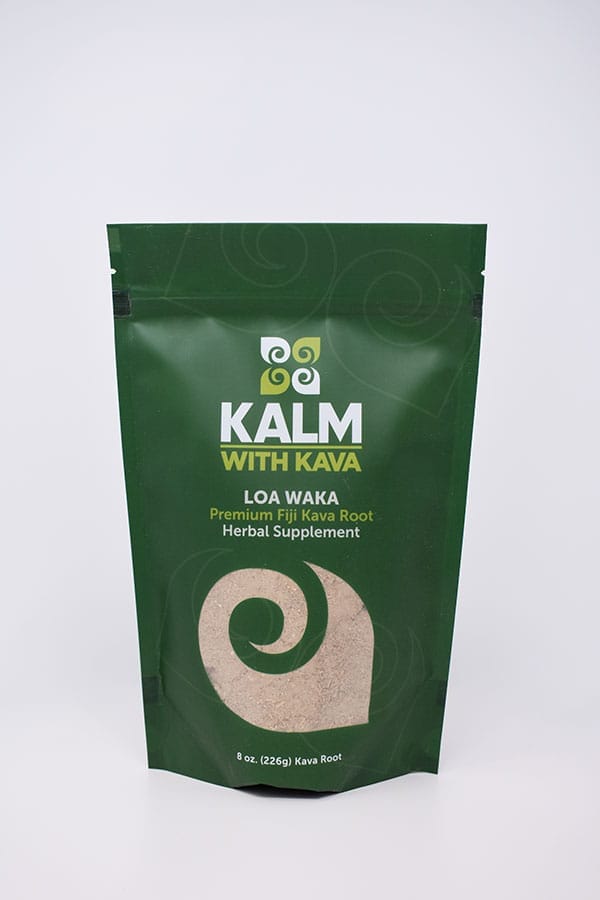
Loa Waka (Fijian) Noble Kava
Kalm with Kava
A named Fijian noble paired with the waka cut — cultivar plus root cut, the exact two-axis lesson, done right.
Our verdict: The cleanest illustration of Fiji's two-axis system: a named noble paired with the waka cut. Loa Waka gives you a recognizable Fijian noble designation and the heady lateral-root cut together, so you get a clean, balanced, kavain-forward profile rather than a mystery blend. If you want one bag that shows what 'named cultivar, defined cut, verified noble' means, this is it.
Lab report. Single-cultivar Fijian noble waka; brand details origin and preparation — confirm the current lot on the product page.
This is Fiji's two-axis system in a single bag. Kalm with Kava's Loa Waka pairs a named Fijian noble designation (Loa) with the waka cut — the lateral roots — so you're choosing on cultivar and root cut at once, exactly the lesson from the Fiji section. Named noble plus a specific cut is the opposite of the vague sourcing that lets tudei sneak in.
In the bowl it behaves the way a good heady noble should: a balanced, clear-headed calm — social rather than a sedative thud — easing off over a couple of hours rather than into the next day. Expect the brief tongue-tingle and reverse tolerance, so give it a few sittings. Adults 21+, no alcohol, no driving.
Who should buy it.
Buy this if you want to learn the Fijian cultivar-plus-cut system from a product you can verify rather than trust blindly — newcomers who want a textbook named-noble baseline, and anyone who's been burned by a heavy, groggy "kava" and wants a named cultivar with a defined root cut instead of a blend.
What we don't like.
At roughly $40 for 8oz it isn't the cheapest powder on the shelf — but that's the article's whole point: noble costs more than tudei, and a suspiciously cheap bag is a red flag, not a bargain. It's also a medium-grind traditional powder, so it asks for a few minutes of kneading and straining.
- Origin
- Fiji — single origin
- Cultivar
- Loa (named Fijian noble)
- Root cut
- Waka (lateral roots — heady)
- Grind
- Medium grind — traditional prep (knead & strain)
- What's verified
- Single-cultivar noble; stated origin
What we like.
- Named Fijian noble cultivar — not anonymous "Fiji kava"
- Waka cut — the prized, kavalactone-rich lateral roots
- Cultivar + root cut together — the full Fijian lesson
- Balanced, clear-headed effect — the heady noble signature
Worth noting.
- Premium pricing — noble simply costs more than tudei
- Traditional medium grind asks for kneading and straining
First, the correction: a kava "strain" is a clone, not a seed strain
The most useful thing we can do before naming a single cultivar is to fix the word "strain." People borrow it from cannabis, where strains are bred from seed, crossed, and stabilized over generations. Kava does not work that way at all.
Piper methysticum — the kava plant — is functionally sterile. It does not reliably set viable seed, and in cultivation it is propagated entirely from stem and root cuttings. That single botanical fact changes everything: every plant of a given cultivar is a clone of one original individual, not the offspring of a cross. When a bag says "Borogu," it isn't naming a recipe or a brand — it's naming a specific clonal line that traces back, plant by plant, to a selection a Vanuatu farmer made and then propagated by hand.
Why belabor this? Because the cannabis framing sets the wrong expectations. There is no "indica vs sativa" for kava, no breeder cooking up new crosses each season. There is a finite, traditional library of named clones, each anchored to a place and a culture — and the meaningful questions are which classification a cultivar belongs to, which island it's from, and what its chemotype reads. That's the rest of this guide.
The classification that decides quality: noble, tudei, medicinal, wichmannii
Before island names matter, every kava sorts into a class. This is the framework Vanuatu's own kava system uses, and it's far more important than any individual cultivar name.
Noble. The cultivars Pacific cultures have selected over centuries for clean, balanced, pleasant daily drinking. These are the varieties you want, and the only class serious drinkers buy for regular use. Vanuatu's Kava Act permits only cultivars classified as noble to be legally exported — the closest thing the kava world has to a legal definition of quality.
Tudei ("two-day"). A coarser class named for the heavy, lingering, sometimes next-day effects it's known to produce. Tudei grows faster, resists pests, and yields more root, which makes it cheaper — and which is exactly why mislabeled or blended tudei is the classic way a kava goes wrong. Traditionally it's reserved for occasional or medicinal use, not the daily bowl. Published analyses describe tudei roots carrying substantially higher levels of compounds called flavokavains; we report that neutrally. We go deep on noble vs tudei here.
Medicinal. A traditional category of cultivars used for specific, occasional purposes in island medicine rather than social drinking. Like tudei, these are not daily-drinking varieties — they're part of the wider "not noble" group that the noble standard deliberately excludes from export.
Wichmannii. The wild ancestor, Piper wichmannii, found in Papua New Guinea, the Solomon Islands, and parts of Vanuatu. It's potent and harsh, sits firmly in the non-noble camp, and is not recommended for the kind of relaxed, daily, social drinking this site is about. We'll name it when we reach PNG, but as a thing to recognize and avoid, not buy.
Heady vs heavy: where the spectrum actually comes from
Drinkers sort kava onto a spectrum from heady (cerebral, uplifting, talkative, clear) to heavy (relaxing, sedating, body-focused, couch-leaning). It's a genuinely useful shorthand — but it's widely misattributed to the cultivar name alone, and that's where shopping goes wrong.
The honest version is that heady-versus-heavy is driven by cultivar and chemotype together. A kava's chemotype is the ratio of its six main kavalactones, conventionally written as a six-digit code ranking them most to least abundant. Cultivars that lean on kavain (the "4") tend to read as more heady; ones that lean on dihydromethysticin and dihydrokavain can read as heavier. Because a cultivar is a clone, it carries a characteristic chemotype — which is why a given variety tends in a direction. But growing conditions, plant age, and which roots were used all shift the final cup, so the cultivar name predicts a tendency, not a guarantee. Our full heady-vs-heavy breakdown is here.
Vanuatu — the noble heartland
If kava has a capital, it's Vanuatu. The plant was domesticated here, and the country holds the deepest library of named noble cultivars — with names that shift from island to island and even valley to valley, because Vanuatu packs over a hundred languages into one archipelago. A few of the most recognized noble clones:
Borogu — associated with Pentecost Island, and probably the noble cultivar a Western drinker meets first. It's the workhorse: balanced, dependable, widely exported, and a sensible baseline for "what good noble Vanuatu kava tastes and feels like." (You'll also see the spellings Boroguru and Borogoru — naming overlaps across islands, and these are sometimes treated as distinct cultivars and sometimes as variants of the same family.)
Melomelo — from Ambae Island. Widely described as one of the heavier, more relaxing Vanuatu nobles, the kind people reach for to wind down rather than to chat — it tends to build slowly and warmly.
Palarasul — from Espiritu Santo. Generally placed toward the heady end: quicker-acting and more cerebral, a contrast to Melomelo's body lean.
Kelai — a celebrated Vanuatu noble that Lebot has called something close to a high point of kava selection; reputationally quick and heady. Boroguru rounds out the daily-drinker tier, often described as building slowly and warmly, while cultivars like Palisi appear in the wider noble catalog islands maintain.
Fiji — the same root, split into waka and lawena
Fiji is a major noble producer with a twist no other tradition emphasizes: it doesn't just name cultivars, it names root cuts. The same plant gets divided into two products with genuinely different characters.
Waka — the lateral roots. The thin, fibrous roots that fan out from the plant to seek nutrients. They're the most kavalactone-rich part and the cut Fijian tradition prizes most, leaning heady: more potent, more cerebral, a clean and talkative clarity. The trade-off is a more bitter, assertive taste.
Lawena — the basal root / stump. The dense base of the plant, closest to the stems. It's typically milder in both taste and effect, leaning heavy in a grounding, body-calming way — the cut people reach for to unwind rather than to spark conversation. This waka-vs-lawena split is largely unique to Fijian kava culture; most other traditions don't separate the cuts.
Loa and Damu are cultivar names you'll see attached to Fijian noble kava (you'll often encounter "Loa Waka," which pairs a cultivar designation with the lateral-root cut). The practical takeaway is that with Fijian kava you're choosing on two axes at once — the cultivar and the root cut — and the cut alone can move a single noble plant from heady to heavy.
Tonga — the noble drinking culture
Tonga has its own deep, formal kava-drinking culture, and its own family of cultivar names — you'll encounter Tongan varieties and blends in the trade, sometimes under names like Fu'u and a range of "kava" and "leka" cultivar names documented in Tongan agriculture. Tongan noble kava is generally described as clean and balanced, in the same daily-drinking tradition as its Vanuatu and Fijian neighbors.
For a Western shopper, Tongan kava shows up less often as a single-origin cultivar bag and more often as part of well-sourced noble blends, so the same rules carry over: confirm it's noble, prefer a stated origin, and let the chemotype settle any heady-versus-heavy question. The country's tradition is real and venerable; the buying discipline doesn't change.
Hawaii — 'awa, the prized and rare cultivars
In Hawaii kava is 'awa, and the Hawaiian cultivars occupy a special place: a documented set of traditional varieties, several historically tied to royalty and ceremony, and prized today partly because Hawaiian-grown 'awa is comparatively rare and premium. Hawaii's cultivar set is also notable for what it lacks — it carries no tudei or wichmannii lineage, only noble 'awa varieties. Among the most renowned:
Mahakea — one of the most commonly grown and recognized Hawaiian 'awa cultivars, used traditionally in ceremony and social gatherings; a well-regarded all-rounder.
Mo'i — historically coveted by Hawaiian ali'i (royalty) and associated with a strong cerebral, heady character, attributed to a kavain-forward profile. A storied, prestige variety.
Hiwa — its name signals "favorite" / a dark sacred 'awa, reserved historically for kahuna (priests) and important ritual; a ceremonial cultivar of high cultural standing.
Papa 'Ele'ele ("black flats / dark base") and Nene round out the core traditional set — Papa 'Ele'ele among the recognized dark-stemmed 'awa, and Nene valued in its own right within Hawaiian practice.
Samoa, Papua New Guinea, and Pohnpei
Three more origins fill out the map — one a noble tradition, two that mostly teach you what to recognize and avoid.
Samoa — 'ava. In Samoa kava is 'ava, central to the formal 'ava ceremony, with its own documented cultivar names (you'll see varieties like 'ava loa and 'ava la'au in the literature). Samoan 'ava sits in the Polynesian noble-drinking tradition alongside Tonga and Hawaii; the same buying discipline applies.
Papua New Guinea — wichmannii. PNG is the home turf of the wild ancestor, Piper wichmannii. It's potent and harsh, sits firmly in the non-noble camp, and is not recommended for relaxed daily drinking — this is the one origin on our map we flag as a thing to identify and skip, not seek out. If a product leans on "wild" or wichmannii framing, read that as the opposite of the noble standard, not as an upgrade.
Pohnpei / Micronesia — sakau. On Pohnpei kava is sakau, prepared and pounded in its own distinct tradition. Micronesian kava is generally described as heavier, and some of it carries a reputation for next-day grogginess — which puts much of it outside the clean, daily-drinking noble lane this site centers on. It's culturally fascinating; just don't assume "sakau" means the same balanced noble profile you'd get from a Vanuatu or Fijian export bag.
How to shop cultivars without getting burned
Put the tour together and a simple buying routine falls out — the same one we run before anything earns a place on this site, distilled so you can do it on any product page.
1. Confirm the class before the name. "Noble" comes first; a beautiful cultivar name on a non-noble or unspecified product is worthless. Vanuatu export = noble by law; otherwise look for the word "noble" stated plainly.
2. Demand a stated origin and, ideally, a named cultivar. "Vanuatu Borogu," "single-origin Fijian waka," "Hawaiian Mahakea" — specificity is the opposite of the vagueness that lets blended tudei hide. A bare "Pacific kava" with no country and no cultivar is a blank check.
3. Read the chemotype to settle heady vs heavy. The cultivar gives you a hypothesis; the six-digit chemotype on the lab report is the evidence. It also helps confirm nobility — noble cultivars lead with kavain (4) and dihydrokavain (2). Here's how to read it.
4. For Fijian kava, decide on the root cut. Want clear and talkative? Waka. Want grounded and calming? Lawena. The cut moves the same cultivar along the spectrum on its own.
5. Treat "suspiciously cheap" and "vague extract" as red flags. Tudei is cheaper to grow, so a bag that badly undercuts every verified noble is a signal, not a steal — and a concentrated "kava extract" with no cultivar, origin, or chemotype is the last place to accept missing paperwork.
More kava worth comparing
Beyond this guide: the highest-rated kava across every format, kavalactones verified, with a live price check on each.




As an Amazon Associate we may earn from qualifying purchases, at no cost to you. 21+.
Quick shop: every pick.
Skip the scroll: the whole lineup, with a live price check on each.
- Superior Vanuatu (Borogu) Noble KavaBest Vanuatu Noble BaselineRoot of Happiness · ~$34.99 / 8ozCheck price
- Wakacon Waka Noble Kava PowderBest Single-Origin Fijian WakaWakacon · $64.99 / 1lbCheck price
- Loa Waka (Fijian) Noble KavaBest Named Fijian Noble CultivarKalm with Kava · ~$39.99 / 8ozCheck price
Key terms
- Cultivar
- A cultivated variety of a plant maintained by humans — for kava, a named, clonally propagated line such as Borogu or Mahakea. Because kava is propagated only from cuttings, every plant of a cultivar is a clone of one selected original. This is what the market loosely calls a kava 'strain.'
- Morphotype
- A form of a plant distinguished by its physical appearance — stem color, internode length, leaf shape. Kava cultivars are often identified as morphotypes, and Vanuatu's vast catalog of named clones reflects centuries of human selection of distinct morphotypes from somatic mutations.
- Clonal propagation
- Growing new plants from cuttings of an existing plant rather than from seed, producing genetic copies (clones). Kava (Piper methysticum) is effectively sterile and is propagated this way — which is why a kava 'strain' is a clone, not a seed strain bred and crossed like cannabis.
- Noble kava
- The class of kava cultivars Pacific cultures have selected over centuries for clean, balanced, pleasant daily drinking — the varieties worth buying for regular use, and the only class Vanuatu permits for export. Choosing noble, single-origin kava is the single most important quality decision a drinker makes.
- Tudei kava
- From the Bislama for 'two-day,' a coarser, non-noble class named for the heavy, lingering effects it's known to produce. Cheaper and higher-yielding than noble, traditionally reserved for occasional or medicinal use, and associated in published analyses with higher flavokavain levels. Mislabeled tudei is the classic way a kava goes wrong.
- Medicinal kava
- A traditional category of cultivars used in island medicine for specific, occasional purposes rather than social daily drinking. Like tudei, medicinal cultivars sit in the wider 'not noble' group that the noble export standard deliberately excludes.
- Wichmannii
- Piper wichmannii, the wild ancestor of cultivated kava, found in Papua New Guinea, the Solomon Islands, and parts of Vanuatu. Potent and harsh, it sits firmly in the non-noble camp and is not recommended for relaxed daily drinking — a thing to recognize and avoid, not a premium upgrade.
- Waka
- The Fijian term for the lateral roots of the kava plant — the thin, fibrous roots that fan outward. They are the most kavalactone-rich cut and lean heady (clear, cerebral, talkative), with a more bitter taste. The waka-vs-lawena distinction is largely unique to Fijian kava culture.
- Lawena
- The Fijian term for the basal root or stump of the kava plant — the dense base nearest the stems. Milder in taste and effect than waka, it leans heavy in a grounding, body-calming way. With Fijian kava, choosing the root cut moves a single cultivar along the heady-to-heavy spectrum.
- Chemotype
- The specific ratio of the six main kavalactones in a given root, conventionally written as a six-digit code ranking them most to least abundant. It's kava's chemical fingerprint and the evidence behind heady-vs-heavy: noble cultivars lead with kavain (4) and dihydrokavain (2). The cultivar predicts a tendency; the chemotype confirms it.
- Heady vs heavy
- The shorthand spectrum drinkers use for kava's character — heady meaning cerebral, uplifting, clear and talkative; heavy meaning relaxing, sedating, body-focused. It's driven by cultivar AND chemotype together (and, for Fijian kava, the root cut), not by the cultivar name alone.
- 'Awa
- The Hawaiian word for kava, and the name for Hawaii's traditional cultivars — a documented, noble-only set including Mahakea, Mo'i, Hiwa, Papa 'Ele'ele, and Nene, several historically tied to royalty and ceremony. Hawaiian 'awa is prized and comparatively rare, making single-cultivar bags a premium purchase.
- Sakau
- The Pohnpeian (Micronesian) name for kava, prepared in its own distinct pounding tradition. Micronesian sakau is generally described as heavier, with some carrying a reputation for next-day grogginess, which places much of it outside the clean daily-drinking noble lane.
- Makas
- The leftover fibrous root pulp discarded after kneading and straining a traditional kava preparation. You drink the strained, milky liquid; the makas is the spent material left in the straining bag.
- Nakamal
- In Vanuatu, the traditional meeting house or kava-drinking gathering place — the social and ceremonial heart of where kava is shared. The word now also describes the kava bars modeled on that tradition.
Questions, answered
Are kava strains like cannabis strains?
No — and the comparison misleads people. Cannabis strains are bred from seed and crossed over generations. Kava is different at the root: the plant (Piper methysticum) is effectively sterile and is propagated only from cuttings, so every plant of a given variety is a clone of one selected original. What the market calls a kava 'strain' is properly a cultivar or morphotype — a named clonal line tied to a place and a people, not a seed cross. There's no 'indica vs sativa' for kava and no breeders making new crosses each season; there's a finite, traditional library of named clones. The meaningful questions are which class a cultivar belongs to (noble vs not), which island it's from, and what its chemotype reads. This is education, not medical advice.
Which kava cultivar is the strongest or best?
There's no single 'strongest' or 'best' cultivar, and any vendor who claims one is overselling. Strength depends on the kavalactone content and the chemotype of the specific lot, plus which roots were used and how it was prepared — not on the cultivar name alone. 'Best' depends on what you want: a balanced daily drinker (Vanuatu Borogu is the classic baseline), a heady and clear session (a Fijian waka, or a heady cultivar like Hawaii's Mo'i), or a grounding, heavy wind-down (a Fijian lawena, or a body-leaning Vanuatu noble like Melomelo). The honest answer is to pick noble first, then choose origin and cultivar to match the heady-vs-heavy lean you're after, and let the chemotype confirm it. Effects vary by person.
What's the difference between waka and lawena?
They're two cuts of the same Fijian kava plant, and the distinction is largely unique to Fijian culture. Waka is the lateral roots — the thin, fibrous roots that reach outward — and it's the most kavalactone-rich cut, leaning heady: more potent, more cerebral and clear, with a more bitter taste. Lawena is the basal root or stump, the dense base near the stems; it's milder in both taste and effect and leans heavy in a grounding, body-calming way. So with Fijian kava you're choosing on two axes at once — the cultivar and the root cut — and the cut alone can move a single noble plant from heady toward heavy. Pick waka for clear and talkative, lawena for grounded and calming.
What does 'noble' kava mean, and why does it matter more than the cultivar name?
Noble is a classification, not a cultivar. It refers to the kava varieties Pacific cultures have selected over centuries for clean, balanced, pleasant daily drinking — as opposed to tudei ('two-day'), medicinal, and wild wichmannii types, which are traditionally reserved for occasional, medicinal, or non-daily use. It matters more than any cultivar name because a beautiful name on a non-noble or unspecified product is worthless: the class decides whether the kava is even in the daily-drinking lane. Vanuatu's Kava Act permits only noble cultivars for export, so 'Vanuatu export kava' is noble by law. The rule of thumb: confirm noble first, then use origin and cultivar to fine-tune within the noble class. Not medical advice.
Which Vanuatu kava cultivar should a beginner start with?
Borogu, associated with Pentecost Island, is the usual and sensible starting point. It's the Vanuatu workhorse — balanced and dependable rather than dramatically heady or heavy — which makes it the ideal baseline to learn what good noble kava feels like before you branch into more specialized cultivars. From there, a Vanuatu drinker chasing a body-leaning, relaxing profile might explore Melomelo (from Ambae), while someone wanting a quicker, more cerebral lift might try a heady cultivar like Palarasul (from Santo). Because it's Vanuatu kava, the noble standard is doing work for you — only noble cultivars may legally leave the country. Start balanced, then fine-tune. 21+, effects vary.
Are Hawaiian 'awa cultivars worth the premium?
It depends on what you value. Hawaiian 'awa cultivars — Mahakea, Mo'i, Hiwa, Papa 'Ele'ele, Nene and others — are a documented, noble-only traditional set, several historically tied to royalty and ceremony, and they're comparatively rare because Hawaiian acreage is small next to Vanuatu or Fiji. That rarity is exactly why single-cultivar 'awa tends to cost more. What you're paying for is provenance and heritage: a named Hawaiian cultivar from a Hawaiian farm is about as traceable as kava gets, with no tudei or wichmannii in the lineage. If drinking a piece of Hawaiian tradition matters to you, it's a worthwhile premium; if you just want a dependable daily noble at the best price, a single-origin Vanuatu or Fijian noble delivers that for less.
Should I avoid Papua New Guinea or Micronesian kava?
Approach both with the noble filter rather than a blanket rule. Papua New Guinea is the home of the wild ancestor, Piper wichmannii — potent, harsh, firmly non-noble — and we'd flag wichmannii or 'wild' framing as the opposite of the noble standard, not a recommendation for relaxed daily drinking. Micronesian kava (Pohnpei's sakau) is generally described as heavier, with some carrying a reputation for next-day grogginess, which puts much of it outside the clean daily-drinking noble lane this site centers on. Neither is 'dangerous' as a category — both have deep cultural traditions — but for the balanced, social, daily experience most readers are after, you're better served by a stated noble from Vanuatu or Fiji. This is buying guidance, not medical advice.
Keep reading.
Noble vs Tudei Kava
The classification that decides quality before any cultivar name — and exactly how we verify a noble claim.
Heady vs Heavy Kava
The effect spectrum, decoded — why it comes from cultivar and chemotype together, not the name alone.
What Are Kavalactones?
The six active compounds and the chemotype code that fingerprints every cultivar.